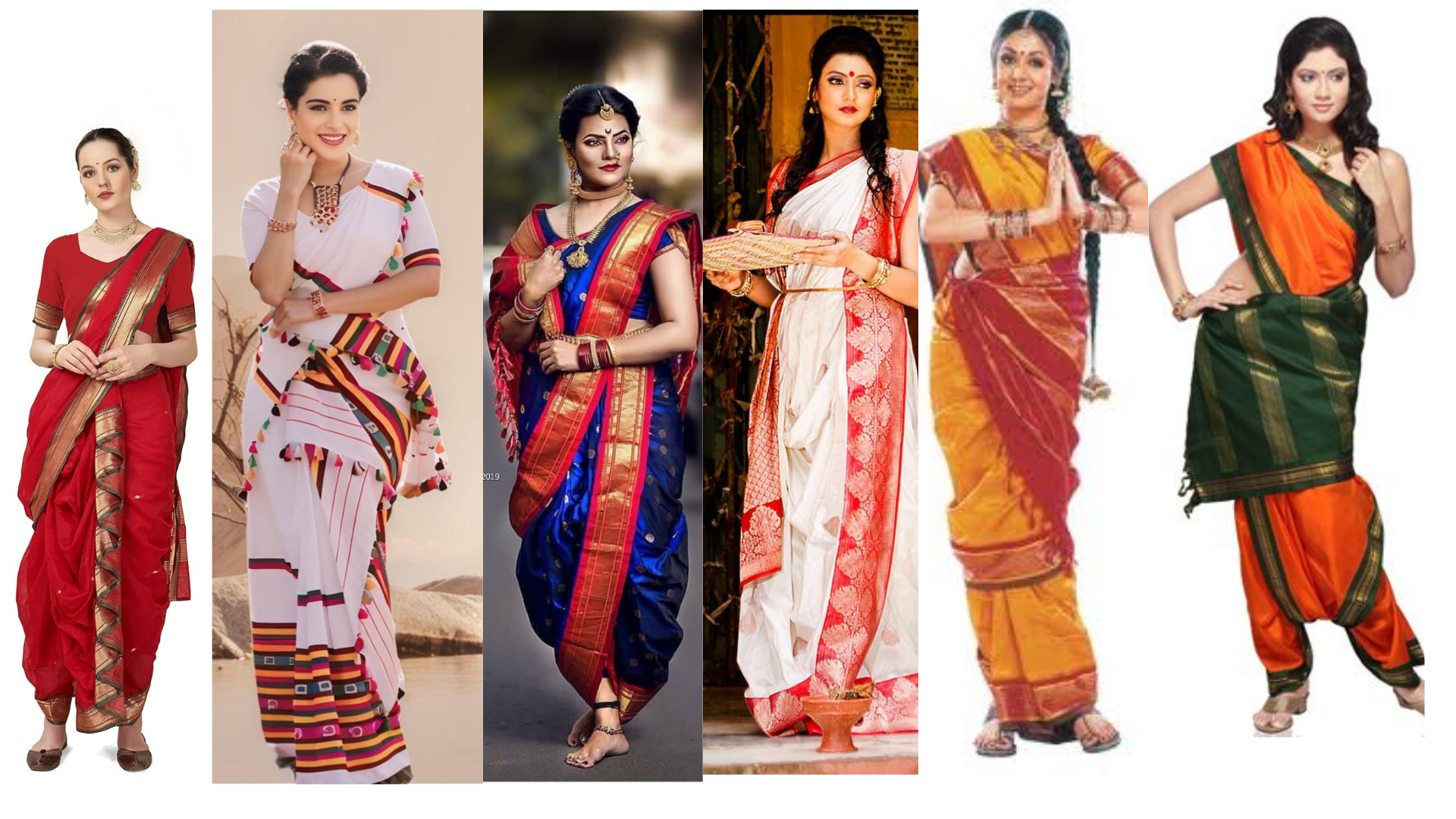
The saree is worn in over a hundred different ways across the country
In the vast tapestry of India’s cultural landscape, the saree stands as a timeless emblem of identity, resilience and artistry. Far beyond being a mere garment, it carries within its folds the legacy of centuries shaped by geography, tradition, social norms and skilled craftsmanship. Ubiquitous yet endlessly diverse, the saree adapts to its region, telling stories not just of fabric and fashion, but of communities, rituals and the rhythm of everyday life.
Though commonly defined as a single stretch of unstitched fabric, measuring roughly 4.5 to 8.2 metres, the saree is worn in over a hundred different ways across the country. Each drape is a distinct expression of a region’s past, its people, and their evolving lifestyles.
Nivi: From Andhra courts to urban corridors

During colonial times it became popular among educated urban women
The Nivi drape, now the most commonly worn style in India, traces its roots to Andhra Pradesh, particularly among aristocratic families in the 19th century. The term ‘Nivi’ comes from the Sanskrit word nivita, meaning to tuck in. Worn with pleats at the front and the remainder, called pallu, elegantly flung over the left shoulder, this style gained visibility through the efforts of reformers and artists like Raja Ravi Varma, who depicted mythological women in this drape. During colonial times, it became popular among educated urban women as a symbol of modesty fused with modernity.
Measuring about 5.5 to 6 metres, the Nivi saree came to represent the confluence of tradition and aspiration, a visual language that could speak fluently in drawing rooms, offices and political assemblies alike.
Nauvari: The warrior woman’s dhoti
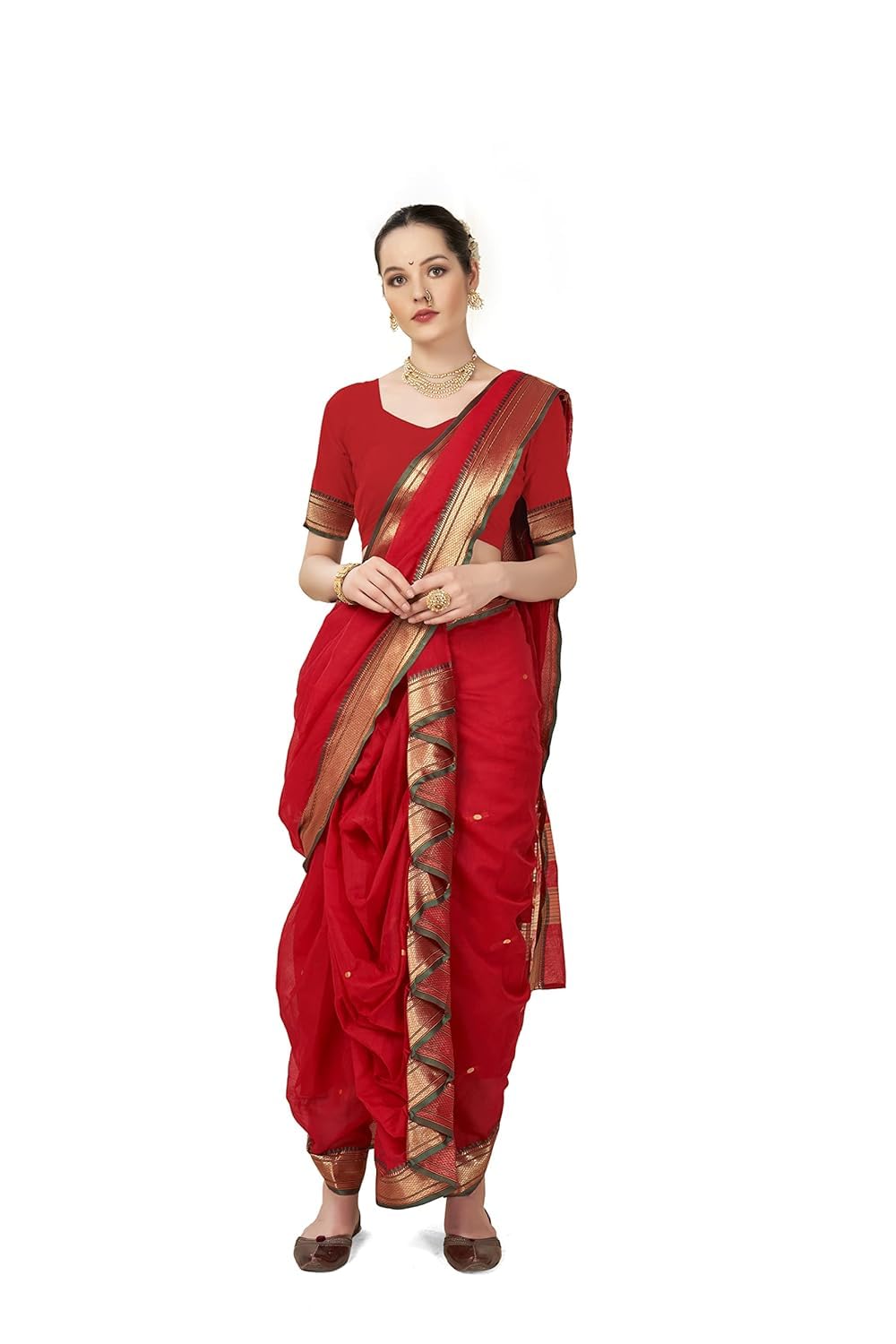
Nauvari is worn during traditional dances like Lavani and religious rituals
In the state of Maharashtra, the saree takes on a more martial and muscular identity in the form of the Nauvari or “nine-yard” saree, measuring around 8.2 metres. Worn like a dhoti, with the centre of the saree passed between the legs and tucked at the back, this style allowed women to ride horses, work in the fields and even accompany men into battle.
The Nauvari became prominent during the Maratha Empire, when women of warrior castes adopted it for both practical and ceremonial purposes. It is still worn during traditional dances like Lavani and religious rituals, symbolising feminine strength and cultural pride.
Madisar: Draping ritual and orthodoxy
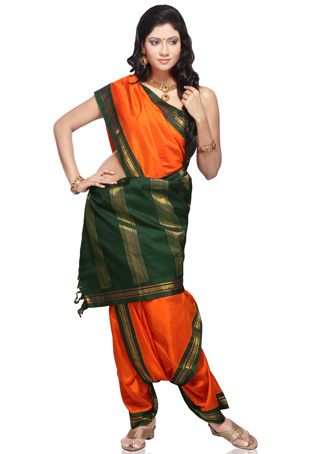
Madisar is draped in a complex style
The Madisar, native to Tamil Nadu, holds deep religious and cultural symbolism, especially among Brahmin women. Traditionally measuring about 8.2 metres, the Madisar is draped in a complex style that wraps both legs and ties at the waist, with the pallu covering the upper body. It fuses the draping styles of both a saree and a dhoti, reflecting the ascetic ideals associated with Vedic traditions.
Worn primarily during weddings, festivals and life rituals such as the thread ceremony or death rites, the Madisar is not just attire, it is part of a sacred script of living, one that links the body with spiritual order and societal roles.
Athpourey: Bengal’s draped grace
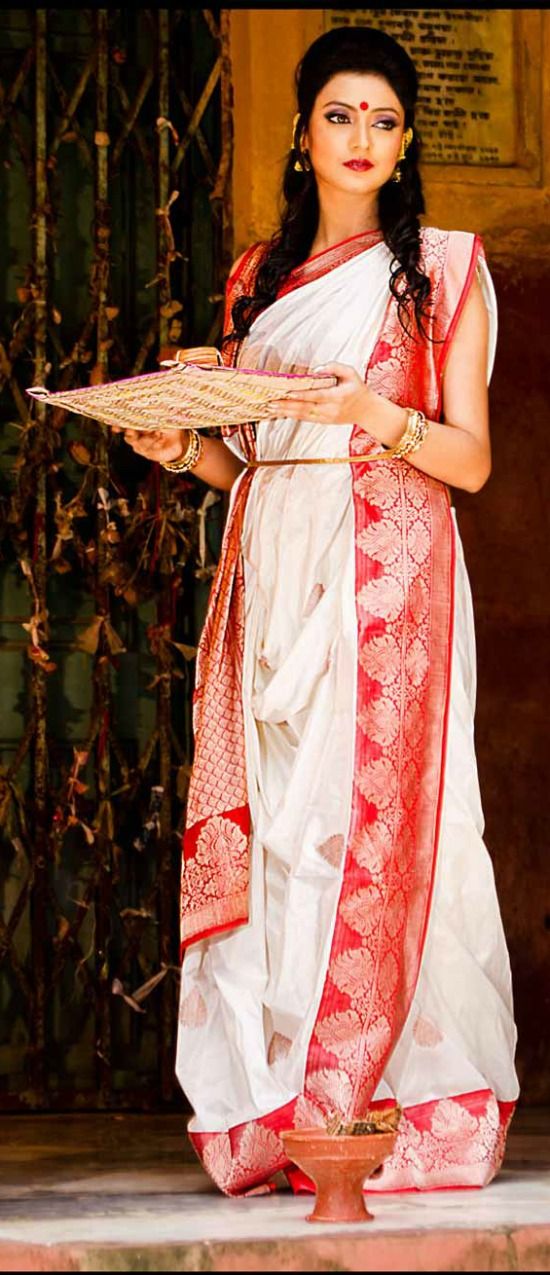
Athpourey saree often seen in red and white cotton
In West Bengal, the Athpourey saree often seen in red and white cotton or silk is typically worn with wide box pleats at the front and the pallu looping back over both shoulders. The name ‘Athpourey’ refers to the eight-fold pleat system and is often associated with the household routines of married women in extended families.
This drape, often worn without a petticoat and measuring around 5 to 6 metres, became prominent in the 19th century among landholders (zamindari families). It reflects Bengal’s balance between grace and practicality, merging the elegance of drapery with the movement needed for daily life.
Seedha Pallu: Gujarat’s forward-facing drape
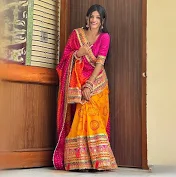
It is worn with vibrant bandhani or mirror-work sarees
In the desert state of Gujarat, where scorching winds and sun are daily companions, the Seedha Pallu or front-facing pallu emerged as both a functional and aesthetic adaptation. The pallu covers the chest and often drapes over the head as a veil, offering modesty and protection.
Typically worn with vibrant bandhani or mirror-work sarees, this style became widespread during the medieval period and is still prominent during garba and Navratri festivities. It symbolises regional identity and showcases Gujarat’s textile artistry, especially in tie-dye and embroidery.
Mekhela Chador: Assam’s two-piece tradition
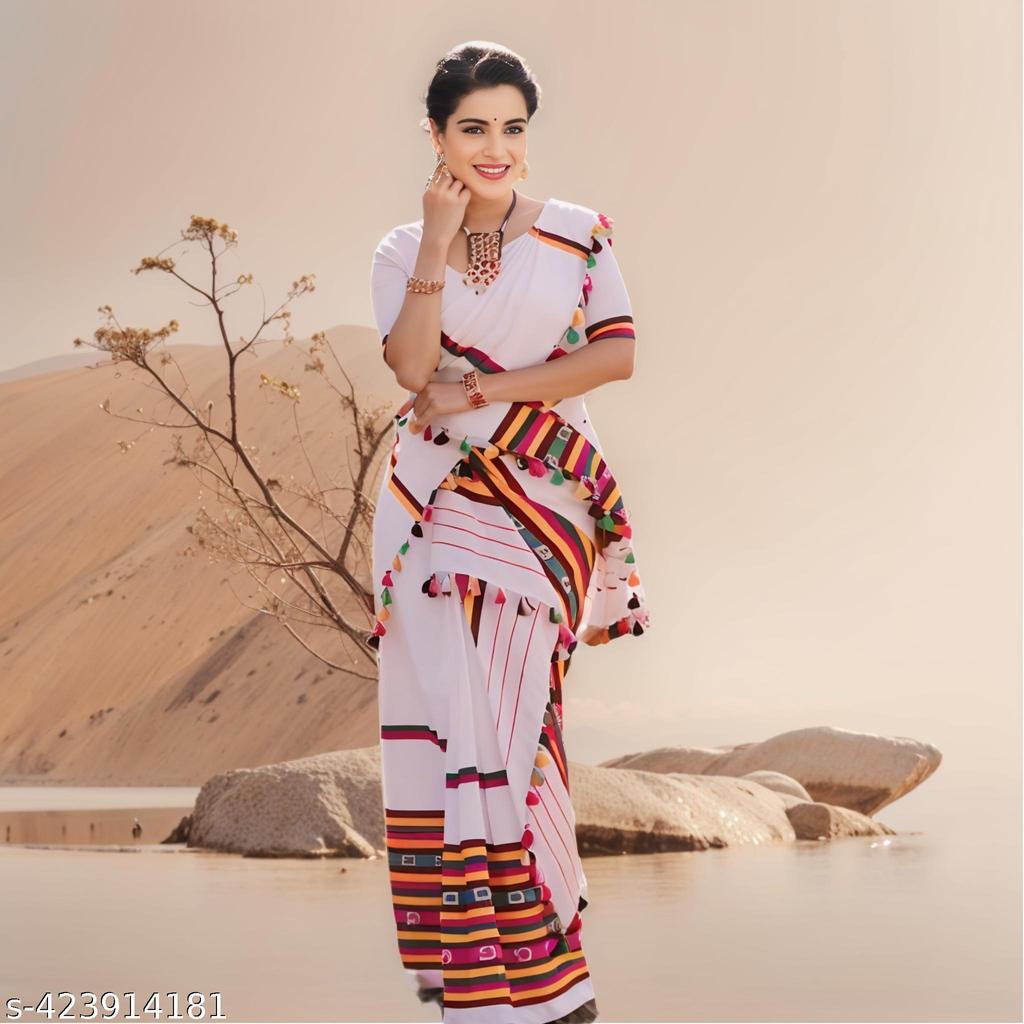
Mekhela Chador dates back to the Ahom dynasty
Moving eastward, the saree takes a fundamentally different form in Assam, where women wear the Mekhela Chador, a two-piece garment comprising the cylindrical mekhela (lower half) and the draped chador (upper half). Unlike other saree forms, this one does not involve pleating at the front and is typically 4.5 to 5.5 metres in total length across the two pieces.
The Mekhela Chador dates back to the Ahom dynasty and reflects a strong tribal influence, often woven from Muga silk, indigenous to Assam. It features woven motifs of elephants, birds, and geometric patterns that represent nature, fertility, and folk spirituality.
Santhal Wrap: Tribal minimalism and earthly connection
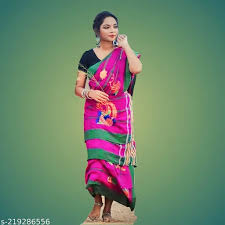
The minimalism of the wrap is both aesthetic and ecological
Among the Santhal tribes of Jharkhand, Odisha, and parts of West Bengal, the saree transforms into a minimalist wrap. Often unstitched and worn without blouse or petticoat, it is usually made of coarse cotton or handwoven fabric, measuring about 4 to 5 metres. The drape crosses the torso diagonally and is tied securely around the waist, ideal for labour-intensive agrarian life.
This style, deeply rooted in animist belief systems and forest ecology, reflects the tribe’s spiritual connection with land and season. The minimalism of the wrap is both aesthetic and ecological, a sustainable tradition in cloth.
A fabric of nations
Though the saree remains a common symbol across India, it is in the drape that the nation’s vast cultural spectrum is revealed. From temples to farmlands, courts to classrooms, the saree has travelled through centuries while carrying the markers of caste, class, climate, and region.
Today, many traditional drapes face the threat of obscurity, as western wear dominates urban spaces and standardised styles replace regional distinctions. Yet, there is also a resurgence, a new wave of designers, artists and digital storytellers seeking to archive and revive forgotten saree drapes. Workshops, fashion shows and virtual archives are reclaiming these stories, fold by fold.
As India continues to straddle the past and future, the saree endures an unstitched silhouette that still manages to stitch together a billion lives and a thousand heritages.