
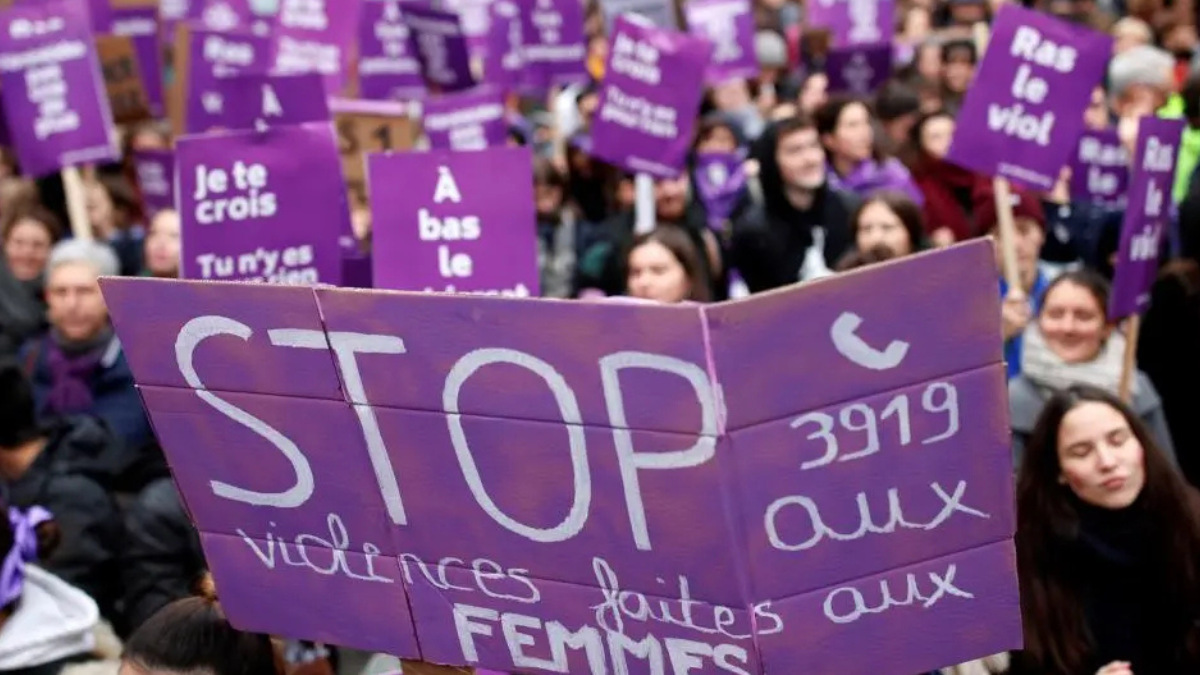
The Council of Europe outlines some of the recent legal steps France has taken to protect women and their children from abuse by a partner (Photo: Human Rights Watch)
In its first detailed report on how France is putting the Istanbul Convention into action, a treaty to prevent and fight violence against women and domestic abuse, Grevio, a group of experts within the Council of Europe, has praised the country’s progress so far. It also made several suggestions to improve police and court responses and to give better support and protection to victims, especially women who have faced sexual violence.
In a press statement, the Council of Europe outlines some of the recent legal steps France has taken to protect women and their children from abuse by a partner. These include things like electronic tagging for offenders, quick temporary protection orders, special medical centres and emergency money for women leaving violent relationships, and a support package called “New Start”. A special protocol has also been introduced to help children who have seen their mother killed in gender-based violence, and more funding has been given to the 3919, the national helpline against domestic violence.
According to the statement, Grevio praised efforts to prevent domestic abuse, such as creating a national team to deal with violence in sports, raising awareness about sexual violence, better lessons in schools about healthy relationships, training for professionals, and educational materials for teachers.
The report also supported the creation of special court units to handle family violence cases, the appointment of liaison judges, and more social workers and psychologists at police stations. It noted that more people are using the online platform to report violence, and that victims can now get forensic evidence collected without having to report the crime right away.
The report says there are gaps in the law and in how policies are carried out, especially around sexual violence. It urges better police investigations, stronger evidence-gathering, and changing the legal definition of sexual violence so that it is based on whether the victim freely gave consent.
Grevio has also urged the French government to improve how its policies are co-ordinated, funded and reviewed. It says more attention is needed for women who face several types of discrimination, like migrant and refugee women, and that charities supporting victims need better funding. It also recommends more training for all professionals who deal with victims and perpetrators of violence.
The report adds that all women who experience sexual violence should have access to a forensic exam and to both short-term and long-term psychological help from trained professionals. France should also do more to protect women with disabilities, including those in care homes and ensure that proper help is available in shelters for both women and their children.
It also says steps must be taken to keep victims and their children safe when courts make decisions about custody and visitation, adding that it is important to make sure that the law banning forced mediation in abuse cases is properly followed. Finally, the report says that risk assessments should always be carried out, and victims should be given a safety plan and protection quickly.
