
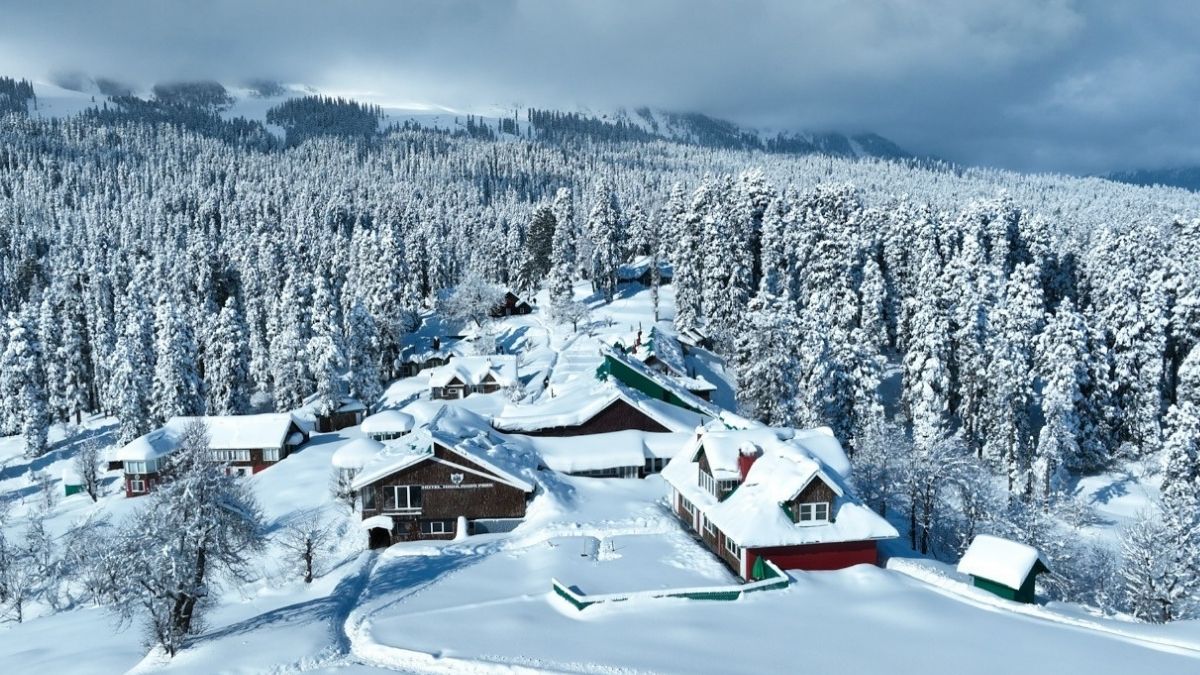
With snow covering the entire valley, winter is an ideal time for embarking on some low-altitude treks in Kashmir (Photos: JK Tourism)
Each year, winter brings with it a new opportunity to explore unique trekking routes in Kashmir, from family-friendly routes to scenic multi-day adventures, local guides reveal the safest and most stunning winter treks of Kashmir.
As these imposing Himalayan peaks get wrapped in a white blanket, trekkers get the perfect opportunity to explore the powdery meadows and icy rivers that lie within their folds, particularly set against crisp blue skies. The region’s trekking routes, which are known for their gentle gradients and splendid views of mountain peaks such as Harmukh and Kolahoi, are inviting without being too intimidating. What makes these ideal for families, couples, and first-time trekkers looking to experience winter’s charm without venturing into harsh terrain is their relatively accessible tracks.
As Kashmir experiences dry, cold weather with wintery conditions setting in by late October, it creates perfect conditions for snow treks. Along the way, travellers encounter a mix of dense pine forests, serene alpine lakes, and the occasional glimpse of wildlife.
These treks offer a major exploration avenues before major snowfalls render these trails inaccessible, making for a risky adventure.
“Snow trekking starts from October and continues until December. In January and February, when temperatures drop well below freezing, most treks remain closed for extended periods. Once snow exceeds two to three feet, reaching higher altitudes becomes impossible, although a few easy to moderate treks stay open, which are usually same-day routes or short overnight trips,” Abbas Kashmiri, a 26-year-old travel manager from Saida Kadal, Srinagar, tellsMedia India Group.
Also Read: Gurez Valley: Trekkers’ untouched haven in Kashmir
However, he warns that the treks in the upper reaches of the mountains are risky in winter and instead points the trekkers towards lower-altitude trekking options.
“Most alpine treks are dangerous in winter, such as the upper reaches of Thajwas Glacier, Lidwas, or KGL. But routes like Kousarnag, Naranag–Dumail, and the Zabarwan peaks near Srinagar are safe and relatively easy. People generally prefer same-day treks to avoid risks as trekkers now require prior permission for all seasons, and most authorities deny winter permits,” Abbas adds.
Below are some of the best winter trekking options in Kashmir, collated with the suggestions of local tour managers.
The Marchoi Trek
The Marchoi Trek is inarguably one of the most beautiful winter trails in the Indian Himalayas. This four-day trek begins in Naranag village of Ganderbal district, approximately 55 km north of Srinagar, and is named after the nearby Machoi Mountain, which stands at an elevation of over 5,000 metres. It takes one through a snowy wonderland that opens up to the Shadimarg meadow at 3,200 metres, where one is mesmerised with panoramic northern views of mighty Mount Harmukh, which stands 5,142 metres tall.
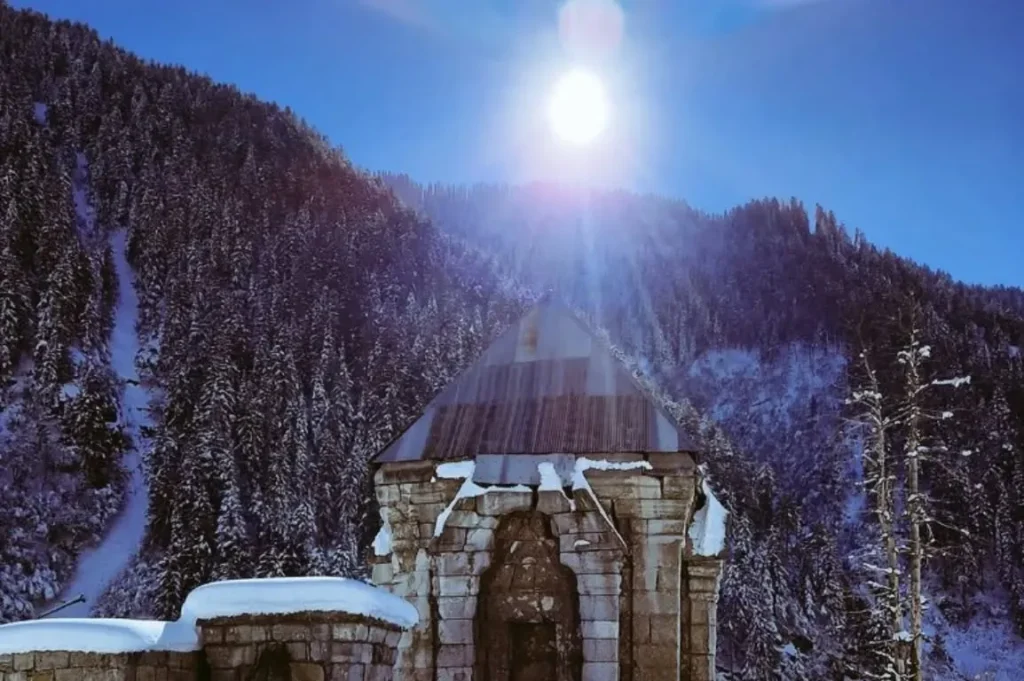
Marchoi Trek is one of the most beautiful winter trails in the Indian Himalayas (Photo: JK Tourism)
With gentle slopes through snow-covered forests and valleys, the trek provides scenic campsites filled with Himalayan birdlife. This makes it perfect for travellers seeking both beauty and relative safety.
Dumail Trek
This trek is ideal for beginners. It is a two-hour short trail which also begins at the iconic Shiva Temple in Naranag, the endpoint of the Kashmir Great Lakes trail, in Ganderbal district. It gently traverses through flat snow paths, frozen gullies, icicles, snow bridges, and woods, before culminating at the confluence of the Dumail River in Dumail Valley. It is mostly favoured by families and couples as it offers less challenging yet splendid features, such as partially frozen streams, making it a hassle-free introduction to Kashmir’s snowscape.
Lidderwat-Aru Trek
This four-day moderate snow trek begins at Aru village in Pahalgam, which is approximately 103 km south of Srinagar. During winters, the Lidderwat area, which usually bustles with high tourist footfall through the summer, is transformed into a serene Himalayan winter retreat. With a total length of 9 km, this trek features easily accessible trailheads and offers minimal elevation variations, making it a bit more popular than other winter trails for trekkers seeking enjoyment without venturing into high-risk terrain. The Lidderwat-Aru trek offers stunning views of snow-capped mountains, pine trees, the partly frozen Lidder River, and rolling hills. As the trail moves toward the foothills of Katernag Mountain, you will find yourself surrounded by cedar forests and frozen river valleys, creating a peaceful escape into Kashmir’s winter wilderness.
Doodhpathri Trek
It begins at Doodhpathri, or the “Valley of Milk” in Budgam district and is situated deep within the Pir Panjal mountain range. There are two options for trekkers to choose from a short day trek or a longer, multi-day trek. The short day trail takes trekkers to the Diskhal Meadow, a 2-hour uphill hike from Doodhpathri. The longer multi-day trek offers a chance to witness the majesty of the seven lakes. Starting from Doodpathri, it first leads to Ashtaar Valley, then to Gurwansar Lake. From here, it leads to Duriem via Pamsar Lake, followed by Gadtar. En route, trekkers can experience the splendour of Bodhsar, Trastar Lake, Navkansar I, II &Damamsar Lakes. The trekkers have the option to either return to Doodhpathri by reversing the trail or trek from Gadtar to Tosamaidan.
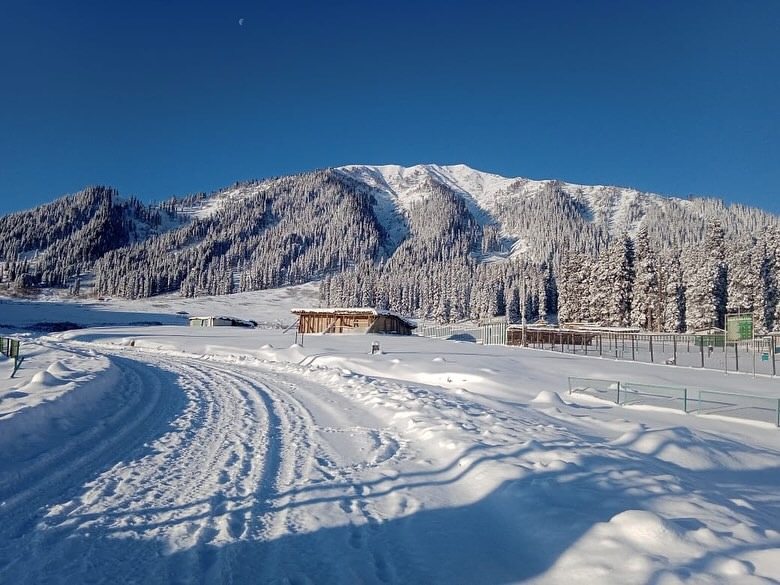
The short day trail takes trekkers to the Diskhal Meadow, a 2-hour uphill hike from Doodhpathri (Photo: JK Tourism)
Tosamaidan Trek
Tosamaidan is known as the “King of Meadows” and is approximately 50 km from Srinagar. It is situated deep in the Pir Panjal mountain range in the Khagtehsil of Budgam district. Tosamaidan meadow serves as a departure point for a four-hour trail to the famed glacial lakes of Gadsar, Budsar, Damamsar, and Kalasar, offering trekkers an out-of-this-world experience. Not only that, this trail allows people to trek to places as far as Gulmarg on one side and Yusmarg on the other.
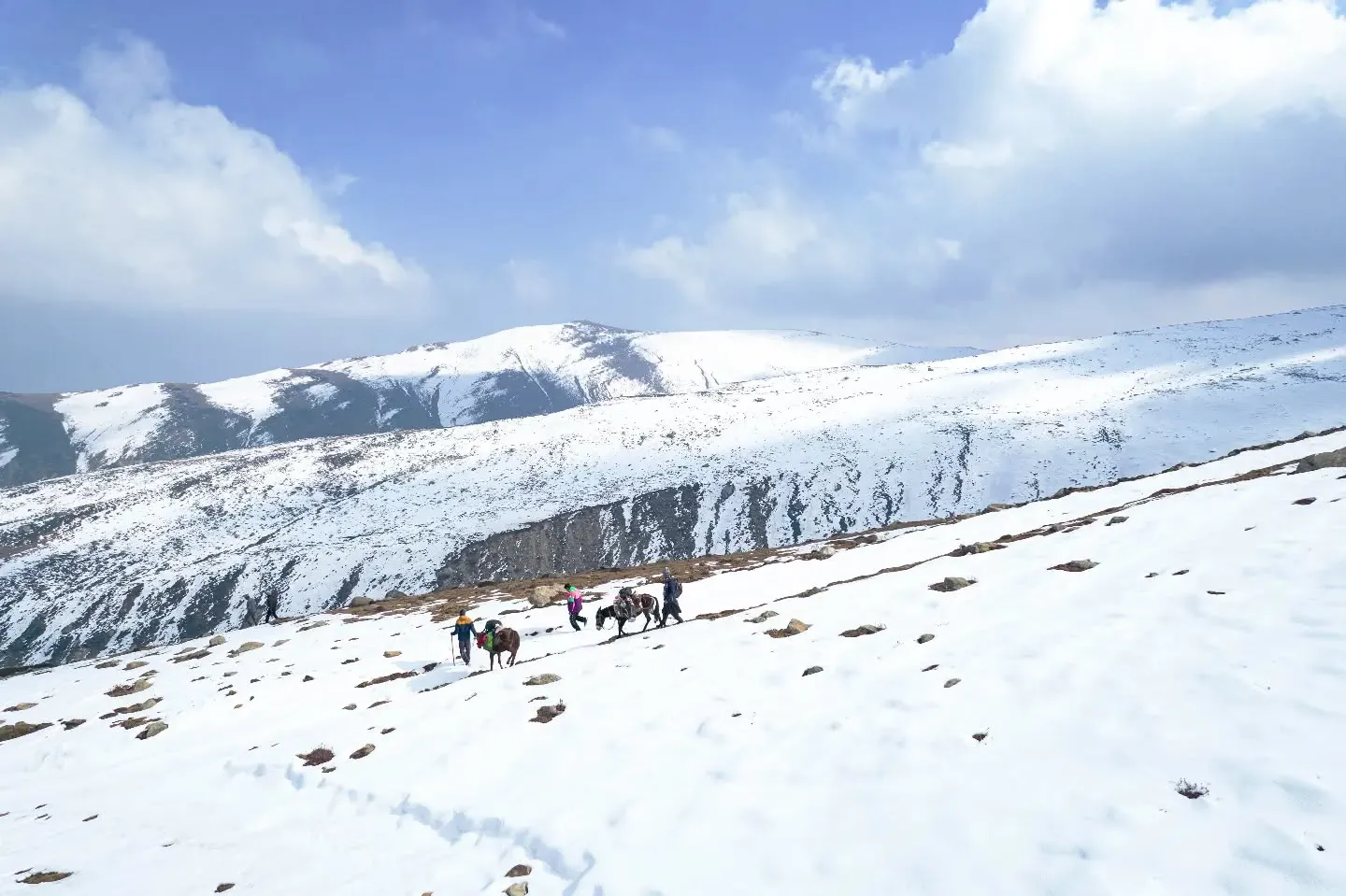
Tosamaidan meadow serves as a departure point for a four-hour trail to the famed glacial lakes (Photo: JK Tourism)
“One can also trek from Tosamaidan to Gulmarg, Doodhpathri, and Yousmarg, with the best season for trekking being June to September,” Firdous Ahmad Khan, 33-year-old tour operator, tells Media India Group.
“In winters, an easy trek from Sitaharan to Tosamaidan takes just 2 to 3 hours, making it accessible for everyone,” Khan adds.
Tulian Lake Trek
The Tulian Lake trek at an altitude of about 3,700 m is a moderate five-day trek that typically remains accessible longer than most winter trails. It traverses through dense forests to this figure-eight turquoise Tulian lake, which is shielded by over 4600 m high peaks. It is an ideal route for beginners as it offers gradual climbs and amphitheatre-like views.
Advanced Snow Treks
Undoubtedly, the most famous are the Kashmir Great Lakes (KGL) and the TarsarMarsar treks. However, these are typically accessible during late spring or early July, even as they offer views of melting snow patches that still cap high passes. While the eight-day moderately difficult KGL trek at 4,000 m demands endurance for steep ascents past glacial lake crossings, the relatively moderate seven-day TarsarMarsar route also at 4,000 m rewards trekkers with the wilderness of twin lakes, alpine meadows, and snow pockets. Moreover, Nafran Valley and Pir Panjal Lakes add variety to these trails, offering offbeat alternatives that feature 10-14 alpine lakes and lingering snowfields. These are best accessible from late June.
Also Read: Winter wonderlands of India: Skiing paradise
KothPathri Trek
KothPathri Trek, a relatively unexplored three-day moderate trail, offers an intimate and splendid view of MountKolahoithat stands at 5,400 m. Like Lidderwat, it also starts from the Aru village in Pahalgam, which has become an all-season off-road travel destination. Considered a relatively safe terrain, this trail guides hikers on a gentle ascent through snow meadows and pine-cedar groves to open plateaus. This trail treats trekkers with bird sightings and their chirpiness while leading them to a high meadow with sweeping views of the valley. It comes with a blend of cultural trailhead vibes, which makes KothPathri an opportune getaway for those seeking winter solitude.
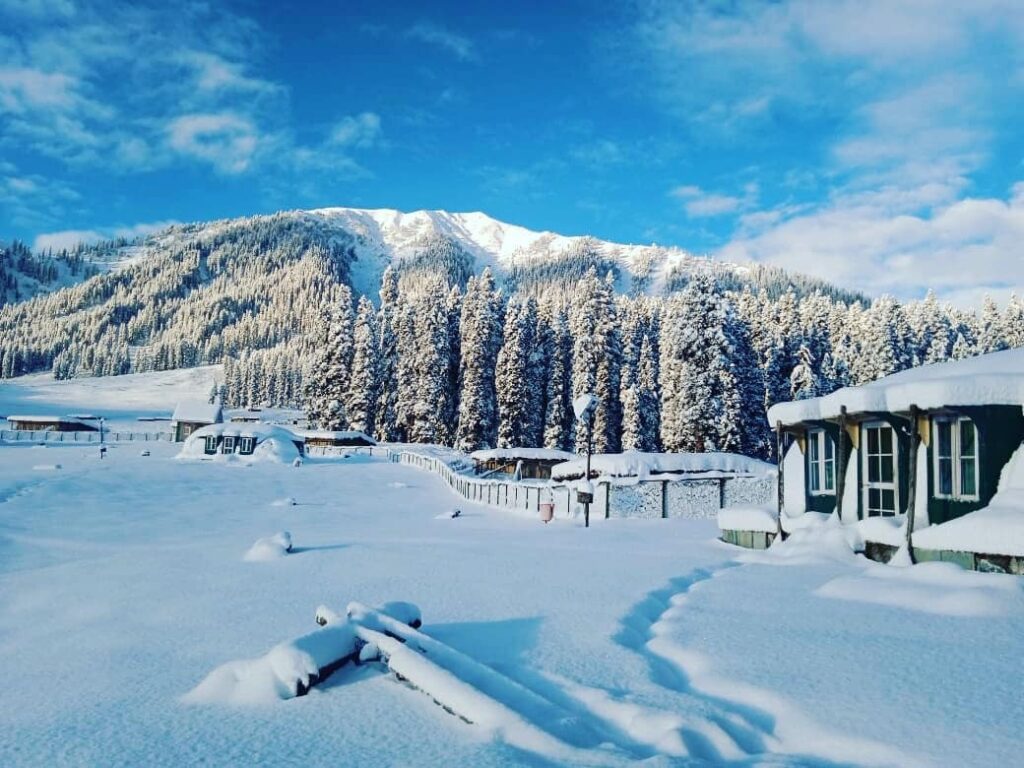
Doodhpathri, the “Valley of Milk,” where serene white landscapes stretch across the Pir Panjal range (Photo: JK Tourism)
Packing for treks
For those interested in exploring the snow-capped winter trails of Kashmir, before embarking on the trail, the essential winter gear to pack would include thermals, gaiters, microspikes, and layered clothing. It is recommended that such treks be undertaken in guided groups to ensure safety, given the fluctuating weather and altitude-related risks, says Abbas.
