
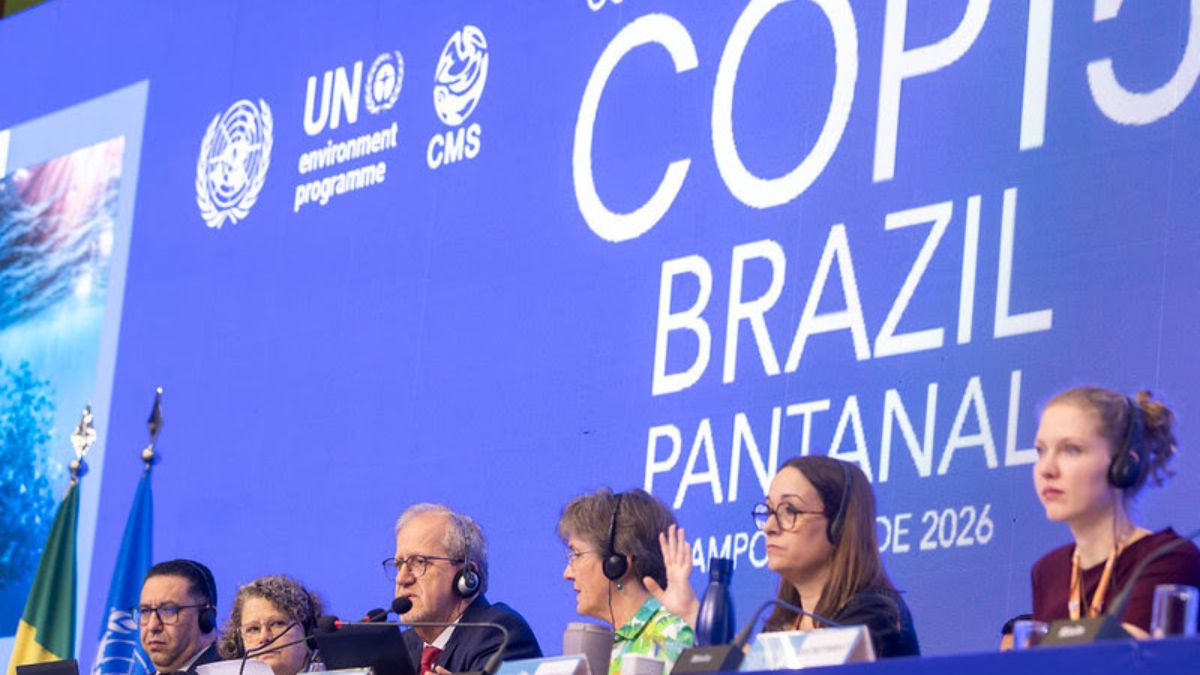
UN pledges stronger protection for 40 migratory species at risk of extinction
At the UN Convention on the Conservation of Migratory Species (CMS), COP15, that was held in Brazil, governments agreed to expand global conservation efforts by granting new or enhanced protections to 40 migratory species and populations, as fresh scientific evidence warned of accelerating declines driven by habitat loss, overexploitation and emerging threats, reinforcing the need for coordinated international action to safeguard species that move across national borders.
In a press statement, the CMS says that the governments agreed to list 40 additional species and populations under its Appendices I (species in danger of extinction) and II (species requiring coordinated international action). The Convention now covers over 1,200 unique species under its 47-year framework.
The meeting also approves multi-species conservation plans in key regions including the Amazon, aimed at improving cross-border protection efforts for migratory wildlife.
The week-long CMS COP15 opened with new scientific findings showing that key indicators for many treaty-protected species continue to trend downward, reinforcing warnings that habitat loss, overexploitation and infrastructure barriers are accelerating declines among species that traverse national borders.
Also Read: CMSCOP14: Birdwatching can help humans cope with climate change
The conference highlighted a growing need to address emerging and intensifying threats such as deep-sea mining, climate change, plastic pollution, underwater noise, illegal wildlife killing, fisheries bycatch and marine pollution.
Leaders at the conference, including Brazil’s President Luiz Inácio Lula da Silva and Paraguay’s President Santiago Peña, underlined the urgency of addressing habitat fragmentation, bycatch, illegal killing and infrastructure-related disruptions to migratory routes.
According to the statement, parties emphasised the importance of ecological connectivity, stronger international cooperation and expanded partnerships with global frameworks such as Cites and IPBES, while also calling for the integration of Indigenous and local knowledge into scientific approaches, alongside ongoing discussions on balancing multiple knowledge systems with scientific rigour.

Amy Fraenkel
The interim State of the World’s Migratory Species report presented at the conference underscored that key biodiversity indicators are trending negatively, with rising extinction risks and widespread population declines.
“We came to Campo Grande knowing that the populations of half the species protected under this treaty are in decline. We leave with stronger protections and more ambitious plans but the species themselves are not waiting for our next meeting. Implementation has to begin tomorrow. Expanded protections for cheetahs, snowy owls, giant otters, great hammerhead sharks and many more, demonstrate that nations can act when the science is clear. Our duty now is to close the distance between what we’ve agreed and what happens on the ground for these animals,” says Amy Fraenkel, Executive Secretary, CMS.
