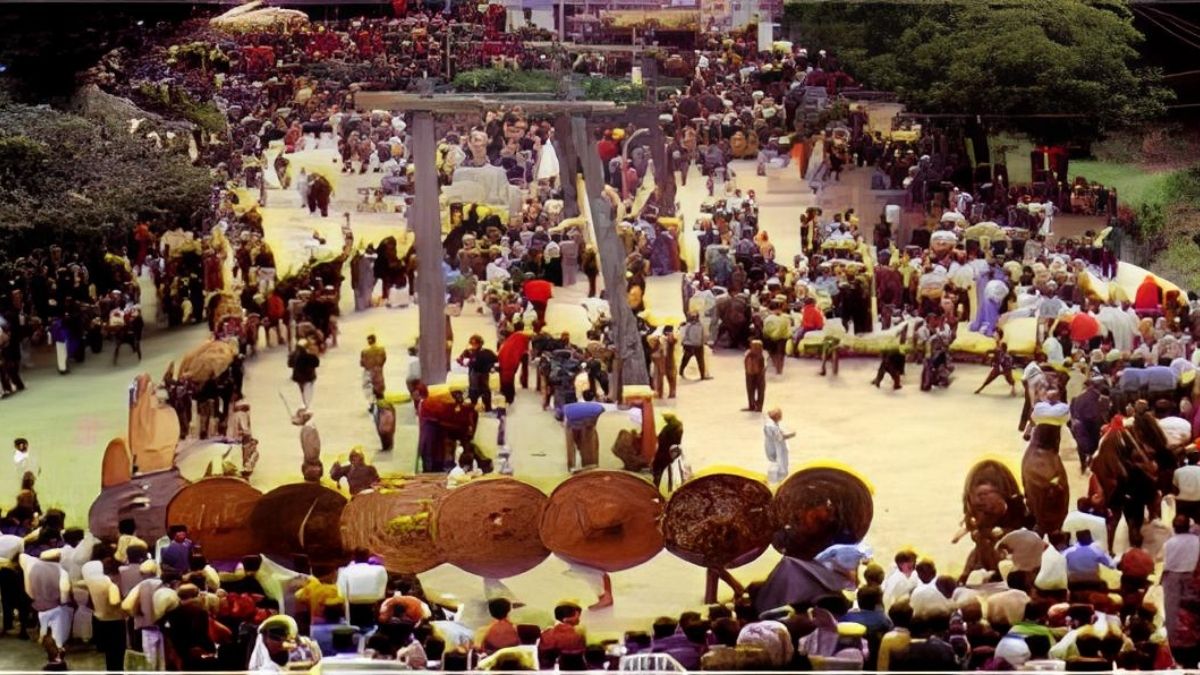
Bagwal blends devotion, ritual stone pelting and clan participation in honour of Goddess Barahi (Photos: Kumaon Division)
Uniting hereditary clan groups like Chamyal, Gahadwal, Lamgadiya and Walig with large gatherings of devotees, the Bagwal festival unfolds annually in late April and early May at the Barahi Temple in Devidhura, Uttarakhand, where a time-bound ritual of stone throwing is performed as a sacred offering to Goddess Barahi, embodying a long-standing tradition shaped by faith, collective identity and symbolic combat.
What defines the festival is not chaos but a structured act of offering, where devotion is expressed through physical endurance, courage and collective participation.
Rooted deeply in the religious traditions of Kumaon, the festival transforms what appears to be violence into a symbolic act of faith. Participation is often inherited, with individuals representing their clan and community, reinforcing lineage-based identity and continuity. While men actively engage in the stone-pelting ritual, women participate through prayers, offerings and support roles, ensuring that the festival remains a collective social and spiritual event.
Today, Bagwal stands as a rare example of ritualised combat within a religious framework, where faith is expressed not only through prayer but through willingness to endure pain without protection measures as an offering. What makes it distinctive is this transformation of physical risk into devotion.
Though centred in Devidhura, the festival’s influence extends across the Kumaon region, drawing devotees, visitors and observers from across Uttarakhand and beyond. This wider participation reflects how a localised ritual has evolved into a shared cultural event while still retaining its strong regional identity.
Also Read: Tehri Lake Festival to boost tourism to Uttarakhand
Engrained in long-standing Hindu practices associated with goddess worship, particularly forms of Durga, the festival also reflects the involvement of diverse social groups including farmers, local artisans, temple authorities and residents. While similar local festivals exist in the Himalayan region, Bagwal remains uniquely recognised for its intensity and its rare form of ritualised violence.
Origin and historical foundation
The origins of Bagwal are traced through oral traditions that point to an earlier practice of human sacrifice offered to Goddess Barahi. According to local belief, this practice was gradually replaced over time, first by animal sacrifice and eventually by symbolic bloodshed through stone pelting.
This transition reflects a broader pattern seen in many ritual traditions, where older, more extreme forms of offering evolve into symbolic acts that preserve meaning while adapting to changing social norms.
In Bagwal, the act of drawing blood through controlled combat came to represent sacrifice, bravery and devotion without the need for human or animal life.
This evolution established the foundation of the present-day ritual, where physical endurance replaces sacrifice while maintaining the core idea of offering to the deity.
Mythology, ritual structure and symbolism
Bagwal is closely tied to the worship of Goddess Barahi, who is believed to protect the region and its people. The festival symbolises devotion through courage, collective participation and the willingness to endure physical hardship as a form of offering.
The ritual structure is highly organised. Participants assemble in designated groups representing their clans and at a fixed moment, begin hurling stones at each other. The event continues for a limited duration under the supervision of temple authorities, after which it is formally brought to an end.
The act itself carries layered meaning, representing sacrifice through symbolic bloodshed, courage as an expression of devotion and a strong sense of collective identity reinforced through clan participation.
What appears as conflict is in fact a controlled and ritualised performance, where boundaries, timing and intent are clearly defined. This structure ensures that the act remains symbolic rather than rebellious.
Bagwal serves multiple spiritual and cultural purposes. It honours the goddess while reinforcing community bonds, preserves a unique regional tradition and reflects how faith can be expressed through both physical and symbolic acts.
Also Read: Rudrakund: Uttarakhand’s untouched gem for spiritual and nature lovers
Key elements of the festival
Bagwal is defined by a series of structured rituals centred around the act of stone pelting. Participants traditionally carry stones and use protective gear such as wooden shields to defend themselves.
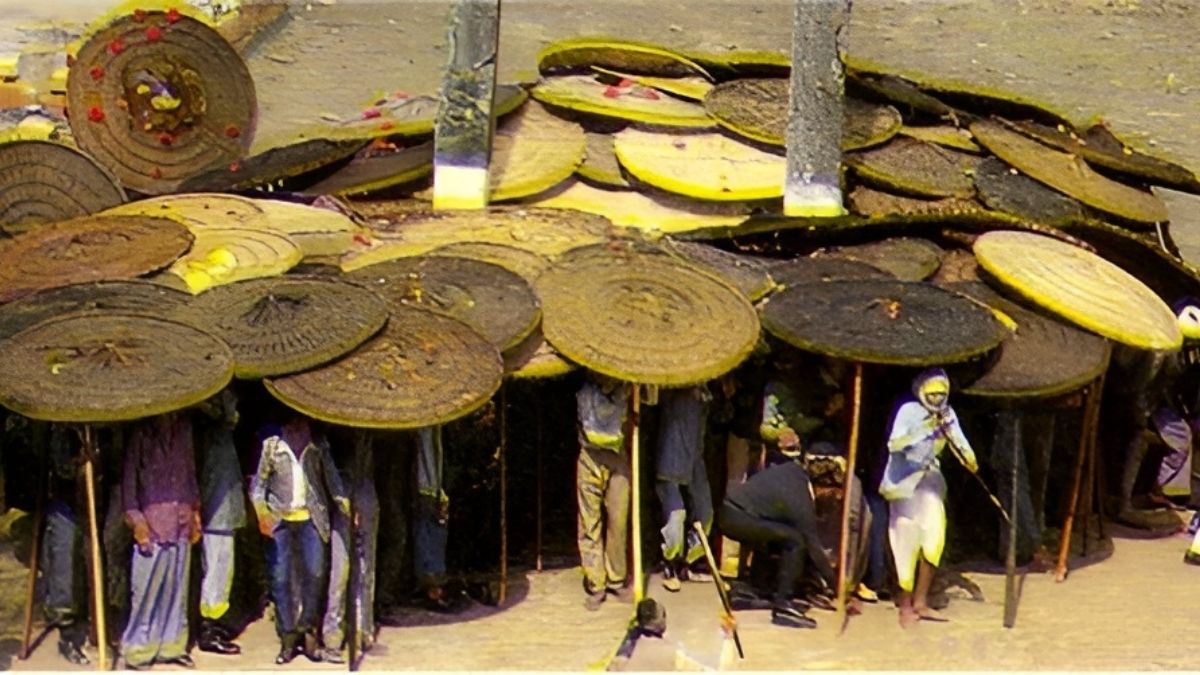
Devotees stand in tightly packed groups beneath large wooden shields
The temple courtyard becomes the focal space where opposing groups face each other and the ritual unfolds in a controlled manner. The presence of priests and organisers ensures that the event follows established norms and concludes at the appropriate time.
Another defining aspect is the visible acceptance of injury as part of the ritual. Minor wounds are often seen as a mark of devotion, reinforcing the idea that faith involves sacrifice and endurance.
In recent years, safety measures have become an integral part of the festival. Helmets, protective equipment, medical teams and ambulances are deployed to minimise serious harm while allowing the ritual to continue.
Each element contributes to a festival that blends devotion with physical intensity, creating a rare form of ritual expression.
Preparation and performance
Preparations for Bagwal begins in advance within participating communities. Families and clan groups organise themselves, reinforcing roles and responsibilities tied to tradition.
Temple authorities coordinate logistics, while local authorities ensures arrangements for safety, crowd management and medical support. Participants prepare mentally and physically for the ritual, aware of both its risks and its significance.
During the festival, the atmosphere is intense and charged. Chants, temple rituals and the anticipation of the event build a sense of collective energy, culminating in the brief but powerful act of Bagwal.
Community, identity and shared culture
Bagwal is deeply embedded in the social fabric of the Kumaon region. Participation is not merely individual but collective, with each clan Chamyal, Gahadwal, Lamgadiya and Walig representing its heritage and maintaining a shared understanding of the ritual’s meaning. The acceptance of risk, respect for tradition and belief in divine protection form common threads among participants.
The festival also acts as a cultural bridge, bringing together different villages and social groups in a shared act of devotion. It reinforces unity not through uniformity but through structured participation and mutual recognition of tradition.
Relevance in the present day
Today, Bagwal exists at a complex intersection of tradition and modernity. While it continues to draw devotees and visitors, it also faces scrutiny from legal authorities and changing social attitudes.
Concerns around safety and public welfare have led to increased regulation, with courts and administration monitoring the event and encouraging safer practices. At the same time, many within the community view these changes as necessary adaptations rather than threats to tradition.
Bagwal remains a powerful example of how cultural practices evolve under pressure. It highlights the ongoing negotiation between faith and modern values, where communities strive to sustain tradition while responding to contemporary concerns.