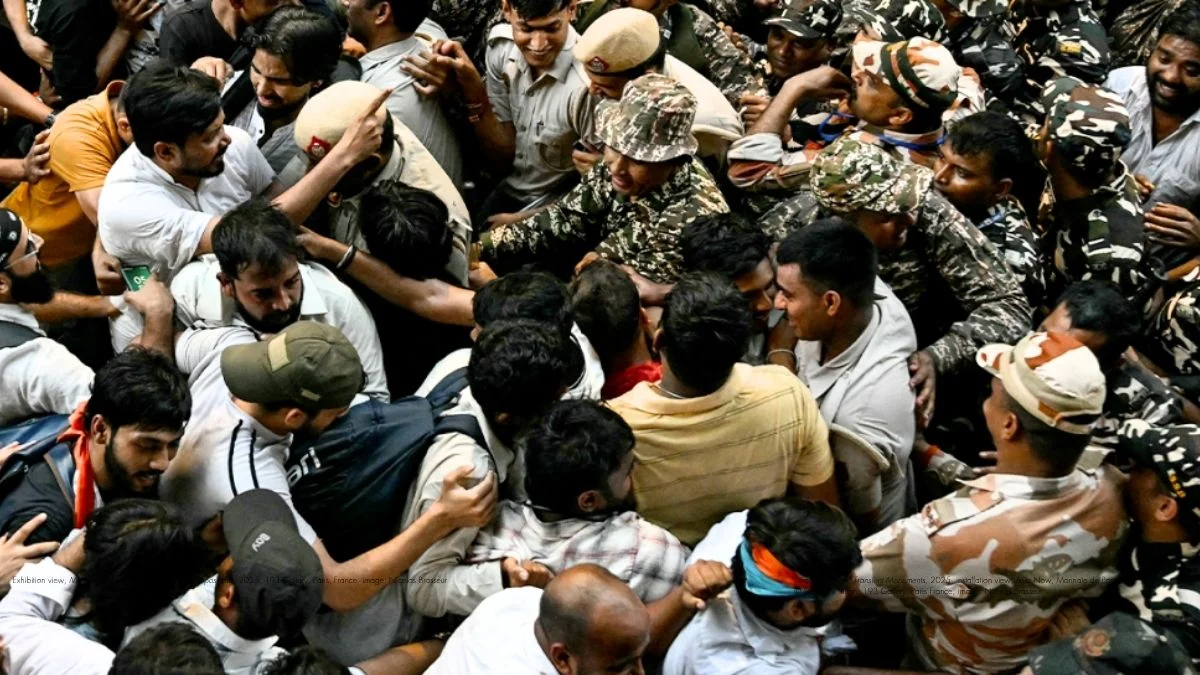
The protests took place amid restrictions imposed by Delhi Police, which had banned the demonstrations, closed metro stations, cancelled trains and restricted internet access within a four-kilometre radius
Reporters Without Borders (RSF), a global press freedom organisation, has called for an independent investigation into the detention of almost 40 journalists by police while covering protests against the revision of electoral rolls in New Delhi and other Indian cities on October 10 and 11.
In a press statement, RSF says that journalists were forcibly removed from protest sites, taken away on buses, beaten and detained for several hours. Some reported that their mobile phones and cameras were confiscated or damaged, while footage was allegedly deleted.
The statement adds that the protests took place amid restrictions imposed by Delhi Police, which had banned the demonstrations, closed metro stations, cancelled trains and restricted internet access within a four-kilometre radius.
Also Read: India slips to 136 on Press Freedom Index
According to RSF, several journalists says they were targetted despite displaying press identification and informing police that they were reporting on the demonstrations.
Jagriti Trisha, a reporter with online news outlet Boom Live, told RSF that police seized her mobile phone while she was filming the arrest of protesters. She said she was then forced onto a bus and taken to the Yamuna Sports Complex, which was being used as a detention centre. She was released after lawyers intervened, according to RSF.
Vivek Gupta, a journalist with The News Minute, reported that police confiscated his recording equipment while he was filming the arrest of a female protester. He was taken to Zafarabad police station, around 50 km away, and his camera was later returned without its battery or memory card and in a damaged condition. Ryan Thomas of The Caravan magazine also told The News Minute that police beat him and threatened him with the butt of a gun while forcing him onto a bus.
RSF says some journalists were prevented from leaving their hotel rooms, while others were detained while travelling to protest sites. The organisation also questioned the enforcement of police guidelines issued before the demonstrations that required reporters to display their press cards.
RSF says that the incidents occurred despite a Supreme Court order dated October 11, which had stated that journalists must not be obstructed while performing their duties.
Also Read: India ordered 200,000 online content takedowns in 4 months: RSF
RSF urged the authorities to return seized equipment, compensate journalists for equipment destroyed and investigate allegations of arbitrary detention and police violence.
“Around 40 journalists were arrested in the space of two days. Some report having been brutally detained, beaten, humiliated, dragged along the ground, having their clothes torn, or having their cameras broken or confiscated by the police. RSF condemns a crackdown of unprecedented scale, with extremely worrying attacks on press freedom in the so-called ‘world’s greatest democracy’. These unacceptable actions against reporters who are simply doing their job cast a harsh light on the authoritarian drift of a government that is attempting to stifle information by any means necessary. The Indian authorities must respect the free practice of journalism and citizens’ right to information. RSF calls on them to return all seized equipment as a matter of urgency, to compensate for any equipment destroyed, and to ensure that journalists can cover the protests freely and safely. The organisation also calls for an independent investigation into the arbitrary arrests and acts of violence committed against journalists by the police,” says Célia Mercier, Head of the South Asia Office at RSF.