
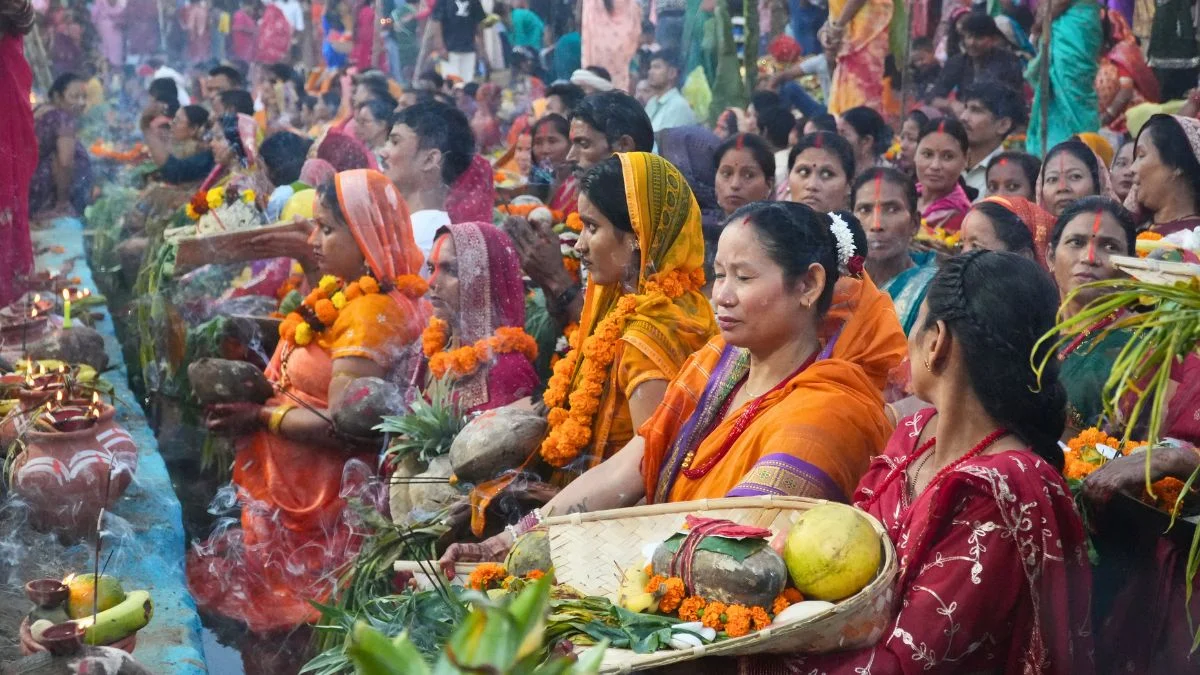
Devotees line up at the edge of a specially-constructed pond in Begumpur in South Delhi, offering prayers to the rising sun during 'Usha Arghya' (Photos: Media India Group/Amit Singh)
Amid rising visibility and observance of Chhath Puja, a tradition mainly from eastern Uttar Pradesh and Bihar, media around the country have been flooded with the images of thousands of devotees gathering at riverfront across the nation to offer prayers.
In Delhi, the central celebrations were held on the banks of the Yamuna River, its pollution notwithstanding. However, for thousands of other devotees, who were not able to access the river, smaller waterbodies, including ponds specially made for the Puja, observed the festival within their localities and one such prominent site was Begumpur near Malviya Nagar in South Delhi.
With baskets of fruits and traditional offerings, devotees, mainly women, observing a rigorous fast gathered at Begumpur that became a focal point of Chhath Puja celebrations held recently.
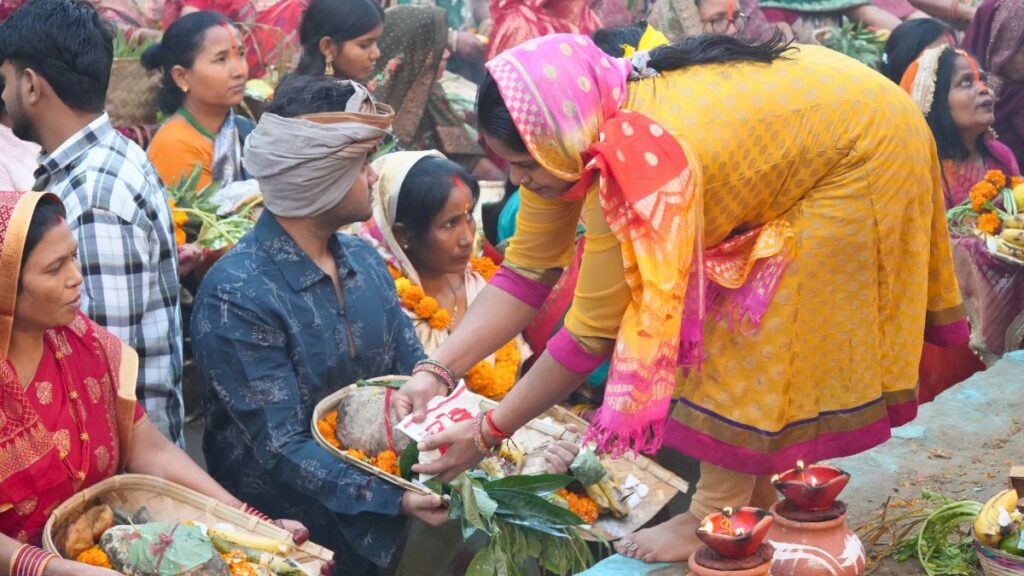
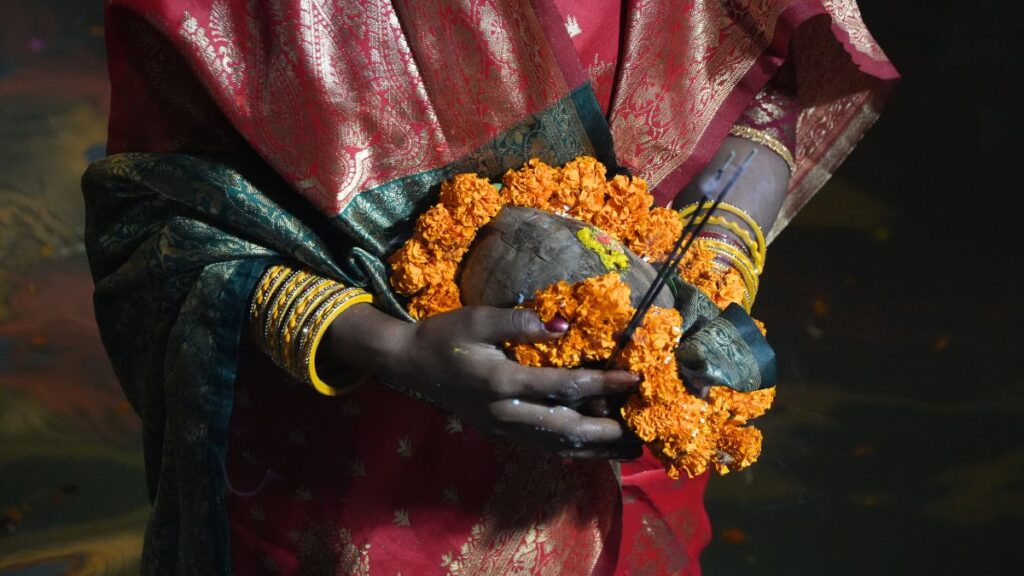
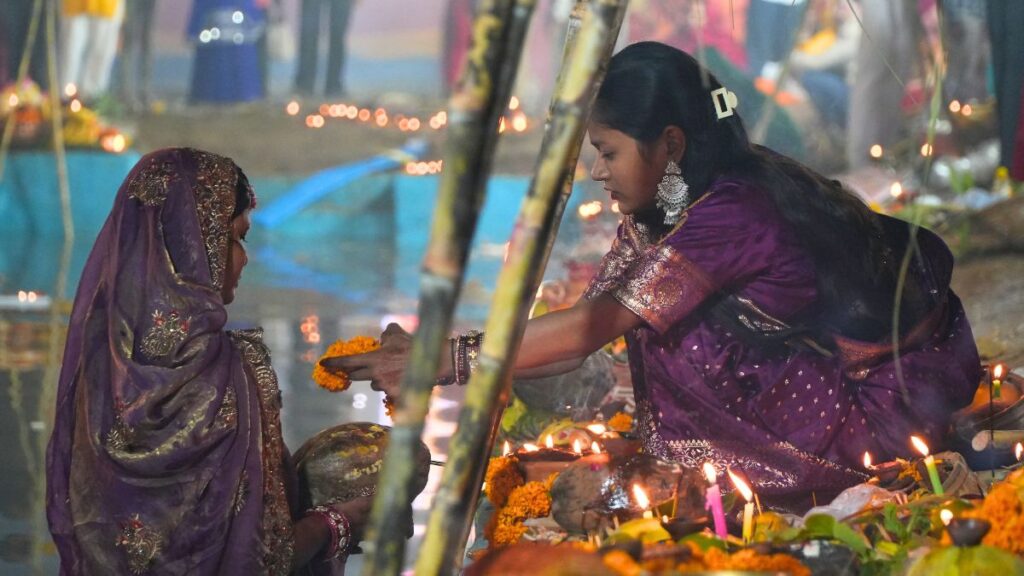
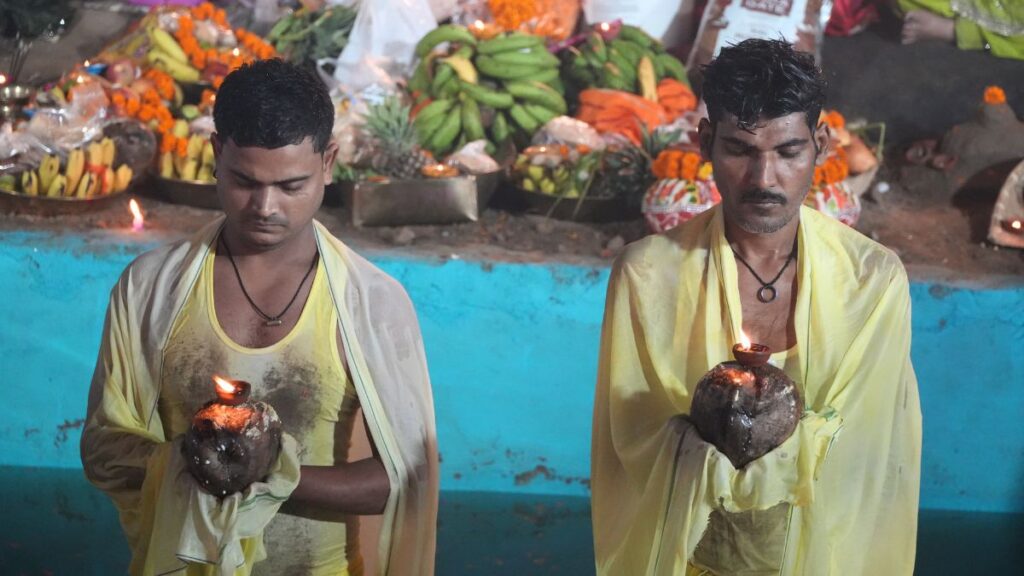
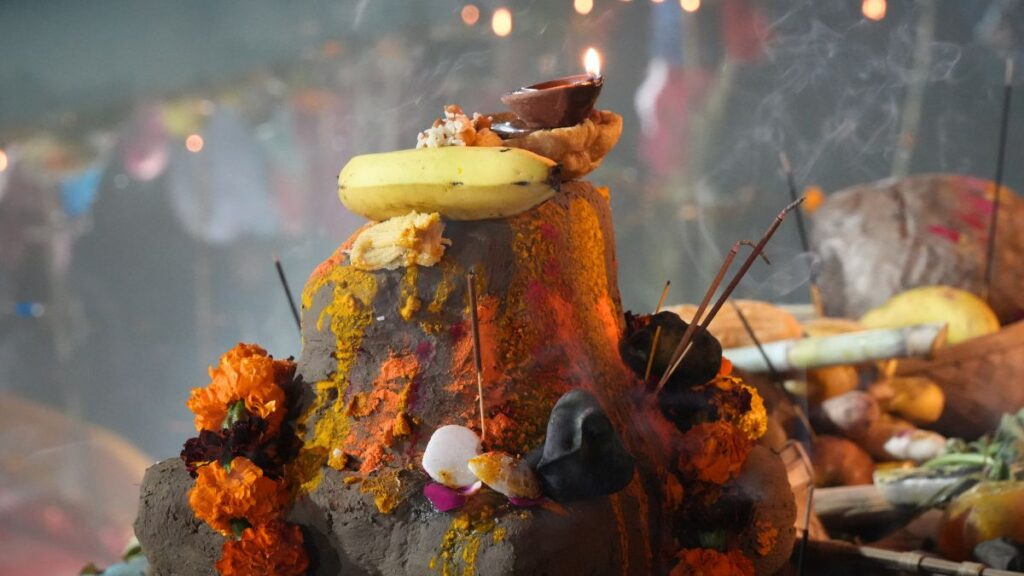

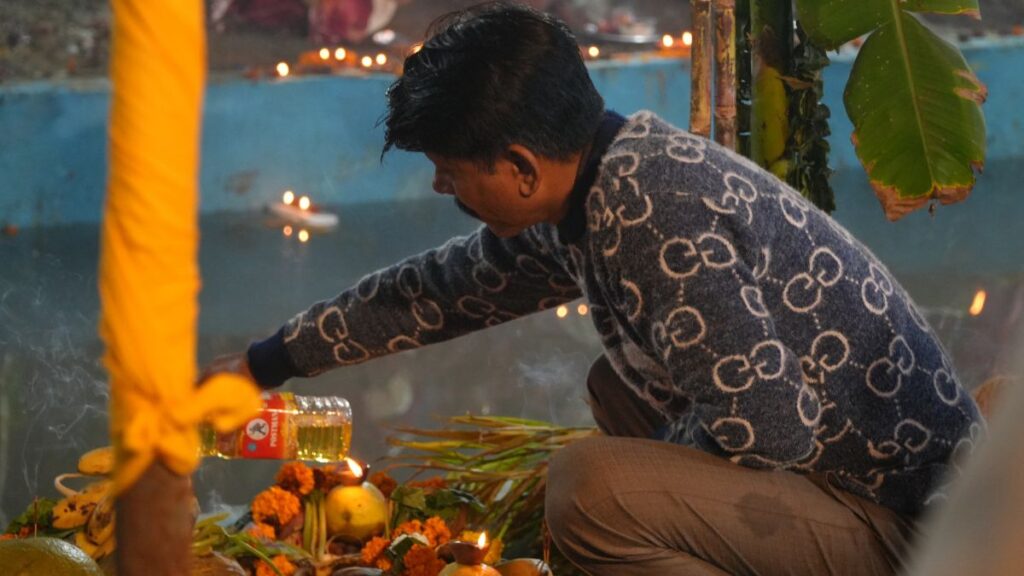
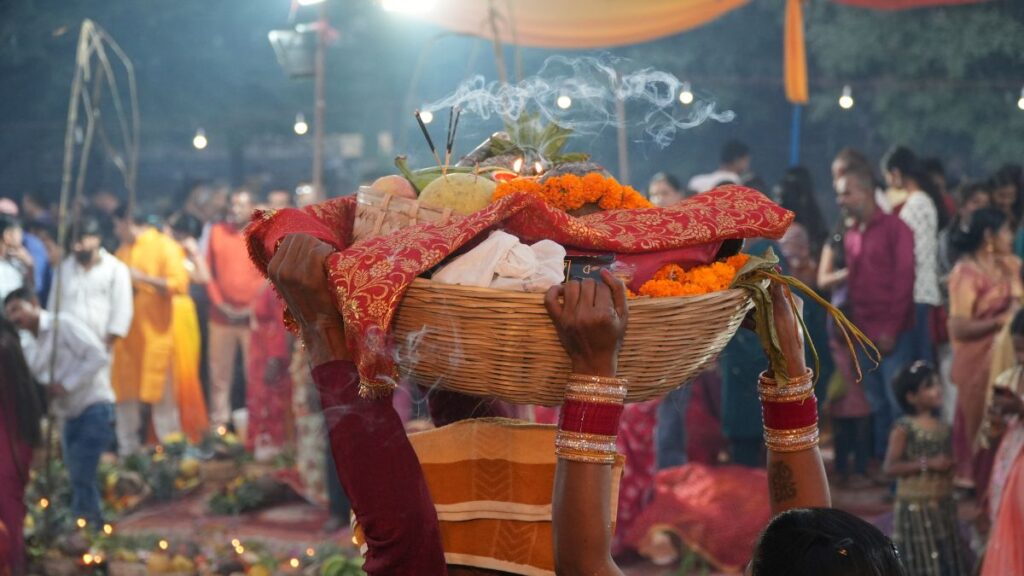

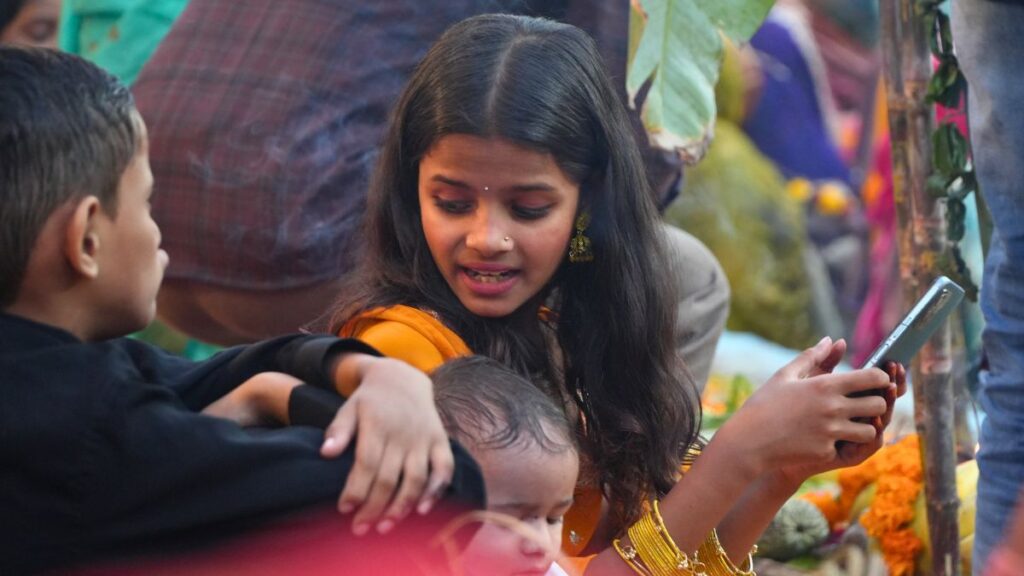

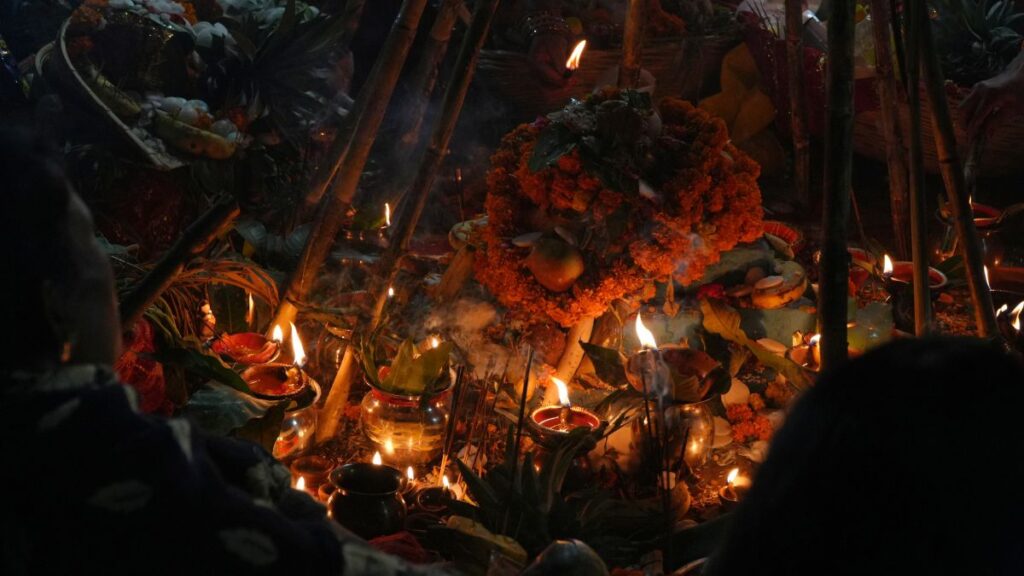

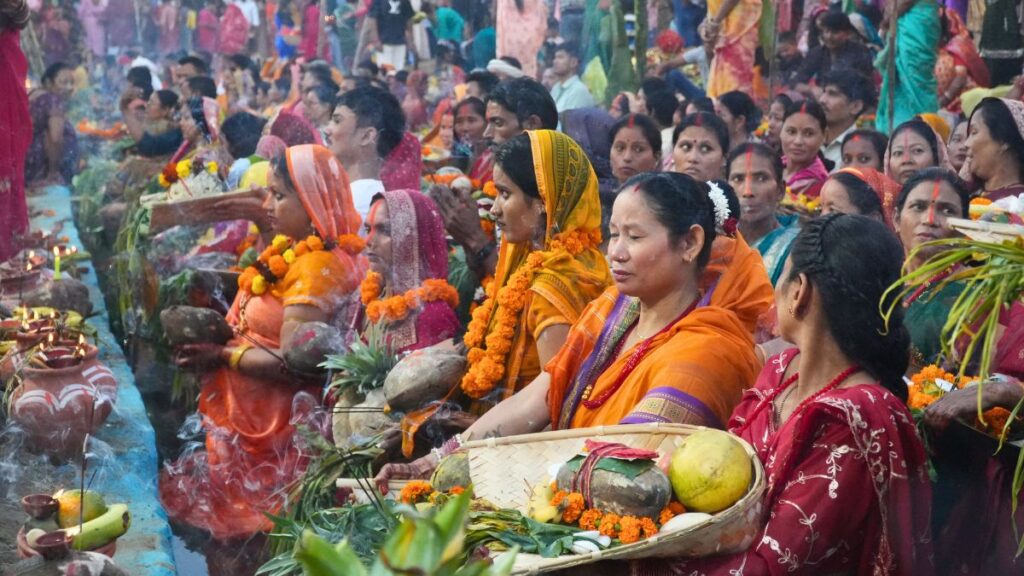
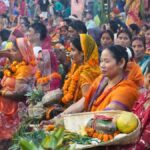
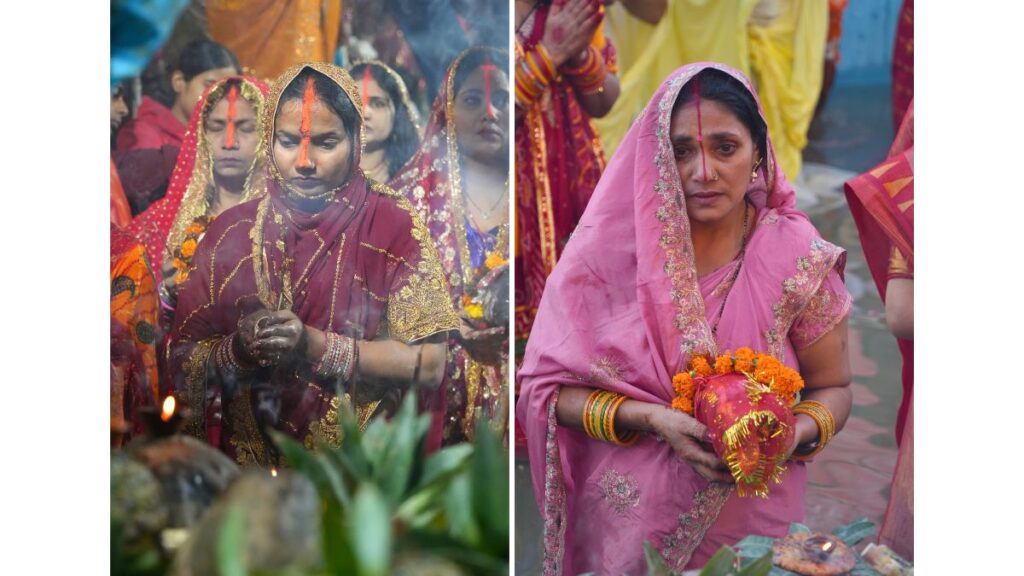

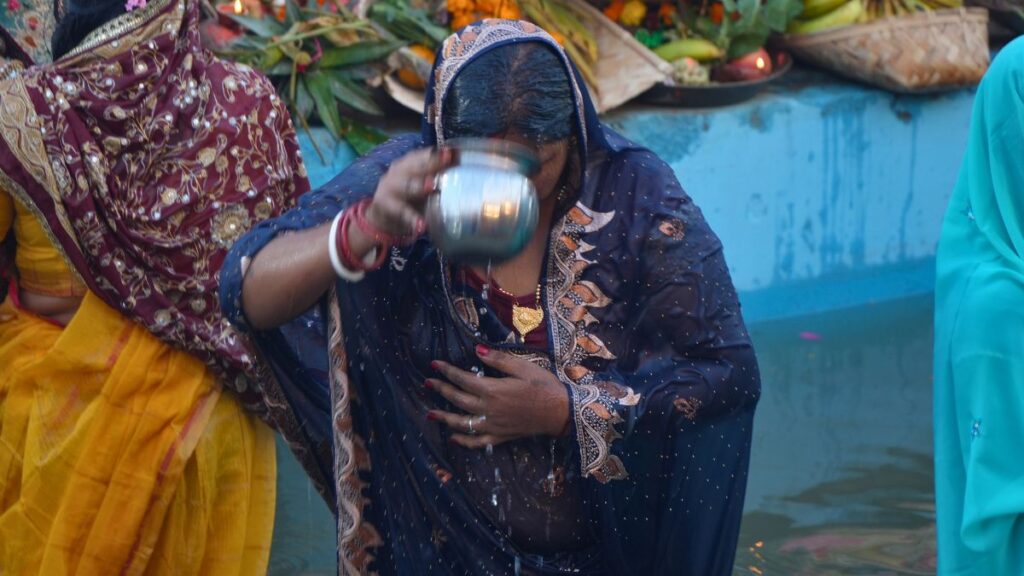

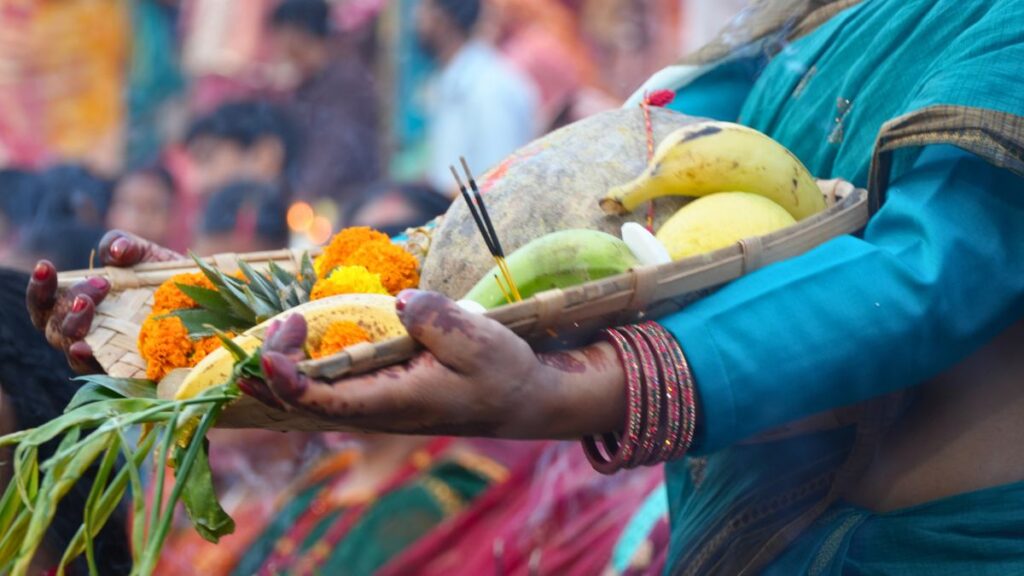
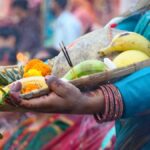
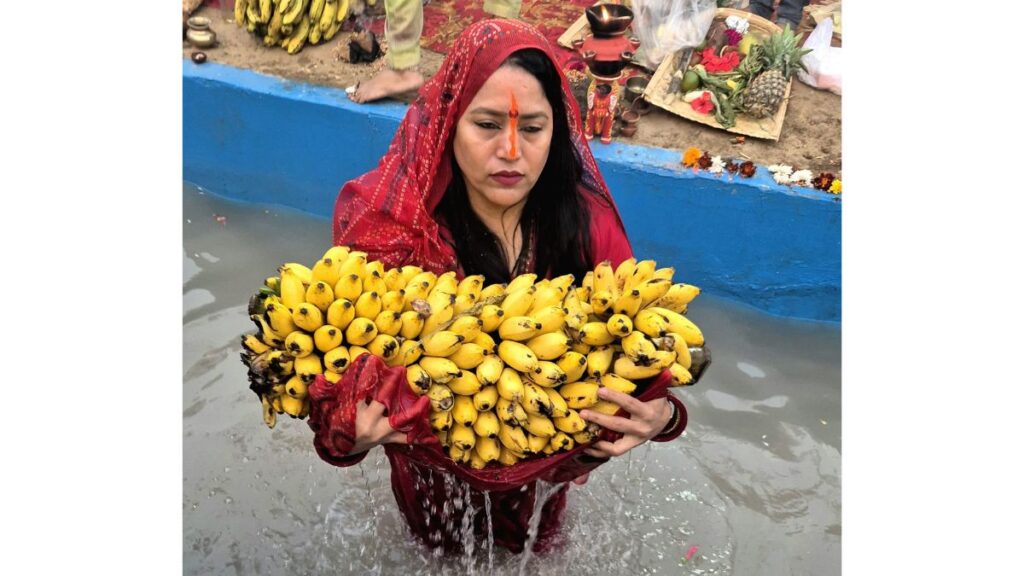

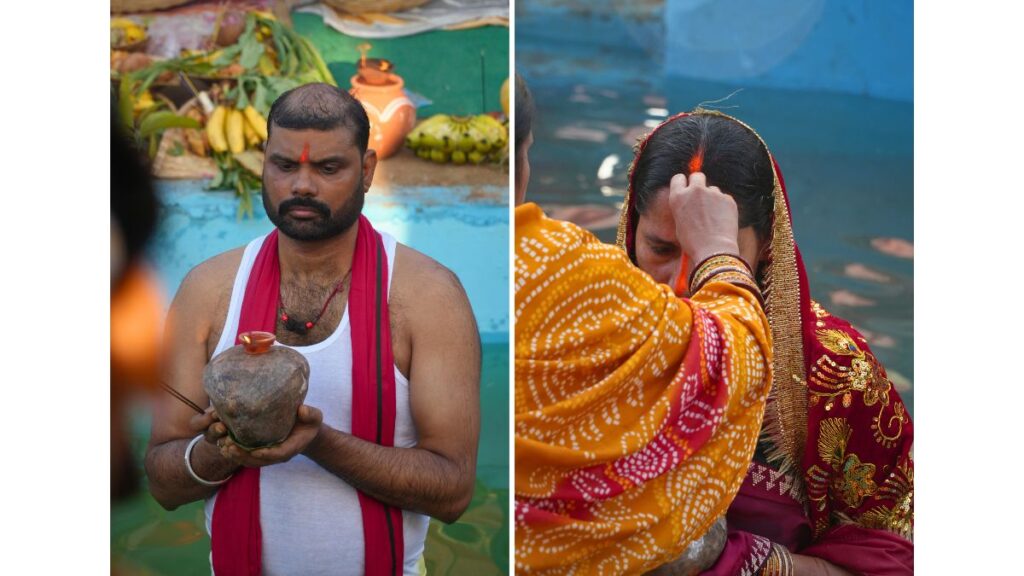

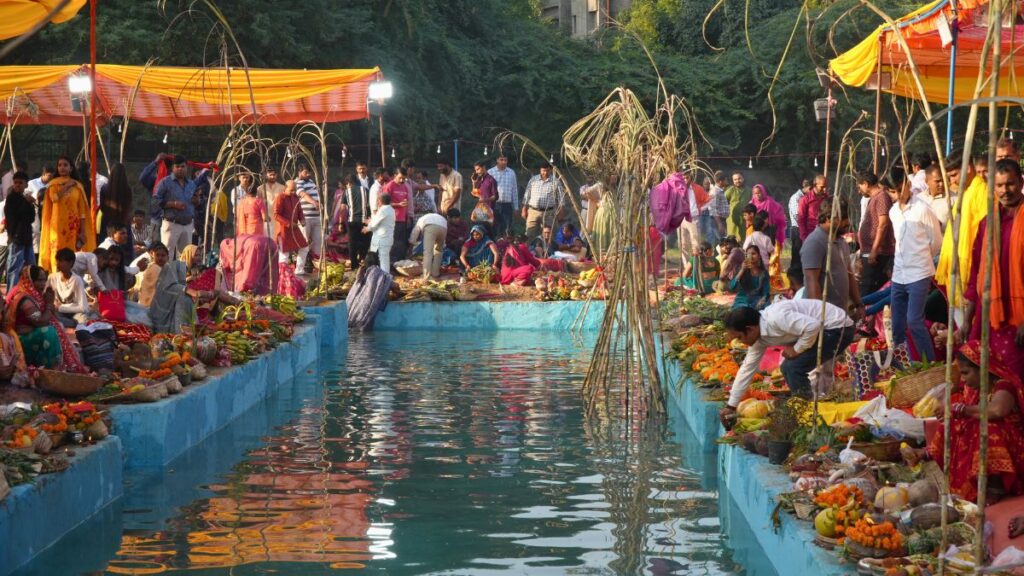

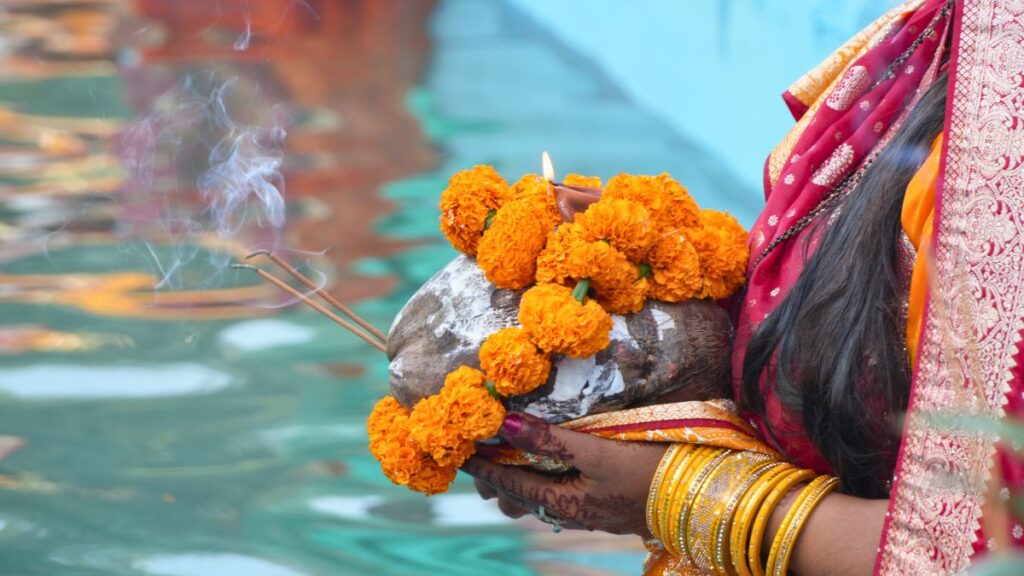
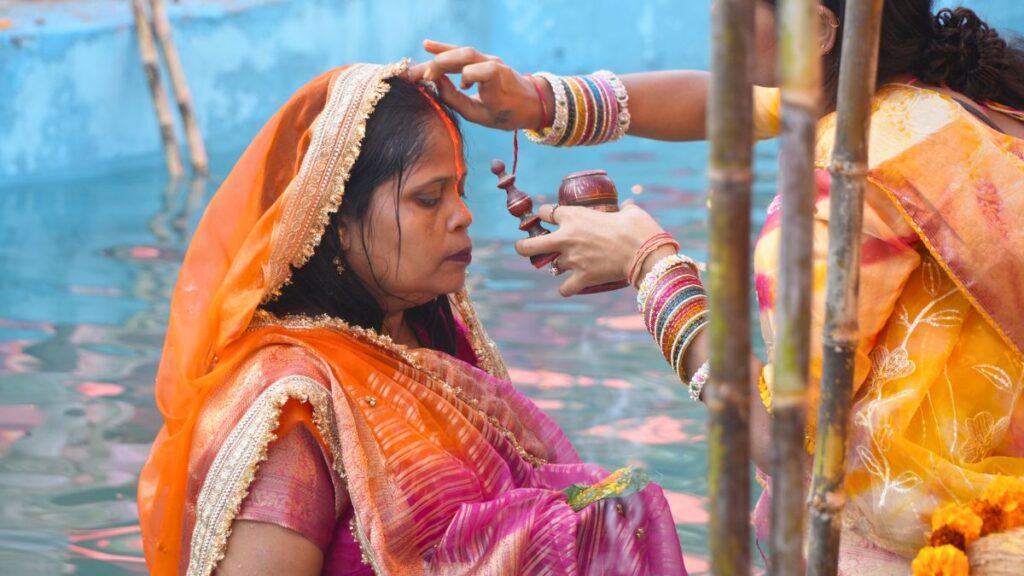
The devotees gathered at the ghat developed by the Municipal Corporation of Delhi (MCD), offering prayers to the Sun God and observing rituals that brought together families and communities. The celebrations reflected how people continue to preserve their traditions, adapting to the spaces and facilities available in the city.
For Preeti Rai, a resident of Malviya Nagar originally from Darbhanga in Bihar, Chhath Puja is not simply a festival but an emotion deeply rooted in the lives of the Bihari community.
“Chhath Puja is a very big festival for all Biharis. It is an emotion. Nobody can really explain what it is or why it holds such a special place in our lives. It has been a tradition for generations, and we become so excited that sometimes we cannot even express our feelings. That is why we say, Chhath is an emotion, not a festival,” she tells Media India Group.
For Rai, the devotion associated with Chhath is also reflected in the demanding 36-hour fast observed without food or water.
“Keeping a nirjala vrat (fast without water) for 36 hours is difficult. Imagine going an entire day without food or even water. It is not easy for anyone. But when something means so much to you emotionally, you find the strength to do it,” she says.
Having grown up witnessing the celebrations in Bihar, Rai says the experience of observing Chhath in Delhi is quite different from celebrating it in her native village. While the festival brings the community together in both places, the scale of participation and the facilities available at the ghats can differ.
“In our village, the entire community comes together. Celebrating with everyone, surrounded by family and people from the neighbourhood, is a completely different feeling,” she says.
She also points to the need for better facilities at the Delhi ghat, particularly regarding cleanliness, safety and arrangements for women observing the fast.
Also Read: Thousands celebrate Chhath Puja in Delhi with devotional dips in Yamuna
“The water is often not clean, and there are not proper changing rooms for women who need to change their clothes during the rituals. Even the tents and other arrangements are not always adequate. The facilities are not as good as they should be,” she says.
For many devotees, Chhath Puja is more than an annual religious celebration. It is a connection to their ancestral homes, family traditions and cultural roots. Celebrating the festival away from their native villages, the community recreates the familiar atmosphere of home through collective prayers and rituals.
For Kajal Yadav, a resident of Shivalik Colony in Delhi who originally hails from Basti in Uttar Pradesh, Chhath Puja is a celebration that has become an important part of her family’s life, even though it is not a tradition they have followed for generations.
“Chhath holds immense importance in our lives. It is one of the biggest festivals for people from Uttar Pradesh and Bihar. Every aspect of the festival is connected to our culture and reflects our devotion to God. Its significance is such that even people who do not belong to these communities have started observing it,” she tells Media India Group.
Yadav says her family began observing the festival around five years ago after learning more about its significance. She also describes the extensive preparations involved, which begin almost two weeks before the celebrations, with families arranging ritual utensils, offerings and new clothes for relatives.
“We start preparing almost two weeks before. Everything, from taking out the utensils to deciding what is needed and arranging new clothes for family members, is planned in advance. For us, Chhath is often even more special than festivals such as Diwali and Holi,” she says.
The celebrations unfolded over two important days. On November 15, devotees observed Sandhya Arghya, an evening prayer during Chhath offering prayers to the setting sun. The following morning, November 16, the festival concluded with Usha Arghya, morning prayer observed during last day of Chhath, when devotees gathered before sunrise to offer prayers to the rising sun.
The gathering at Begumpur reflected how traditions travel with communities, finding new homes in cities far from their places of origin.
A piece of Bihar in the heart of Delhi
Besides Bihar and eastern UP, Chhath Puja is also observed in Jharkhand and the plains of Nepal. Dedicated to the Sun God and Chhathi Maiya, the festival involves prayers, fasting and offerings made over four days.
For people living away from Bihar, finding a suitable place to perform these rituals is an important part of the celebrations. The ghat developed by the MCD at Begumpur provided a designated space for devotees to gather and observe the festival together.
Families arrived with traditional bamboo baskets, fruits, sugarcane and other offerings, while devotees prepared for the evening and morning prayers. The gathering brought together people of different generations, with children and elderly family members participating alongside those observing the fast.
For Gayatri Devi, who originally is from Deoria in eastern Uttar Pradesh, Chhath Puja is closely associated with the well-being and prosperity of her family. Having observed the festival for several generations, she considers it an important part of her family’s faith and traditions.
“Chhath Puja is a very significant festival. Its importance is beyond measure. We observe it for the happiness, peace and prosperity of our families,” she tells Media India Group.
Despite the physical demands of the fast, Devi says devotion makes the rituals easier to observe. She explains that although the fast is difficult, the faith associated with the festival helps devotees overcome its challenges.
“It is very difficult, but somehow you do not feel the hardship. When we begin the fast, we think about how difficult it will be, but for us, it does not feel that way,” she says.
However, she feels that celebrating Chhath in Delhi is different from observing it in a village, particularly when it comes to the facilities available at the ghats. Recalling her experience, she says the cleanliness and arrangements at the place where she observed the festival could have been better.
“The ghats in Delhi are different from those in villages. Where we perform the rituals, the ghat was not very good and the cleanliness was also not adequate. The arrangements were not as good as they should have been. But we had already undertaken the fast, so where else could we go? We had to complete the rituals,” she says.
Sandhya Arghya: Prayers to the setting sun
On November 15, the ghat filled with devotees for Sandhya Arghya, one of the most significant rituals of Chhath Puja. As the sun began to set, devotees entered the water and offered prayers, holding traditional offerings as part of the ritual.
The evening gathering reflected the collective nature of the festival, with families standing together, exchanging greetings and participating in prayers. For many, the occasion was also an opportunity to experience the traditions of their native villages in the middle of Delhi.
Usha Arghya: Welcoming the rising sun
The celebrations continued early on November 16 with Usha Arghya, the final ritual of Chhath Puja. Devotees returned to the ghat before sunrise to offer prayers to the rising sun, completing the festival’s rituals.
The morning gathering marked the culmination of the celebrations, bringing two days of devotion and community participation to a close. For devotees, the completion of the rituals also represented the continuation of a tradition that connects families across generations and geographical boundaries.
