
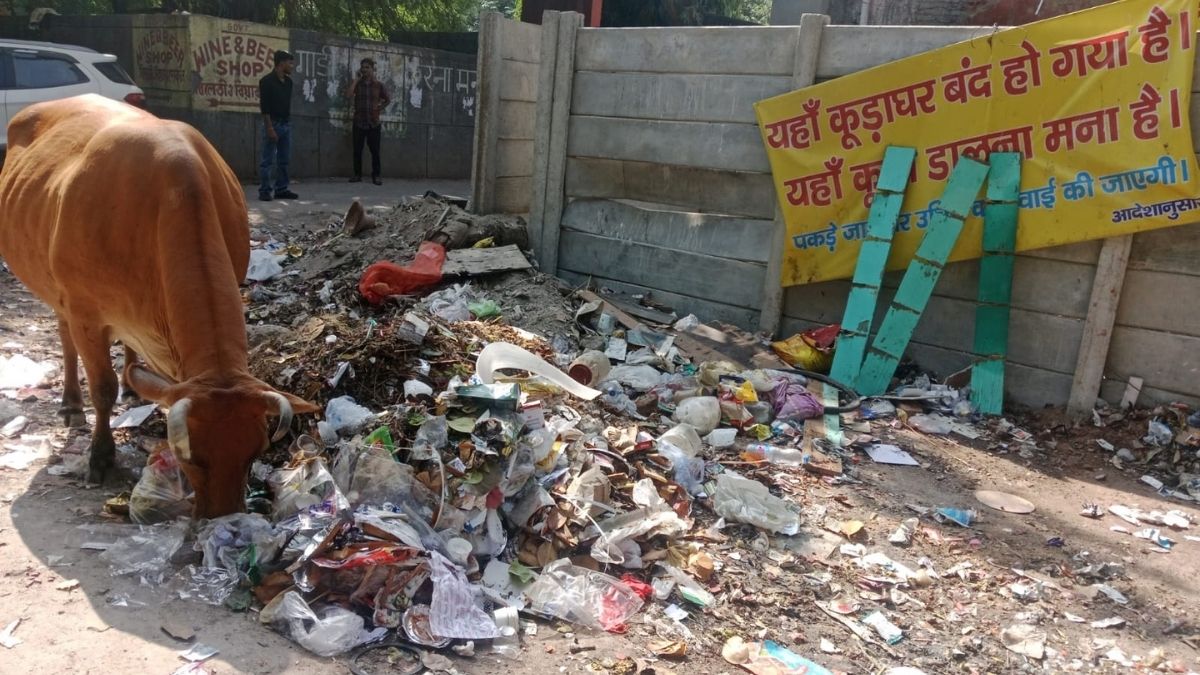
Mounting piles of garbage have been strewn in streets all over the national capital (Photos: Media India Group)
Delhi has a mounting garbage problem, again. And this time it is entirely the creation of the very same organisation that is mandated to deal with household waste management.
For over a month, mounting piles of garbage have been strewn in streets all over the national capital, with the usual exception of the Lutyens Delhi, as the existing garbage collection and handling points in most areas of the city have been demolished and closed off by the Municipal Corporation of Delhi (MCD), with a clear warning displayed on big banners telling residents that the garbage collection point has been shut and depositing garbage there would be penalised with hefty fines.
Residents and local eateries, which are amongst the most common users of these garbage collection points, have remained clueless about what to do with the daily household waste that is generated and have been left with no option but to dump the garbage on the streets just in front of these collection points, creating a pile just under the banner warning them against dumping garbage there.
Also Read: Ever-growing garbage hills of Delhi
For residents, the problem began when the garbage points they had depended on for years were suddenly closed or made unavailable, without any warning or public consultation and certainly without a notice to the local residents and commercial establishments. While the Municipal Corporation of Delhi says it is replacing or converting some traditional garbage points as part of changes to the city’s waste-management system, residents say the immediate question of where their daily waste should go was not adequately addressed before the closures.
Nearly a month on, the absence of an accessible alternative has become a source of frustration in affected neighbourhoods. Households continue to generate waste every day, but the disposal points that previously served them are no longer available.
In Sukhdev Vihar, in South Delhi for instance, the MCD has submitted an action plan before the National Green Tribunal for converting an existing collection point on Main Public Works Department (PWD) Road into a fixed compactor transfer station. The civic body has also indicated that the existing facility cannot simply be shut before an alternative arrangement is ready as it currently serves the surrounding locality.
A similar situation has been reported in Sarita Vihar, where garbage accumulating outside a children’s welfare facility and spilling onto the road came under scrutiny. The MCD reportedly says the site would be converted into an enclosed compactor station, but in the interim, without a replacement point within a reasonable distance, people are left to find their own ways of managing it.
For Sonam Mishra, a Delhi resident and Vice Chairman at Sulabh International School of Action Sociology and Sociology of Sanitation, the lack of designated garbage disposal points is creating difficulties for residents.
Also Read: From feast to waste: India’s wedding food crisis
“Waste management is a critical civic issue that needs immediate attention. When there is no designated and accessible place for residents to dispose of their garbage, people are left with little choice but to put the waste on roadsides or in nearby open spaces. This quickly turns into an unhygienic and unpleasant situation,” Mishra tells Media India Group.
Another Delhi resident, Nirmal Verma, an IT Manager, says residents are sometimes forced to keep their waste inside their homes after a nearby garbage point is closed.
“Now we have to keep the garbage at home for some time. Many times, when there is no alternative place nearby, people are forced to dispose of the waste on the roadside or in another nearby garbage bin,” Verma tells Media India Group.
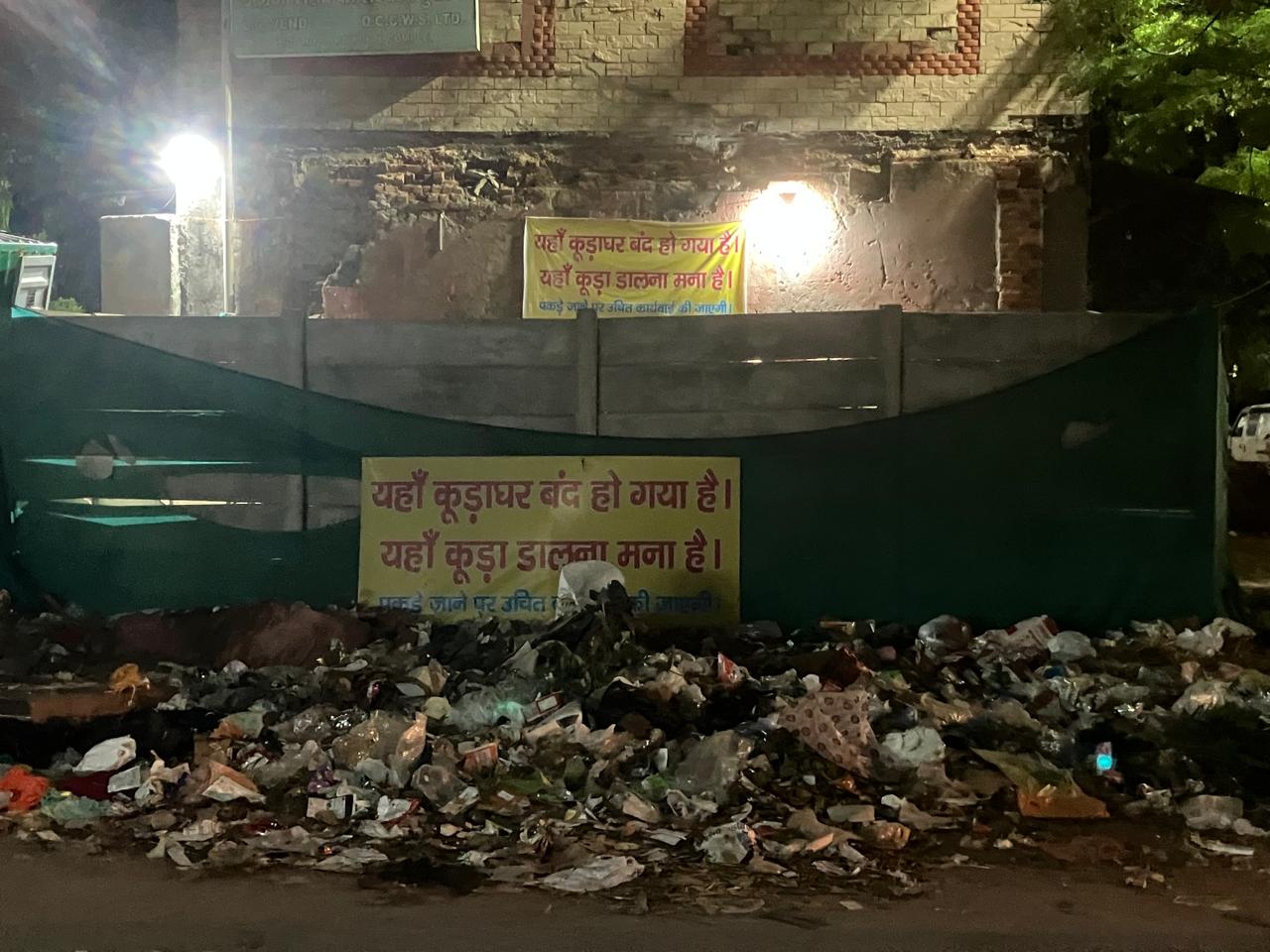
The absence of an accessible alternative has become a source of frustration in affected neighbourhoods
The frustration is also linked to the lack of clear information. Residents say they have not always been told where they should take their waste once the familiar garbage point is shut.
“In many places, people have not been clearly informed where they should dispose of their garbage after the bin is closed. Even where alternative arrangements have been made, the information has not reached all residents,” Verma says.
The result is that garbage is increasingly finding its way onto roadsides, vacant spaces and other nearby locations. Open drains can also become affected when residents have no designated place to dispose of waste.
Also Read: Haridwar waste crisis returns after Kanwar Yatra
“In some places, garbage has started accumulating along roadsides and in vacant spaces. This has increased the problem of dirt and foul smell,” says Verma.
For residents, this is particularly frustrating because the garbage has not stopped being generated simply because the disposal point has been shut. The waste has instead become a problem that households and neighbourhoods have to deal with themselves.
Although garbage collection vans operate in different areas, residents say the collection system is not always sufficient to cope with the volume of waste generated in large and densely populated localities.
“Although the MCD provides garbage collection vans in various areas, one vehicle may not be sufficient to serve a large and densely populated locality. When collection is delayed or inadequate, garbage accumulates at nearby spots and gradually becomes a major public-health and sanitation concern,” says Mishra.
Where collection is delayed, waste can remain around homes and public spaces for longer periods. Residents say the accumulation has also brought foul smells, flies, mosquitoes and stray animals into the affected areas.
“The heaps of waste create a foul smell, making it extremely difficult for pedestrians and residents to pass through or live near these areas. The accumulation of garbage also attracts flies, mosquitoes and other pests, increasing concerns about cleanliness and public health,” Mishra tells Media India Group.
Also Read: 70 pc waste pickers in Delhi faced severe income loss: PPC-PIC report
Mishra says the civic body needs to address the immediate problem rather than leaving residents to manage the consequences.
“We sincerely hope that MCD will take this issue on a priority basis and strengthen the waste-collection system wherever required. Additional collection vehicles, more frequent rounds, properly designated disposal points and regular monitoring could help prevent garbage from being dumped on roads and in open spaces,” she says.
She adds that residents should not be expected to manage the consequences of inadequate arrangements on their own.
“A clean Delhi requires not only responsible citizens but also an efficient, accessible and responsive waste-management system. Residents should have a safe and dignified way to dispose of their waste, and no neighbourhood should be forced to live amidst overflowing garbage and foul-smelling waste,” she adds.
The situation has also increased pressure on local councillors, who are often the first point of contact for residents dealing with overflowing waste in their neighbourhoods. Residents expect councillors to raise complaints with the MCD, seek clarity on where waste should be taken after a garbage point is closed and push for immediate collection from areas where waste has started accumulating.
They also expect local representatives to communicate any alternative arrangements clearly, particularly when an existing point is shut. But it seems that the councillors are as much in the dark about MCD’s plans as the residents are. In the meanwhile, new garbage heaps continue to spring up all over Delhi, with only the residents left to themselves to face the consequences.
