
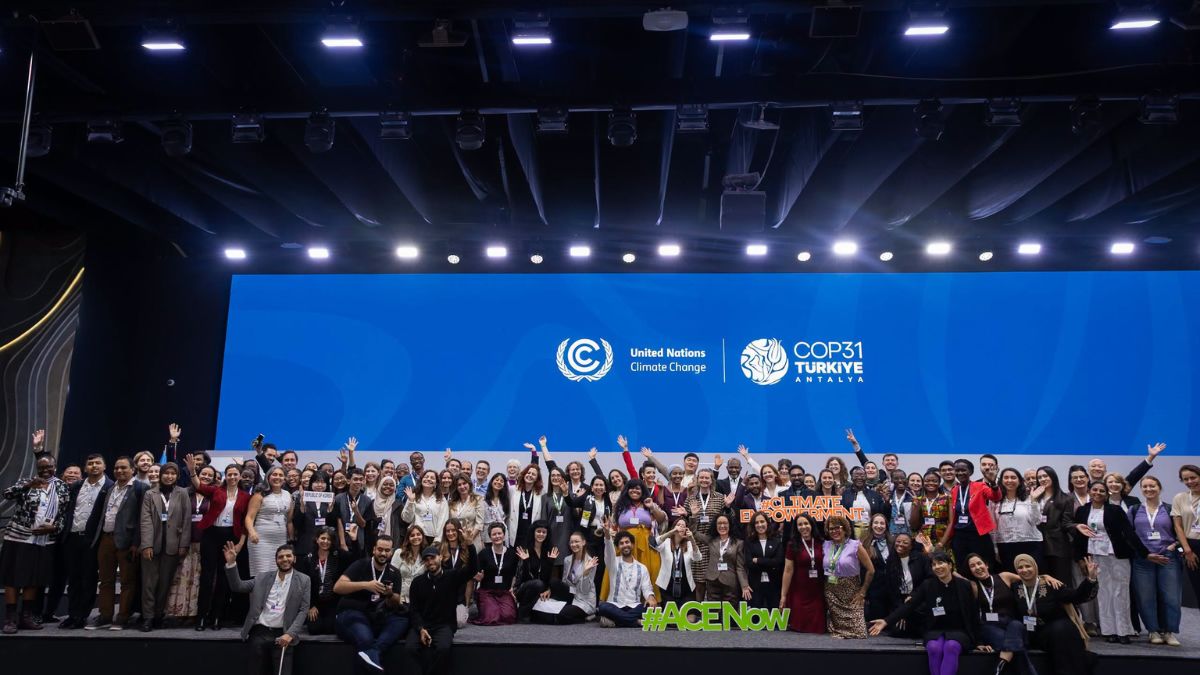
COP31, currently going on at Antalya in Turkiye, has ended in an uneasy calm
The first week of Climate Change Summit, COP31, currently going on at Antalya in Turkiye, has ended in an uneasy calm. The real storm could begin now as Environment and Climate Ministers take over the negotiations.
Yet, besides the metaphoric storm in the negotiating rooms, several real storms have already been playing havoc outside the COP31 site, all around the world as a series of extreme climate incidents have led to extreme heat, melting glaciers, devastating floods, disrupted harvests and mounting global water and food insecurity. Nature does not negotiate extensions, instead it responds to accumulated human inaction.
Opening the climate change meet, UN climate chief Simon Stiell urged countries to supercharge solutions, including electrification and methane reductions. Swedish youth icon Greta Thunberg said that the planet was not dying; it was being killed! And soon-retiring UN Secretary General Antonio Guterres said that one cannot build peace on burning planet.
Also Read: Over 700 organisations demand Just Transition mechanism at COP31
The question is whether all these statements have overtones or underlying leadership to lead the discussions in the right direction.
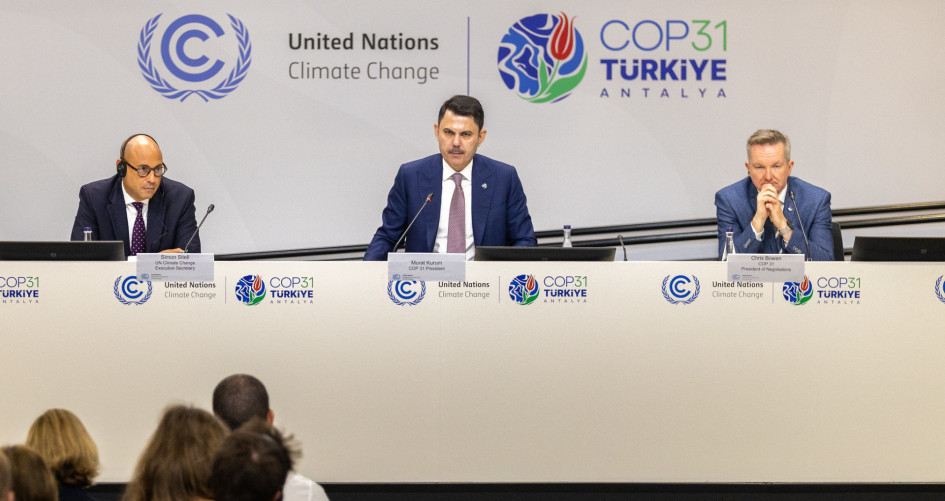
UN climate chief Simon Stiell urged countries to supercharge solutions, including electrification and methane reductions (Photo: Credit: Kubilay Ciftci | UN Climate Change)
The first week showed why an implementation COP must be judged differently from a conference that merely produces slogans, priorities and an agreed text. The difference between moving paragraphs and moving emissions is enormous.
Days of technical movement, political hesitation
The deliberations reveal substantial technical effort, but also familiar divisions. Parties completed subsidiary-body work on adaptation communications, reporting support and gender. They advanced texts and passed unresolved issues to ministers. Agriculture, central to food security and rural livelihoods, was effectively pushed towards a decision in 2027.
Negotiations on climate finance, the elephant in the room, exposed the rapidly rising elephantine gap between financial architecture and accessible money. On the Global Goal on Adaptation, parties still need to convert indicators and targets into resources and protection. The just-transition discussions face a defining test, of whether the proposed Belém–Antalya Mechanism help workers and communities, or become another platform for dialogue without delivery? The future of the mitigation work programme and the transition away from fossil fuels remain politically contentious.
The empty finance announcements, weak arrangements for ‘just-transition’, unequal electrification, neglected oceans and the risk that artificial-intelligence data centres compete with essential electricity needs, all these expose a reality that climate action must be fair, funded and faithful.
‘The Point of Return’ has a number !
Titled The Point of Return, UNEP’s 2026 Emissions Gap Report, offers an unusually stark arithmetic of survival. Its lowest-overshoot pathway requires global greenhouse-gas emissions to fall 18 pc by 2030, 45 pc by 2035 and 69 pc by 2040, all compared with 2025. Full implementation of existing NDCs would deliver only 5–8 pc reductions by 2030 and 11–15 pc by 2035. The gap is not rhetorical; it is as measurable and visible as rhinocerotic open jaw!
Also Read: COP31 Presidencies outline key climate priorities ahead of ministerial negotiations
The UNFCCC’s assessments of NDCs, transparency reporting (BSR) and national adaptation planning (NAP) sharpen the same question on who will actually deliver the transformations written into national commitments? Reporting is essential, but a report does not retrofit a building, it does not finance a village water system or train a technician.
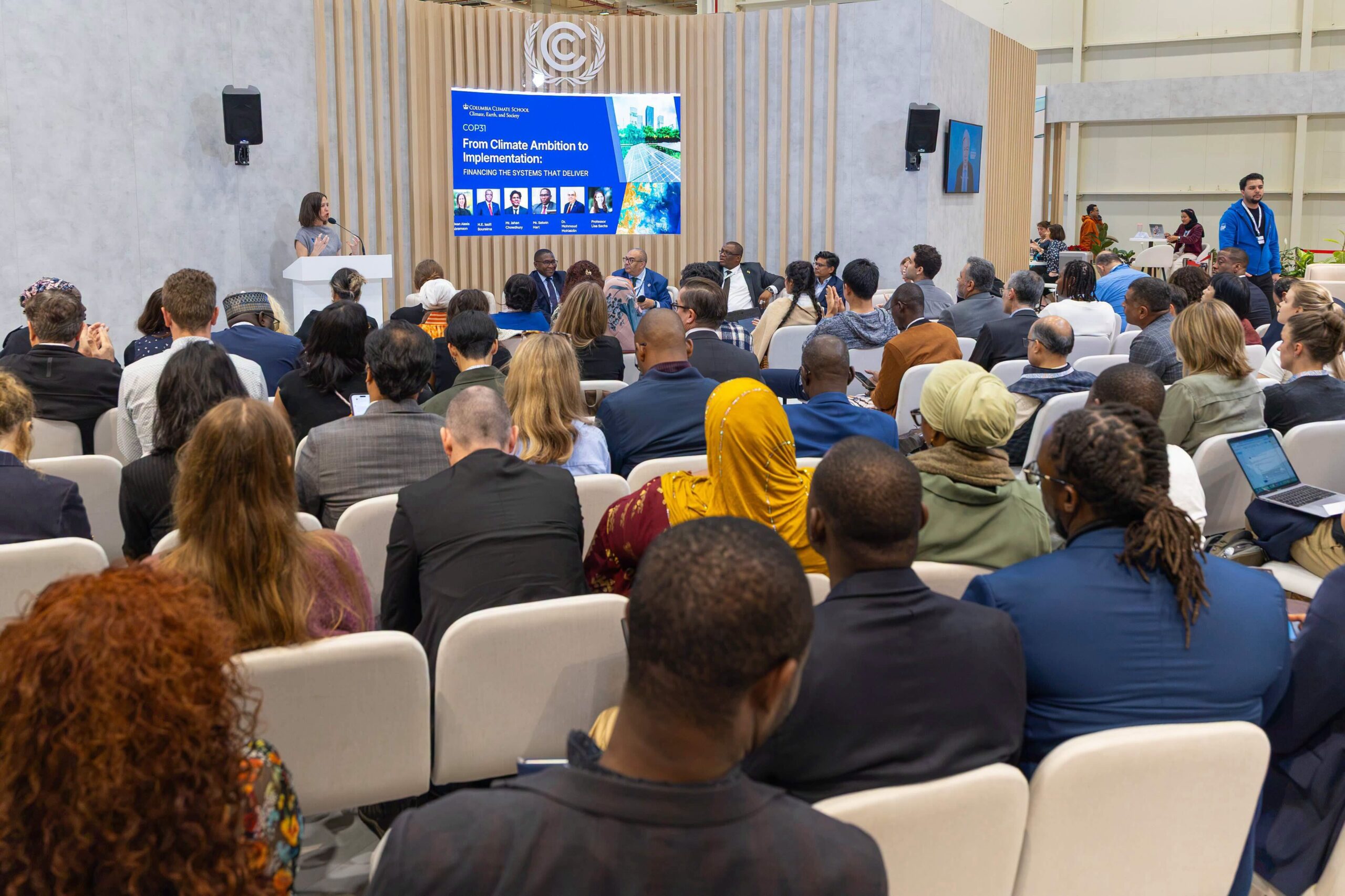
On the Global Goal on Adaptation, parties still need to convert indicators and targets into resources and protection
The world is not short of targets. It is short of institutions and human capital capable of turning targets into verified outcomes.
A lesson and a warning from Kigali
Just days before COP31, the Montreal Protocol’s 38th Meeting of the Parties concluded in Kigali, 10 years after the Kigali Amendment. Parties agreed to replenish the Multilateral Fund for 2027–2029 with USD 695 million, including USD 360 million in new contributions and USD 335 million in carryover resources. They adopted 22 decisions, including steps on HFC-23 emissions and refrigerant destruction technologies to mitigate GHG emissions and the impact of forever-chemicals.
This is the power of an environmental agreement with a dedicated financial mechanism, scientific and technical assessments, national implementation institutions and industry participation, strengthened by UNEP. During my years leading UNEP OzonAction, I learned that compliance is built long before the final diplomatic handshake, through training, technology transfer, enterprise-level change and persistent national support.
Yet Kigali was no victory parade. Parties could not agree on important arrangements for additional atmospheric monitoring stations or stronger implementation tools. It proved that even a comparatively successful treaty must keep renewing its capacity to succeed.
The larger lesson for negotiators at Antalya is not to copy the Montreal Protocol mechanically into the much wider climate regime. It is to connect the institutions of climate, ozone, biodiversity, land and water without diluting their mandates. Cooling alone illustrates the intersection, with refrigerants, energy efficiency, heat resilience, electricity demand and public health and now AI data centres cannot sensibly be managed in separate silos.
Also Read:UN wildlife summit COP15 expands protection for migratory species
The five decisions ministers cannot postpone
Second-week leadership should be measured against five tests. First, turn climate finance promises into predictable, accessible and appropriately grant-based support, especially for vulnerable countries.
Second, give the Global Goal on Adaptation a credible implementation route that includes baselines, milestones, locally relevant indicators and resources.
Third, translate the energy transition into renewable power, efficiency, sustainable cooling, grids and equitable access, and not simply a headline electrification percentage.
Fourth, make just transition an engine of livelihoods and skills, with workers, young people and communities shaping the mechanism.
Fifth, strengthen cooperation among environmental agreements and implementation agencies while avoiding duplicate reporting burdens.
These are not five separate bargaining chips. They form one system. Finance without skills simply stalls; technology without institutions grossly fails; adaptation without community ownership remains fatefully fragile. The two Presidencies of COP31, Türkiye and Australia- should use their complementary roles to bridge these interdependencies rather than settle for the lowest common denominator.
The Third Way: Partnership powered by Gen Z
The stalled negotiations in climate change point to the need for looking at a different approach to negotiating. Traditional diplomacy moves from the top down as governments negotiate targets, responsibilities and finance. Voluntary action rises from the bottom up as campuses, cities, communities and corporates experiment with solutions. Both are indispensable; neither is sufficient by itself.
Smart Campus Cloud Network (SCCN), now a global movement of Third Way, connects the top-down and bottom-up through institutions, practical learning and accountable partnerships.
In the second week of COP31 in Antalya, Smart Campus Cloud Network (SCCN), in collaboration with YOUNGO Energy, a constituency of the UNFCCC, is advancing a third way to develop a ‘chip’ of Gen Z ‘humanware’, or University Determined Contributions (UDCs) as a voluntary implementation pathway. They are not a new category under the Paris Agreement and do not replace national NDCs. Their value is to accelerate NDCs by raising the human capital, or educated youth and the educational institutions that NDC delivery requires.
A campus is a micro-city. Students can measure Scope 1, 2 and relevant Scope 3 emissions, design energy and cooling improvements, manage water and waste, track progress and share replicable solutions.
SCCN’s network of more than 640 institutions in 22 countries provides a mobilisation platform, every member has already delivered the UDCs.
Graduates carry those skills into municipalities, industries, farms and public administration. Learning by doing becomes accelerating by sharing: from campus to community to country.
Also Read: COP30 President’s proposed climate agenda reforms not enough: NGOs
A different measure of COP success
Antalya’s final decisions will matter. So will the credibility of finance, the protection of vulnerable communities and the direction of the energy transition. But the deepest test is whether COP31 leaves countries with more capacity to implement what they have promised.
Nature will not read ‘cover decisions’, instead it registers emissions, land-use changes and the resilience, or fragility of living systems. The Point of Return will not be reached by diplomacy alone, nor by voluntary action without governmental responsibility. It requires their purposeful convergence.
The world is running out of time, but the Universities have not run out of talent. Let Antalya turn that untapped talent into the humanware needed to build the climate infrastructure that can put the world on the path to climate healing, just as it undertook the historic journey of repairing the ozone hole almost four decades ago.
(Rajendra Shende is a former Director UNEP, Founder Director Green TERRE Foundation, coordinating lead author, IPCC that won Nobel peace prize, Prime Mover SCCN, IIT Alumnus. The views expressed here do not necessarily reflect those of Media India Group.)
