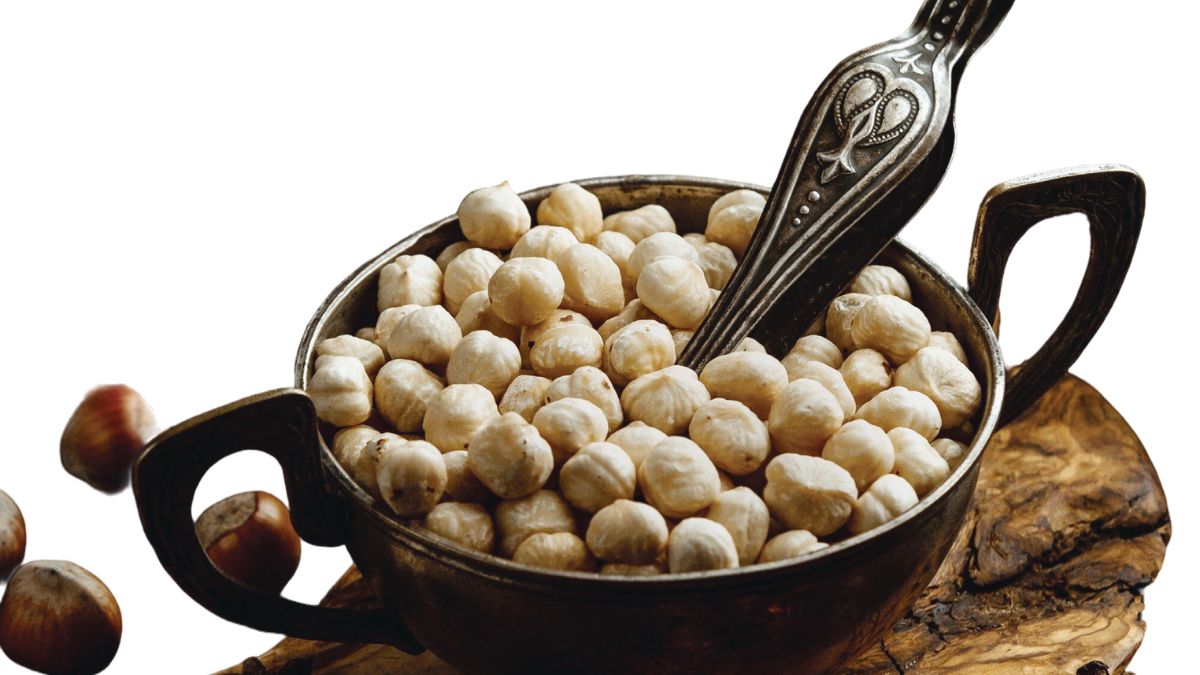
Once associated mainly with traditional Indian diets and fasting, makhana is gaining popularity as an everyday snack
For generations, makhana or fox nuts or Lotus seeds has been associated with fasting, festivals and traditional Indian households, particularly in Bihar. Today, the aquatic seed is increasingly being positioned as a healthy and convenient snack, finding space alongside nuts, chips and other packaged foods.
India accounts for around 90 pc of global makhana production, with Bihar contributing around 90 pc of the country’s output, according to an Indian Council for Research on International Economic Relations (ICRIER)-Agricultural and Processed Food Products Export Development Authority (APEDA) study. Bihar’s cultivation area rose from 130 sqkm in 2012-13 to 350 sqkm in 2021-22, while popped makhana production increased from 9,400 tonnes to 23,700 tonnes.
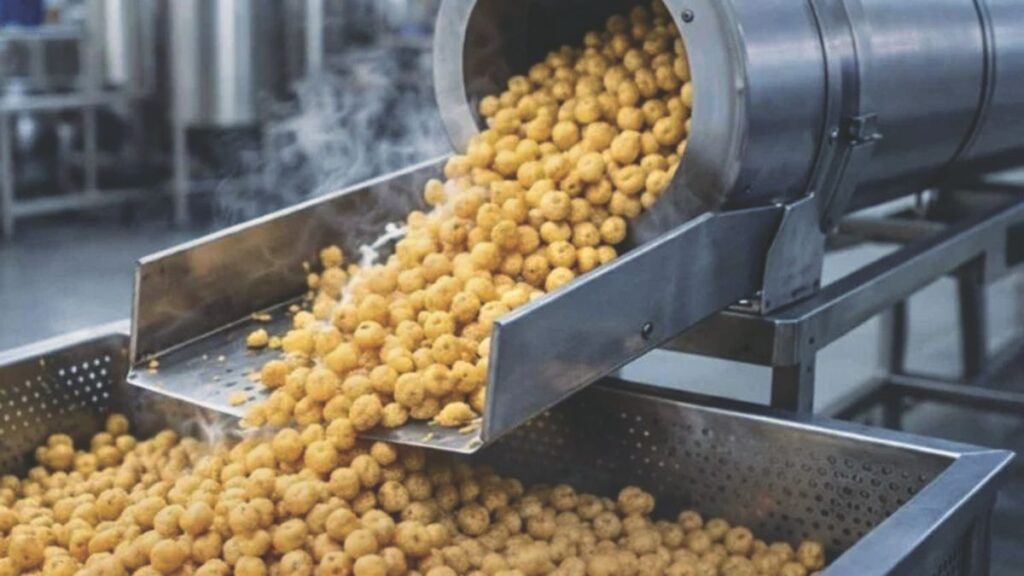
Mechanised processing is helping transform makhana into a convenient, ready-to-eat snack for growing domestic and international markets
The growing supply has been matched by rising domestic demand. Credit Rating Information Services of India (Crisil) data available through APEDA show the market growing from USD 6-6.6 billion in 2021-22 to USD 9.6-10.2 billion in 2024-25, with projections of USD 13.3-14.5 billion by 2029-30.
Makhana is also moving beyond traditional consumption, with brands such as Haldiram’s, Too Yumm, Farmley, Shakti Sudha and Mr Makhana selling roasted, flavoured and ready-to-eat variants. Monthly consumption of popped makhana stands at 3,000-3,500 tonnes and rises to nearly 5,000 tonnes during festive periods, with organised fast-moving consumer goods channels accounting for 1,800-2,000 tonnes a month.
However, the demand is not limited to processed products. Sonu Jha, Manager at Mallah Makhana, a B2B distributor based in Darbhanga, Bihar, says raw makhana continues to see strong bulk demand from markets across India.
“This year, the demand for raw makhana is very high. Roasted makhana is also ordered in bulk, but raw material demand is stronger, with buyers from Mumbai, Kolkata, Andhra Pradesh, Bengaluru and other markets,” Jha tells Biz@India.
Also Read: Indian food processing industry: Limited appetite for value-added exports
Jha says his company sells around 50 tonnes of makhana a month, highlighting the scale of domestic bulk demand. He also points to the nutritional positioning of makhana, including its protein content and sugar-free nature, as factors supporting consumer interest.
Prices have also risen sharply, with the average domestic price increasing from around INR 500 per kg in 2020 to approximately INR 1,250 per kg in 2025.
However, farmers say the rise in consumer prices does not necessarily translate into a similar increase in their earnings. Vijay Jha, a makhana farmer from Raghopur in Supaul, Bihar, says farmers still depend heavily on traders and do not capture the full value created through processing and branding.
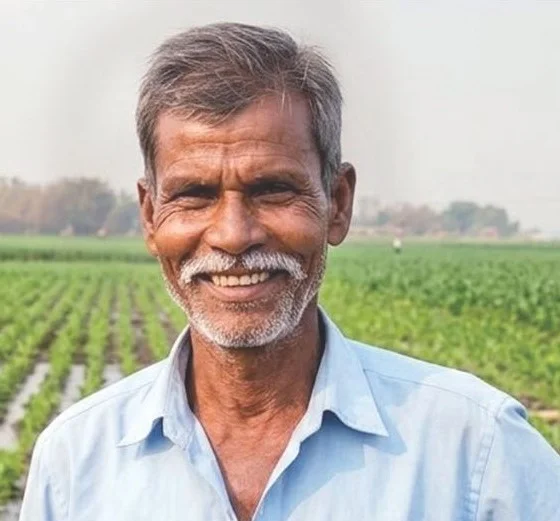
Vijay Jha
“The demand for makhana has definitely increased and it is now being sold as a healthy snack throughout the year. But we do not get the price that consumers pay for packaged products. Most of the processing and value addition happens after we sell the crop, so farmers get only a part of the value,” Jha, tells Biz@India.
Digambar Choudhary, another farmer from Biraul in Darbhanga, offers a more specific view of the price gap. He says farmers can receive around INR 700-900 per kg from traders, while better-quality processed and packaged makhana can reach INR 1,200-1,500 per kg.
“The price has increased, but the increase is not the same at the farm level. Better-quality, larger makhana can get around INR 1,000-1,200 per kg, but the bigger margins come after roasting, flavouring and packaging,” Choudhary tells Biz@India.
Choudhary says direct access to exporters remains limited because individual farmers often cannot supply the 1-2 tonnes of uniform-quality produce required by buyers.
“Most farmers sell to local traders because they collect the crop and pay immediately. If farmers can form groups and aggregate 10-20 tonnes, it can help us deal directly with processors or exporters,” he says.
He identifies labour and harvesting costs as the biggest constraints and says a 10-15 pc improvement in farm-gate returns could encourage farmers to bring more ponds under cultivation.
The shift towards value-added products is also visible among processors. Sayed Faraz, Co-Founder of Darbhanga-based Shhe Foods, says the company started as a B2B business and now supplies more than 250 brands on a white-label basis, including brands serving markets in Europe, the US, Canada, Australia, the Gulf and other regions. Incorporated in 2021, the company recorded revenue of around INR 140 million in the last financial year, with monthly revenue averaging INR 15-18 million.
Also Read: Indian food processing industry: Limited appetite for value-added exports

Sayed Faraz
Faraz says demand has changed particularly over the past two years as companies increasingly position makhana as a snack rather than only a traditional food or superfood.
Shhe Foods now makes cookies, flavoured makhana, pasta and plant-based protein powder. Its Maket cookies have been in the market for around 1.5 years and the company sells around 25-30 tonnes of cookies a month.
“People are not accepting makhana as a superfood in the market. Brands are showing it as a snack and then people accept it. We have made value-added products such as cookies, and our makhana cookies have been in the market for around 1.5 years,” Faraz tells Biz@India.
The company also illustrates the growing domestic demand. Faraz says around 50 pc of its revenue now comes from general trade and distribution, with Maharashtra, Gujarat, Karnataka, Telangana, Madhya Pradesh and Delhi among the markets showing strong traction.
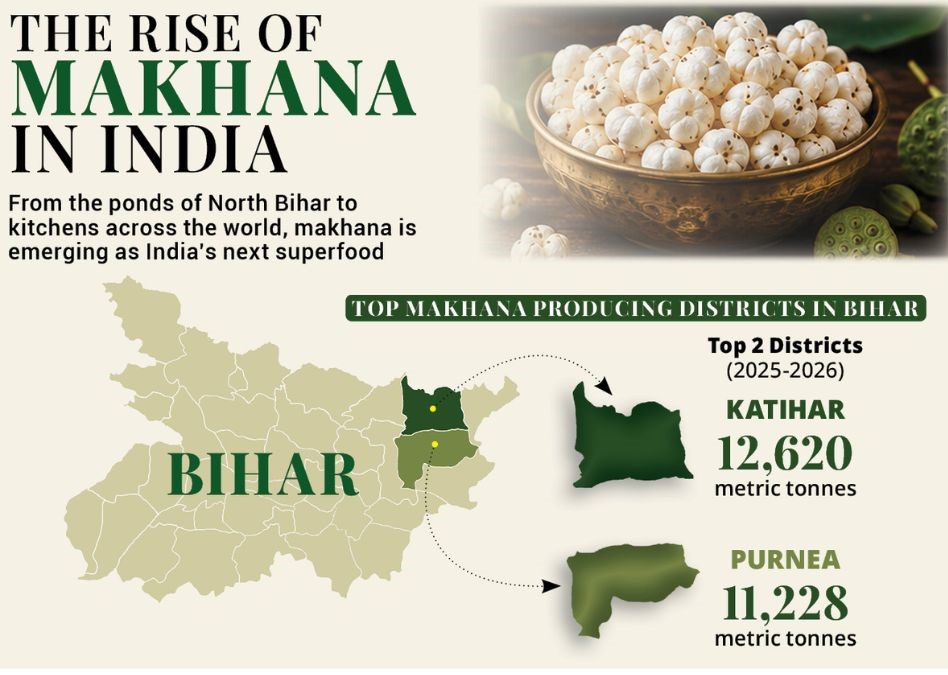
Katihar and Purnea are among Bihar’s leading makhana-producing districts, supporting India’s expanding supply
“We have a very good demand, so we buy more than 60 pc of our makhana from farmers. We can grow only around 40 pc ourselves. The demand is increasing and farmers are also trying to increase production,” Faraz says.
The raw makhana market remains highly competitive, with Faraz putting the market price at around INR 400-1,200 per kg, rising to INR 1,300-1,400 per kg depending on quality and market. He says margins are much stronger in processed products.
“In raw makhana, it is difficult to save even 4-5 pc profit because there is a lot of competition. We have a good margin in value-added products such as cookies and flavoured makhana. We also make macaroni pasta and plant-based protein powder from makhana and these products give us better margins,” he says.
This domestic transformation is creating a potential export opportunity. According to the Ministry of Commerce, more than 7,000 tonnes of makhana and value-added products were exported in FY2025-26 to more than 20 destinations, including the United States, Middle East and Africa.
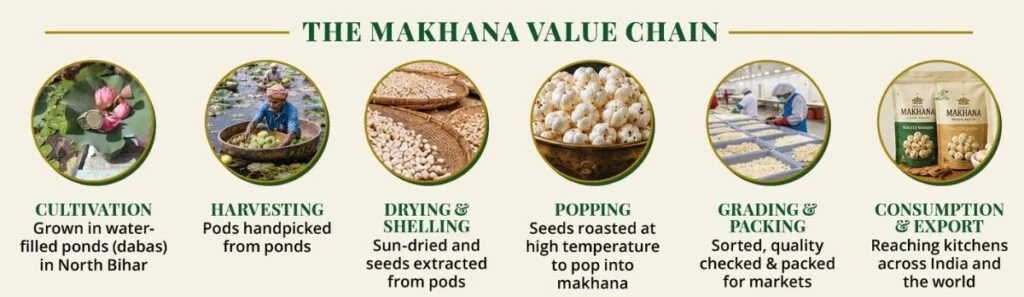
From pond cultivation and harvesting to popping, grading and packaging, makhana passes through several stages before reaching consumers
The US, Canada, United Arab Emirates (UAE) and United Kingdom are among the major markets. Crisil data indicates that the US accounted for around 40 pc of exports in 2025, followed by Canada at 20 pc, UAE at 17 pc and the UK at 10 pc.
However, India’s production advantage has not yet translated into a proportionate export presence. The ICRIER-APEDA study estimates that only around 12,000 tonnes of production is currently of export-grade quality. Inconsistent grading, moisture levels, fragmented supply chains, labour-intensive harvesting and inadequate post-harvest infrastructure remain constraints.
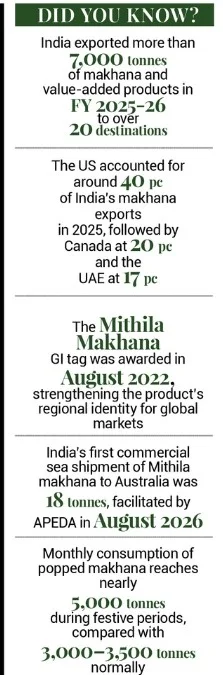
Rising international demand is creating opportunities for Indian producers to expand exports through value-added products and stronger branding
Faraz says the industry is still not fully commercialised and that awareness remains one of the biggest challenges to taking makhana to global markets. He says the market began showing a noticeable shift from 2023 onwards, after limited growth during the company’s first three years.
“We started in 2020 and incorporated the company in 2021. For the first three years, there was very little growth in the market. But since 2023, we have seen a slight boom, particularly in 2023-24. In the last two years, we have seen very good demand,” Faraz says.
He also says greater awareness and promotion are needed.
“The government is doing a lot through events and promotions, and we are also invited to many places to display our products. But we have to do it better so that makhana gets proper recognition. If there is awareness, the product will sell automatically,” he says.
For farmers, the export opportunity will depend on whether this growing demand creates a more direct link with producers.
“If exports increase, it can create a bigger market for farmers, but we need better access to exporters and processors. If buyers pay a better price for good-quality makhana, we will also have more incentive to improve quality and production,” Jha, a farmer says.
Value addition could provide a way forward. Rather than exporting only popped makhana in bulk, Indian companies can target international consumers with flavoured snacks, ready-to-eat products, flour and other processed products.
The government has also begun strengthening the sector. The Union Budget 2025-26 announced an allocation of USD 120 million for setting up Makhana Board, while a separate central sector scheme has an outlay of around USD 573 million for 2025-26 to 2030- 31, covering research, planting material, harvesting, post-harvest management, value addition, branding, export promotion and quality control.
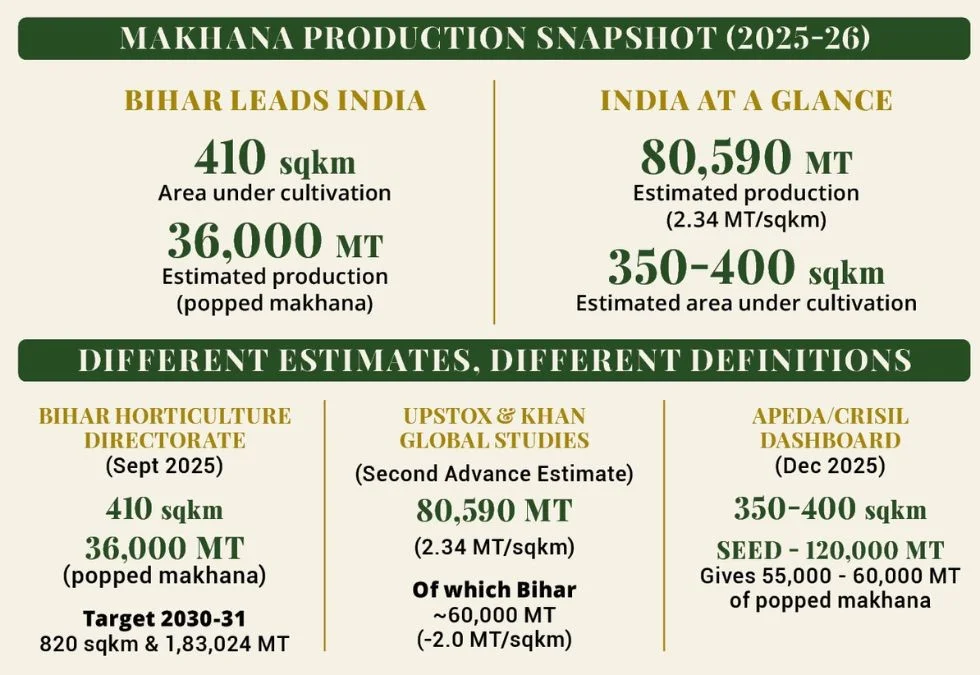
Bihar dominates India’s makhana production, with cultivation and processing driving the sector’s growth
The Geographical Indication (GI) tag awarded to Mithila Makhana in August 2022 could strengthen its identity overseas, while the APEDA facilitated its first commercial sea shipment of 18 tonnes from Bihar to Australia in August this year. The industry’s next phase will depend on consistent quality, organised supply chains, processing, food-safety standards, packaging and branding to expand India’s global makhana exports.