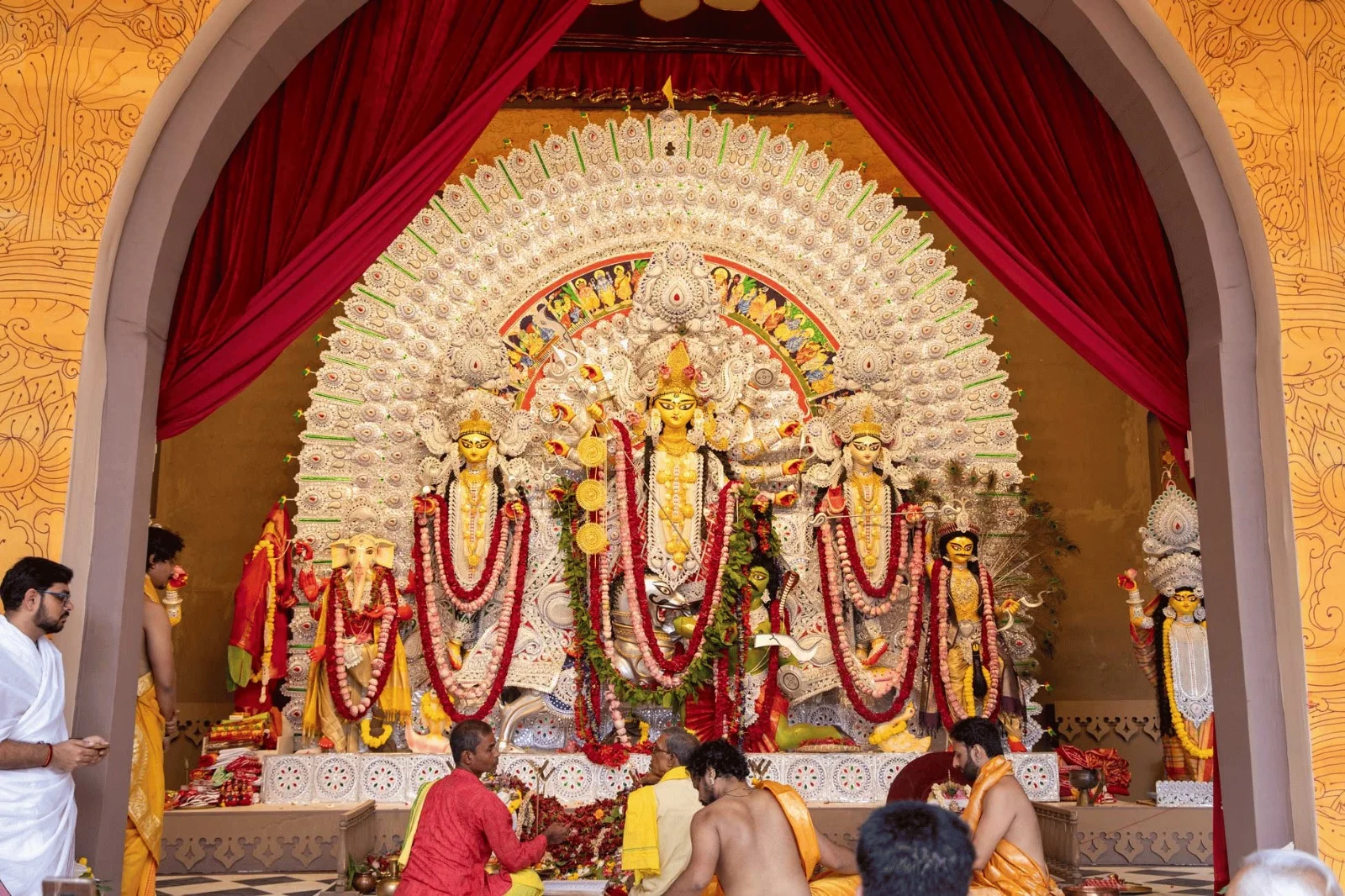
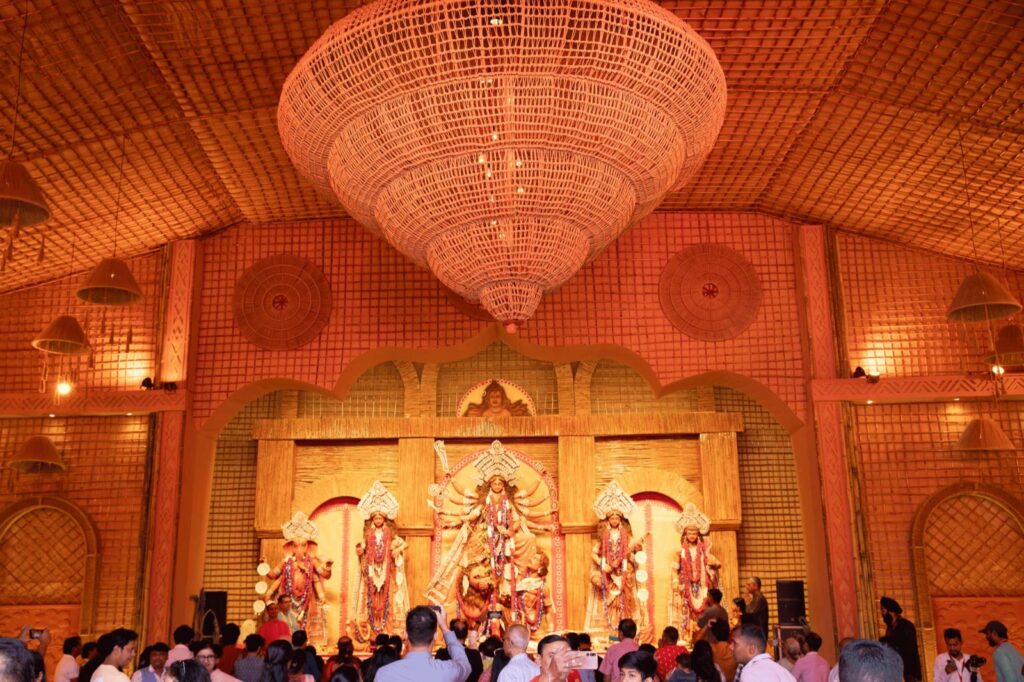
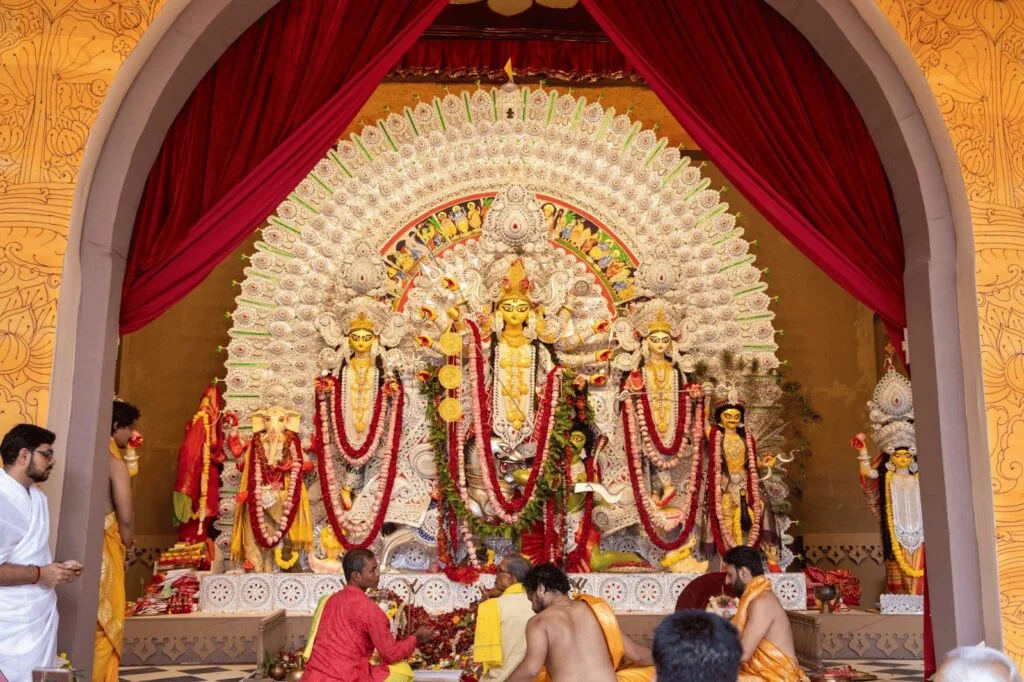
The beautifully decorated idol of Goddess Durga and her children is seen at a Durga Puja pandal in Delhi (Photo: Media India Group/Aman Kanojiya)
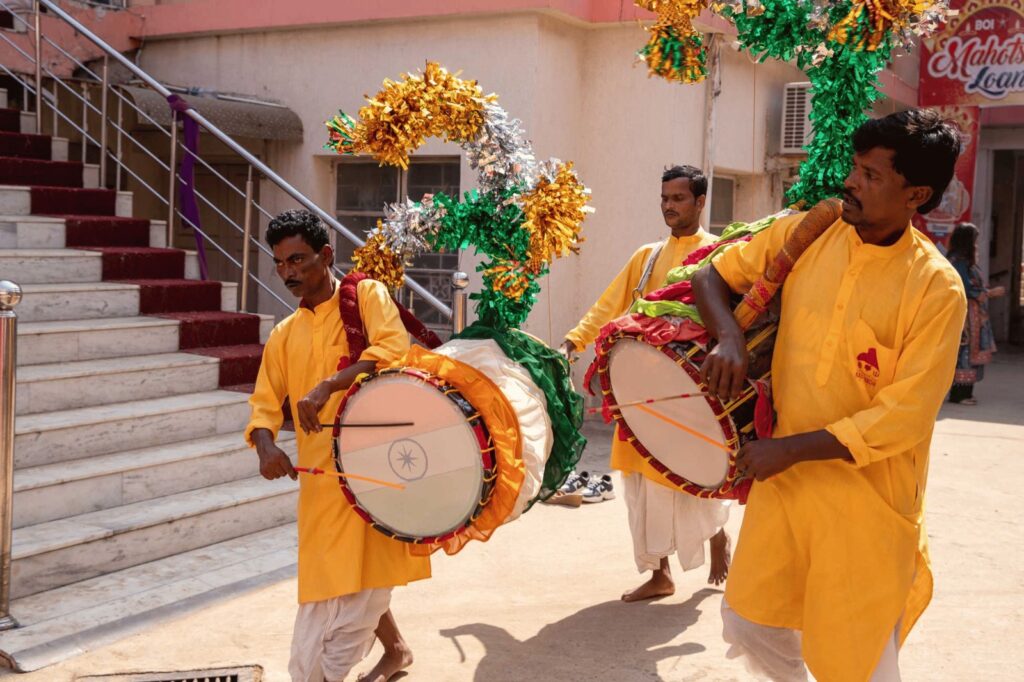
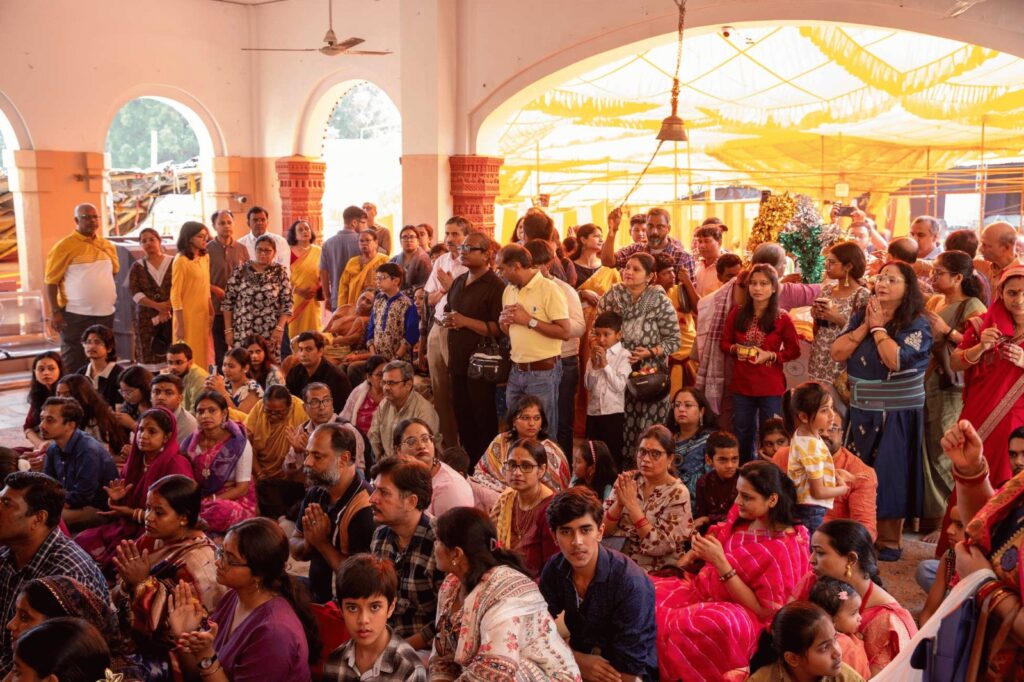
With the sounds of the traditional drum, played in its typical rhythm and amidst chanting of prayers, the vibrant red of vermillion and women dressed in traditional sarees, the residents of Chittaranjan Park, a locality in southern Delhi dominated by the Bengali community, bid farewell to their favourite deity, Goddess Durga.
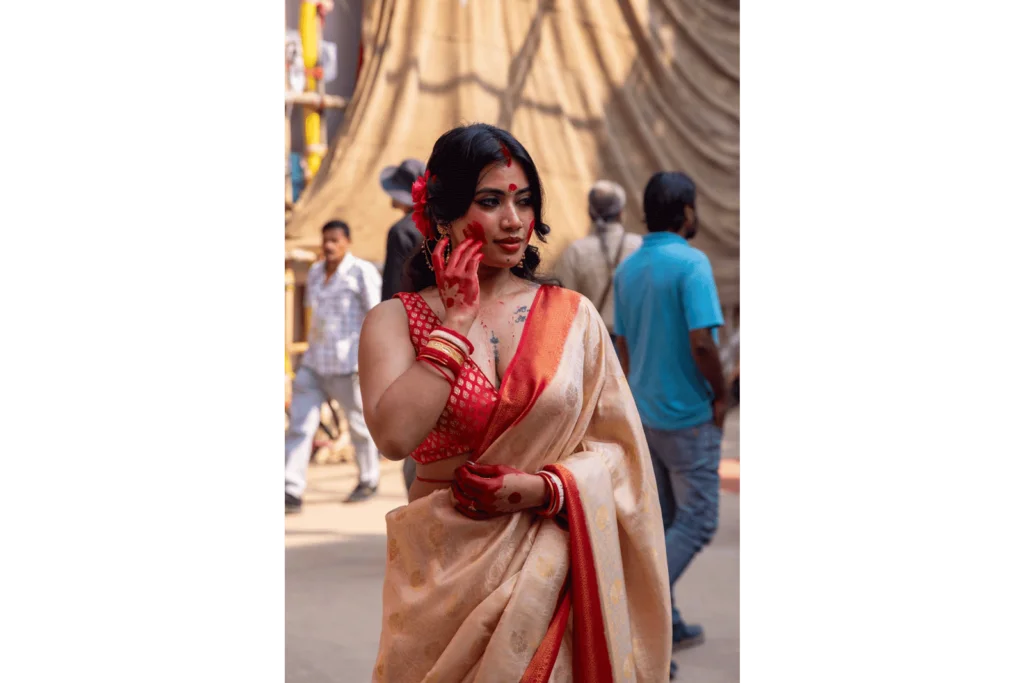
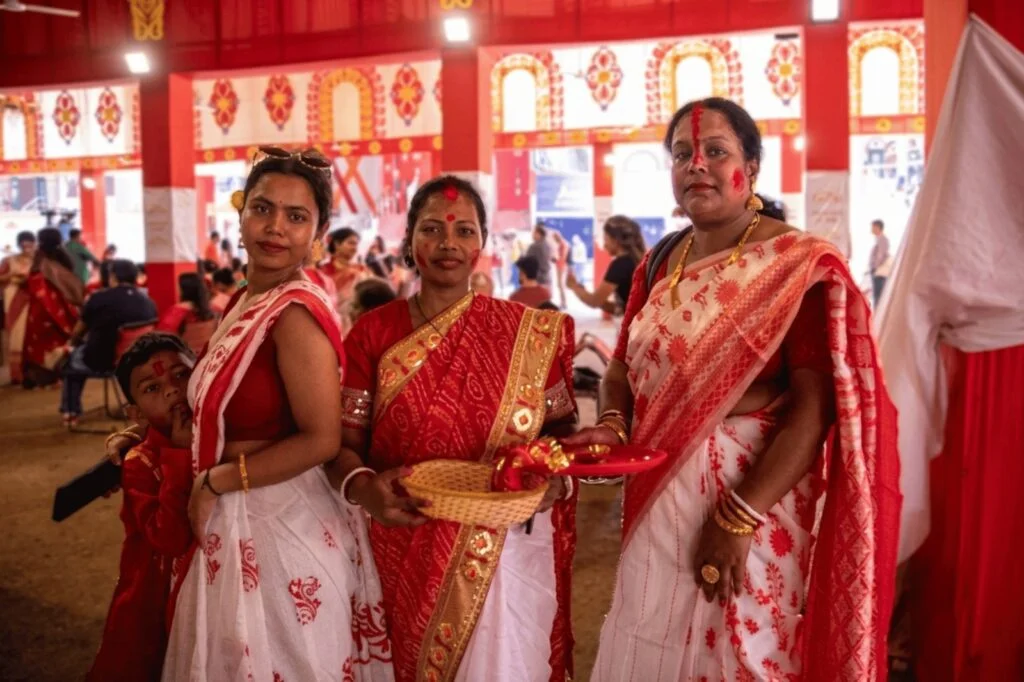
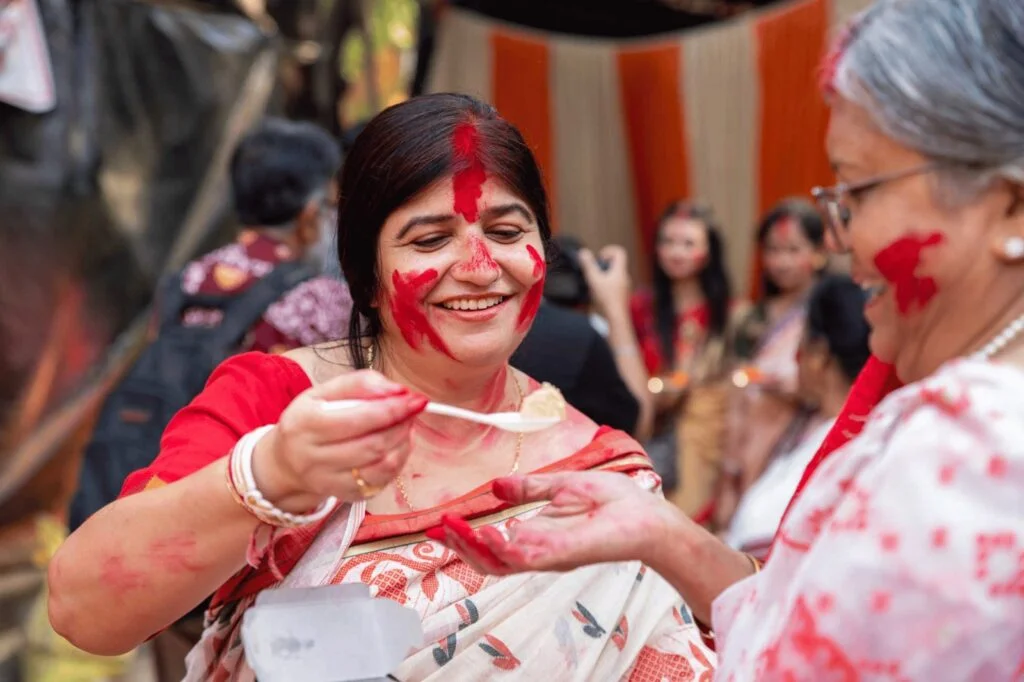
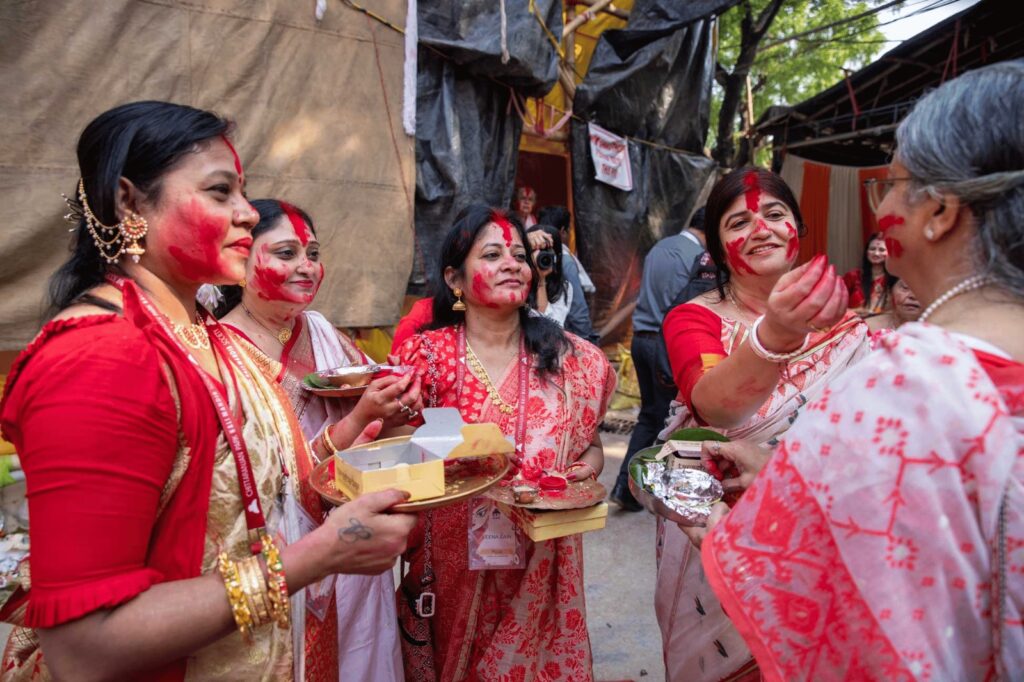
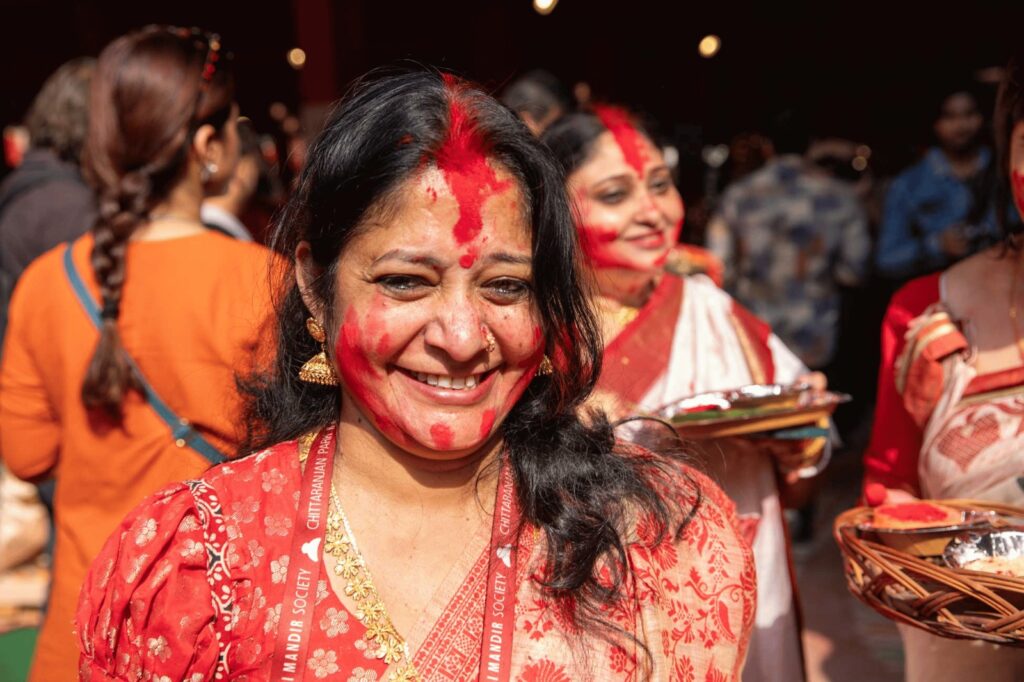
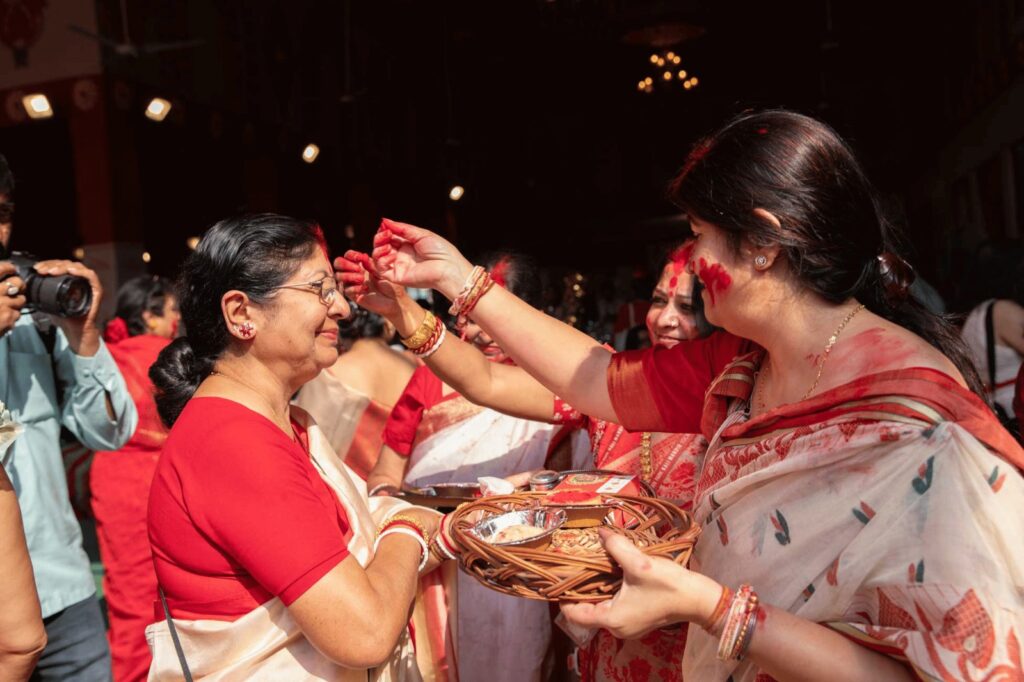
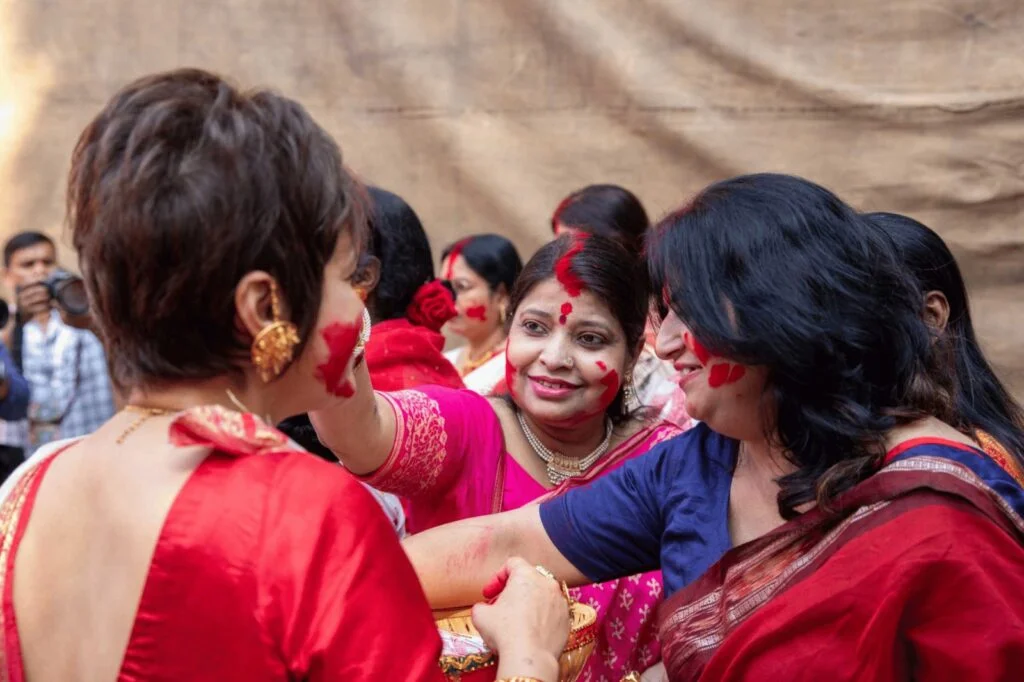
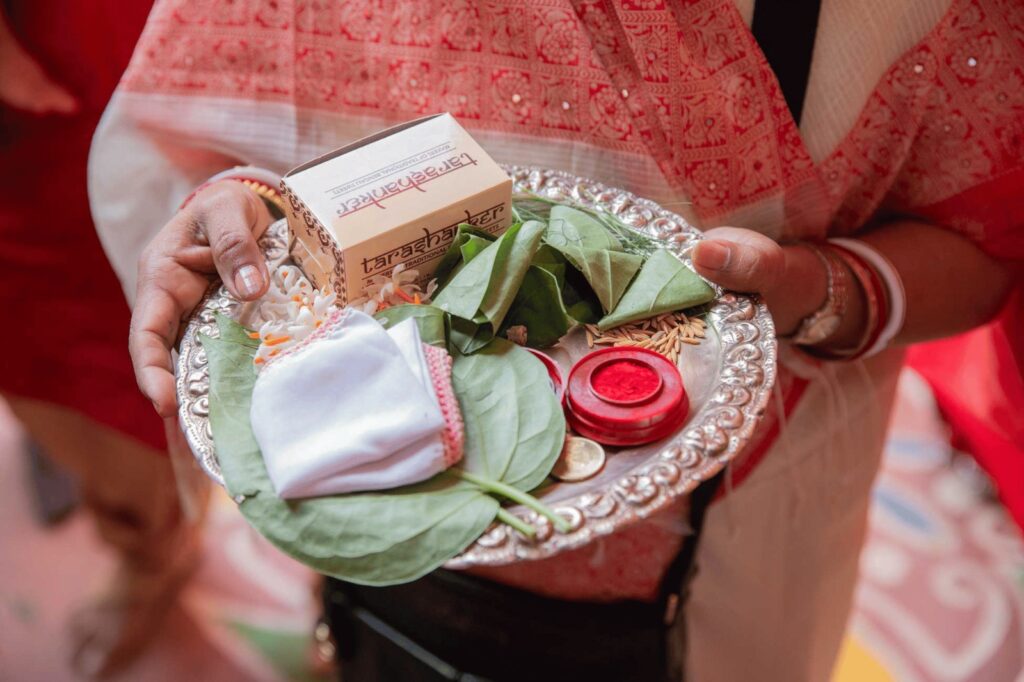
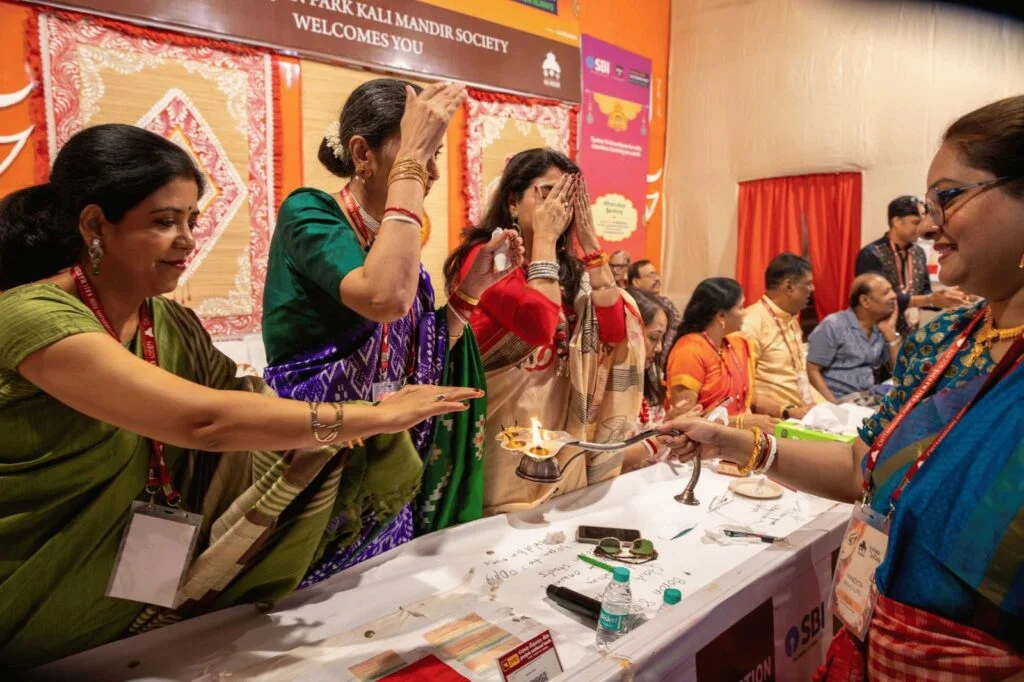
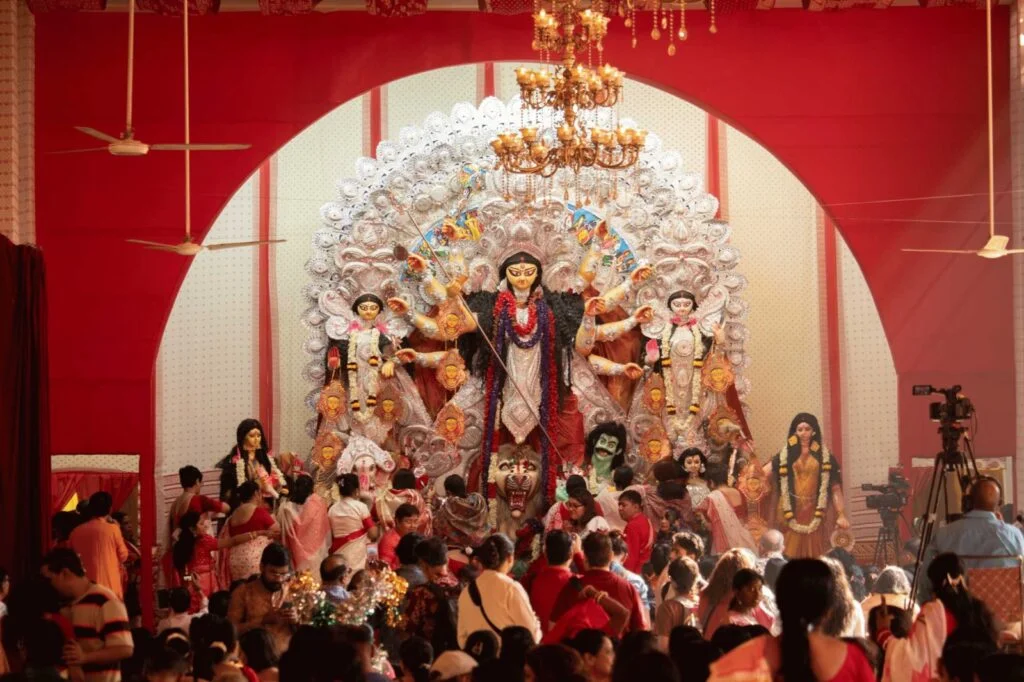
Though dozens of Durga idols adorn the numerous pandals set up for the Puja, one of the highlights of the celebrations is at the Kali Mandir that acts as an anchor for the community. And on the final day of the festival, it is also the biggest celebration of Sindoor Khela, a traditional ritual in which vermilion is offered to Goddess Durga and exchanged among women as they bid farewell to the goddess.
For Delhi’s Bengali community, Durga Puja is more than a religious festival. It celebrates faith, family, culture and togetherness. According to Bengali tradition, Mother Durga visits her maternal home with her children before returning to her husband’s home. Her departure brings sadness, along with the hope of welcoming her again next year.

A tradition of faith and devotion
Chittaranjan Park, known for its strong Bengali cultural identity, becomes a major centre of Durga Puja celebrations. At Chittaranjan Park Kali Mandir, the festival has been celebrated for over 53 years, following traditional rituals such as the goddess’s adornment, offerings and evening aarti.
Shirshendu Mukherjee, General Secretary of Chittaranjan Park Kali Mandir, which manages the temple and organises the celebrations, says the celebrations help preserve traditions across generations.
“We have been celebrating Durga Puja here for almost 53 years. The celebrations follow traditional rituals, from the goddess’s adornment and bhog to the evening aarti,” he tells Media India Group.
Describing Vijayadashami, he says devotees bid farewell to the goddess while looking forward to her return.
“Today is the final day, called Vijayadashami. We bid farewell to our mother as she returns to her husband’s home, and we look forward to welcoming her again next year,” he says.
Durga Puja also carries a spiritual message. Goddess Durga represents Shakti, or divine feminine power, and her victory over evil symbolises the triumph of good over wrongdoing.
Mukherjee explains that worshipping the goddess inspires people to follow truth and righteousness. He also recalls Lord Rama worshipping Durga before fighting Ravana, highlighting the festival’s message of good triumphing over evil.
A daughter’s emotional farewell
For Bengali families, Durga’s visit to her maternal home is central to the festival’s emotional significance. The tradition reflects the experience of married daughters returning to their parents’ homes to spend time with family and enjoy traditional food.
Ratna Biswas, a devotee, explains this connection. “We believe that Mother Durga has come to her maternal home. In our tradition, married daughters also return to their parents’ homes during this time. They enjoy good food, spend time with their families and celebrate together,” she tells Media India Group.
She says the goddess’s departure makes the final day particularly emotional. “It is like a daughter’s farewell. We become very emotional, and it is difficult to explain that feeling in words,” she says.
During Sindoor Khela, women traditionally offer vermilion to the goddess and apply it to one another, expressing devotion, affection and wishes for marital happiness. At the temple, women in red-and-white sarees gathered around the idol, exchanging vermillion and sharing smiles.
For Biswas, the ritual reflects the sadness of parting with someone loved.
As Vijayadashami brings Durga Puja to an end, devotees carry forward their faith, cultural traditions and memories of togetherness. For Delhi’s Bengali community, Sindoor Khela is not simply a farewell but a reminder of family bonds, devotion and the enduring hope of welcoming the Goddess home again next year.