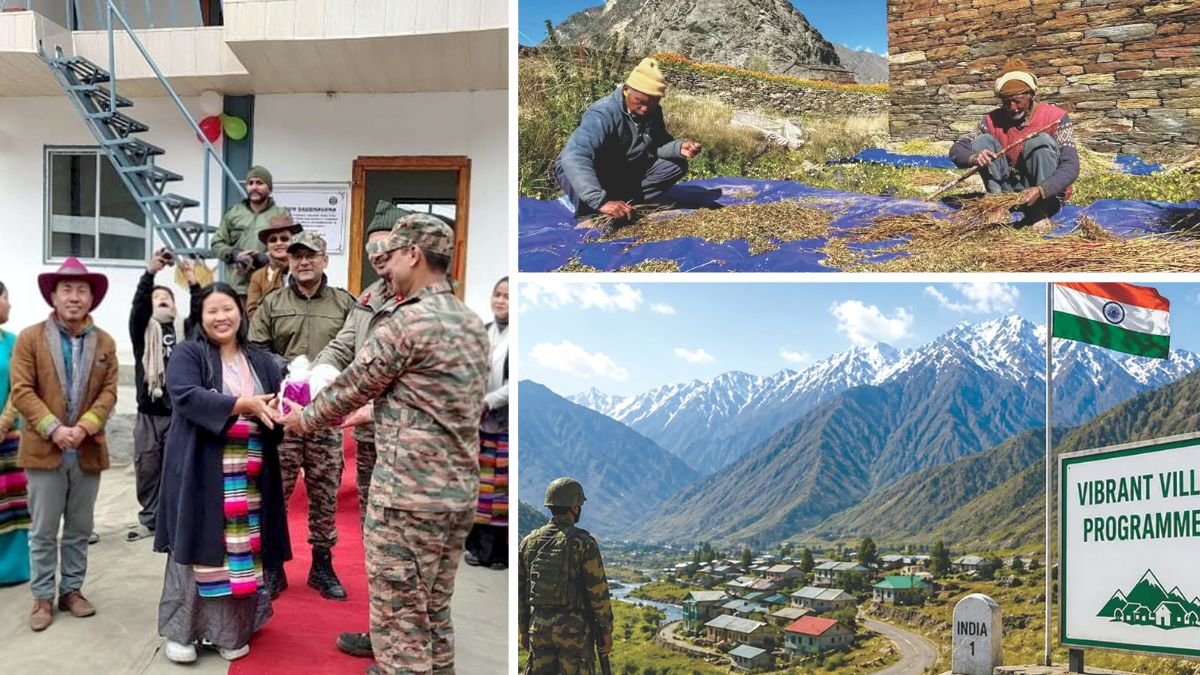
The Vibrant Villages Programme (VVP) was launched in February 2023 with a Phase I budget of INR 48 billion targeting 663 priority villages along India’s northern borders
Keran is not easy to find on Google maps. It sits along the Line of Control in the remote hills of Kupwara district, in Jammu and Kashmir, where the Kishanganga River marks the divide between India and Pakistan. For decades, the crossing here was sealed. On the Indian side, there were no roads that linked Keran to the outside world and neither was there any mobile network.
In 2023, two things happened almost simultaneously and which promised to be a harbinger of change and development in the village. The first was the reopening of the border crossing for the first time in living memory, and the second was the launch of Vibrant Villages Programme, a scheme of the Union Government that promised to bring roads, connectivity, and economic activity to the frontier settlements which so far had been left to fend for themselves for generations.
Waseem Ahmed, a lifelong resident of Keran, he remembers how people felt when news of the programme reached the valley.
“When the Vibrant Villages Programme came, we were happy, thinking that now finally we will see development at our doorsteps,” Ahmed tells Biz@ India.
Three years later, the promise remains on paper and residents like Ahmed still talk of development in the future tense. The roads and the connectivity have yet to arrive and the only thing that has come is a trickle of visitors from across India who have heard of Keran and its vaunted position as the last village on the frontier and they are attracted by its remoteness, its river, its dramatic border setting but they have to reach on foot because there is no other way.
Also Read: Keran Valley: A journey to Kashmir’s borderland beauty
“People are coming but they have to trek. It is a border area. It should have been developed, which would have been good for the Indian Army,” says Ahmed.
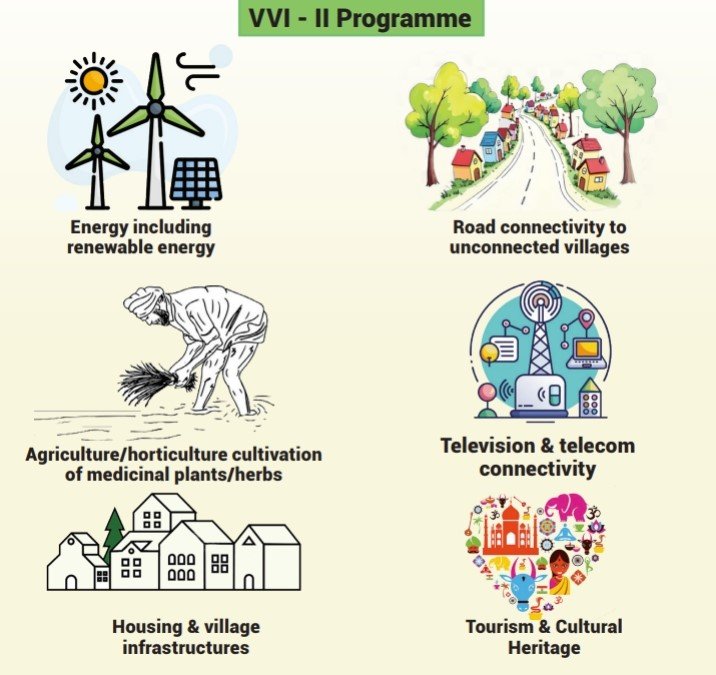
VVP prioritises all-weather road connectivity and housing and village infrastructure to improve living conditions, boost livelihoods, and curb out-migration
The Vibrant Villages Programme (VVP) was launched in February 2023 with a Phase I budget of INR 48 billion targeting 663 priority villages along India’s northern borders with China across Arunachal Pradesh, Himachal Pradesh, Sikkim, Uttarakhand, and Ladakh. Out of the total 2,967 villages identified for development under the programme across 19 districts and 46 border blocks, the government said 663 would be addressed first. The Phase II, approved with INR 68 billion running through 2028-29, brought the expanded scope to nearly 1,954 additional villages across 17 states and Union Territories.
By mid-2025, of the nearly 3,000 villages on the borders, only 1,010 villages had been brought under ‘active development’, with the construction of about 480 km of roads, holding of 200 health camps and about 1,200 youth trained in homestays and agri-technology. That leaves well over 1,900 villages from the total identified list still waiting for meaningful ground-level work to begin.
In Sikkim’s border village of Gnathang, village leader Sonam Bhutia told NPR (National Public Radio) an independent, non-profit media organisation that since the programme was announced, all his community received was a single solar-powered streetlamp, which broke down within a month. “Our legislators only visit twice in a five-year term: while campaigning for elections and for a victory lap,” he said. The village, which once had more than 1,500 residents, now has only 750, as people have left for towns and cities. It is a pattern repeated across hundreds of Indian border villages that continue to empty out.
The strategic logic behind the programme is that on the night of June 15, 2020, in the Galwan Valley of Ladakh, soldiers of China’s People’s Liberation Army attacked an Indian patrol in what eventually turned out to be the deadliest clash on the Sino-Indian border in more than four decades. Over 20 Indian soldiers were killed, including a Colonel, in brutal hand-to-hand combat using clubs, stones, and iron rods, as firearms are forbidden by long-standing protocol between the two sides. India said the clash happened on its side of the Line of Actual Control (LAC). China officially acknowledged losing four soldiers, though multiple independent assessments have put its casualty count far higher. The violence triggered a two-year military standoff and forced a reckoning with just how badly India had fallen behind China on border infrastructure.
Also Read: 70 pc Indian students use mobile-first fintech for cross-border payments: Beacon
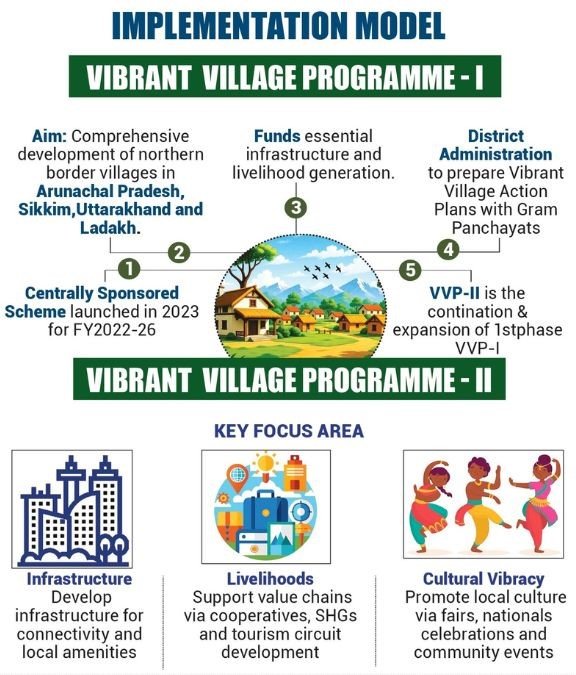
Implementation model for VVP-I & VVP-II
The gap was not theoretical. In parts of Arunachal Pradesh near the LAC, Indian mobile networks cut out entirely, while Chinese signals carried through. Army convoys moving through Ladakh depended on roads that, in several sectors, did not meet operational needs. China, meanwhile, had been systematically building villages along Tibet’s southern borders with India, Nepal, and Bhutan since 2016, constructing roads linking them to larger Chinese towns and populating them with civilians who, analysts say, serve as the state’s eyes and ears along disputed territory.
Research by China scholar Robert Barnetts research, published in late 2024, documented 22 Chinese villages built in areas claimed by Bhutan alone. Vinayak Bhat, a satellite analyst who worked with the Indian Army until 2015, says that of the more than 600 Chinese villages built near the Indian border, at least 10 sit in disputed areas.
The spending gap between the two sides puts the scale of the challenge into stark relief. China’s 14th Five-Year Plan (2021-2025) earmarked USD 30 billion for infrastructure projects in the Tibet Autonomous Region alone, the region that sits directly across from India’s northern borders. India’s entire Vibrant Villages Programme, across both phases, amounts to roughly USD 1.4 billion, and the Border Roads Organisation, which handles strategic road construction across all of India’s frontier zones, received INR 65 billion, approximately USD 780 million, in the FY25 Union Budget, a 30 pc increase from the previous year. The numbers are not on the same plane. India is just spending billions of rupees. China is spending tens of billions of dollars, and it has been doing so for a decade without interruption.

Sriparna Pathak
Sriparna Pathak, Professor of China Studies, and the founding Director of the Centre for Northeast Asian Studies at Jindal Global University, (JGU) in Haryana, says the connection between the two is direct.
“India’s robust border infrastructure push, including the Vibrant Villages Programme and accelerated road construction, represents a strategic and determined response to China’s rapid expansion along the frontier regions. India’s Border Roads Organisation has delivered hundreds of strategic projects, including major highways like the Arunachal Frontier Highway and high-altitude roads exceeding 4,877 metre enhancing troop mobility and logistical support in challenging terrain. These developments build on post-2020 accelerations following Galwan, where India fast-tracked infrastructure to bridge previous gaps and assert effective control along the Line of Actual Control,” Pathak tells Biz@ India.
Also Read: Hunderman: Exploring Borderland Legacy of Ladakh
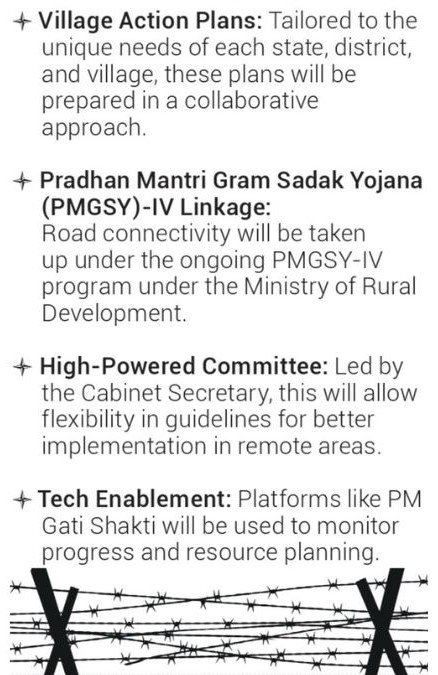
The Vibrant Villages Programme has been designed for border villages across the country
But Pathak also says that the civilian dimension of the programme is inseparable from its military purpose. Border villages that lose population create a vulnerability no troop deployment can fully compensate for. “By prioritising comprehensive infrastructure, connectivity, healthcare, education, renewable energy, and livelihood opportunities in remote Himalayan areas, especially along the Line of Actual Control with China, the programme is aimed at effectively countering out-migration, strengthening demographic presence and transforming border communities into self-sustaining hubs that serve as vital support systems for military logistics while acting as additional eyes and ears for national security,” says Pathak.
On employment, she adds: “The initiative seeks to equip locals with training and market access, fostering self-employment and community-based enterprises that keep youth and families rooted in their villages. Enhanced road connectivity and digital infrastructure under VVP open new markets for local produce and products, boosting entrepreneurship and reducing the economic compulsion to migrate for work. Reports from implementing agencies highlight increased participation of women and youth in skill-led activities, leading to higher local retention and a stronger demographic presence in sensitive areas,” says Pathak.
A former legislator, Konchok Stanzin told NPR from Ladakh. “Indian officials sometimes only approve work in September,” he said, when the Himalayan winter is already closing in and construction must stop within weeks. “When Chinese authorities build a road, they bring along power lines too. But in India, they build a road, then dig it up for cables, then dig it up again for plumbing works. In the time it takes India to lay the foundation for a building, China completes the building,” he added.

Anand K Sethi
In Himachal Pradesh, Anand K. Sethi, who spent years single-handedly converting the 170-year-old Dagshai Jail in Solan district into a museum and has watched the state’s border regions change over decades, says that where the programme has delivered, it is partly because the ground had been prepared well before 2023. Military logistics requirements toward the Tibetan border in Kinnaur district had already pushed road construction. Army cantonments like the one near Dagshai had always meant a higher infrastructure baseline than purely civilian zones. “Work or thinking had already been there to improve the infrastructure of the border villages for defence. The requirement for such infrastructure had already been felt and some work had already started,” Sethi tells Biz@ India.
But Sethi raises something that rarely makes it into official accounts of the programme. “The roads being built through these mountains come at a cost that goes beyond budget lines. The four-laning of highways through Himachal Pradesh’s hills, part of the broader connectivity push, has resulted in the felling of tens of thousands of trees. The Parwanoo-Shimla highway project alone was estimated to require the cutting of around 34,000 trees, of which 12,900 had already been cleared when last reported. The Gangotri Highway expansion, in a landslide-prone stretch, is expected to require the felling of approximately 7,000 more,” says Sethi.
In Himachal Pradesh, an alarming six-fold increase in major landslides was recorded between 2020 and 2022, from 16 major landslides to 117. The Himachal Pradesh State Disaster Management Authority, in a 2015 report that has only become more relevant since, identified road construction itself as a primary cause of slope instability in the region.
Also Read: Darma Valley: Tourism shaped by borders and seasons
“Trees are being cut in the forest here because multi-laning of the roads is being done. As a result there is now temperature rise in the hills right up to the border areas,” says Sethi.
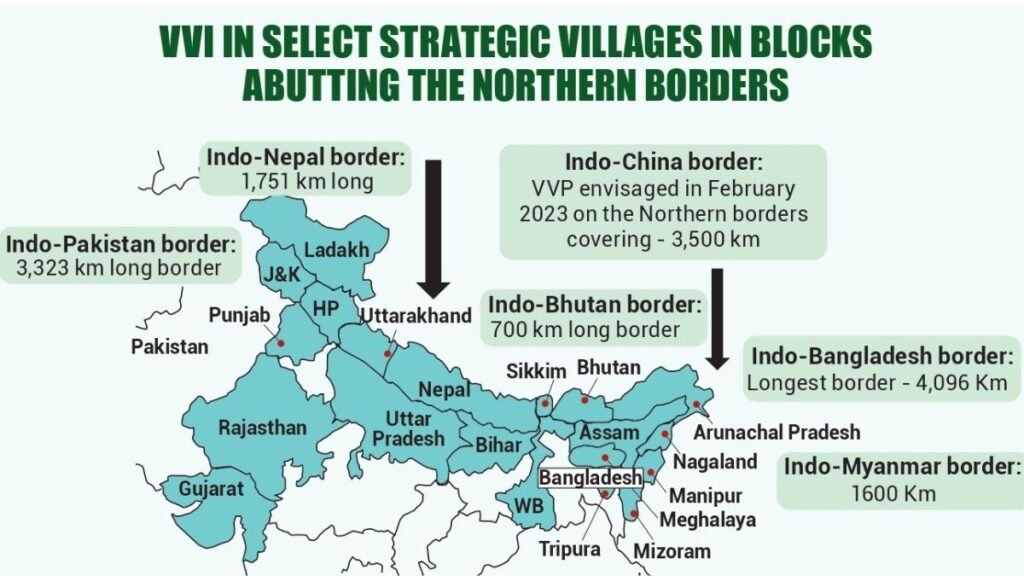
VVI in select strategic villages in blocks abutting the northern borders
The military consequences of this are not abstract. Landslides caused by destabilised slopes regularly block the same strategic routes that army convoys depend on. In 2023, Himachal Pradesh recorded 113 landslides in just 55 days of the monsoon season. Damage to roads and infrastructure that year cost the Public Works Department INR 24.91 billion and the National Highways Authority another INR 10 billion, according to state officials. When a mountainside gives way onto a road that an army truck needs to move through, the ecological cost becomes a security cost overnight.
Pathak’s case for the programme rests on what she sees as its long-term logic. “Unlike purely militaristic approaches, VVP delivers holistic security through prosperity, bolstering civilian resilience, reducing vulnerabilities in sparsely populated high-altitude zones, and projecting India’s resolute commitment to safeguarding sovereignty in strategically critical terrains near China. This development-led defence model not only addresses immediate challenges but positions India as a forward-looking power, turning frontier villages into proud symbols of resilience, stability, and long-term strategic strength along the formidable Himalayan borders,” says Pathak.
On paper the programme is robust, but the ground reality, from Gnathang in Sikkim to Keran in Kashmir, is that three years in, the programme’s reach is uneven and its pace is being lapped by China on the other side of the mountains. In Jammu and Kashmir, where Keran sits, Phase II covers 124 strategic villages across 43 border blocks in 8 districts. A gap analysis of 1,421 border villages found that 30 still have no road connection at all and in the Baramulla and Kupwara districts, where Keran falls, DTH connectivity and 4G coverage remain incomplete. People are still leaving. In Gnathang, the population has halved. In Keran, Ahmed cannot say how many families have left for Srinagar or further south in search of work and schools, but he knows the number is not insignificant.