
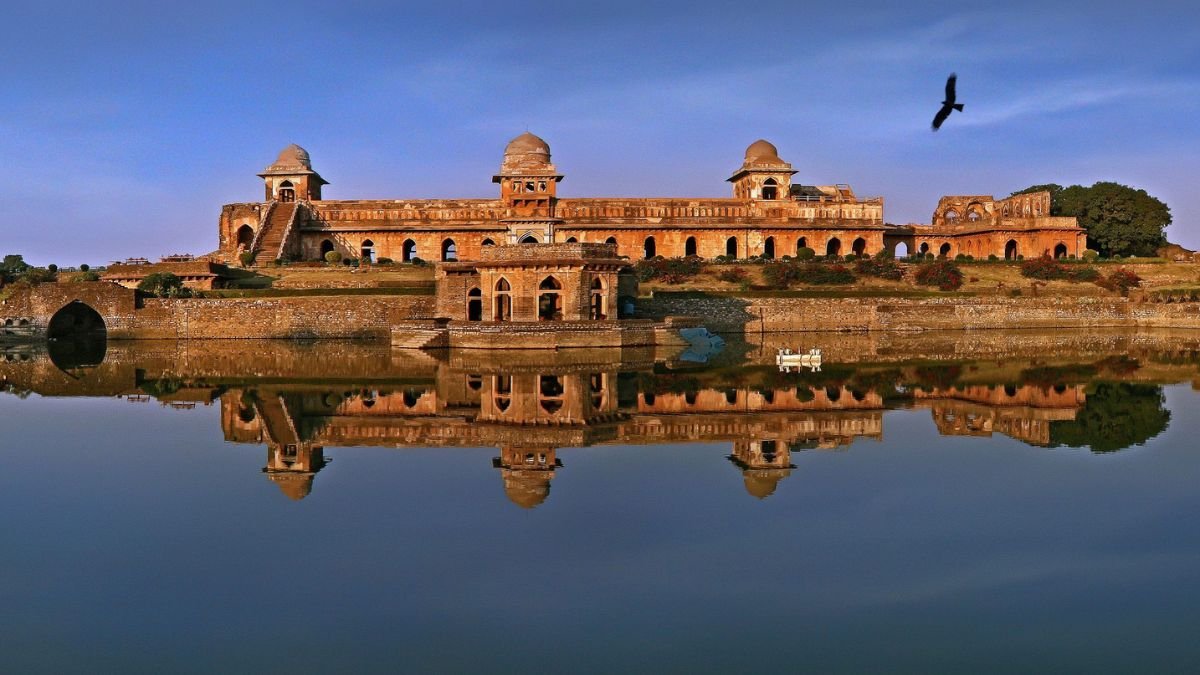
Jahaz Mahal features large halls, corridors, balconies and open terraces (Photos: District Dhar)
Standing between Munj Talao and Kapur Talao, two artificial lakes that give the palace its distinctive appearance of a ship, Jahaz Mahal is one of the most recognisable monuments of Mandu, a historic town in the Dhar district of Madhya Pradesh.
Its long, narrow structure resembles a ship resting on water, particularly during the monsoon when the lakes reflect the palace that dates back to the 15th century and is associated with Sultan Ghiyasuddin Khilji, who ruled the Malwa Sultanate between 1469 and 1500. Historical accounts suggest that it was built to accommodate women of the royal household. Mandu was once an important centre of the Malwa Sultanate, and its collection of palaces, mosques and tombs continues to reflect the region’s royal history.
Also Read: Mandu: Discovering the forgotten city of romance and ruins in Madhya Pradesh
Approximately 120 metres long and spread across two storeys, Jahaz Mahal features large halls, corridors, balconies and open terraces. Its upper floor has domed pavilions overlooking the surrounding lakes. The building’s long structure, combined with its open spaces and position between the water bodies, gives it the appearance of a vessel resting on a lake.
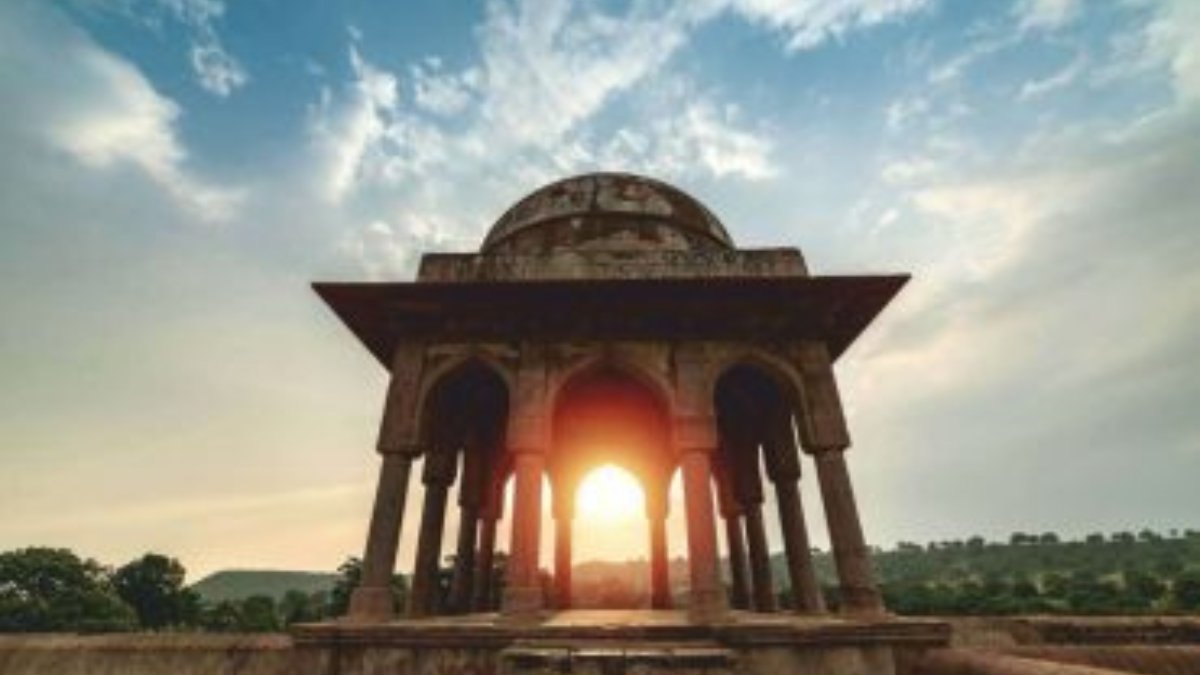
The palace offers an opportunity to explore Mandu’s architectural heritage and enjoy views of the surrounding lakes
The two lakes are central to the palace’s architectural setting. Their reflections make the building appear as though it is floating, an effect that becomes more visible during the monsoon when water levels rise.
The surrounding landscape also adds to the visual appeal of the monument, particularly for visitors interested in architecture and photography.
Also Read:Discover Madhya Pradesh beyond well-trodden paths
Water was also an important part of the palace complex. It includes pools, channels and arrangements for collecting rainwater. Mandu’s location on the Vindhya ranges made water storage important, particularly during periods of low rainfall. The artificial lakes helped store water, while the channels and pools served practical and recreational purposes.
These features reflect how the architects incorporated water into the design of royal buildings, making it both a functional resource and an important part of the surrounding landscape. The combination of water bodies, open spaces and architectural structures gives Jahaz Mahal much of its distinctive character.
For visitors, the palace offers an opportunity to explore Mandu’s architectural heritage and enjoy views of the surrounding lakes. Its halls, balconies and terraces provide different perspectives of the building, while the monsoon season offers particularly striking views of its reflection in the water.
A visit to Jahaz Mahal can also be combined with other historical attractions in Mandu, including Hindola Mahal, Jami Masjid, Hoshang Shah’s Tomb and Roopmati’s Pavilion. Together, these monuments offer a glimpse into the region’s royal past and architectural traditions.
