
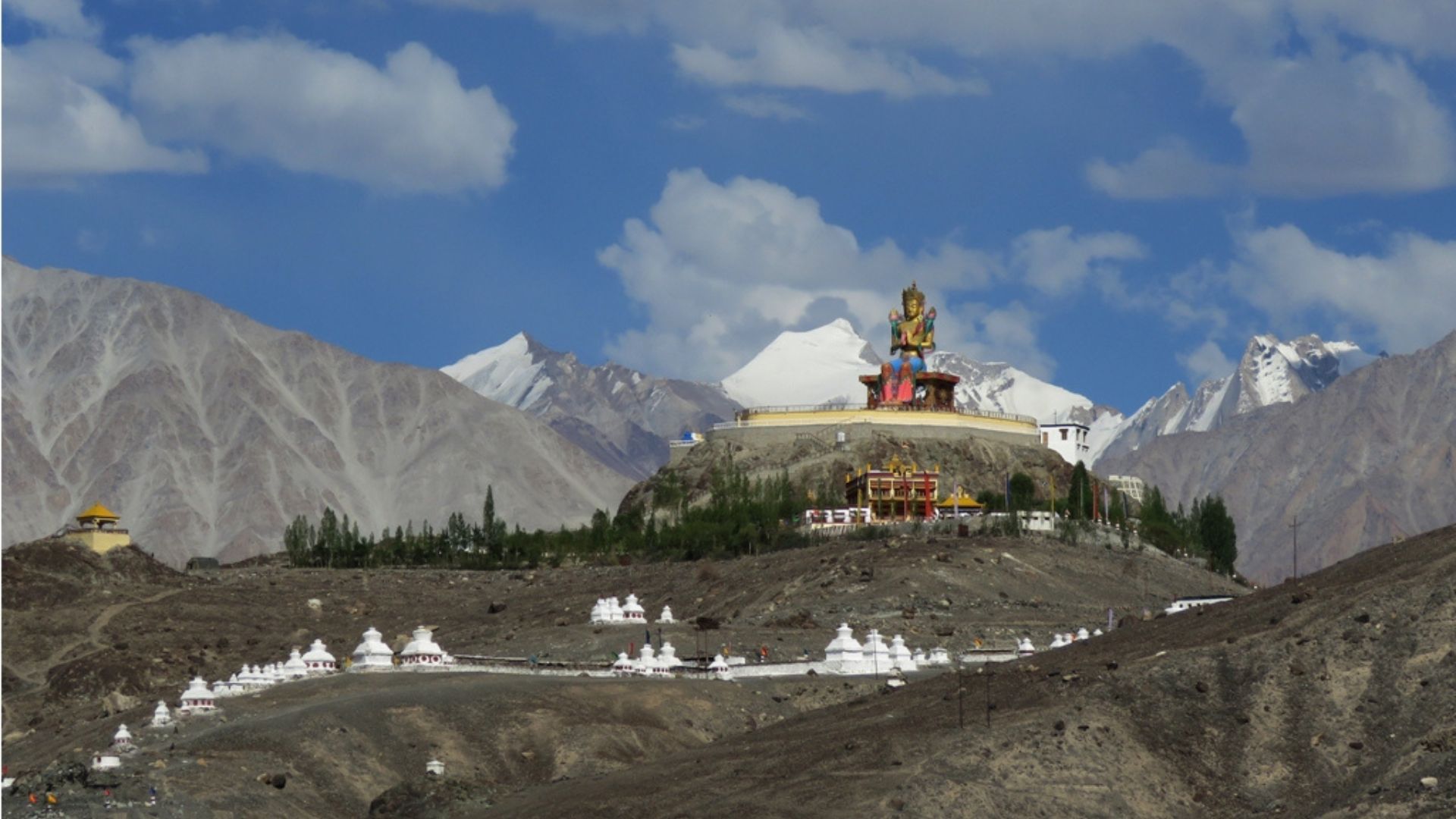
The journey to Nubra Valley begins in Leh, the capital of Ladakh (Photo: Administration of Ladakh)
Nubra Valley, tucked away in the northern part of Ladakh, is one of India’s most enchanting and peaceful destinations. With its mix of snow-capped mountains, white sand dunes, green villages and ancient monasteries, it offers visitors an unforgettable experience.
The journey to Nubra Valley begins in Leh, the capital of Ladakh. From Leh, travellers can reach Nubra by road via the Khardung La Pass, one of the highest motorable roads in the world at over 5,300 m. The drive takes about six hours and offers breath-taking views of mountains, valleys and glaciers. To enter Nubra Valley, all visitors, Indian or foreign, need an Inner Line Permit, which can be easily obtained in Leh through travel agencies or online.
One of the most striking sights in the valley is Hunder, where the desert meets the mountains. Visitors are often surprised to find white sand dunes at such a high altitude. At Hunder, one can enjoy a ride on a double-humped Bactrian camel, a rare species that was used along the Silk Route. The sunsets over the dunes are magical, with the golden light reflecting off the sand and mountains.
Diskit Monastery is another must-see attraction. It is the oldest and largest monastery in Nubra Valley and sits on a hilltop, offering wide views over the valley below. A massive statue of Maitreya Buddha, facing the Shyok River, brings a sense of peace and calm to the landscape.
About 43 km from Nubra valley lies the, Samstanling Monastery near the village of Sumur. The Monastery offers a quieter but equally beautiful spiritual experience. Its brightly coloured walls and peaceful surroundings make it an ideal place to stop and reflect.
Last village of India
About 165 km north of Nubra valley lies Turtuk, commonly known as the last village of India. The village feels quite different from the rest of Ladakh.
Close to the Line of Control with Pakistan, Turtuk is home to the Balti people and is known for its warm hospitality, traditional stone houses and apricot orchards.
Wandering through the village offers a glimpse into a unique way of life, shaped by history and geography.
Another peaceful spot is Panamik. Located 100 km from Turtuk, Panamik a small village famous for its natural hot sulphur springs, which are believed to have healing properties. The views from village are equally impressive, with the Nubra River winding through the valley and the distant snow-covered peaks in view.
Adventure enthusiasts can trek in the nearby mountains, camp under the stars and explore remote villages. Others may prefer to simply enjoy the slow pace of life, visit monasteries and try local dishes such as thukpa and momos.
Photographers will find inspiration in every direction, from colourful prayer flags fluttering in the wind to quiet, stony paths leading to hidden hamlets.
The best time to visit Nubra Valley is between May and September, when the weather is pleasant and the roads are open. During winter, temperatures drop sharply and many routes become impassable due to snow.
