
Indian travellers are moving toward short-haul destinations such as Thailand, Singapore and Vietnam
The geopolitical shock caused by the siw-week long conflict between Iran and the United States-Israel has disrupted India’s travel economy, says the Punjab, Haryana, Delhi Chamber of Commerce and Industry (PHDCCI), which warns of a 15–20 pc decline in inbound tourist traffic and an estimated INR 180 billion net loss for the aviation sector following the ongoing West Asia conflict.
In a press statement, PHDCCI says that airlines are facing flight cancellations, restricted airspace and rerouted international operations, increasing travel time by two to four hours on key routes. With aviation turbine fuel already accounting for 35–40 pc of operating costs, the longer routes have raised fuel consumption and overall expenses, affecting profitability.
The statement adds that the disruption of Middle East air corridors, a major global transit hub, has reduced connectivity and pushed up airfares. The impact is visible in travel patterns, with inbound tourism declining by up to 20 pc as international travellers delay or avoid long-haul trips linked to affected routes.
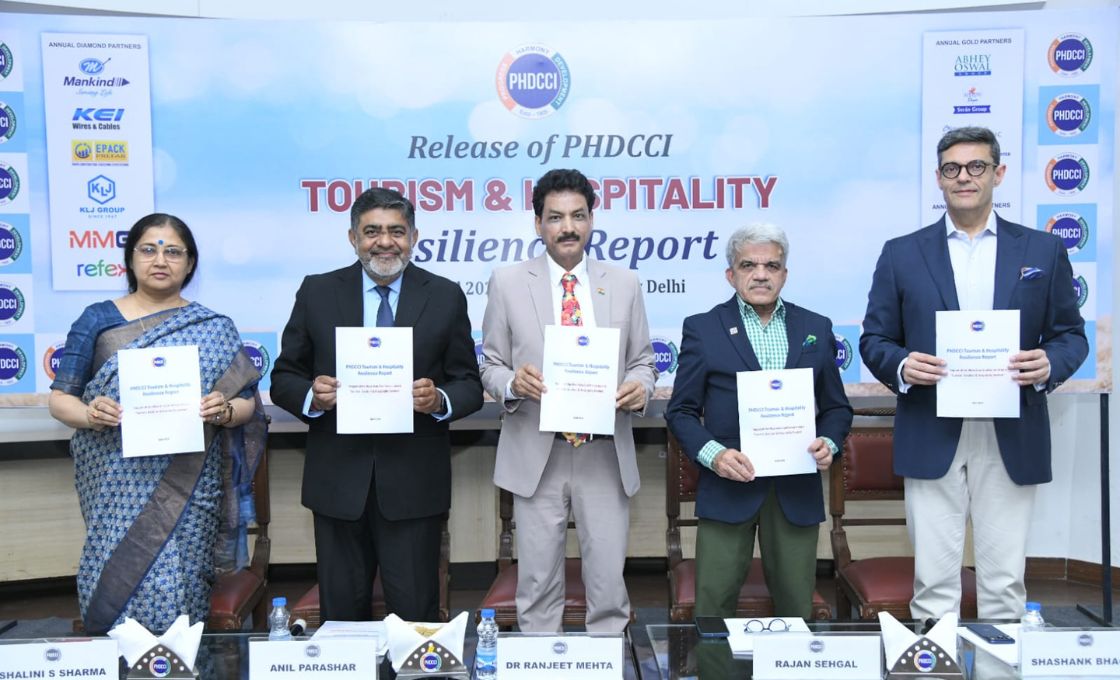
In its report, Impact of the West Asia Conflict on India’s Tourism, Aviation & Hospitality Sectors, PHDCCI identifies aviation as the worst-hit segment.
Also Read: With energy crisis, India real loser in US-Israel attack on Iran
The report adds that outbound travel trends have also shifted. Indian travellers are moving toward short-haul destinations such as Thailand, Singapore and Vietnam, while demand for long-haul travel has moderated due to transit risks, says the statement.
According to the report the hospitality sector remains operationally stable due to domestic demand, but rising energy and input costs are affecting margins, particularly in premium and business hotel segments that depend on foreign travellers.
In the food services segment, industry estimates aligned with the National Restaurant Association of India indicate that nearly 10 pc of restaurants have shut down, with business losses reaching INR 790 billion per month. Input cost inflation of 10–15 pc, driven by imported ingredients, logistics, and energy, has added pressure, especially for small and mid-sized operators, says the report.
Also Read: With energy crisis, India real loser in US-Israel attack on Iran
According to the statement, despite external disruptions, domestic tourism continues to sustain demand across sectors, supported by travel trends such as staycations and short-duration trips. However, the report underlines the need for policy intervention to manage ongoing risks.
Key recommendations include diversifying international air routes, reducing dependence on conflict-prone regions, easing taxation on aviation turbine fuel, and improving access to credit for MSMEs. It also calls for strengthening domestic tourism circuits, expanding infrastructure, and targeting new international markets to offset the decline in inbound travel.
