
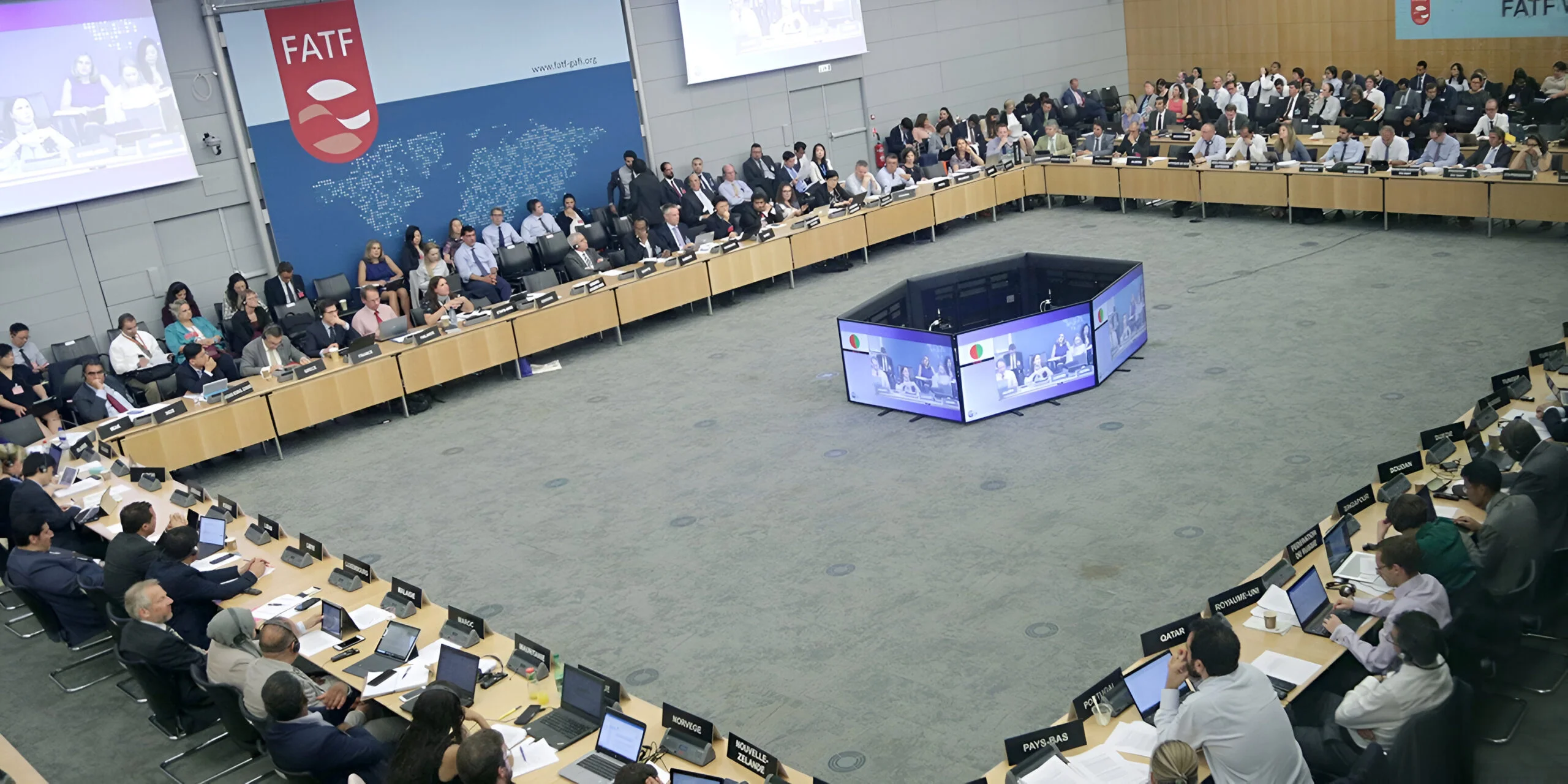
The new guidance has undergone extensive public consultation gathering more than 100 responses (Representational Image)
Financial Action Task Force (FATF), a global money laundering and terrorist financing watchdog, announced that it has updated its Guidance on Financial Inclusion and Anti-Money Laundering and Terrorist Financing Measures to support countries and the private sector in bringing more people into the formal financial sector through proportionate, risk-based approaches to tackling illicit finance.
In a press statement, FATF says that the guidance follows the strengthening of Recommendation 1 of the FATF Standards earlier this year to reinforce the expectation that Anti-Money Laundering, Countering the Financing of Terrorism, and Counter-Proliferation Financing (AML/CFT/CPF) controls must be implemented through a proportionate and risk-based approach, and to encourage countries to promote financial inclusion.
The statement adds that the new guidance highlights that financial inclusion and the fight against financial crime are mutually supportive. Enhanced financial sector transparency and integrity increases the reach and effectiveness of AML/CFT/CPF measures that help keep criminals out of the financial system and facilitate law enforcement investigations.

Elisa de Anda Madrazo
“Bringing more people into the formal financial sector is crucial to our fight against financial crime, as it reduces the size of the black and informal markets where criminals and terrorists hide their operations. But it also addresses a clear injustice in our society. Financial exclusion largely affects people in disadvantaged and vulnerable communities. In the majority of cases, these people are not higher risk but are excluded from financial services due to cost or lack of formal documentation,” says Elisa de Anda Madrazo, President, FATF.
According to the statement, the new guidance has undergone extensive public consultation gathering more than 100 responses, including from civil society, academia and the public and private sectors. It contains practical case studies from around the world.
FATF adds that it expects countries and private sector to implement AML/CFT/CPF measures through a risk-based approach. Greater recognition of a risk-sensitive approach to implementing AML/CFT measures, including an approach that considers the risks of financial exclusion and the benefits of bringing people into the regulated financial system, is a key step for countries seeking to build more inclusive financial systems.
The updated FATF Guidance includes examples of how policy-makers, supervisors, the private sector, industry associations and others have implemented the risk-based approach. For instance, In Sweden, the Swedish Bankers Association, in collaboration with the Swedish Migration Agency, designed a process to enable identification of asylum seekers for the purpose of opening a bank account, through confirmation provided by the Swedish Migration Agency through an online process.
Meanwhile in the Netherlands, the Dutch Association of Banks published a risk-based industry baseline on implementing AML/CFT measures for low, neutral, and high-risk scenarios related to EU list of high risk third countries. The baseline defines different risk scenarios and specifies how FIs should approach each scenario with practical use cases, thus helping to take proportionate measures. In Singapore, the Monetary Authority of Singapore works with retail banks to offer Limited Purpose Banking Accounts to individuals with higher ML/TF risks for example ex-offenders in serious financial crimes.
