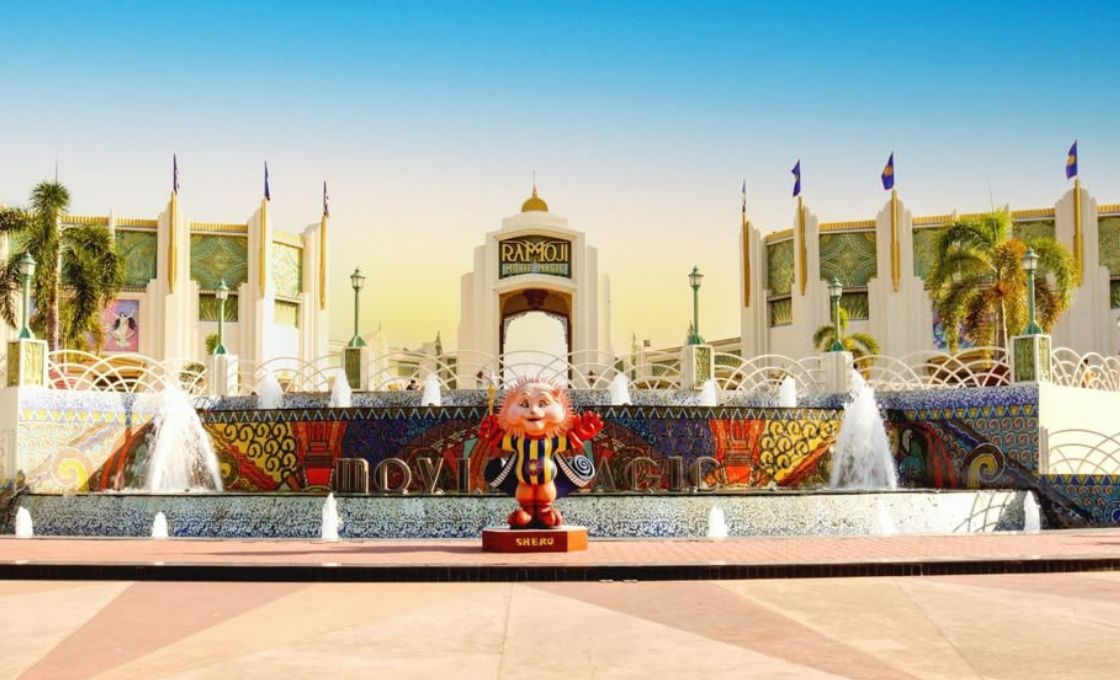
Ramoji Film City functions as a tourism destination, around 1.5 million tourists visit each year (Photo: Telangana Tourism)
Ramoji Film City, situated in the Ranga Reddy district, about 40 km from Hyderabad in Telangana, operates as a city built for cinema where films are not just shot but lived. Sprawling across 809.37 hectares, it merges large-scale production with tourism, turning the mechanics of moviemaking into an experience itself. It has hotels, restaurants, transport, a workforce, and a daily schedule. It also happens to be the world’s largest film studio complex.
Ramoji Film City holds a Guinness World Record for its size. The numbers behind it are not cinematic embellishment. The facility has 47 sound stages for indoor filming, along with permanent sets including forests, gardens, mansions, apartment blocks, hotels, a railway station, and an airport. It offers over 500 locations and can support up to 20 international film productions simultaneously. Nearly 40 Indian films can be produced at the same time, serviced by a workforce of 6,000 personnel.
Also Read: Interview: Vijayeswari Ch, Managing Director, Ramoji Film City
The man behind it was Cherukuri Ramoji Rao, born in 1936 in a farming family in Krishna district, Andhra Pradesh. He built a media empire that included the Eenadu Telugu newspaper, the ETV channel network, and a financial services company. His intention with Ramoji Film City was to build a film studio modelled on Universal Studios in the United States. He commissioned art director Nitish Roy to design the complex. The site originally featured jungles and rugged terrain, and was developed with a focus on preserving its natural environment.
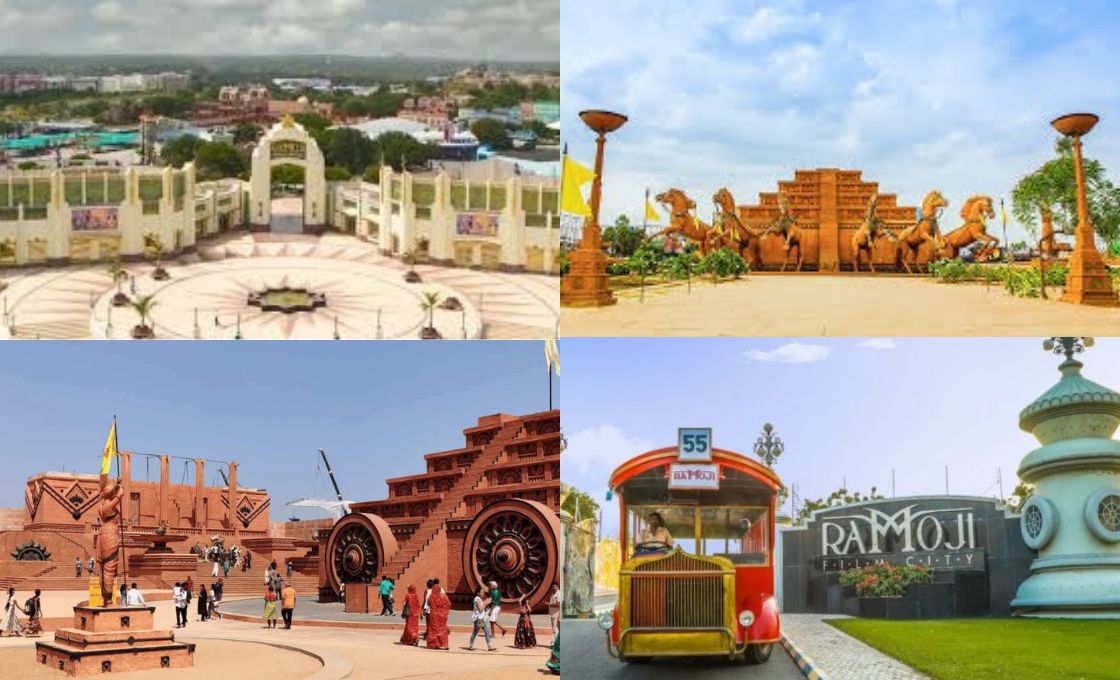
Ramoji Film City holds a Guinness World Record for its size (Photo: Telangana Tourism)
The facility was established in 1996. The first film to be shot entirely at Ramoji Film City was Maa Nannaku Pelli in 1997. From that point, the complex became a production hub for Telugu, Hindi, Tamil and other Indian language films, as well as television serials. Hollywood productions including Crocodile 2 and Nightfall were also shot there in the early years. Later, Hrithik Roshan’s Krrish 3 used the Mumbai road set, and the Mahishmati sets from the Baahubali franchise became among the most visited spaces on the lot.
The scale of production the site handles annually is substantial. Ramoji Film City handles around 400 to 500 film productions each year across multiple Indian languages, and can accommodate up to 15 simultaneous shoots. Since its opening, over 3,500 films in various Indian languages have been shot there.
The infrastructure supporting this output is purpose-built. The set design and construction division, called Maya, maintains a backup inventory of 10,000 objects including pillars, cornices, brackets, moulds, domes, and dado designs, operated by 500 professionals. A separate division called Parade handles props and costumes. A central kitchen supports film crews on location.
Alongside the production operation, Ramoji Film City functions as a tourism destination. Around 1.5 million tourists visit each year. The facility has six hotels and provides internal transportation via vintage buses and air-conditioned coaches, employing approximately 1,200 staff members and 8,000 agents. Visitors take guided tours through the studio lots, watch live stunt shows, visit themed gardens, and move through sets built for specific films. The site also includes an adventure land called Sahas and a wellness centre called Sukhibhava.
The entry fee for a general adult ticket starts at approximately INR 1,150. Tour buses operate on fixed circuits through the lot.
Also Read: Film Cities in India
Ramoji Rao did not live to see the operation reach its third decade in full. He died in June 2024, at the age of 87, from heart disease in Hyderabad.
The film city now operates under the legal entity Ushakiron Movies, with Kiron as Chairman and Vijayeswari as Managing Director. Operations have continued without visible disruption.
What Ramoji Film City represents, structurally, is the convergence of two industries that in India have long operated in parallel film production and domestic tourism. The studio became a destination not despite being a working facility but because of it. Tourists pay to observe the infrastructure of production: the false fronts, the light rigs, the constructed streets that exist solely to be filmed and then abandoned. The behind-the-scenes has become the attraction itself.
Recent blockbusters shot at Ramoji Film City include Kalki 2898 AD (2024), Salaar: Part 1 – Ceasefire (2023), Leo (2023, including the climax), Pushpa: The Rise (2021), and RRR (2022).