
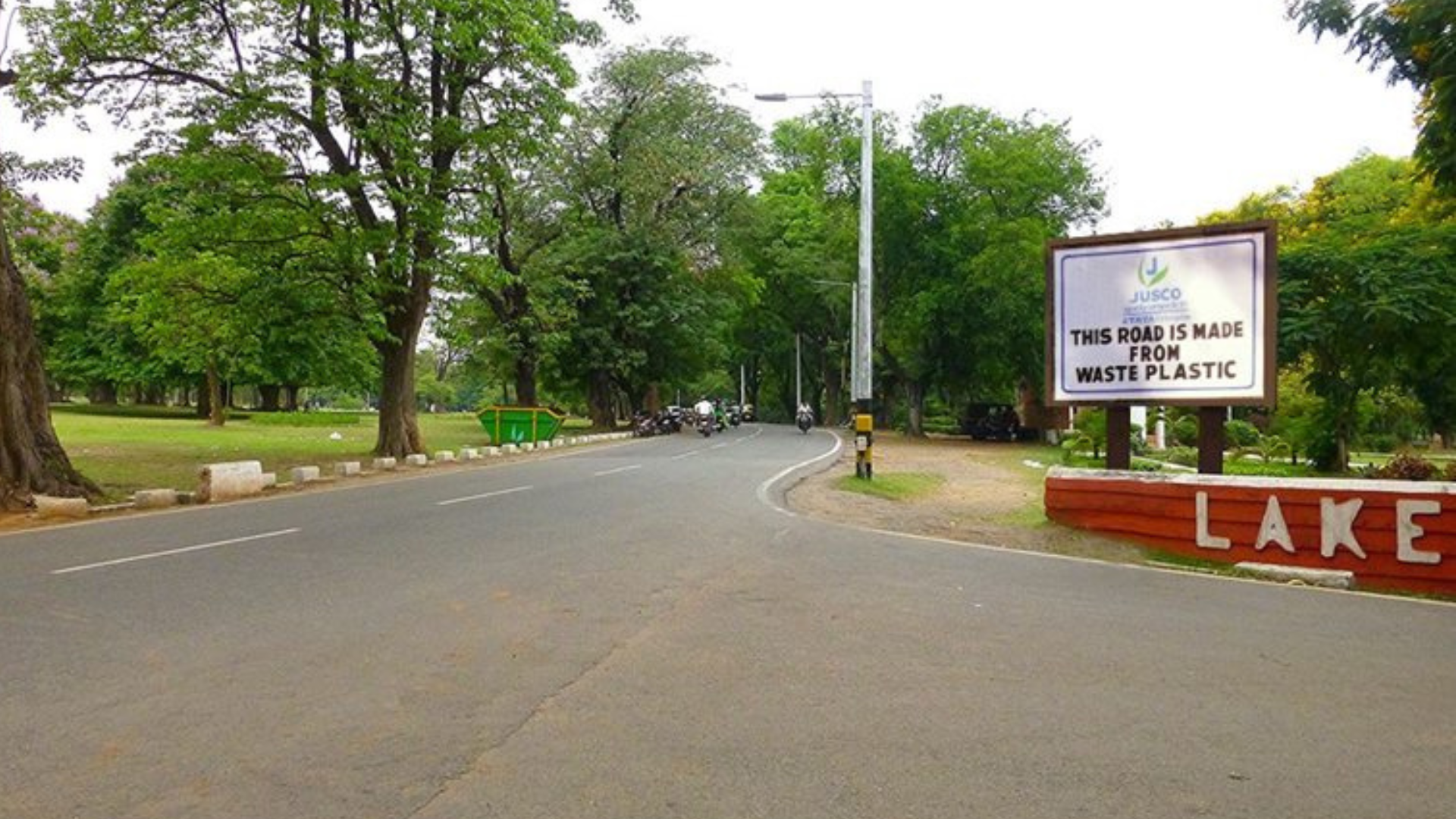
Roads made with recycled plastics have been hailed as an ingenious solution to the global waste problem
Earlier this year, scientists revealed startling evidence that concentrations of microplastics in human brains and livers sampled in 2024 are now considerably higher than those found in similar tissues eight years ago. The new findings, published in Nature Medicine, confirmed that a human brain harbours as much as 4,917 micrograms of plastic per gram of tissue, an increase of nearly 50 pc since 2016, with the liver and kidneys not far behind. In individuals with dementia, the microplastic burden was even greater.
According to recent estimates, the average person may ingest or inhale between 78,000 and 211,000 microplastic particles every year, and microplastics have been detected in 98.9 pc of seafood samples and throughout the terrestrial food chain.
Yet plastics are far from confined to infrastructure. From mobile phone cases and kitchenware to clothing fibres and packaging, the modern world is virtually encased in polymers. The invisible price is paid in the form of microplastics, tiny fragments shed through daily wear, washing and sunlight, making their way into soil, rivers, the ocean, and the air.
Concerns around human health are growing, especially as microplastics are now conclusively found not just in blood and lungs but in organs as varied as kidneys, liver, placenta, even the brain and reproductive tissues. They have also been detected in skin, arteries, bone marrow and umbilical cord blood of newborns. Laboratory data indicate that microplastic particles as small as 10 micrometres can breach organ barriers and enter cell structures.
“We take in microplastics mostly by eating or breathing them, and sometimes through contaminated water. In the short term, these tiny bits can irritate the gut and lungs, spark inflammation, cause oxidative stress, and throw off the balance of helpful bacteria in our bodies. This can lead to discomfort in the abdomen, breathing problems, or exaggerated immune reactions,” Dr Shivam Singh, Resident Doctor, Apollo Hospital in Delhi, tells Media India Group.
“Over time, the risks multiply. Long-term exposure is tied to ongoing inflammation, which may increase the chances of heart disease, autoimmune disorders, and metabolic problems like type 2 diabetes. The additives that leach out, such as bisphenol A (BPA) and phthalates, can mess with our hormone systems, harm reproductive health (potentially lowering fertility and altering natural hormone levels), and even damage nerves. There is also evidence that these particles can affect our DNA, raising the risk of cancer. Researchers have found microplastics in various organs, including the liver, lungs, kidneys, reproductive tissues, and even the brain, where they can trigger inflammation and disrupt normal cell functions,” Singh adds.
And though there has been talk of recycled plastics, most of it is blatant lie as even the European Union admitted that over 90 pc of plastics supposedly safely recycled was in fact smuggled out of the EU and dumped in the Third World nations, notably in Asia and Africa.
And even when there is an attempt at recycling, various studies around the world have revealed the pointed failure of the notion of safe recycling of plastics. They say that there is nothing like safe plastic, leave alone safe recycling as at each step of manufacturing, transport and usage, plastics release microplastics in large numbers. The ‘recycling’, even if it is carried out not only release millions of microplastics, but also a large amount of highly toxic byproducts cited above.
Thus usage of recycled plastic in infrastructure, which is being presented as an ‘innovative solution’ to the planet’s mounting waste problem is perhaps laying the ground for ensuring that microplastics reach even those parts of the planet which have so far remained unpolluted.
Amongst the most prominent and high-profile applications for recycling plastics is the construction of roads using shredded plastic waste, a method increasingly embraced worldwide for its potential to decrease landfill burden and extend pavement life.
Roads made with recycled plastics have been hailed as an ingenious solution to the global waste problem. In 2024, India’s Central Roads Research Institute constructed trial plasticised roads that it said were designed to withstand temperature extremes. These roads use shredded plastic waste mixed into bitumen, prolonging pavement life and reducing maintenance costs. Elsewhere, Scotland, the Netherlands and South Africa have also tried similar methods, partly motivated by the promise of diverting mountains of discarded plastic out of landfills.
But latest research shows that the most notable risk is during the mixing and laying of the recycled-plastic asphalt. When heated, the mixture can release volatile organic compounds (VOCs) and polycyclic aromatic hydrocarbons (PAHs), compounds known to have adverse health effects if inhaled in large quantities. For workers directly on-site, careful use of protective gear is advised since exposure to PAHs such as benzo[a]pyrene is associated with non-cancer health risks.
Some field tests in Singapore and Thailand in 2024 suggest that at ground level near the finished road, the concentration of dangerous particulates is not significantly higher than in traditional roads, though long-term population studies are still lacking. Recent studies from South Africa also highlight the risk of microplastics being released as the roads age and degrade, infiltrating soil and water and thus entering the human food chain.
A study last year reported that over 11 million tonnes of plastics are dumped in the sea every year and that the level of microplastic pollution around the world’s oceans has reached unprecedented levels, with the Mediterranean seafloor near Italy recording 1.9 million pieces of microplastics in every sqm of the seabed.
One of the major contributors of microplastics entering the sea is through friction of tires on normal roads, that have been built without additional plastics dumped on them.
Global health systems may soon confront the reality of microplastic pollution as a leading factor driving chronic inflammatory disease, metabolic syndrome, and immune dysregulation, with resource-poor regions least equipped to manage the fallout. If plastic use and environmental contamination continue at the present rate, researchers fear not only surging incidences of cancer, heart conditions, and autoimmune disorders, but also increasing neurological impacts as micro- and nanoplastics are observed to cross the blood-brain barrier, raising the spectre of cognitive impairments, neuroinflammation, and perhaps higher rates of degenerative brain conditions such as Alzheimer’s and Parkinson’s.
While researchers are still studying the impact of plasticised roads on the ecology and human health, it is perhaps best for the governments to go slow on building plasticised roads as once built, there is no way to stop the plastics from getting mixed with water, air and soil and that may well set humanity and the entire biosphere on the path to perdition.
