
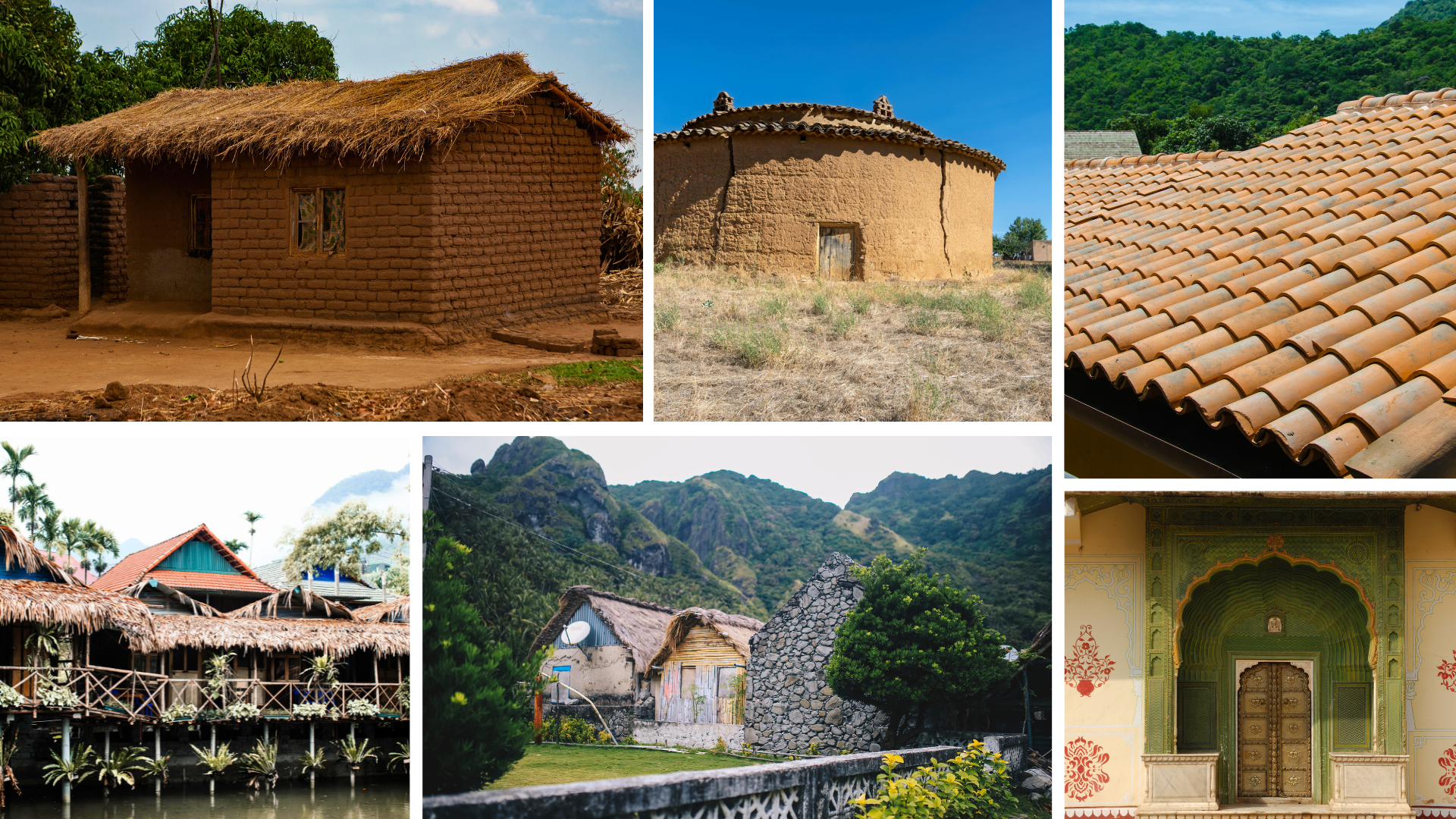
Traditional Indian houses were carefully designed to suit the local climate and lifestyle
When we think of Indian architecture, famous monuments like the Taj Mahal, Qutub Minar, forts and palaces or ancient temples of southern India come to mind. But there is another side to India’s architecture that is just as important, the traditional homes in villages across the country, built in a style known as Indian Vernacular Architecture.
In modern India, residents are forced to rely on artificial methods like air conditioners and heaters, depending upon the time of the year, to cope with the changing weather. However, in the bygone era, the builders had a much more natural approach. The homes they built were not planned by famous architects or used fancy materials, but by local people using naturally abundant materials such as mud, bamboo, wood and stone.
These houses were carefully designed to suit the local climate and lifestyle. Each region had its own unique style, reflecting the wisdom and creativity of the people who lived there.
These age-old building techniques show just how smart and resourceful our ancestors were when it came to living in harmony with nature. In some parts of the country, especially in the villages, these traditions have survived the onslaught of time.
North India
In the colder parts of northern India, such as Jammu and Kashmir, Himachal Pradesh and Uttarakhand, winters can be long and harsh. To stay warm, people build homes using stone and wood, which help retain heat.
The use of thick stone walls and wooden beams adds both strength and warmth to the structure. Sloped roofs are also common in these areas to prevent snow from collecting on top.
Northeast India
In the northeast of India, including states like Assam and Meghalaya, there is very high rainfall throughout the year and frequent flooding. To deal with this, houses are built on stilts, lifting them off the ground to stay above floodwater and keep insects and animals outside.
These homes are usually made from bamboo and thatch, which are locally available, lightweight and quick to rebuild if damaged making this style is perfect for the wet, hilly terrain of the region.
Central India
Central India, covering areas such as Madhya Pradesh and Chhattisgarh, experiences extremely hot summers. To protect against the heat, people here build houses with thick mud walls.
Mud is a natural insulator that keeps the inside of the house cool even when it is scorching outside. The simple design and use of earth materials make these homes comfortable and sustainable.
Western India
In western India, especially in the desert areas of Rajasthan, the climate is hot and dry during the day but cools at night, with very little rainfall. Here, houses are made from stone, which helps keep the interiors cool during the day and warm at night.
The walls are often thick and many homes are built with courtyards to allow air to flow freely. People also create clever rainwater harvesting systems to make the most of the little water they get in the dessert.
South India
In southern India, including states like Kerala and Karnataka, heavy monsoon rains are common but the region also warms up during summers. To protect their homes, people build sloping tiled roofs that let rainwater run off easily.
These roofs, made from clay tiles, not only help keep the home dry but also stay cool under the sun. The use of wood and open verandas adds charm and improves airflow during the hot, humid months.
