
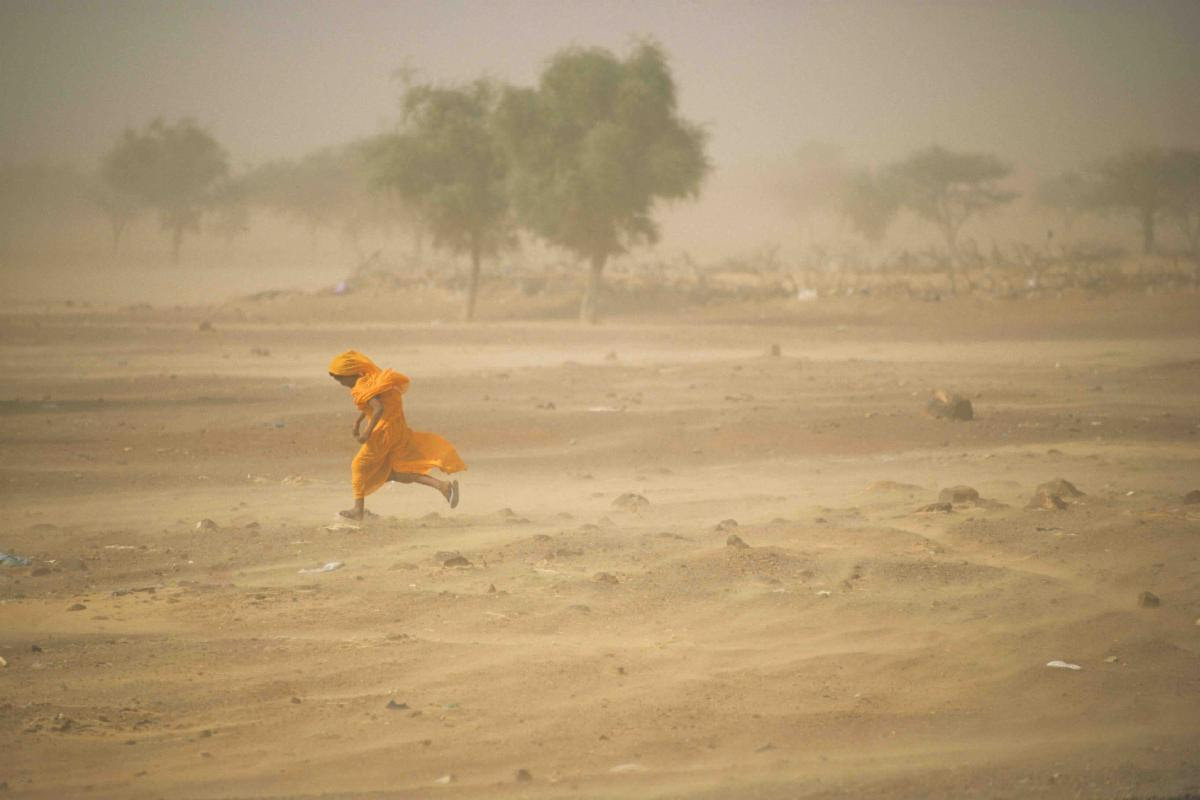
According to the report, the scientists propose an ambitious but achievable target of restoring 50 pc of degraded land by 2050
About 21 scientists have issued a prescription to use food systems as a powerful lever to halt and reverse global land degradation, emphasising that this action is critical to mitigating climate change and stopping biodiversity loss.
Their report, published in the journal Nature, quantifies the profound impact that could be achieved by 2050 through a combination of reducing food waste by 75 pc and maximising sustainable ocean-based food production, measures that alone could spare an area larger than the continent of Africa.
“This paper presents a bold, integrated set of actions to tackle land degradation, biodiversity loss, and climate change together, as well as a clear pathway for implementing them by 2050. By transforming food systems, restoring degraded land, harnessing the potential of sustainable seafood, and fostering cooperation across nations and sectors, we can ‘bend the curve’ and reverse land degradation while advancing towards goals of the UN Convention to Combat Desertification and other global agreements,” says Fernando T Maestre, Lead Author, King Abdullah University of Science and Technology (KAUST), Saudi Arabia.
“Once soils lose fertility, water tables deplete and biodiversity is lost, restoring the land becomes exponentially more expensive. Ongoing rates of land degradation contribute to a cascade of mounting global challenges, including food and water insecurity, forced relocation and population migration, social unrest, and economic inequality. Land degradation is not just a rural issue, it affects the food on all our plates, the air we breathe, and the stability of the world we live in. This is not about saving the environment, it is about securing our shared future,” says Barron J Orr, Co-Author and Chief Scientist, United Nations Convention on Combatting Desertification (UNCCD).
According to the report, the scientists propose an ambitious but achievable target of restoring 50 pc of degraded land by 2050, up from the current global goal of 30 pc by 2030. This would translate into the restoration of 13 million sqkm of land, both cropland and non-cropland, with a focus on including indigenous peoples, smallholder farmers, women and vulnerable communities in the process.
The report adds that key recommendations include shifting agricultural subsidies toward sustainable smallholder farmers, instituting land-based taxes to reward sustainable practices, implementing environmental food labeling for informed consumer choices and enhancing data systems to track emissions and land use impact.
It adds that with roughly one-third of all food currently wasted, 14 pc lost post-harvest and 19 pc at retail and household stages, cutting food waste by 75 pc could spare about 13.4 million sqkm of agricultural land.
The report highlights the integration of land and marine food systems as a vital approach. Sustainable seafood and seaweed-based products could replace a significant share of unsustainably produced red meat, thereby sparing 17.1 million sqkm of pasture and feed cropland.
The report says that together, these measures, land restoration, food waste reduction, and dietary shifts toward sustainably sourced ocean foods, could spare or restore approximately 43.8 million sqkm of land by 2050. Beyond land savings, the combined efforts would mitigate around 13 billion tonnes of CO2-equivalent emissions annually, improve biodiversity by protecting natural habitats, and assist in fulfilling international commitments such as the Rio Conventions and Sustainable Development Goals.
The authors call for coordinated action among the UN’s Rio Conventions, UNCCD, CBD, and UNFCCC, to align efforts around shared land and food system goals. Implementation of these measures promises to transform global food systems into a core part of the solution for climate change, biodiversity conservation and global health.
