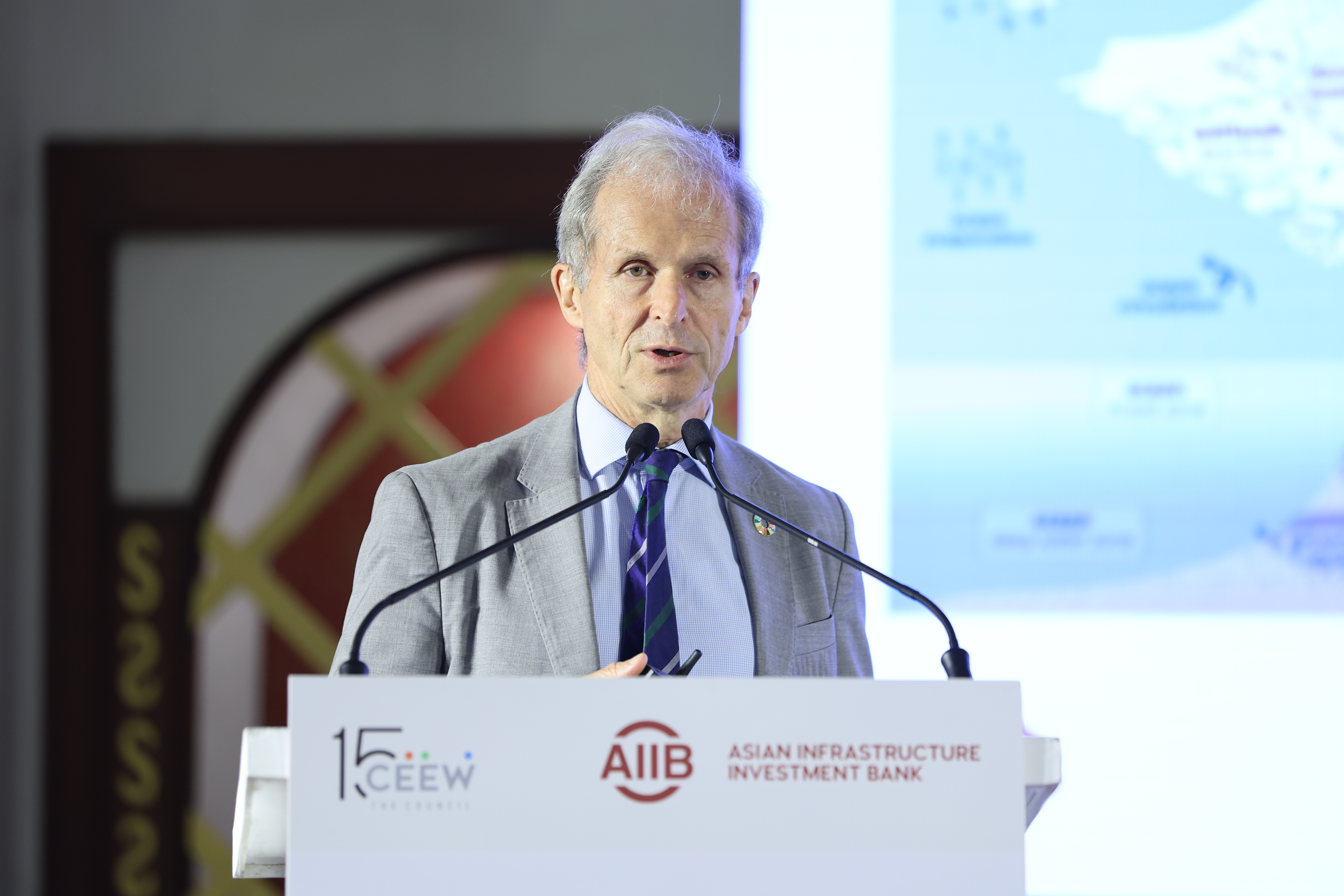
Moody's credit rating mentions that improved water management would allow India to achieve a better credit rating, leading to cheaper capital, which is a very important reason to consider this now
You have just released a report on the Asian water infrastructure. What is the most critical finding of that report?
The most important finding or outcome, if I were to choose one, is that we need to think of the water cycle as an important infrastructure, as something we need to invest in, that we need to manage, that we need to make more robust. It also means we have to try to make sure we are not damaging the water cycle. We need to understand what is critical for the robustness of the water cycle. It is about investing money in nature, it is about governance, it is about the water cycle. The important thing is that we have to try and leave as much water in nature as we can. So whether it is in rivers or lakes or very crucially also in forests and wetlands of course we want to retain water in the mountains and try to find ways of keeping it there when glaciers are melting, through forests or reservoirs. It is very important for us as a development bank to connect what we do on blue water, green water, the water that is in the soil and in the vegetation, what we do on urban water to what we do on watershed management and what we do on inland water and coastal infrastructure. So in fact it is a systemic approach to the water cycle.
When you say we need to address taking water as critical infrastructure, is it surprising that something as critical as water is not already considered critical infrastructure?
We have often looked at water as a sector of its own, but we are trying to show that water is a cross-sectoral and systemic issue. Water is critical because it makes life possible on earth and supports all economic activity based on it. In India, you have 18 pc of the world’s population but only 4 pc of the water. Much of that is from the monsoon as about 70 pc is through monsoon. There is a problem with harvesting or storing it, causing issues like flooding and runoff.
We have been conscious of the concerns and issues around water. Sometimes it is not enough, sometimes too much, sometimes it is too filthy, and almost always it is not very fairly distributed. However, I think we have treated it as a sector issue, not a holistic one.
How critical is the situation in India today?
It is critical enough to affect India’s credit rating. Moody’s credit rating mentions that improved water management would allow India to achieve a better credit rating, leading to cheaper capital, which is a very important reason to consider this now. More fundamentally, due to the current changes in climate and the continued loss of nature, the urgency of addressing the water issue is greater than ever before.
Also Read: AIIB calls for water to be treated as critical infrastructure
Do you see any sign of life in the government’s recognition of this in a very real manner, not political speeches but actually on the ground?
There is a lot of awareness, but the issues are not easy to resolve because it involves the pricing of water, which is politically very sensitive. It is about sorting out the finances of the utilities, which vary a lot across different states, so these are difficult issues to address. I think there is, as I said, an awareness that we are still struggling to get enough water.
Some of the problems can be politically tough to address while some are fundamental. Pumping water from the groundwater table without permission is a crime, and this practice is very common in India. Do you see the government taking that seriously?
That is a nice point to raise. These irrigation systems, now with the help of solar panels, are reducing the cost of obtaining water but increasing the problem of groundwater depletion. For example, when we offered a loan to the Maharashtra government for USD 1.1 billion for solar pumps, we stipulated that the depth of the drill holes cannot be beyond a certain part and it cannot be done in areas that are challenged. So you can do something on regulation side, but I think the real opportunity is to try to connect more of this to the grid to allow farmers to ensure there is an opportunity cost for using this for pumping water or to instead use it to find ways of selling it to the distribution companies.
So I think there are solutions, but it requires this systemic approach that we are still missing and we should, as I said, also take some responsibility ourselves. We haven’t maybe fully linked up what we do and we need to take a more systemic approach. And I think it is a little bit parallel to how we have addressed climate, that we have thought of climate, we are trying to address it project by project, in mitigation projects and adaptation projects, but we need to think much more systemically.
We need to consider how we can help shape policies and provide funding. We have a new instrument called policy-based funding for climate, which we can use to help shape water policies and support the implementation of new water policies. When we think about climate policy-based lending in India, it would certainly have a strong water component.
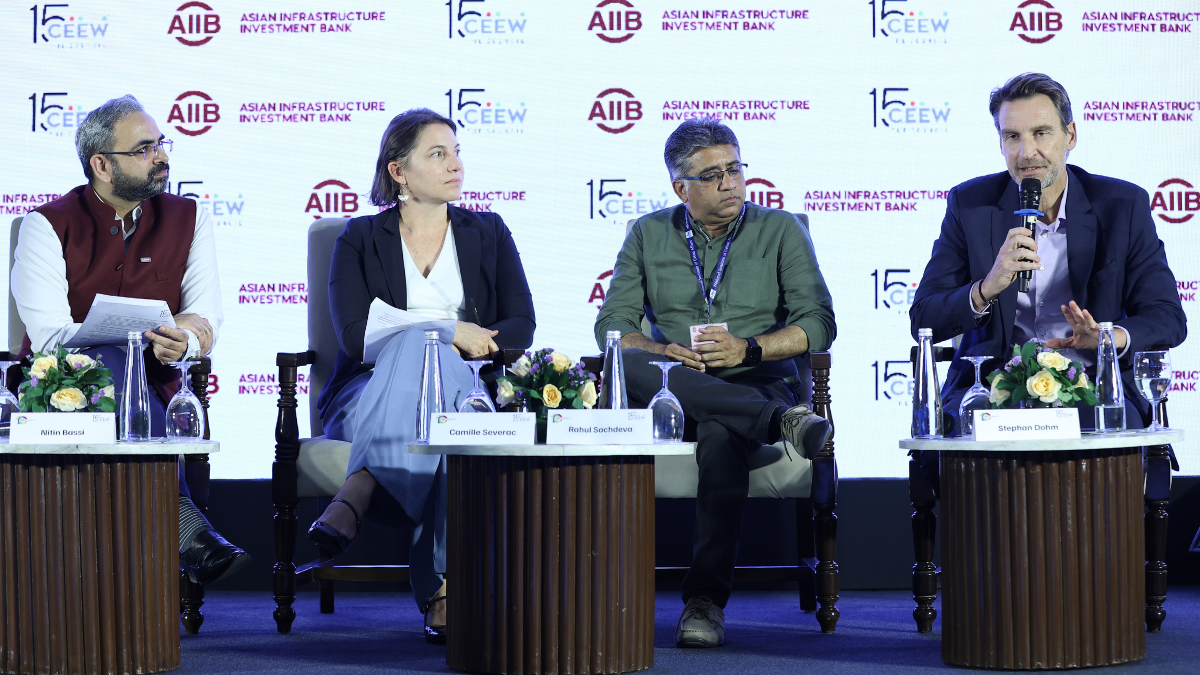
Global Travel & Tourism leaders on board Crystal Serenity for WTTC’s inaugural Leadership Cruise through the Suez Canal
Since the Paris Agreement of 2015, there has been hardly any progress on climate finance. Do you see any momentum now?
I think that is a lot of evidence that the Paris Agreement has helped. And without the Paris Agreement we would have been in a much worse scenario. On climate, we are very committed. Last year more than 70 pc of our financing was climate finance, and that is by the methodology of the multilateral development bank. We are nowhere near where we intended to be, but I suppose there is, even in India. I think I get different views on this in India, but I have to say I have a chance to come here two or three times a year, and I have seen a lot of movement over the last two or three years in terms of certainly what the private sector has been doing, but also I see more and more movement on the government side and now taking the commitments at the national level to the state level and also, in some cases, to the city level. I think it is a very beneficial trend, thinking about creating some kind of country platform that would allow India to attract financing for climate, I think, is also very promising. I think the parallels between climate finance and water are not just that they are similar, but that they are very much related, very much interrelated.
Also Read: India’s water contamination crisis goes far beyond Indore
But was it also the case that finance would come from international banks and rich countries. Why is that not happening?
I think it has not advanced to the level we wanted, and there has been some improvement, but not at the levels we committed to. However, this presents an opportunity because there is a lot of capital in the private sector and among institutional investors willing to provide climate-related financing. This is why discussions about creating a platform for India are welcome, as it could help channel funding and technologies.
India needs to become more active in the green technology space, both by adapting technologies developed elsewhere and by developing its own. India has significant capacity for this. A couple of years ago, I visited the Indian Institute of Science in Bengaluru and was impressed by the start-ups focused on renewable energy and energy efficiency. The challenge is scaling these innovations. There are important lessons from China, which started by supporting basic science, then individual companies, and finally adoption shifting support over time without increasing subsidies. This is a real opportunity for India to do more effectively.
Is the west, particularly the developed world entirely failing and completely reneging on its obligations regarding climate financing?
I believe it is accurate to say that we are not fulfilling the obligations we made. That being said, there have been significant increases, and I see a lot of cash coming to nations that are making commitments to transparent and genuine climate policy. India needs to prove that it is dedicated to cooperation across ministries at the federal, state, and municipal levels and that it will implement climate mitigation or adaptation investments. Looking at countries like Egypt or Brazil, which have developed frameworks for attracting investment, we can learn from their experiences. We need more financing and credible policies to ensure success.
What makes you think India is falling behind in that?
This is complicated. It is a large country with a big economy and strong stakes in the coal sector, particularly in the state-owned part of the economy. Both state-owned enterprises and financial institutions are committed to fossil fuels. We must be honest, coal will remain part of the energy balance for some time. However, the shift from base load to peak load is a major achievement that can be pursued over the next decade. Electrification is critical, and it is not just a supply problem. While supply is growing, electricity isn’t attractive enough for many users due to subsidies. We need to push the electrification agenda and gradually change the energy mix.
Earlier you talked about equity in access to water. How critical is this imbalance in India? Considering that we are the world’s largest number of poor people.
The impact of climate, the impact of nature loss, and the impact of water stress are felt much more by the poor, by the elderly, by women more than men, and so on. This is obviously the impact on heat, on air pollution, and on all those things, which people have ways of protecting themselves against. Not perfectly, but you can see on health outcomes that it really makes a difference whether you have resources to protect yourself.
The challenge is to, when we make this intervention, make sure that it reaches the poor and that they are involved in local communities. I think a lot of this will be around the management of nature. You cannot manage nature without the involvement of the local community. You need to give them a stake in improving nature and give them a stake in managing these assets over time. There is a huge international experience now, and we should learn from that. How you create government schemes that ensure, for example, indigenous populations certain compensation over time and then you need to provide sufficiently long time horizons for this so that this is something that happens over generations. That is the problem, the private sector cannot do that. We need to have government schemes at the bottom, but then the private sector can come in and facilitate and intermediate this. But if we don’t have that commitment from the government side, it won’t happen.
Also Read: World Water Day: Pollution aggravates water scarcity in India
When discussing overpricing, is it important to note that the poor are already unable to afford it?
It is a very critical problem. But you need to find other ways of reaching the poor than for them to overuse water and overuse electricity. You cannot really blame them because today it is very hard to control your consumption. Metering is highly imperfect both when it comes to electricity and water. So we need to help empower them to control their own energy consumption and water consumption as we are trying to price water.
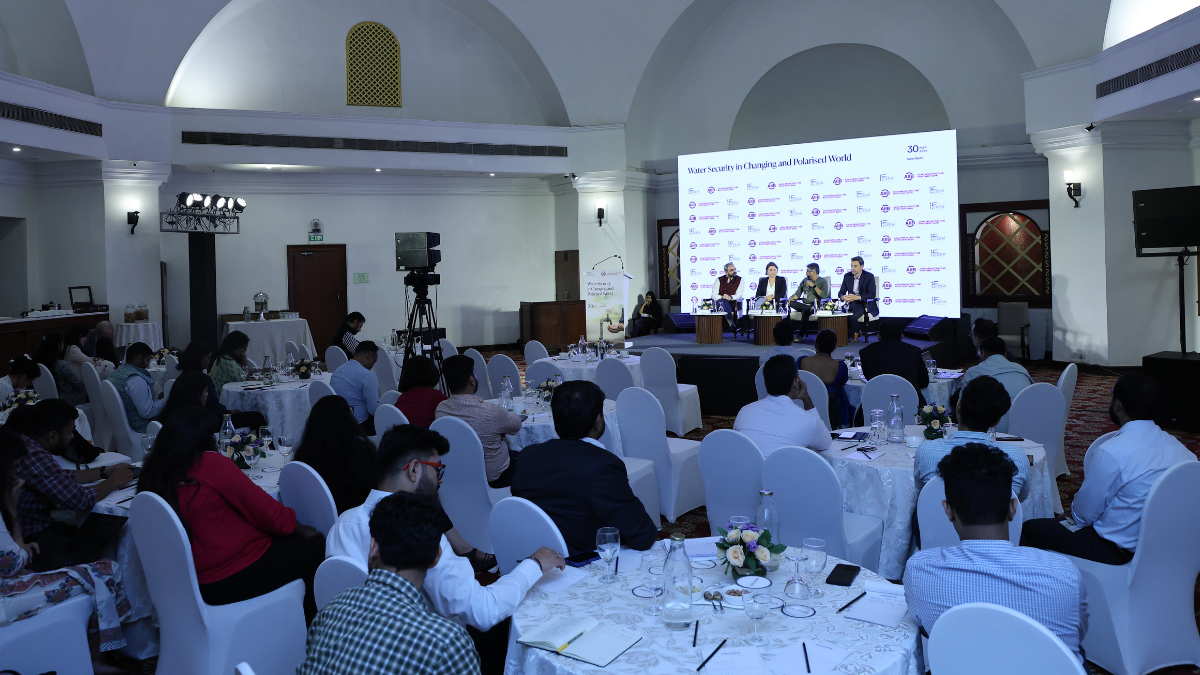
Experts, entrepreneurs and policy-makers convene for a conversation on a sustainable and balanced future
Would you support free water for the poor and a variable price as per usage for the rich?
I think there is evidence and there have been some studies on this in India as well. I noticed some studies today in Odisha, for example where when you give clean water at the door so that people can actually have it on tap, people are prepared to pay for it. There are health benefits and there are convenience benefits, particularly for women who are typically involved in water collection and so on. So I think we need to look at it as a service as well.
USD 1 a litre is nothing to a rich person, but it is beyond the capacity of the poor. Would you favour differential pricing?
I would approach it differently. I would try to target schemes of the budgets of the poor and find other ways. Maybe, again, I realise that sometimes in India the tools are not there. But for example you have this wonderful Aadhaar system which allows you to identify the poor in a very different way and maybe that can be used for finding schemes that directly help those poor rather than using water or electricity as a way.
Then you tie that in with the reality that 80 pc of Indians are poor, and many get free food from the government. Or may these 80 pc also be supplied water at differential pricing or financial support to pay for water?
That is what I’m saying. You should pay them, and if they want to use it for water, that is fine. They might have used too much water. If they want to buy a television, that’s fine too. I believe elections should allow people to make their own decisions. You give them the money, and they decide how much to spend on water, power, and other things.
There is an intriguing study from Morocco, about 15 years old, examining families’ connection to water infrastructure. The biggest gain was not the expected health benefits, as women had learned to treat water effectively. Instead, the real benefit was that women gained a lot of free time, increasing their life satisfaction.
We need to consider how and when we develop these services, help people understand the benefits, and ensure those who benefit most from these reforms can influence investment decisions.
Does your report have any figure about how much India needs to get its water right?
India is a very water-stressed country, with excessive water use in agriculture and industry. Thermal plants, coal, and gas are heavily dependent on water for cooling. Indian exports are highly water-intensive, especially rice cultivation, which could be produced more efficiently or diversified.
Water pricing is crucial, as it influences the virtual water content globally. Proper pricing should reflect scarcity. The report highlights ‘flying rivers’, or atmospheric rivers of moisture, originating from dense forests. Brazil is the largest contributor, with India also playing a significant role. Emerging and developing countries, with their natural resources, have a surplus compared to advanced economies.
Even with the lowest water tariffs, advanced economies would owe significant debts to these countries. India is the seventh-largest contributor, exporting its water for free.
Is there a way to tap it?
There have been tremendous improvements in the science of water. We now understand that water molecules are not identical, allowing us to trace them through nature and determine their origins and destinations. This knowledge lets us think differently about contracts and governance.
Today, we can better monitor where water comes from and where it goes. For example, in Mato Grosso, Brazil, there is a ‘parametric insurance’ project related to rain. If there is no rain, compensation is provided. Interestingly, the arrangement identifies those responsible for insufficient rain. If a part of the rainforest isn’t maintained, contributions are required for farmer compensation.
These arrangements can be implemented within countries, and over time, we should consider expanding them. Countries benefiting from atmospheric rivers have a self-interest in sustaining them. This is why investing in the rainforests of the Amazon and the forests of India is crucial.
Are we not doing that?
No, you are not doing that now. But this should be something that also should come from the outside because outsiders are benefiting from this.
Which is the largest beneficiary of this river of water? Is it the USA?
If you look at Brazil, it is the largest exporter, benefiting regions like the Pacific, the southern and eastern US, Africa, and even India. The Congo Basin is massive for Europe and the rest of Africa, and very important for India. Indonesia is also very important. The largest beneficiaries include countries like Mongolia and Central Asia, but in net terms, the economies of Europe and the United States are big beneficiaries. Canada, on the other hand, is a net contributor.