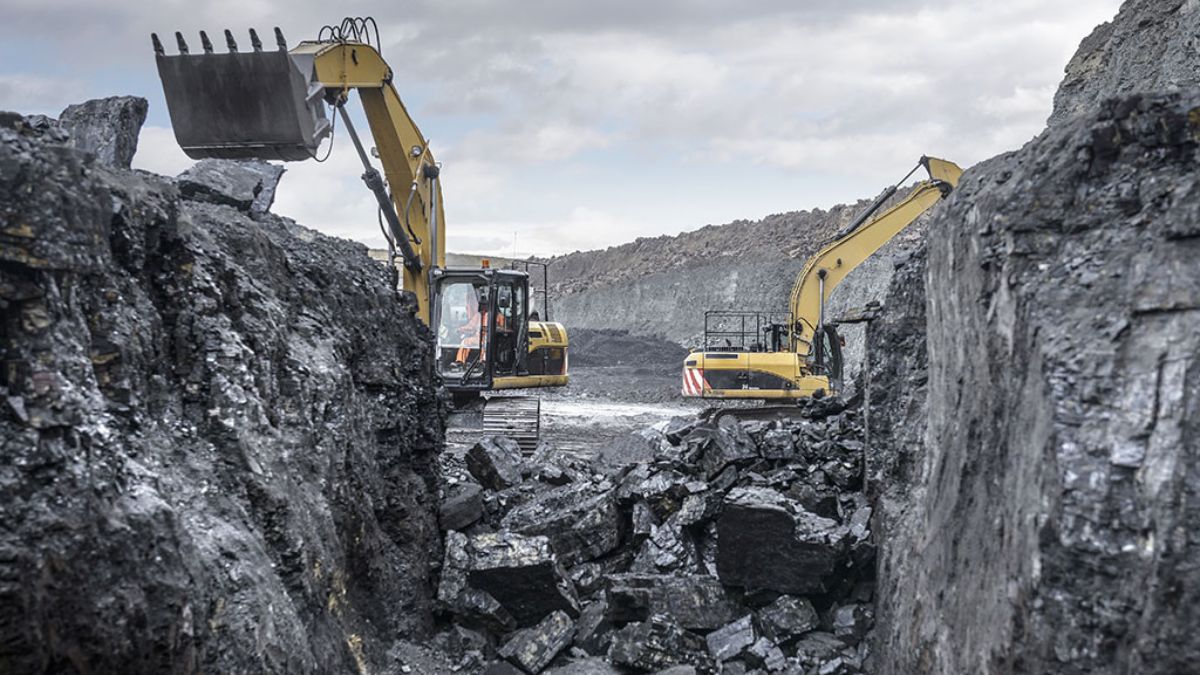
Coal still accounts for roughly 60 pc of India's total power output, even as its share of installed capacity has fallen below 50 pc (Photo: CREA)
On March 25, more than a year after it was due, the Union Cabinet quietly approved what may be the most consequential document India has submitted to the international community in recent years. India’s third Nationally Determined Contribution, its updated climate action plan under the Paris Agreement, covering the period 2031 to 2035 landed without much ceremony, framed as a natural progression of the country’s ‘consistent track record’ of climate delivery.
The report pledges are striking enough to reduce emissions intensity of GDP by 47 pc from 2005 levels by 2035, raise the share of non-fossil fuel electricity capacity to 60 pc, and expand India’s forest and tree cover carbon sink to between 3.5 and 4 billion tonnes of CO₂ equivalent. These targets build on India’s 2022 NDC, which had set a 45 pc emissions intensity reduction and 50 pc non-fossil capacity by 2030, targets that India has already exceeded ahead of schedule, with non-fossil capacity crossing 52 pc by early 2026 and emissions intensity down 36 pc between 2005 and 2020.
Also Read: Global North violating Paris Agreement commitments: Climate Action Network
For a country that accounts for roughly 3.5 pc of global historical emissions, that progress is genuinely meaningful. But the world that India’s NDC enters in 2026 is not the world of 2015, when its first climate pledge was submitted. Temperatures are rising faster than models projected. The 1.5°C window is narrowing and the gap between what countries have pledged and what the science demands has never been wider.
The 60 pc clean power capacity target is the centrepiece of India’s updated NDC and it is where the gap between optics and reality is most instructive.
India’s non-fossil installed capacity already stands at around 52 pc of its total electricity mix as of February. Analysts at the Centre for Research on Energy and Clean Air note that India added 41 GW of renewable energy in just the first 11 months of 2025, itself a record. At that pace, some analysts says India could hit 60 pc non-fossil capacity well before 2030, making the 2035 target less a stretch goal and more a floor.

Lauri Myllyvirta
But Lauri Myllyvirta Co-founder and Lead Analyst at CREA warns that the target ‘underestimates the country’s potential for transformative clean energy growth’, noting that under current plans, 60 pc clean-power capacity could be achieved before 2030. The ambition, in other words, may be calibrated to be comfortable rather than transformative.
There is also a fundamental distinction between capacity and generation one that policy documents tend to obscure. Installed capacity says how much electricity a plant could generate. The actual contribution of clean energy to India’s grid is a different matter entirely. Coal still accounts for roughly 60 pc of India’s total power output, even as its share of installed capacity has fallen below 50 pc. The reason being that renewables are frequently curtailed when the grid cannot absorb them, and coal plants operating with minimum technical loads of around 55 pc are structurally difficult to flex down quickly enough during peak solar hours.
“The 60 pc clean power capacity target is directionally strong, especially given where India stood a decade ago. But ‘capacity’ is not ‘generation’. We have seen consistently that installed renewable capacity and actual clean energy in the grid are very different numbers, because of curtailment, grid integration failures, and storage deficits,” Abhiir Bhalla, Sustainability Consultant and Environmentalist based in Delhi tells Media India Group.
Also Read: COP26 headed to failure despite carbon to coal commitments
The Central Electricity Authority, which regulates power production in India, projects that country’s total power capacity will roughly double, reaching around 1,121 GW by 2035-36. For 60 pc of that to come from non-fossil sources, India would need approximately 672 GW of clean power, a formidable but, analysts says, already achievable target given current trajectories.
If the clean energy story contains uncomfortable nuances, the coal story is an outright contradiction at the heart of India’s climate ambitions.
Even as the Union Cabinet signed off on its greenest NDC yet, India added 7.2 GW of coal-fired power capacity in fiscal year 2025-26 the highest in a decade, roughly 60 pc above the previous year’s additions. As of late 2025, nearly 24 GW of new coal capacity was under construction, with another 107 GW in various stages of pre-construction development, according to Bloomberg’s Global Coal Countdown tracker.

Abhiir Bhalla
The Ministry of Power has outlined plans to add at least 97,000 MW of additional coal and lignite-based thermal capacity. Some internal government projections, as reported by Bloomberg, suggest coal capacity could reach 420 GW by 2047 nearly double current levels.
India justifies this expansion on grounds of energy security, citing the volatility of global fossil fuel markets intensified by the West Asia energy crisis, and the need for baseload power to backstop intermittent renewables. These arguments are not without merit. But they sit uneasily alongside net-zero commitments.
The problem, as Bhalla notes, is lock-in that comes with coal-fired plants. “Every new coal plant built today has a 25 to 30 year operational lifespan. Every fossil fuel subsidy extended today creates a constituency that will resist reform tomorrow. Every year of delayed grid modernisation is a year of renewable curtailment that discourages investment,” says Bhalla.
India has not set a formal timeline for when coal use will begin to decline. Government officials have suggested coal use may not peak until 2040 or later a trajectory that sits closer to a 2°C warming pathway than a 1.5°C one.
The 47 pc emissions intensity target the flagship quantitative pledge carries a subtlety that deserves more scrutiny than it typically receives in official communications.
Emissions intensity measures greenhouse gas emissions per unit of GDP. Reducing it by 47 pc from 2005 levels means India will emit less carbon per rupee of economic output. It does not mean India’s absolute emissions will fall. In fact, if India’s GDP grows at the government’s target rates and there is every reason to expect robust growth given demographic trends absolute emissions could continue rising even as intensity improves.
Most large emerging economies use intensity-based targets because they allow developmental headroom. China’s own updated NDC shifted from an emissions-peaking target to an absolute reduction goal, but was criticised by analysts as underwhelming for the world’s largest emitter.
For India, the intensity framing is diplomatically and economically rational. The country contributes 3.5 pc of global historical emissions while housing nearly 18 pc of the world’s population. Its per capita emissions remain far below the global average. The equity argument is real and historically grounded.
But Bhalla draws a distinction that climate advocates are increasingly insisting upon. “The developmental equity argument is legitimate. India did not create this crisis. But I worry that it is increasingly being used not just to demand climate finance from the Global North which is appropriate but also as a shield against domestic ambition. When the same argument is used to justify continuing coal subsidies, delaying EV mandates, or softening renewable targets, it stops being equity and starts being inertia,” says Bhalla.
The forest carbon question
The least-scrutinised component of India’s NDC is perhaps its most precarious. The target to create an additional carbon sink of 3.5 to 4 billion tonnes of CO₂ equivalent through forest and tree cover by 2035 has drawn limited public debate but significant scepticism among ecologists and climate scientists.
India’s fourth Biennial Update to the UNFCCC, released in January 2025, states that an additional carbon sink of 2.29 billion tonnes of CO₂ equivalent had been created between 2005 and 2021, primarily through afforestation and ecosystem restoration. The government presents this as progress. Critics present it as a measurement problem.
Bhalla, who has followed the issue closely, points to a core flaw of miscounting. “India’s Forest Survey reports have faced consistent criticism for counting monoculture plantations and even urban trees in ways that overstate ecological carbon sequestration. Natural, biodiverse forests sequester carbon very differently from commercial plantations but the data often does not distinguish between the two,” says Bhalla
Also Read: India’s Coal Crisis: Preventable, predictable replay of Oxygen crisis
Simultaneously, forest land diversion for infrastructure, mining and industrial projects continues under various government exemption windows. The result is a carbon accounting system that, in the absence of independent third-party verification, may reflect political commitment more than ecological reality.
The finance gap nobody talks about
Underlying every structural challenge is a number that the NDC does not address with the urgency it demands.
NITI Aayog estimates India will require approximately USD 5.15 trillion between 2025 and 2050 to fund its climate transition. Earlier estimates had placed the 2030 requirement alone at USD 2.5 trillion. Current flows of international climate finance to India represent a small fraction of either figure.
The transmission infrastructure deficit is equally sobering. India is building solar farms faster than it can construct the grid capacity to carry the power. The Central Electricity Authority’s own projections require not just generation additions but massive grid modernisation new transmission corridors, battery storage and load-balancing infrastructure all of which require financing that has not been secured.
Bhalla says that the financing gap is enormous India needs upward of USD 2.5 trillion for its climate transition by 2030, and the current flow of international climate finance is a fraction of that. The NDCs do not adequately address where this money comes from.
There is one absence in India’s NDC that experts call the most politically consequential, which is a framework for the communities that will bear the cost of coal’s eventual decline.
States like Jharkhand, Chhattisgarh and Odisha have economies built around coal mining, with millions of workers and entire regional supply chains dependent on the industry. Without a concrete policy plan for their retraining, relocation and economic diversification, any political move to accelerate coal phase-down will face fierce resistance not from industry alone, but from elected representatives of populations with few visible alternatives.
Think tanks have produced policy papers and pilot programmes have been launched. But there is no national just transition framework with the kind of financial commitments and institutional architecture that a problem of this scale demands. “And without that, the political will to phase down coal will remain limited,” says Bhalla.
India’s NDC, in the final analysis, is a plan designed to succeed by being achievable. That is not a trivial accomplishment. India has consistently met or exceeded its NDC targets ahead of schedule, a distinction it shares with very few major economies. The country has scaled renewable energy faster than most analysts predicted a decade ago. But the 1.5°C target embedded in the Paris Agreement demands something different from achievable. It requires global emissions to be halved by 2030 and reach net zero by around 2050. India’s current trajectory, even with these NDCs fully implemented, sits closer to a 2°C pathway than a 1.5°C one.
The lock-in calculus matters here. Coal plants commissioned today will still be generating electricity in 2055. Grid infrastructure built without storage integration will constrain renewable absorption for decades. Forests accounted for without biodiversity standards will not deliver the carbon sequestration the models assume.
Bhalla says that India has demonstrated it can move with extraordinary speed when it chooses to the vaccination drive, the UPI rollout, the early solar scale-up. “The question is not capacity. The question is political will and the courage to reframe climate action not as a sacrifice, but as the single largest economic opportunity of the 21st century for a country of India’s scale and ambition,” says Bhalla.