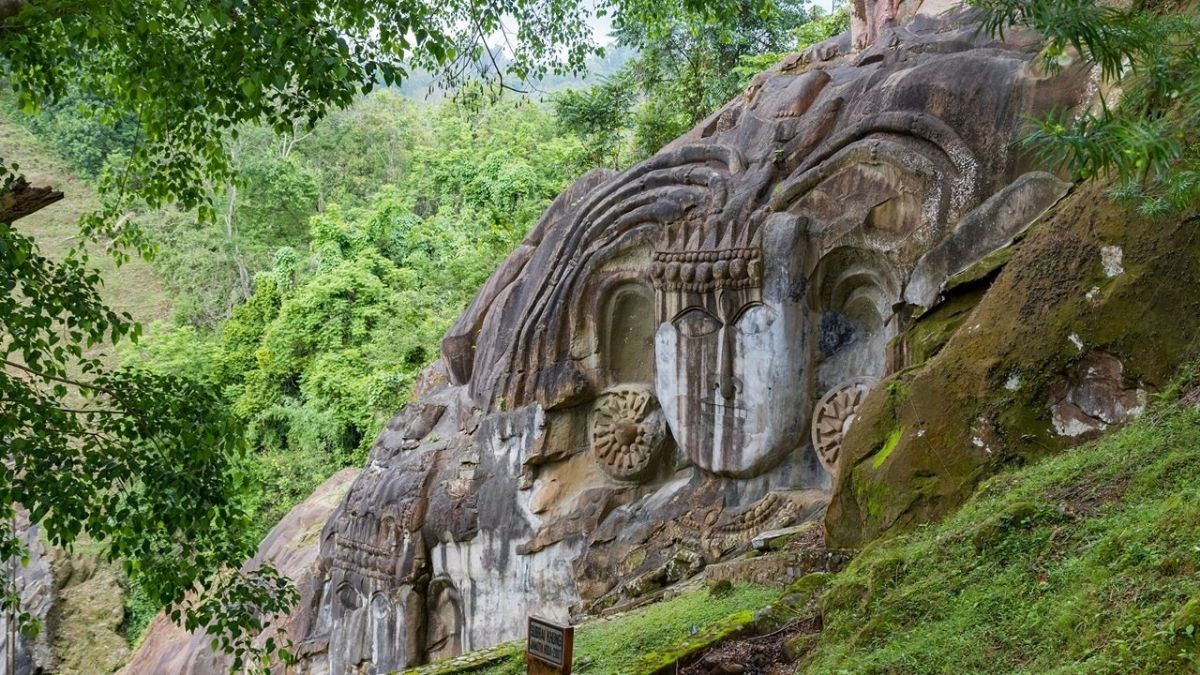
Ancient rock-cut sculptures rise from the forested hills of Unakoti in Tripura
Unakoti, located amid the forested hills of northern Tripura near Kailashahar, is a mysterious blend of ancient rock-cut sculptures, towering Shiva reliefs and lush natural landscapes. Hidden deep within dense greenery and rocky terrain, the site features massive stone carvings believed to date back centuries, creating a spiritual and unexplained atmosphere where mythology, archaeology and nature exist together.
Unakoti feels less like a conventional tourist attraction and more like an open-air myth carved into stone. Giant faces of deities emerge form mass-covered rock walls, waterfalls flow thorough the landscape and narrow stairways wind through forested slopes, creating an atmosphere that feels untouched by time.
The name Unakoti means ‘one less than 10 million’ and locals continue to define the indentify of the palce. According to one of the popular stories, Lord Shiva was travelling to Kashi with 10 million gods and goddesses. He instructed everyone to wake up before sunrise, but only Shiva woke up the next morning. Angry at others for overspleeping, he turned them all into stone, leaving the number one short of 10 million.
Another legend speaks of a sculptor named Kallu Kumhar, who was asked by Shiva to carve 10 million idols in a single night in return for a place in Mount Kailash. Despite his efforts, he failed to complete the final sculpture before dawn, leaving the site eternally incomplete.
Also Read: Tripura: Wonders of the hidden gem of Northeast India
Situated amid forests and rocky terrain, Unakoti is unlike India’s better-known temple complexes. Instead of built temples or cave interiors, the carvings are etched directly onto steep rock faces spread across the hillside. The most striking sculpture is the gigantic 9.144-metre-high image of Shiva known as Unakotiswara Kal Bhairava. With its elaborate headdress, large ears and intense facial expression, the massive relief dominates the entire landscape.
Scattered across the hills are enormous carvings and stone figures of Ganesha, Durga, Hanuman, Nandi and other mythological figures, many partially hidden beneath vegetation and weathered by time. Historians believe the carvings date back between the 7th and 9th centuries, though the exact origins of the site remain uncertain.
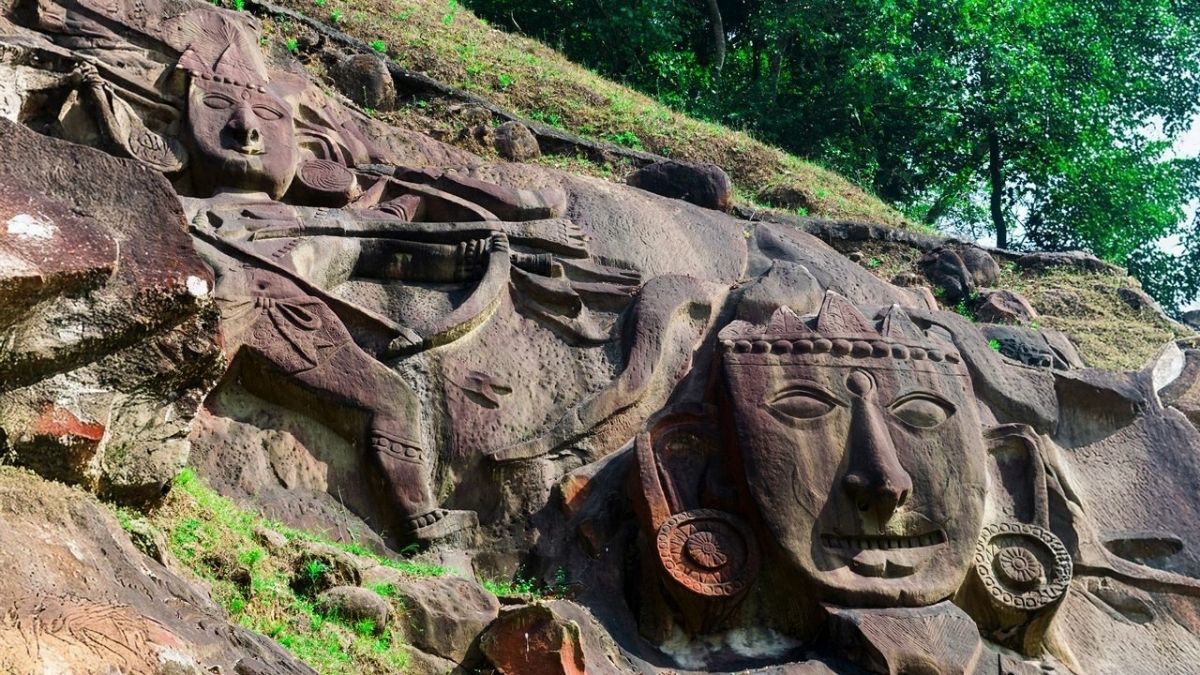
Giant stone deities carved into a forested hillside
Away from crowded tourist routes, Unakoti offers visitors a slower and more immersive travel experience. Most tourists spend their time walking through forest paths, descending long stairways and discovering carvings hidden between rocks, streams and trees. The experience feels less structured and more exploratory with each section of the hill revealing new sculptures and viewpoints.
Nature plays an equally important role in shaping the atmosphere of the site. Dense greenery, seasonal waterfalls and natural springs surround the carvings, making the entire landscape feel peaceful and secluded. Birdsong, flowing water and quiet forest stretches replace the noise commonly associated with larger pilgrimage destinations.
For photography enthusiasts, Unakoti offers dramatic visuals throughout the day. The changing sunlight filtering through the forest canopy creates shifting shadows across the ancient stone faces, especially during early morning and late afternoon. The combination of heritage remains and natural surroundings also makes it attractive for documentary filmmakers and heritage photographers.
The site is also becoming increasingly popular among slow travellers and offbeat tourism enthusiasts looking to explore lesser-known regions of India. Unlike mainstream heritage circuits, Unakoti allows travellers to engage with both local culture and nature without large crowds or heavily commercialised tourism.
Trekking and nature walks form an important part of the experience here. Uneven stone trails and stairways move across the hillside, connecting different clusters of carvings. Some sections pass through streams and rocky terrain, giving visitors a more active way to explore the site.
Also Read: Northeast India: Gems of an unexplored paradise
Religious tourism continues to remain important at Unakoti, particularly during the annual Ashokastami Mela held around March or April. During the festival, thousands of pilgrims gather at the site to take ritual dips in the sacred water reservoirs below the carvings. The otherwise quiet hills transform into a vibrant cultural and spiritual gathering filled with rituals, local markets and community celebrations.
The forests surrounding Unakoti also support biodiversity and offer opportunities for eco-tourism. Visitors often combine heritage exploration with birdwatching, short hikes and nearby village visits. During the monsoon season, the landscape becomes especially lush, with streams and waterfalls flowing more actively through the hills.
The best time to visit Unakoti is between October to May, when the weather remains pleasant and the forest trails are easier to navigate. Winters also bring clearer skies and comfortable conditions for walking and photography. Monsoon months make the site greener and visually dramatic, though slippery pathways can make movement difficult.
Accommodation options near Unakoti remain relatively simple and low-key, ranging from small guesthouses and lodges around Kailashahar to government tourist facilities. Many travellers include Unakoti as part of a longer Tripura itinerary along with attractions such as Neermahal Palace, Ujjayanta Palace, Jampui Hills and the archaeological sites of Pilak and Deotamura.
Despite its historical and spiritual importance, Unakoti still remains largely outside mainstream Indian tourism. Much of the site is believed to remain unexplored beneath surrounding forests and hills, adding further mystery to its identity. Archaeologists and historians continue to study the carvings, their symbolism and the civilisation that may once have existed here.
For travellers seeking destinations beyond India’s conventional tourist circuits, Unakoti offers a rare combination of heritage, spirituality, nature and mystery. It is not simply a monument site, but a living cultural landscape where ancient legends continue to exist quietly within the forests of Tripura.