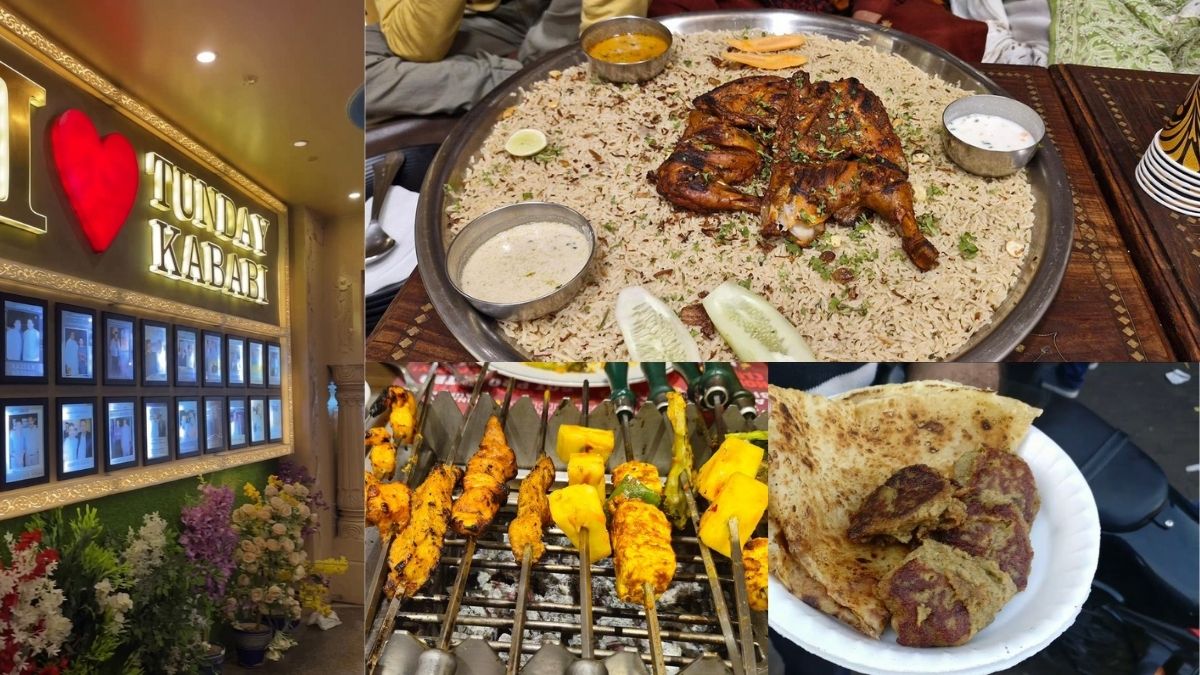
The ODOC scheme maps 208 dishes across 75 districts and 18 divisions, every single one of them is vegetarian
When Union Home Minister Amit Shah launched the ‘One District, One Cuisine’ (ODOC) initiative in Lucknow recently, the state government framed it as a landmark moment for the promotion of regional food culture. However, within days, the scheme began facing flak over not what it had included, but about what it had chosen to leave out. For many, the omissions were not administrative oversights but a calculated cultural attack, a state-sanctioned rewriting of Uttar Pradesh’s culinary identity along communal lines. The notable exclusions include Lucknow’s Tunday and Galouti kebabs, Awadhi biryani and nihari, Rampur’s mutton korma and seekh kebabs, and Bareilly’s mutton preparations dishes that have defined UP’s global reputation for centuries.
The erasure is most glaring in the case of Awadhi cuisine. Just months before the ODOC list was unveiled, UNESCO had declared Lucknow a Creative City of Gastronomy, placing it among 70 gastronomy cities worldwide and making it only the second Indian city after Hyderabad to receive the honour. The recognition explicitly celebrated Lucknow’s Ganga-Jamuni culinary culture, the centuries-old blend of Persian, Muslim, and Indic influences embodied in dishes like the Galouti kebab, dum biryani, and nihari. Yet despite this landmark international recognition, not one of these iconic Awadhi dishes finds a place in the government’s official One District, One Cuisine list. The state that had leveraged Lucknow’s meat-based culinary legacy to secure a UNESCO title has, in the same breath, refused to officially acknowledge that legacy exists.
Also Read: Five things to do in Lucknow
The ODOC scheme maps 208 dishes across 75 districts and 18 divisions. Every single one of them is vegetarian. As per the list, Lucknow includes items like rewadi, mango products, chaat, and malai makhan, while Moradabad has been assigned preparations of dal and handi halwa, a city whose signature dishes include Moradabadi Biryani and Galauti Kabab. For Azamgarh, the slow-cooked Handi Mutton, its local specialty, is missing.
The politics of that absence has driven most of the debate. Uttar Pradesh is home to approximately 19.3 pc Muslim population as per the 2011 census roughly 38.5 million people concentrated heavily in western UP districts such as Rampur, Moradabad, Bijnor, Saharanpur, and Muzaffarnagar. In Lucknow specifically, Muslims make up 26.36 pc of the city’s population over 742,000 residents many of whose culinary traditions trace directly to the Nawabi kitchens that gave Awadhi cuisine its global identity.
Lucknow’s culinary heritage is also one of the main draws for tourists from across the country and even overseas. In 2024, the city recorded nearly 8.27 million domestic and international tourists, while in the first half of 2025 alone, more than 7.02 million visitors had arrived, numbers that officials themselves cited as evidence of food-driven tourism growth.
According to critics, the government had used Lucknow’s meat-based culinary heritage to secure global recognition, and then assembled an official food list, but without the heritage that had earned it the title.
The UP cabinet formally approved the ODOC scheme on May 4, with MSME Minister Rakesh Sachan stating that the scheme would emphasise improving quality, enhancing shelf life, and developing export opportunities for traditional food products. Specifically, on the exclusion of non-vegetarian dishes, Sachan denied deliberate exclusion, saying dishes could later be added based on public demand and local recommendations. The list, officials added, remains open to public suggestions, a standard caveat that critics say does little to address the structural logic behind the initial selection.
At the launch of ODOC, Chief Minister Yogi Adityanath said the initiative would promote hygienic and nutritious food, including millet-based products, and enable geo-tagging, branding, packaging and designing of local cuisines in line with domestic and global demand. The statement made no reference to meat-based traditions.
Syed Faizan, a Lucknow resident who works in Delhi, has followed the debate closely. “The list ignores the diverse, syncretic food culture of Uttar Pradesh, particularly undermining the Awadhi cuisine heritage. Kebabs and biryani are not fringe dishes. They are what put Lucknow on the global map. Leaving them out is not a neutral administrative decision,” Faizan tells Media India Group.
Food historian Pushpesh Pant described the all-vegetarian list as a ‘half-baked move’ that reflected selective exclusion. The phrase has circulated widely since, because it captures the core tension: the scheme is not incomplete due to administrative oversight. Its omissions follow a clear editorial direction.
Also Read: Lucknow’s Old World Charm
Awadhi cuisine, the Nawabs’ cuisine was celebrated for its commitment to refinement, artistry and cultural depth, which reflect in its famed kebab and korma dishes as well as the dum pukht style of cooking. These dishes were not incidental to UP’s food identity. They were, for centuries, the defining feature of it.
Sadaf Hussain, a businesswoman from Bijnor, sees the exclusion through an economic lens. “Bijnor has its own rich non-vegetarian food traditions, dishes that have been cooked in this region for generations. As a businesswoman, I see real commercial opportunity in promoting that heritage, in packaging it, branding it, taking it to wider markets. But if the official list doesn’t even acknowledge that this food exists, where does that leave entrepreneurs like me? We are being asked to build on a foundation the government has chosen not to recognise,” Hussain tells Media India Group.
The government’s own framing creates an uncomfortable tension. The ODOC scheme is conceptualised to boost branding, packaging, and marketing of signature district dishes and the government has cited export opportunities as a key objective. Yet the dishes most likely to travel internationally Awadhi biryani, Galouti Kabab, Tunday’s galawati are precisely the ones absent from official support.
Lucknow’s culinary tourism numbers suggest the market has already decided what it comes for. For now, the scheme stands as a government document about UP’s food culture in which the kebab has no place. In Lucknow, the city of the Nawabs, now a UNESCO gastronomic city, that absence is hard to read as accidental.