
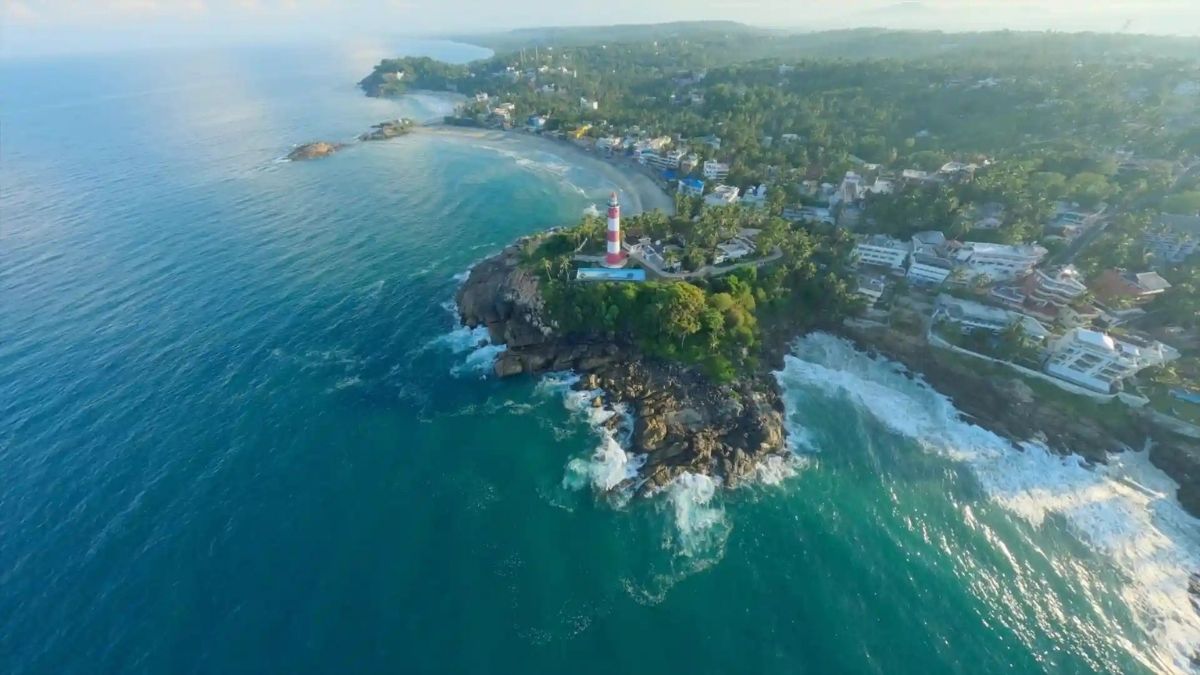
Kerala received the most, at INR 3.74 billion driven largely by two SASCI-funded ecotourism hubs (Photo: Kerala Tourism)
Expanding tourism infrastructure across the country, the Ministry of Tourism has sanctioned 117 projects worth INR 57 billion over the past two years, with funding spread across states and Union Territories under six central schemes supporting destination development, connectivity, pilgrimage, tribal tourism and visitor amenities.
In a press statement, Ministry of Tourism says that the capital has spread across 31 states and Union Territories, mixing big-ticket urban convention centres with small, high-impact village projects in remote border and tribal regions.
The statement adds that the funding runs through six distinct central schemes. Swadesh Darshan 2.0, the flagship destination-development scheme, accounted for 24 projects worth INR 15.5 billion. The ‘Challenge-Based Destination Development Scheme’ funded 37 projects worth INR 6.88 billion. The PRASHAD scheme for pilgrimage rejuvenation supported nine projects worth INR 1.72 billion. Assistance to Central Agencies for Tourism Infrastructure funded just two projects worth INR 174.6 million. A tribal homestay sub-scheme under DA-JUGA funded five projects worth INR 175.2 million.
Also Read: Adventure tourism guidelines launched by Ministry of Tourism
By far the largest allocation, however, came through the Special Assistance to States for Capital Investment scheme (SASCI), which funded 40 projects worth INR 32.96 billion more than half of all money sanctioned across the two years, with every project under it approved in the 2024-25 financial year.
According to the Ministry, Kerala, Bihar, Andhra Pradesh, Rajasthan, and Chhattisgarh emerge as the top recipients of central tourism assistance when totals across all six schemes are combined. Kerala received the most, at INR 3.74 billion driven largely by two SASCI-funded ecotourism hubs one at Ashtamudi worth INR 597.1 million and another near Malabar’s Sargaalayaa worth INR 953.4 million along with Swadesh Darshan projects at Alappuzha and Malampuzha. Bihar followed closely with INR 3.56 billion spread across pilgrimage, heritage, and lake-development projects, including a single INR 976 million rejuvenation of Matsyagandha Lake in Saharsa. Andhra Pradesh received INR 3.46 billion, Rajasthan INR 3 billion and Chhattisgarh INR 3 billion.
Madhya Pradesh, Karnataka, Goa, Meghalaya, Maharashtra, and Tamil Nadu rounded out the next tier, each receiving between roughly INR 2.4 billion and INR 3 billion. Assam, Odisha, Sikkim, Gujarat, Mizoram, Telangana, and Uttar Pradesh each received between INR 1.8 billion and INR 2 billion, says the statement.
Also Read: Spiritual tourism puts Uttar Pradesh on path to progress
Smaller Union Territories and northeastern states received proportionally less: Dadra and Nagar Haveli and Daman and Diu got INR 1.47 billion, Tripura INR 1.47 billion, Uttarakhand and Punjab close to INR 1.29 billion each, Manipur INR 1.14 billion, Haryana INR 925 million, Himachal Pradesh INR 860.4 million, Lakshadweep INR 811.8 million, Nagaland INR 753.4 million, Arunachal Pradesh INR 613.4 million, Jharkhand INR 537.4 million, Puducherry INR 481.3 million and Ladakh, the smallest recipient, INR 143.7 million, says the statement.
Within Swadesh Darshan 2.0, the costliest single sanction was INR 1.65 billion for a Buddhist Meditation and Experience Centre at Bodh Gaya in Bihar, followed by a INR 1.47 billion convention centre in Daman and a INR 1.46 billion heritage corridor around the Bhoramdeo temple complex in Kawardha, Chhattisgarh. Mizoram received three projects worth a combined INR 1.72 billion around Champhai and Aizawl, Nagaland’s Chumoukedima adventure circuit was funded, and Lakshadweep secured INR 811 million for an eco-retreat at Bangaram. The Challenge Based Destination Development scheme, by contrast, was the most geographically dispersed of the six, funding 37 projects that were mostly capped near INR 250 million each, spread across categories the Ministry labels culture and heritage, spiritual tourism, ecotourism, and the Vibrant Village Programme, the last of which is aimed specifically at developing tourism in villages along India’s international borders. Border and frontier villages such as Kibitho and the Bichom Dam site in Arunachal Pradesh, Rakchham in Himachal Pradesh, and Jadung and Mana in Uttarakhand each received smaller sanctions of roughly INR 50 million to INR 100 million.
The statement adds that the projects are being implemented through Central Financial Assistance provided to state governments and Union Territory administrations, subject to scheme guidelines and the availability of funds.
Alongside infrastructure development, the Ministry says it has strengthened digital promotion through the Incredible India Digital Platform, which was revamped in September 2024. The portal and mobile application provide travel information and allow users to book flights, hotels, cabs, buses and tickets for Archaeological Survey of India monuments through partnerships with online travel agencies and other stakeholders.
The Ministry says it is also promoting tourism through official social media platforms, digital campaigns and collaborations with social media influencers.
Also Read: Andhra Pradesh to become India’s first AI-powered tourism state
As part of its Ek Bharat Shreshtha Bharat initiative, the Ministry continues to organise tourism events and institutional programmes to promote cultural exchange. These include the annual Bharat Parv during Republic Day celebrations and participation in Rashtriya Ekta Diwas 2025 at Ekta Nagar in Gujarat.
According to statement, Ministry’s autonomous institutions, including the Institutes of Hotel Management, the Indian Institute of Tourism and Travel Management, the Indian Culinary Institute and India Tourism Offices, are also conducting student exchanges, familiarisation visits, cultural programmes, regional cuisine festivals and tourism networking events to promote the culture and heritage of different states and Union Territories.
To boost international tourism, the Ministry says that it is promoting India in key overseas markets through roadshows, trade meetings, familiarisation visits, media campaigns, food festivals and participation in international tourism fairs in collaboration with Indian Missions and tourism stakeholders.
The government has also expanded travel facilitation measures, including the e-Visa facility, which is now available under nine categories for nationals of 174 countries. Other initiatives include a 24×7 multilingual tourist helpline, the Incredible India Tourist Facilitator Certification Programme, and the integration of Regional Level Guides into the Incredible India Tourist Guide system, says the statement.
The Ministry says that it is working with the Ministry of Civil Aviation to improve connectivity through the UDAN regional connectivity scheme, under which 53 tourism routes have been identified. It is also coordinating with the Ministry of Home Affairs to facilitate travel to restricted and protected areas.
The Ministry is also promoting niche tourism segments including spiritual, eco, adventure, rural, tribal, wellness, medical, MICE, wedding and heritage tourism. It has introduced national strategies for these sectors, launched the Meet in India sub-brand for MICE tourism, the India Says I Do campaign for destination weddings and issued a Model Adventure Tourism Safety Framework.
