
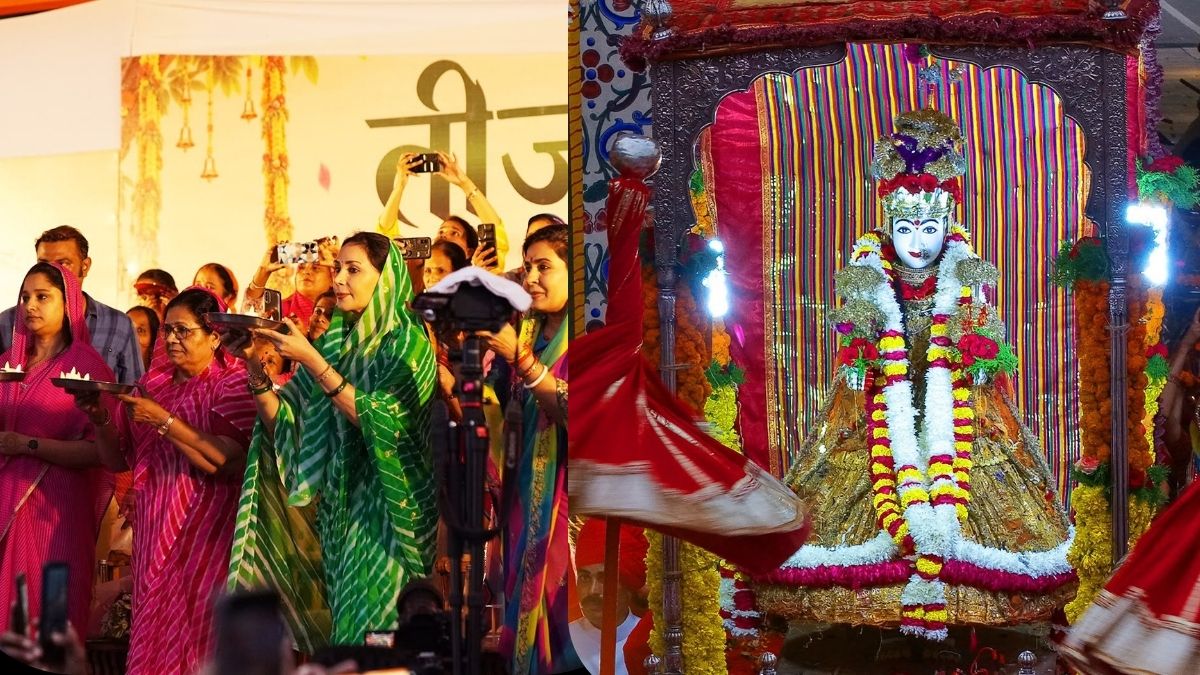
Women offer prayers during Jaipur’s traditional Teej celebrations
The Royal Teej procession of Jaipur, travelling from Tripolia Gate through Choti Chaupar and Gangauri Bazaar, brought together devotion, folk traditions and royal heritage on August 15. Traditional folk performances, music, decorated horses and camels, swordsmanship displays and participation by around 175 artistes showcased Rajasthan’s cultural diversity, while live digital broadcasts connected the celebrations with the Rajasthani diaspora across North America.
According to a press statement by Rajasthan Tourism, at Choti Chaupar, Rajasthan Deputy Chief Minister and Tourism Minister Diya Kumari and Jaipur City MP Manju Sharma performed the grand aarti of Teej Mata’s procession. The celebrations featured around 175 folk artistes from different parts of Rajasthan, showcasing traditions including Kachhi Ghodi, Kalbelia, Chari, Ghoomar, Chang-Dhap, Manganiyar singing, Bhapang, Ravanhatta, puppetry and Bhawai/Bahurupiya performances.
The procession also featured traditionally decorated horses and camels, adding to the royal grandeur. Girls from the Shaurya Seva Sangathan presented a swordsmanship performance, highlighting Rajasthan’s tradition of valour and women’s empowerment.
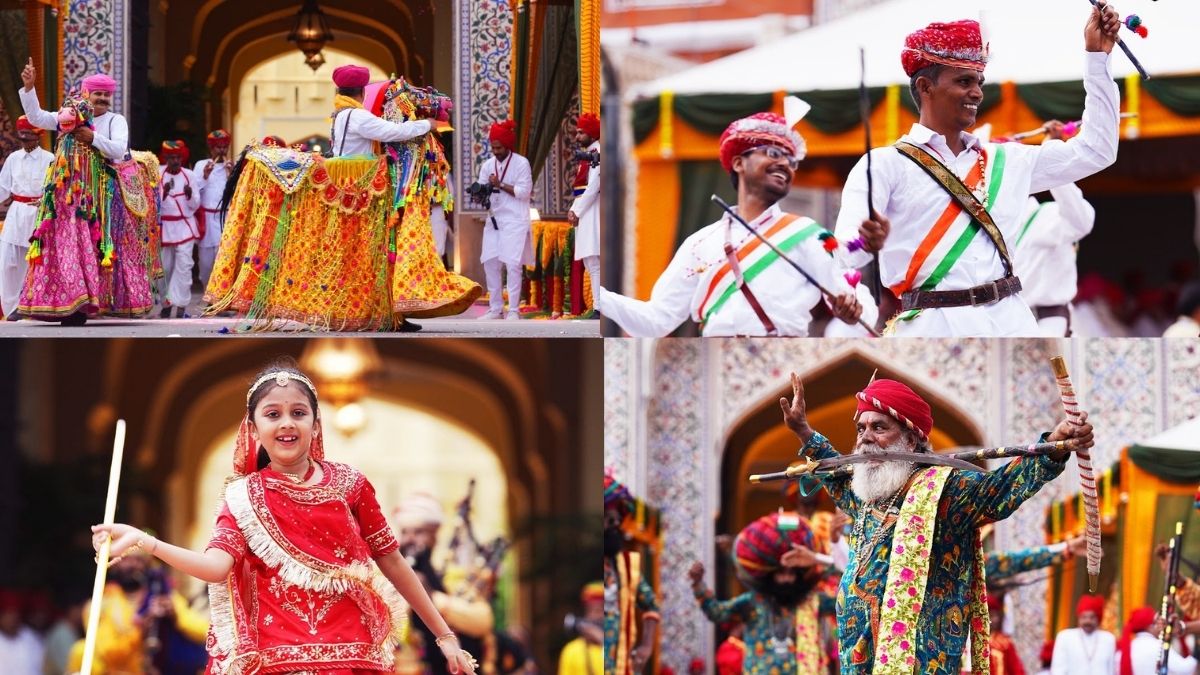
Jaipur’s Royal Teej procession brought together devotion, royal heritage and Rajasthan’s vibrant folk traditions
The celebrations extended beyond Jaipur through digital platforms. The Rajasthan Association of North America (RANA) streamed the procession live for the Rajasthani diaspora living across North America, allowing the overseas community to witness Jaipur’s centuries-old Teej tradition. The Rajasthan Tourism Department also live-streamed the procession through its social media platforms.
Also Read: Over 200,000 visitors turn up for Jaipur’s Teej Festival and Fair 2025
In Jaipur, live coverage was displayed on LED screens installed at 13 prominent locations, including Ajmeri Gate, New Gate, Sarawagi Mansion, Moti Doongri, Rambagh Circle, SMS Stadium, Maharaja College, Birla Mandir, Rajasthan University and Patrika Gate at Jawahar Circle. The initiative enabled residents outside the walled city to witness the procession and have darshan of Teej Mata.
The procession continued through Gangauri Bazaar, where the Jaipur Vyapar Mahasangh organised a floral shower for Teej Mata. The celebrations later moved to Paundrik Park at Talkatora, where an art fair and folk performances continued the festivities. A drone-based floral shower also added to the spectacle as crowds gathered at palaces, terraces, jharokhas and havelis along the procession route.
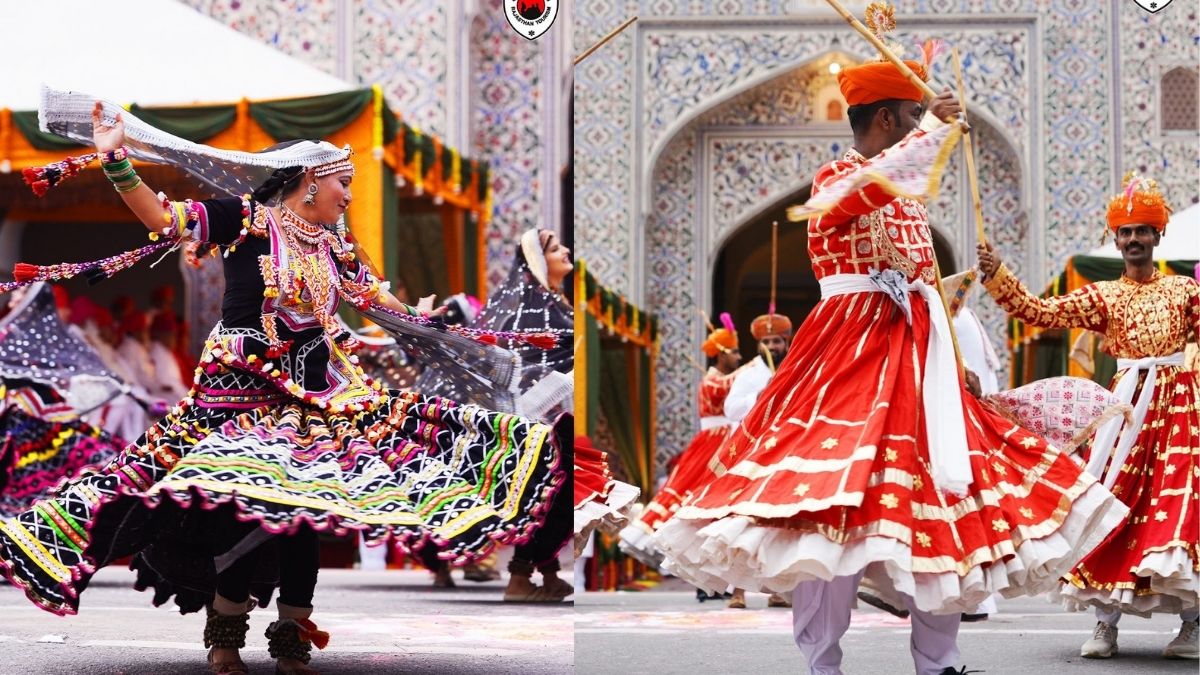
Around 175 folk artistes showcased Rajasthan’s diverse cultural heritage through traditional music and dance
According to Upendra Singh Shekhawat, Deputy Director, Tourism, the royal procession of Teej Mata represents Jaipur’s vibrant cultural tradition by bringing together faith, folk art, music, valour and royal heritage. This year, digital platforms helped take the celebration beyond the walled city and connect it with audiences across India and Rajasthanis living overseas.
The event also featured performances by the Jail Band and RAC Band, while social media creators from Delhi shared glimpses of the celebrations with wider digital audiences.
“Teej is a tradition of Jaipur that has connected faith and community life across generations. This year, the addition of digital platforms enabled this cultural heritage of Jaipur to reach not only audiences across India but also Rajasthanis living overseas,” says Shekhawat.
