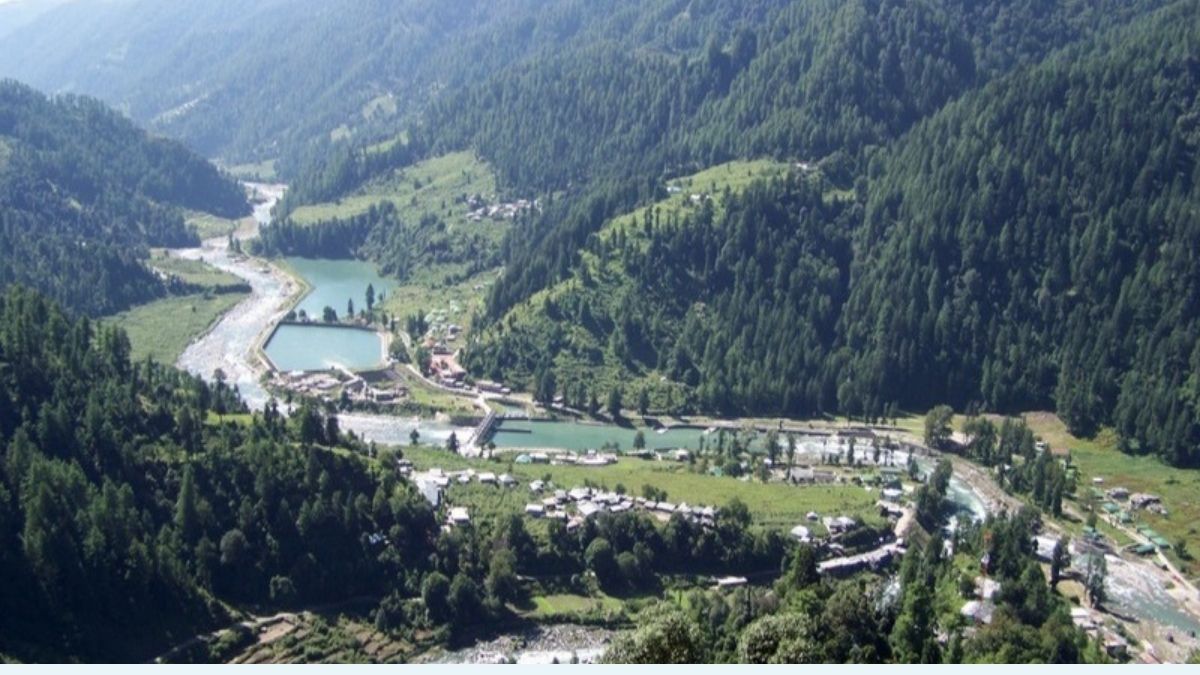
The Mandi district administration identifies Barot as a trout-farming centre (Photos: Himachal Pradesh Government)
Situated at an altitude of around 1,835 metres, Barot is a small valley in Mandi district of Himachal Pradesh, surrounded by forested mountains and the Uhl River. While the destination remains lesser known than other major hill stations in the state, its combination of natural landscapes and local experiences is attracting travellers looking for quieter mountain holidays.
The Mandi district administration identifies Barot as a trout-farming centre, a gateway to the 278 sqkm Nargu Wildlife Sanctuary and a base for trekking routes towards the Kullu and Kangra valleys. The area is also known for vegetable and pulse cultivation.
The Uhl River is central to tourism identity of Barot. The Fisheries Department has identified a 10 km stretch of the Uhl from Barot to Kothikhad and a 6 km stretch of the Lambadug from Barot to Lohardi as trout waters. Both brown and rainbow trout are found in cold-water streams of Himachal, while trout farming has also developed as a commercial activity.
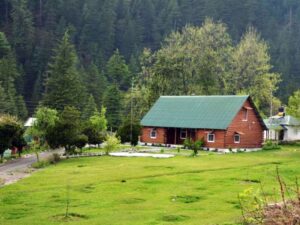
Barot’s scenery is also linked to the history of hydropower
Trout farming connects tourism with a local livelihood
Trout Fish Farm of Barot, operated by the Himachal Pradesh Fisheries Department, is one of its most distinctive attractions. Established in 1959, the farm stands near the merging of the Uhl and Lambadug rivers and close to the barrage of the Shanan hydro-electric project. It includes hatchery, nursery and production facilities and remains part of Himachal’s trout-farming network.
Also Read: Strong summer surgent for tourism to Himachal Pradesh
Angling adds another experience to the valley. Fishing is regulated and requires a licence, with the department identifying Uhl and Lambadug as trout waters around Barot. The official rules allow licensed rod-and-line fishing in trout waters, with a close season from November 1 to the last day of February. The department also lists an angler lodge near the trout farm.
Hydel heritage adds another layer to the landscape
Barot’s scenery is also linked to the history of hydropower. The reservoir of the Shanan Power Project, built during the British period, is located here and remains an important feature of the valley. The project’s history gives Barot an unusual combination of natural and industrial heritage, with the river, reservoir and surrounding mountains forming part of the same landscape.
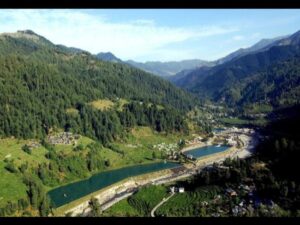
The destination remains lesser known than other major hill stations in the state
The nearby narrow-gauge rail connection at Jogindernagar, around 40 km from Barot, provides another link to the region’s historic infrastructure. The Mandi administration lists Jogindernagar as the nearest rail link, while Gaggal Airport is around 114 km away and Bhuntar Airport around 123 km.
Forests and trekking take travellers beyond the main valley
Barot is the gateway to Nargu Wildlife Sanctuary, spread across 278 sq km and home to species including the Himalayan monal, wild cats, monkeys and black bears. The surrounding forests provide opportunities for nature walks, birdwatching, photography and trekking, although wildlife sightings cannot be guaranteed. The valley also acts as a base for routes towards Kullu and Kangra.
Also Read: Chitkul: Last inhabited village of Himachal Pradesh
One of the more offbeat extensions is Rajgundha Valley, a remote settlement in Kangra’s Chota Bhangal region. At around 2,700-2,770 metres, it is surrounded by the peaks of the Dhauladhar range, deodar and pine forests, meadows and the Uhl River. The Kangra administration highlights trekking, camping, angling, birdwatching and local village life, while traditional stone-and-mud houses and seasonal farming add to its cultural character. A Barot-Rajgundha itinerary can therefore combine river walks, trekking, village interaction, camping and night-sky experiences, giving travellers a much more immersive Himalayan experience than a conventional sightseeing trip.
Homestays bring visitors closer to village life
Homestays can further strengthen Barot’s slow-travel appeal by allowing visitors to experience the valley through local households rather than only through commercial accommodation. Staying with families can open opportunities to sample home-cooked food, learn about farming and fishing, explore nearby villages and understand how tourism is becoming an additional source of income.
This community dimension is important because Barot’s tourism attractions are closely connected to existing livelihoods. Trout farming, agriculture, trekking and homestays can work together to encourage visitors to stay longer and spend within the local economy.