For several emerging Indian businesses, the exhibition is an opportunity to find distributors, test products with international buyers and explore markets where demand for health-focussed, convenient and value-added foods is growing
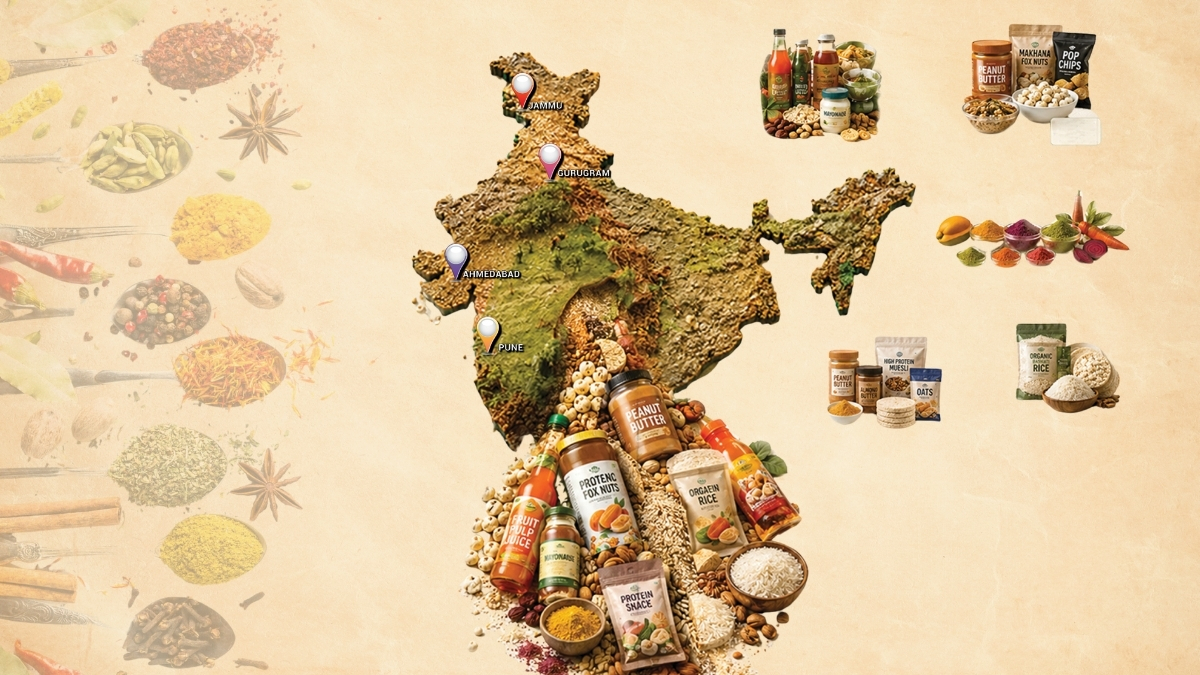
Indian food start-ups are taking their products to SIAL Paris 2026 as they seek to turn their domestic success into international business. With 64 Indian companies participating, the exhibition offers emerging brands access to buyers across markets and categories, from pesticide-free product and organic rice to peanut butter, protein snacks, fruit beverages and food ingredients, while exposing them to the challenges of global trade.
Indian food start-ups are arriving at SIAL with products designed for a changing global food market, but their ambitions extend beyond simply displaying what they make. For several emerging Indian businesses, the exhibition is an opportunity to find distributors, test products with international buyers and explore markets where demand for health-focussed, convenient and value-added foods is growing.
Indian food start-ups are taking their products to SIAL Paris 2026 as they seek to turn their domestic success into international business
The exhibition will bring together around 8,000 exhibitors, 650 start-ups and 400,000 products across 280,000 sqm. About 295,000 food professionals are expected to attend the event.
For Indian companies still building their export networks, the opportunity is significant. But so are the challenges, particularly around product adaptation, sourcing standards, pesticide residues and logistics.
Wingreens World
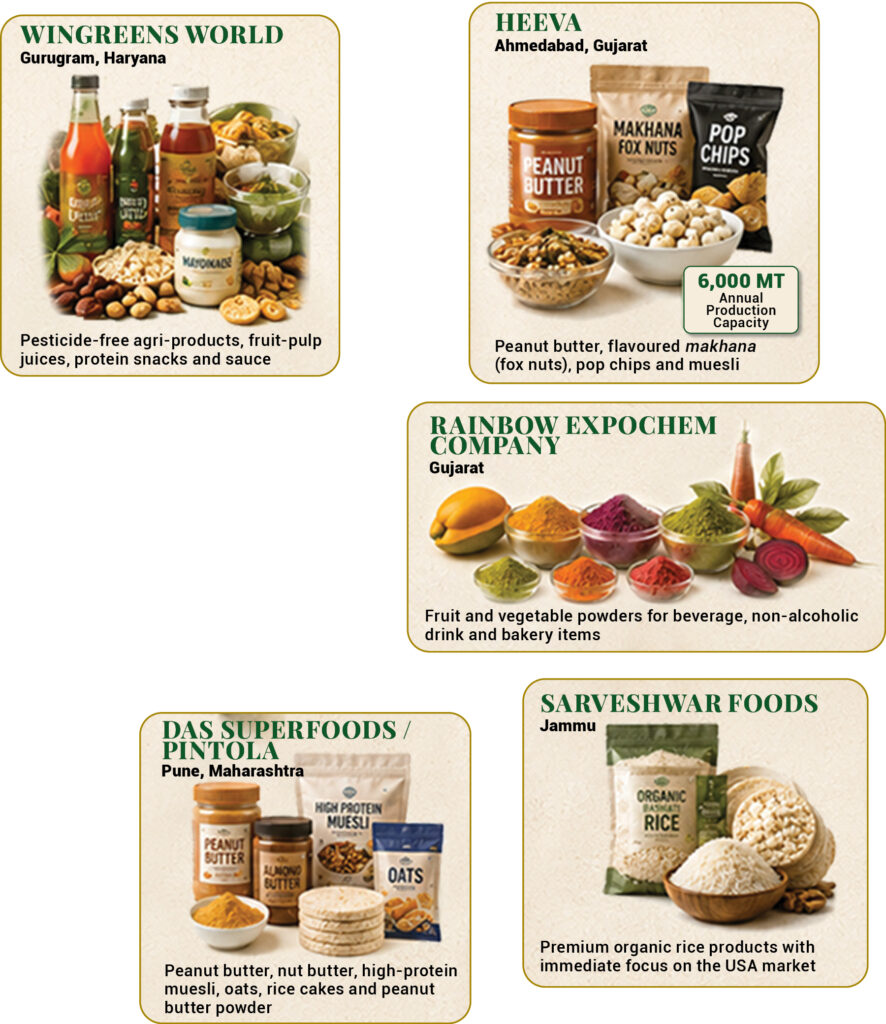
Wingreens World, based in Gurugram, Haryana is taking a broad portfolio to SIAL, combining pesticide-free agricultural products with health-focussed beverages, protein snacks, sauces and mayonnaise.
Jitendra Kukreja
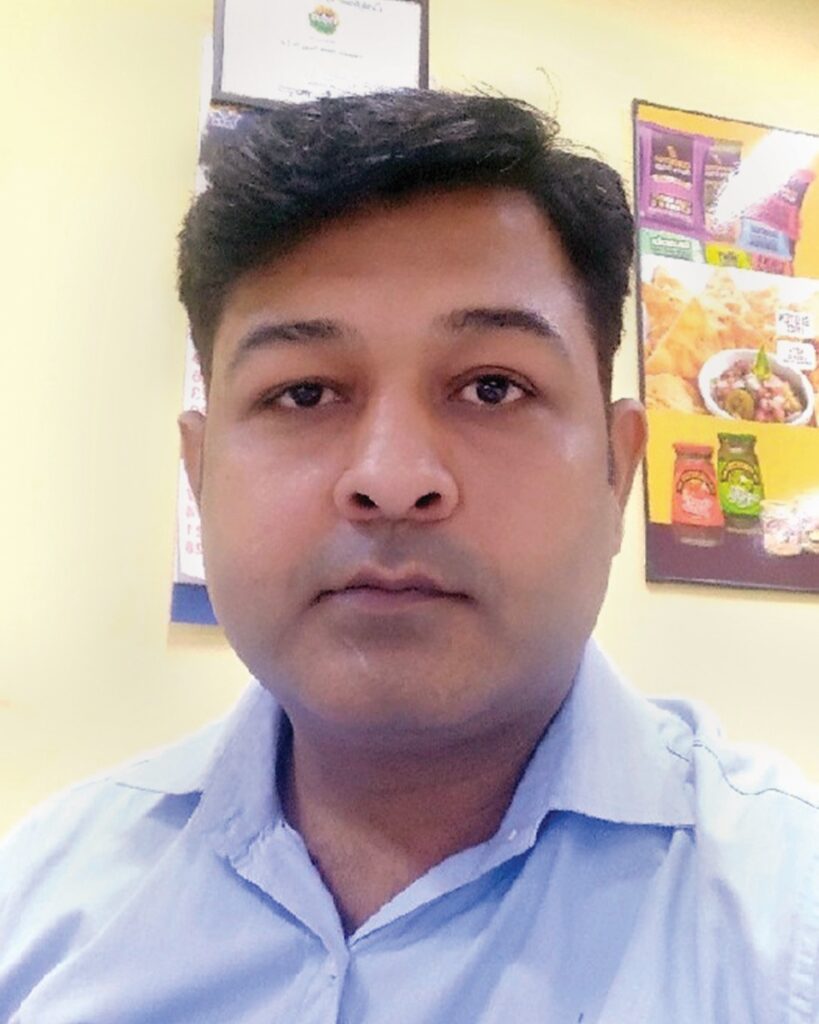
Jitendra Kukreja, General Manager, Export, Wingreens World, says that the company is using the exhibition to present products across several food categories.
“At SIAL 2026, we are exhibiting our range of pesticide-free agri-products, health-focussed juices made without refined sugar and containing real fruit pulp, protein snacks, as well as sauces and mayonnaise prepared with sunflower oil,” Kukreja tells Biz@India.
The portfolio reflects some of the categories attracting attention among international food buyers, particularly products positioned around health, convenience and cleaner ingredients.
Wingreens World already exports to the Middle East and parts of Southeast Asia. At SIAL, however, the company is looking to widen that footprint.
“While we currently export to the Middle East and parts of Southeast Asia, our primary intent for participating in SIAL is to enter the European market, particularly the United Kingdom and France,” says Kukreja.
The company is also using the exhibition to respond to enquiries from North America.
“We are also addressing inquiries from the United States and Canada,” he added.
The move towards Europe brings another set of challenges. For an Indian food company, having a product that works in the domestic market does not necessarily mean it will automatically work overseas.
Kukreja says understanding local tastes is one of the issues the company has to address as it expands.
“The main challenges we face in expanding internationally are understanding and tailoring our offerings to local taste profiles,” he says.
Heeva

Ankit Mackwan
Heeva, based at Ahmedabad in Gujarat, is approaching the international market through a portfolio that combines familiar global food products with Indian ingredients. Ankit Mackwan, Brand Head at Heeva, says that the company has built significant production capacity around its portfolio.
“Our core product lineup for SIAL includes peanut butter, flavoured makhana (fox nuts), pop chips, and muesli, backed by an annual production capacity of around 6,000 metric tonnes,” Mackwan tells Biz@India.
Peanut butter is among the products with strong international demand, but Europe is the company’s principal export focus for the coming years.
“While peanut butter enjoys strong global demand, our primary export focus over the next few years is to expand into Europe,” says Mackwan.
The company’s experience also highlights one of the biggest barriers facing Indian food start-ups entering developed markets: sourcing raw materials that meet stringent quality requirements.
“The biggest hurdle we face in taking an Indian food brand to European markets is meeting the strict quality and pesticide standards. The issue becomes particularly important when Indian brands use agricultural ingredients sourced locally,” says Mackwan.
“Raw materials sourced locally often carry high pesticide residue, whereas European buyers demand organic-grade inputs, making quality sourcing our primary operational concern,” he added.
Also Read: Indian market flooded with poor quality, unhealthy foods amidst weak regulation, low awareness
For food start-ups, therefore, export readiness begins well before a product reaches an international buyer. Ingredient sourcing, testing and traceability can determine whether a product meets the standards required by overseas retailers and distributors.
Among the other emerging Indian food businesses at SIAL is Das Superfoods, the company behind Pintola.
The company is showcasing a portfolio centred on peanut butter and other nut-based and protein-focussed products. Its range includes peanut butter, nut butter, high-protein muesli and oats, rice cakes and peanut butter powder.
Pintola represents a different stage of international expansion from some of the newer start-ups at SIAL. The brand has already built a presence beyond India and is looking to strengthen its position in international markets.
Its product portfolio also illustrates how Indian food businesses are moving beyond traditional export categories.
Peanut butter is a processed consumer product rather than a commodity, allowing the company to build a brand around an ingredient that has growing relevance among consumers interested in protein and convenient food.
The same strategy can be seen across several Indian food start-ups, which are increasingly developing packaged products that combine Indian ingredients with international food formats.
Sarveshwar Foods
While Europe remains an important destination for Indian food exporters, some companies at SIAL are using the exhibition to strengthen their position in the United States and other markets beyond Europe.
Sarveshwar Foods, based in Jammu, is using its presence at SIAL to promote its organic rice portfolio as it looks to expand its international footprint.
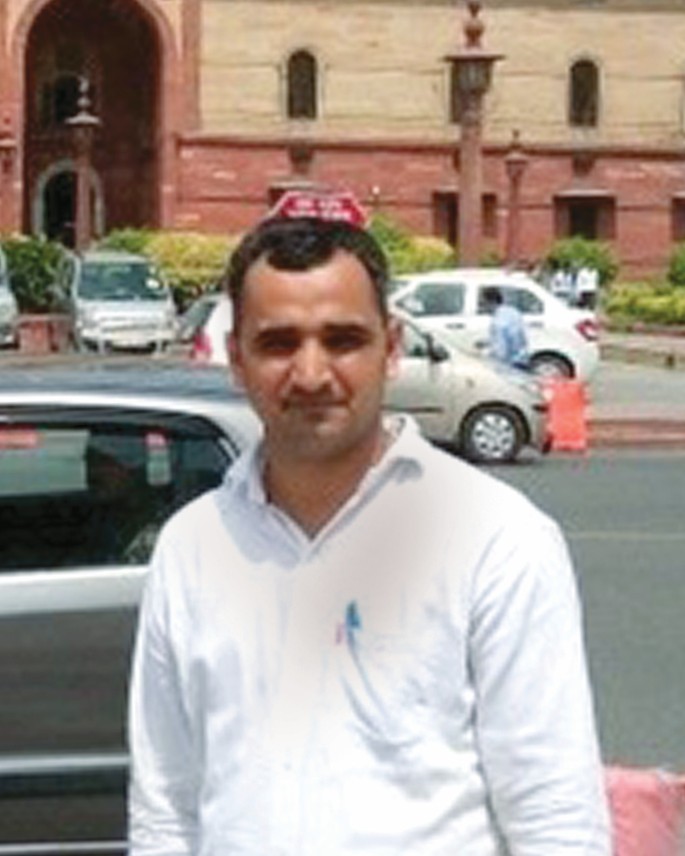 Deepak Sharma, Export Manager at Sarveshwar Foods, says the company’s immediate focus is the US market.
“As we look beyond European markets, our primary focus is expanding our presence in the USA. At SIAL, we are proud to showcase our premium range of organic rice products as part of our global growth strategy,” Sharma tells Biz@India.
The company sees SIAL as a platform to present its products to buyers while continuing to navigate the operational challenges involved in international trade.
“While navigating international expansion can present its obstacles, our main operational focus right now is managing international shipping freight costs effectively,” he adds.
Freight costs remain a recurring concern for Indian food exporters, particularly when products are being shipped to distant markets. For companies competing with suppliers from different parts of the world, transport costs can influence the final retail price and, consequently, their ability to win and retain overseas buyers.
Also Read: Indian food processing industry: Limited appetite for value-added exports
“We are also managing current sea freight issues, including container shortages and high freight costs,” says Kukreja.
For emerging food businesses, freight can have a direct impact on export margins. A product may find buyers in a new market, but high shipping costs can make it difficult to maintain competitive prices.
Sarveshwar Foods’ focus also underlines the continuing importance of rice within India’s food-export sector, even as newer companies move into processed and branded categories.
Rainbow Expochem
Another Indian company at SIAL is Rainbow Expochem Company from Gujarat, which is presenting fruit and vegetable powders aimed at international food manufacturers.
Paresh Pateliya, Founder of Rainbow Expochem Company, says the company is targeting multiple global food-industry segments with its products.
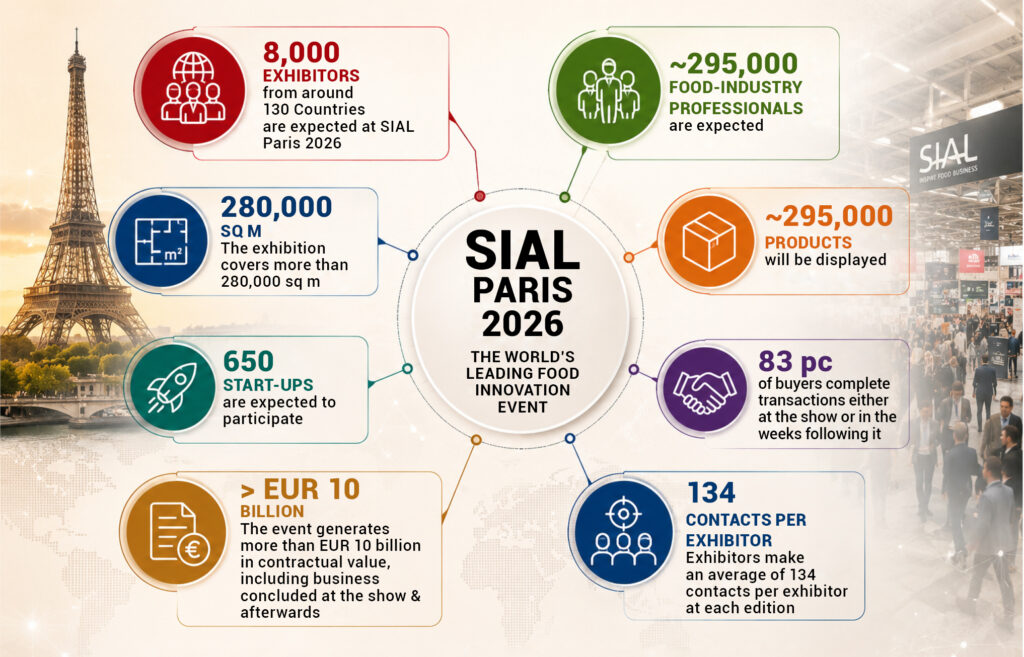
The exhibition will bring together around 8,000 exhibitors, 650 start-ups and 400,000 products across 280,000 sqm
“At SIAL 2026, we are showcasing our versatile range of fruit and vegetable powders. Our goal is to cater to key global sectors including the beverage, non-alcoholic drink, bakery, and ice cream industries by providing high-quality, natural ingredients,” Pateliya tells Biz@India.
Unlike consumer-facing brands that are primarily looking for retail distribution, ingredient suppliers can use exhibitions such as SIAL to connect with food manufacturers and other businesses that require inputs for their own products.
For Rainbow Expochem, the exhibition is part of a longer-term international expansion strategy.
“As we expand our international footprint over the next two to three years, our strategic focus is on strengthening our presence globally, with a strong emphasis on markets across Europe, Australia, Canada, and the United States,” Pateliya adds.
SIAL Paris provides an important platform for this transition because of its scale and international buyer base. For Indian companies seeking to move from domestic sales to international distribution, the exhibition offers access to potential importers, distributors, retailers and food manufacturers in one location.