
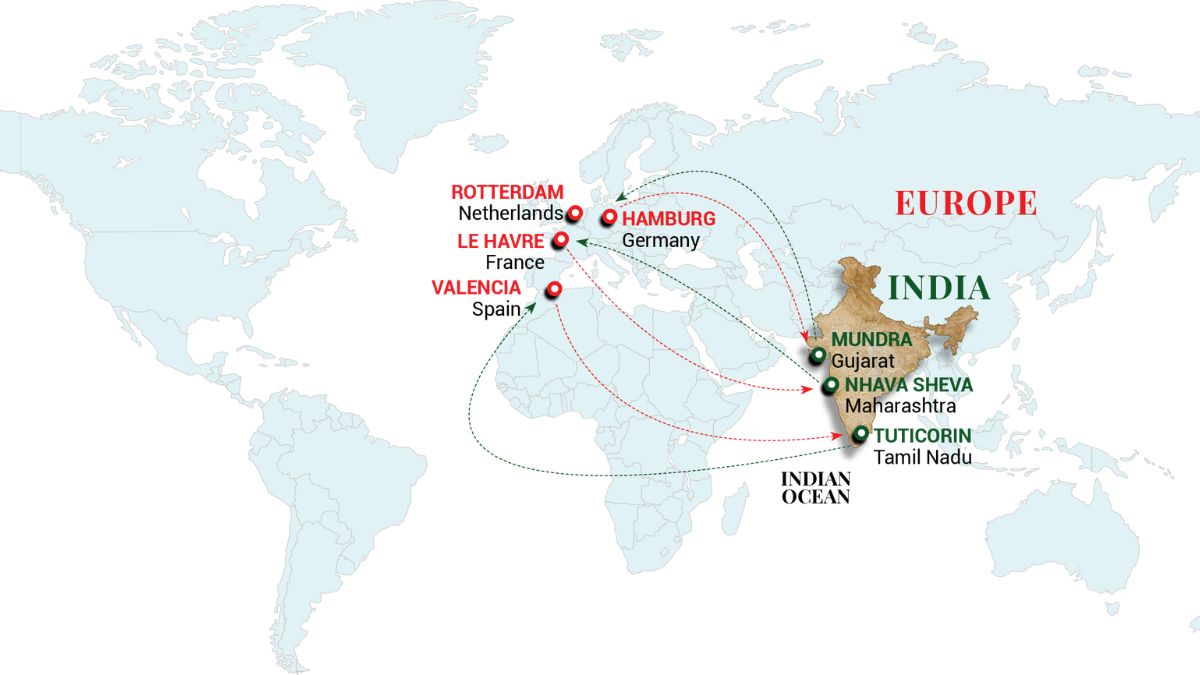
India’s food exports to Europe are expanding beyond traditional staples, with processed foods, spices and healthy snacks gaining ground (Photos: Media India Group)
After nearly 18 years of protracted negotiations, India and European Union in January this year concluded the landmark Free Trade Agreement (FTA) in New Delhi. The FTA is set to transform India’s trade and economic relations with 27 European Union countries.
On paper, the Indian food processing industry is going to be one of the biggest beneficiaries of the FTA. This is supposed to come through easing market entry and eliminating steep tariffs on value-added goods. India stands at a pivotal moment in its agri-food journey and as one of the world’s largest producers of food grains, fruits, vegetables and dairy, the country has immense potential to lead the global food market.
The FTA seeks to reshape the EU–India trade through more predictable regulatory procedures, improved market-access provisions and deeper supply-chain linkages. While lower tariffs will reduce transaction costs, additional provisions will lower compliance burdens and create new commercial opportunities for Indian food processing sector.
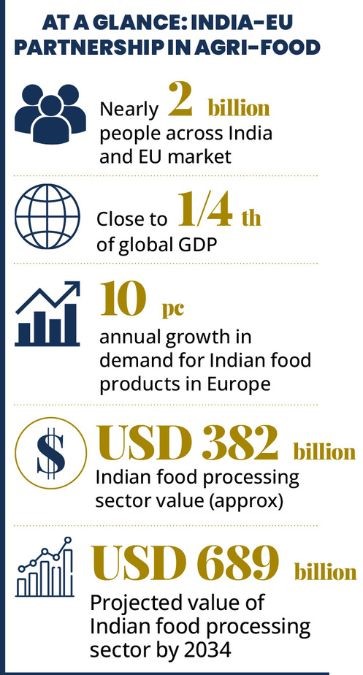
India-EU Partnership in Agri-Food (Inforgraphics: Media India group/Hitesh Mehta)
The landmark FTA comes at a critical time for both economies, offering an opportunity to deepen economic cooperation amid growing global uncertainty and disrupted global food supply chain. By reducing barriers across goods and services, the agreement can help the EU diversify its partnerships and strengthen its presence in one of the world’s fastest-growing markets, while enabling India to expand exports, attract investment, upgrade industries and integrate more deeply into global value chains.
The demand for Indian food products in Europe is growing at roughly 10 pc annually, moving far beyond traditional ethnic grocery niches into broader consumer markets. Demand is shifting past traditional Indian diaspora hubs into mainstream European households. Indian food has in fact emerged as a soft power influencing and enhancing European households and lifestyle.
Top items in Indian exports, besides the traditional rice, lentils and spices, dehydrated onion and garlic, are superfoods like makhana and millet-based products and private-label processed foods. The Netherlands has so far been the primary entry point and major destination for EU-bound Indian agricultural and fishery goods, but with the agreement coming into force early next year, all EU countries will be connected directly with the Indian exporters.
For last two decades India’s food processing industry has undergone a profound structural transformation, anchored in a strong agricultural base, a rapidly expanding consumer market and sustained policy support by the government. Once viewed primarily as a supplier of raw agricultural commodities, India has emerged as a reliable global source of value-added food products and modern logistics solutions. This paradigm shift also presents compelling opportunities for European investors seeking scale, resilience, and long-term value in a high-growth emerging Indian food processing sector.
India is uniquely positioned to lead the next phase of global agri-food transformation. With one of the largest and most diverse agricultural ecosystems in the world, India ranks as one of the top producers across a wide spectrum of commodities, including fruits and vegetables, dairy, cereals, millets, pulses, livestock, fisheries, tea, and spices. This abundance of raw material provides a robust platform for processing, value addition and supply chain optimisation.
Regulatory hurdles and compliance
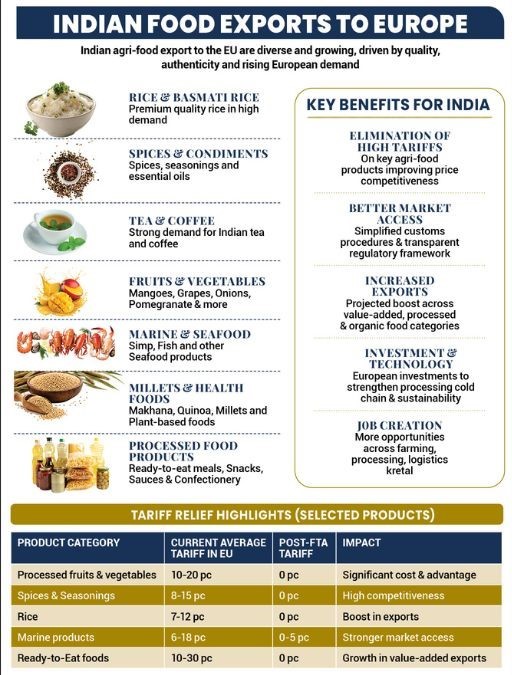
Indian food exports to Europe
However, if India’s processed food producers think that the FTA has opened the doors to easy fortune for them, they are living in an illusion. They must know that European market is very regulated and is highly standardised. Key challenges and EU regulatory hurdles including safety standards, will remain a challenge for India. Strict Sanitary and Phytosanitary (SPS) measures often lead to cargo rejections or delays. Navigating multi-layered EU certifications and testing standards is expensive and slow.
The EU has very stringent, science-based standards to protect human, animal and plant health. All products imported from India under the agreement will have to respect these standards. The EU will conduct Impact Assessments to analyse potential alignment of production standards between domestic and imported products, notably on pesticides and animal welfare. It will also increase the number of food safety audits reinforcing measures to strengthen EU border controls on imported food, animal and plant products.
Already, Indian exporters frequently face EU border rejections due to stringent Sanitary and Phytosanitary regulations, pesticide residue limits, such as tricyclazole or ethylene oxide and traceability requirements. While exports of grain and dairy processing are robust, fruit and vegetable processing penetration remains low, of under 5 pc, limiting processed exports like juices or ready meals compared to regional competitors.
Not a pandora’s box, a measured market access
The FTA has reduced or zeroed out duties on key value-added items, organic inputs, and processed marine products. But a large share of Indian exports is raw or semi-processed commodities rather than high-margin finished goods.
Under the FTA, the EU has also protected its most sensitive agricultural sectors. Official summaries confirm that products such as beef, chicken meat, rice, sugar, and other politically sensitive farm goods have been excluded from liberalisation under the FTA.
The agreed framework of the FTA is a deliberate political and trade balance and not a blanket free trade. For businesses, while the agreement offers clearer rules and phased access, for governments, it preserves policy space to manage domestic priorities.
Indian exporters will, however, have to face a plethora of challenges, despite imports from the EU of several considerable quantum elements from India. The most notable are non-pricing obstacles such as strict limits on pesticide residues called the Maximum Residue Limits (MRL), health and phytosanitary standards, traceability and hygiene. Other problems, such as the limited acceptance and recognition of Indian certification organisations, add to the cost and the burden of compliance affecting the overall competitiveness of exporters.
Navigating EU’s green wall
Another point of concern for Indian exporters would be that the EU’s Carbon Border Adjustment Mechanism (CBAM) remains fully in force. The CABM imposes tax on import of products that are produced by industries that are carbon intensive, such as steel, aluminium, cement and fertilisers. What this means, in practice, is that if the carbon emissions are not reduced on production in India, then Indian products would be priced higher in the European market because of the imposition of taxes, leading to a major hit to Indian exports.
A critical question for Indian policymakers and exporters is whether the FTA will provide additional leverage to India or whether India will be subjected to the same stringent carbon costs as the other global trading partners. Therefore, without rapid decarbonisation, Indian products are at a risk of being priced out of the European market.
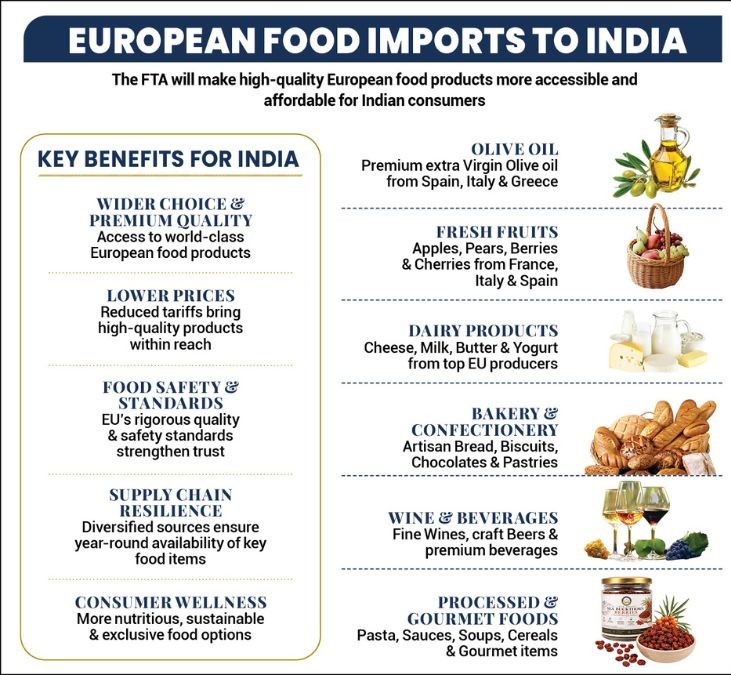
Benefits and imported goods of the India-Europe Free Trade Agreement (FTA) for Indian consumers
There is a comprehensive work plan with separate provisions under the EU-India free trade agreement to address concerns over the European Union’s carbon tax, and it is hoped that Indian Small and Medium Enterprises (SMEs) will not face any problems due to that measure. As India is also developing its own carbon pricing mechanism.
The CBAM does not directly target processed food items, but it indirectly increases operational and packaging costs for India’s food processing industry through the supply chain. As food processing relies heavily on metal cans, tinplate, aluminium foils, and machinery components, the packaging cost inflation will come as indirect supply chain pressure. Direct food items are not in the initial CBAM phase, but energy-intensive packaging, fertilisers, and cold-chain logistics face future indirect cost pressures. Moreover, SMEs will face complex emission-tracking and verification demands.
Mainstream and niche consumer demands
India’s agricultural exports to the EU reached EUR 3.8 billion in 2025, establishing the country as the EU’s fifth-largest food and agri-commodity supplier by value, but a large share of that caters to the Indian diaspora, which itself has grown significantly in the last decade or so. Historically, the EU has accounted for about 12 pc of India’s total processed food exports, which translates to about EUR 1 billion or USD 1.15 billion.
Also Read: EU-India FTA: Redefining India’s trade policy for new global era
To make real gains from the FTA, the Indian exporters will need to expand beyond the diaspora market. They will have to move past traditional ethnic grocery stores by introducing authentic Indian flavours, spices, tea, and ready-to-eat meals to mainstream European supermarket chains. They must focus on health and convenience too. They will need to promote organic lines, healthy snacks, and convenient packaged foods that match fast-paced European lifestyles.
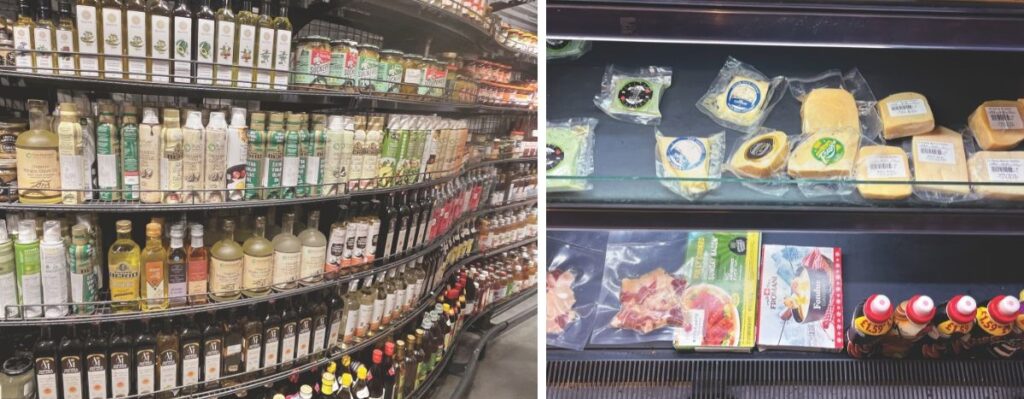
Olive oil, packaged foods and other European products could become more accessible to Indian consumers
Data shows that 1.8 pc of Indian agricultural consignments entering Europe were subject to border rejection or enhanced checks in 2025, primarily due to pesticide residues, which accounted for 41pc of rejections, aflatoxin levels in spices, that caused 28 pc of rejections and documentation non-compliance which made for 31 pc of rejections.
Buyers working directly with unvetted spot-market suppliers face material risk of rejected shipments, demurrage costs, and inventory write-downs. The problem with Indian exporters is that in their rush to make ‘quick money’ in the European market, they tend to forget that once they are blacklisted after repeated alerts, their future in EU market will be fully terminated.
In order to deepen access for the Indian SMEs on food in the EU market, the Indian government will need to support them through financial assistance for modern machinery, packaging infrastructure and cold-chain facilities.
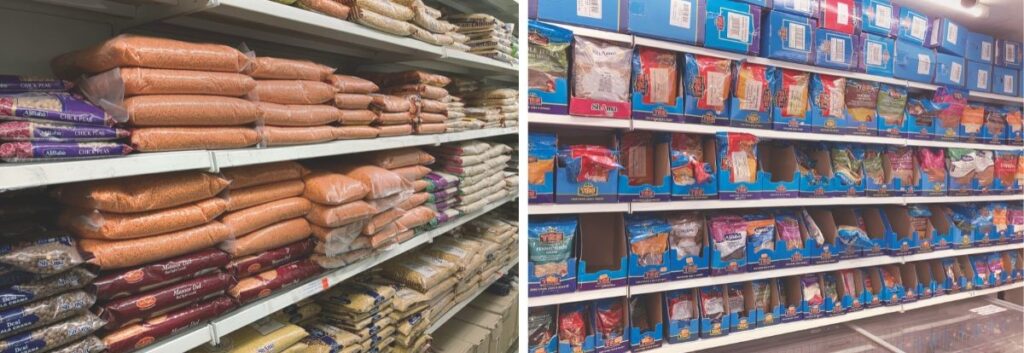
From grains and pulses to packaged snacks, India’s food processing industry has an opportunity to strengthen its presence in European markets under the India-EU FTA
EU cracks open Indian food market
India is rapidly emerging as a market of choice for global food businesses, supported by evolving consumer preferences and increasing demand for organic and value-added products. The FTA could also double EU exports to India within five years of its entry into force, although businesses would need to convert the agreement’s provisions into commercial partnerships. The bilateral agri-food trade currently stands at around EUR 5 billion and could double by 2032.
The opportunity unfolds across segments at different speeds. For European food and beverage producers, the most immediate impact appears in categories that previously struggled to achieve viable price positioning in India. Wine, Spirits, Beer, Olive oil and select packaged foods move closer to commercial scale as tariff barriers ease. The shift influences portfolio economics, brand architecture, and route-to-market choices, particularly in premium and urban consumption channels. Most of these products are already being sold in the Indian grocery stores and not just the ones catering to the wealthy consumers, many Mom and Pop stores too now offer these ‘exotic’ products to Indian buyers who are lapping them up.
The FTA is set to ease the entry of not just a lot more of these products but also newer products in the Indian market. The trade deal, which could eliminate up to EUR 4 billion in tariffs on EU exports, has sparked mixed reactions from the Indian Food and Beverage industry.
Agricultural tariffs currently averaging more than 36 pc will be reduced. Tariffs on Wine will fall from 150 pc to 75 pc at entry into force, eventually reaching 20 pc. Tariffs on Olive oil will be phased out from 45 pc to zero over five years. Tariffs of up to 50 pc on processed goods, such as Bread and confectionery, will be eliminated entirely.
And as the EU food safety standards are already by far the world’s most rigorous, these products will face little difficulty at the Indian Customs, quite unlike the struggle of Indian food exporters catering to the European market to move their products from ports to shop shelves.
Dairy industry disruption?
European agricultural sectors, such as dairy, Beef, Chicken, Rice, and Sugar, have been excluded from the pact. However, these sectors are concerned by longer-term market shifts, potential regulatory issues, and the risk of future liberalisation that could expose them to more competition. While dairy is not expected to face tariff cuts, related sectors, such as processed foods and ingredients, like milk powders or dairy-based products, could benefit from reduced tariffs, leading to increased competition from Indian dairy-based imports in the European market. But here, too, nontariff barriers, such as food safety regulations and quality standards, could complicate market access for Indian dairy products.
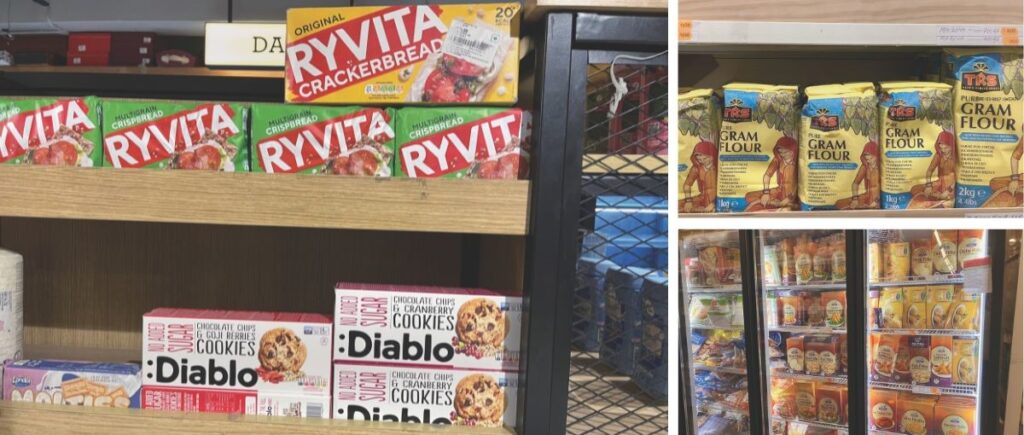
Indian food products are finding space on European supermarket shelves, but stricter food safety and quality standards remain key challenges
The dairy industry is also a politically delicate sector for New Delhi, supporting around 80 million smallholder farmers. Liberalising dairy imports could undermine livelihoods and destabilise this delicately balanced value chain. There are concerns that opening the sector in future trade talks could result in greater exposure to international market fluctuations and reduce the leverage that India has over its domestic dairy market. Furthermore, the potential future liberalisation of these sectors may not only increase competition but also prompt a reassessment of subsidies and support mechanisms for European and Indian producers, raising questions about the sector’s sustainability in both regions.
Also Read: Indian food start-ups eye global markets at Sial Paris 2026
Potential impact
Indian exporters often treat overseas expansion as a branding exercise. That route suits distinctive products and patient capital. Yet FTA may create an equally valuable opportunity in contract manufacturing and private label. EU retailers, foodservice distributors and challenger brands need suppliers that can combine cost, innovation and continuity; India brings raw-material depth, modern processing capacity and multiple price points.
For a capable processor, supplying a recognised EU label can build plant utilisation and foreign-currency revenue faster than creating consumer awareness from zero. The same platform can later support contract manufacturing for volume, an owned brand for margin, and ingredient supply for diversification. Joint ventures also become more compelling since an EU partner can bring product development and market access, while the Indian partner brings sourcing, manufacturing economics and incentive-supported capacity.
Capitalising on the EU food processing shift
As Chinese food processing export to EU is yet to recover from the Covid-19 shock, the FTA offers India’s processed food producers a strategic economic opportunity to capture EU market. Under the FTA, Indian fisheries, organic goods, and specialty foods have gained streamlined, duty-free entry into European markets. By contrast, China faces worsening trade friction, structural supply strain, and a looming ‘China Shock 2.0’ pushback from European regulators. But to displace China, India must mandate stringent, internationally accredited laboratory testing and adopt rigid compliance models to satisfy European food safety agencies. As European buyers look to diversify from China via “China Plus One” supply chains, India possesses a massive window of opportunity to position itself as the primary alternative for processed foods.
This provides India with a unique window to transition from an exporter of raw agricultural commodities into a primary global hub for value-added processed food. In short, the EU-India Free Trade Agreement has the potential to act as a massive catalyst. Whether the Indian industry is capable of capitalising on this opportunity is quite another story.
(Sunil Prasad, is the Secretary General of Brussels based Europe India Chamber of Commerce and the views expressed here are his personal views.)
