
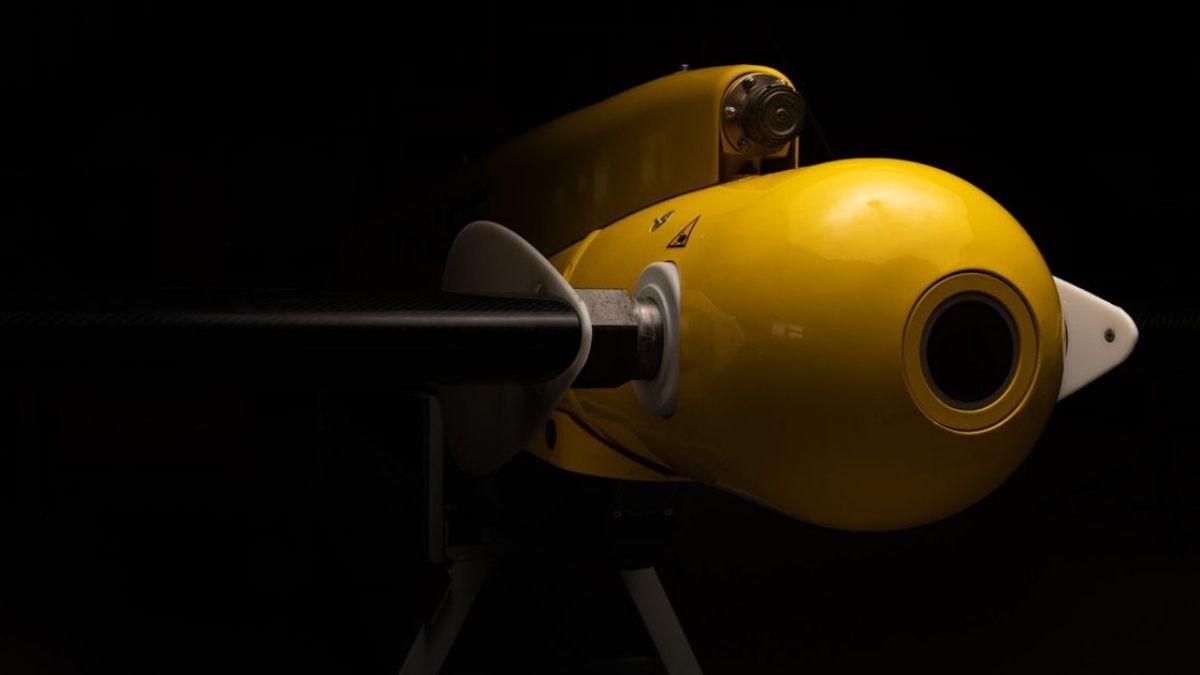
RMH enables remote mine detection and threat engagement, reducing risks to sailors and platforms (Photo: Thales)
To strengthen the US Navy’s mine countermeasures capabilities, Advanced Acoustic Concepts (AAC), a US-based subsidiary of Thales, has been awarded a USD 53.9 million contract to produce and deliver two integrated RMH modules, along with engineering support. The contract includes options for additional modules that could increase its total cumulative value to approximately USD 196.2 million.
In a press statement, Thales says that the RMH solution will support the Navy’s Find, Fix and Finish approach to countering undersea mine threats. The system will enable sailors to remotely detect, locate and classify mines from safer stand-off distances, reducing risks to personnel and naval platforms in contested maritime environments.
The statement adds that the RMH module suite integrates advanced sonar, mission management software and remotely operated vehicle technology. It includes a multiview towed Synthetic Aperture Sonar (SAS), which provides high-resolution mine detection and imaging capabilities while reducing false target rates.
Also Read: Thales, Renault Group partner to industrialise Toutatis loitering munition production
The system also incorporates artificial intelligence (AI)-augmented Automatic Target Recognition (ATR) algorithms, enabling sailors to process, classify, map and manage mine-hunting data for faster decision-making and improved target identification.

Rob Geckle
“The ability to counter undersea mine threats remains fundamental to maritime security and naval mission success. By advancing the Navy’s MCM capabilities, this programme will help strengthen fleet readiness and support mission success in an increasingly dynamic operating environment,” says Rob Geckle, CEO, Thales North America.
Mike Carnovale, President of Advanced Acoustic Concepts, says that the programme combines technologies across Thales’ portfolio with AAC’s experience in delivering integrated undersea warfare capabilities to the US Navy. He adds that integrating sonar, classification software and future remote neutralisation capabilities into a single solution will simplify mine-hunting operations and accelerate the transition from detection to action across manned and unmanned surface vessel platforms.
