
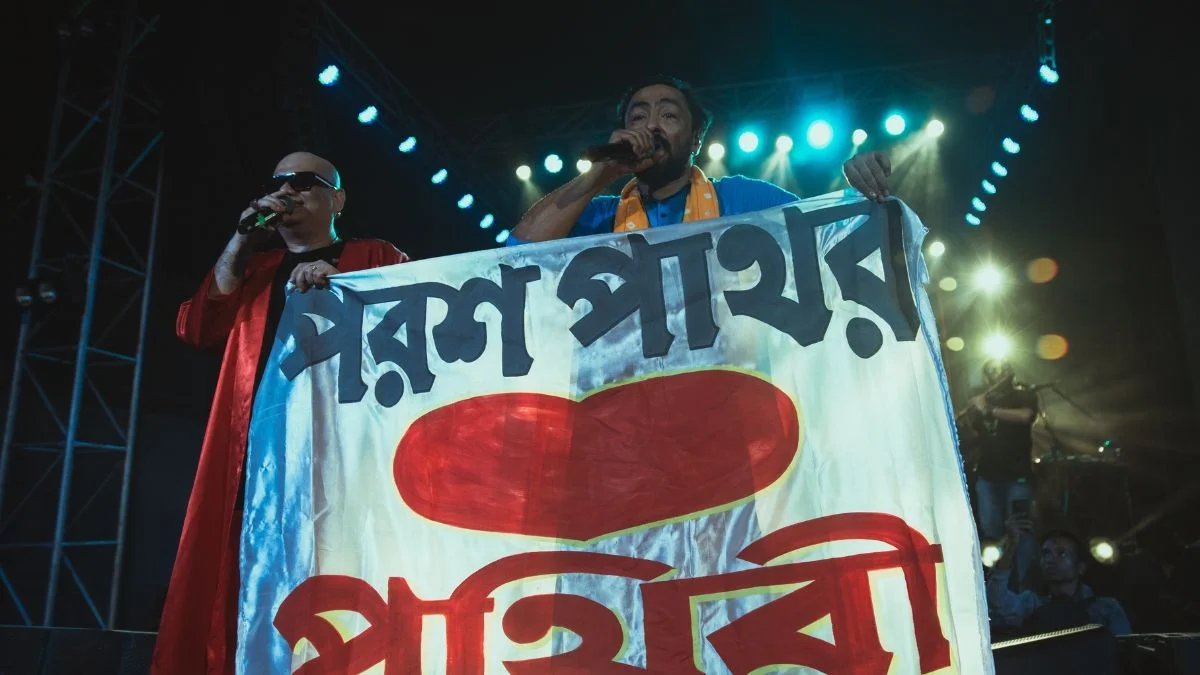
A live performance highlights the festival’s celebration of music, artistic expression and cultural diversity
Kolkata Centre for Creativity (KCC) will host the 7th edition of the Ami Arts Festival from November 20 to December 20, bringing together over 100 artists across seven venues in Kolkata and Santiniketan. The month-long programme will feature more than 70 events, including music and theatre performances, dance, exhibitions, film screenings, conversations, workshops and an art fair, with 20 partners participating in the festival.
In a press statement, the organisers say that the festival takes its name from Ami, the Bengali word for ‘I’, and focusses on individual expression, creativity and collaboration as ways of connecting artists with audiences. The programme will feature both established and emerging practitioners, alongside opportunities for younger artists to engage with different artistic disciplines.
The festival will be hosted at KCC and cultural institutions in Kolkata, including Victoria Memorial Hall, Indian Museum, G D Birla Sabhagar, The Asiatic Society and Gyan Manch. It will also extend to Santiniketan through partnerships with SSVAD and outreach schools.
The music programme will cover classical, folk, spiritual, rock, jazz and contemporary genres. Heart Song will bring together Baul singer Parvathy Baul and jazz musician George Brooks, while the Anirudh Varma Collective will present Kahat Kabir, drawing on the poetry and philosophy of Kabir.
Other performers will include Kaushiki Chakraborty, presenting classical and semi-classical music, and Ruuh-Bakhsh, featuring Tajdar Junaid, Satyaki Banerjee and Rabi Mondal, exploring Bengal’s folk and spiritual traditions. The Tapi Project will combine folk music with funk and contemporary sounds, while The Tagore Boys will revisit Rabindranath Tagore’s ideas of freedom and change through Bhangoner Gaan.
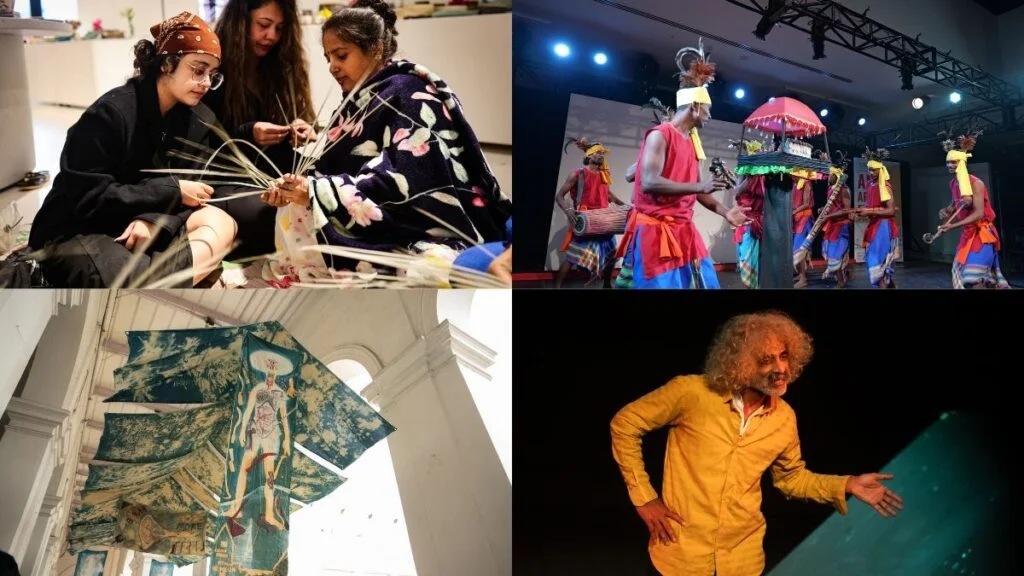
The Ami Arts Festival brings together diverse artistic expressions through workshops, folk performances, exhibitions and live music
The Raghu Dixit Project will draw on folk music from Karnataka and mystical poetry, while Hooligaanism will combine Bengali folk, Jatra, rock and protest music. The programme will also feature Rhythm Roots, curated by Pandit Hindole Majumdar; Mehfil-e-Qawwali by Danish Hussain Badayuni and Group; and Samagam, featuring Pandit Partha Bose, Pandit Lokesh Anand and Pandit Anindo Chatterjee.
The theatre programme will feature ten productions, including new works making their Kolkata debut and returning performances. Swapnasandhani will present its interpretation of Shakespeare’s Hamlet, while Ichheymoto will stage Montu O Marx. Lillete Dubey will direct Mahesh Dattani’s Dance Like a Man.
Abhimukh will present Raghunath, a production from Assam exploring a father’s struggle to secure the future of his village. Something Like Truth will examine the experiences of four women, while Amol Parashar’s Besharam Aadmi will explore personal beliefs and progressive values.
The programme will also include Kuch Panne by Seema Pahwa, featuring stories from prominent Hindi literary figures, and With Love, Aap Ki Saiyaara by Juhi Babbar Soni, exploring love and relationships. Ek Lamhaa Zindagi-A Love Story 1938-1979 will trace a love story across four decades of a changing India, while Papa Painter will follow a son’s journey towards understanding his father.
The wider performance programme will include two Dastangoi presentations, Dastaan-e-Dev Anand and Dastaan-e-Mukesh, alongside the solo performances Mandala and The Blue God in Varied Manifestations.
Under the theme In Other Words, the festival will organise conversations on art, society and contemporary concerns. Sumantra Ghosal will deliver the Chidanand Dasgupta Memorial Lecture, examining how audiences engage with art. Other sessions will include Monica Khosla Bhargava’s discussion on the architecture of South Kolkata and Sukrit Sen’s conversation on youth and the future of water. Suhasini Barman’s Salted Caramel will focus on poetry and reading.
The exhibition programme will feature My Gaze: Aparna Sen, exploring the life and work of filmmaker and actor Aparna Sen through her perspective, and Jal, Jangal, Jamin: A Gathering of Indigenous Voices, highlighting indigenous traditions and knowledge. Karigari will showcase craftsmanship and emerging creative practitioners, while The Collector’s Edit will offer audiences an opportunity to discover and acquire artworks.
A key highlight will be Evam Badal, a three-day celebration marking the birth centenary of playwright Badal Sircar. The programme will include discussions, masterclasses, film screenings and performances examining his legacy and influence on modern Indian theatre. Participants will include M K Raina, Satish Alekar, Amol Palekar, Bratya Basu, Kirti Jain, Makarand Deshpande, Debesh Chattopadhyay and Sudhir Mishra.
Also Read: Bengal Biennale to be held in Kolkata, Santiniketan from November 25-January 2, 2027
The festival will also organise workshops and educational initiatives, including Rabindranritya sessions with Pallabi Ruj and Rabindrasangeet workshops with Prolipto Ghosh. Old Man River, an original collaborative musical play, will be developed with students from four participating schools. Film screenings will be organised in partnership with the Australian Consulate-General.
Its open-call initiatives will include MKIK 6.0, inviting participants to explore the question of what Kolkata means to them, and Utsav, which will provide young performers with a platform to showcase their work in music, dance and elocution.
The residency programme will feature Scoring for the Screen with Neel Dutt, offering participants an introduction to composing music for cinema. In Santiniketan, a four-day residency at SSVAD with students from Antaranga School will explore performance through mime, music, dance and storytelling.
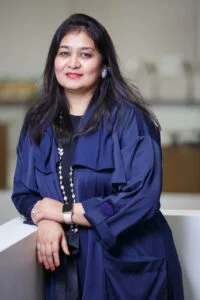
Richa Agarwal
The organisers say the festival will also focus on Diversity, Equity, Accessibility and Inclusion (DEAI), with initiatives to improve access to cultural spaces for persons with disabilities and increase the visibility of underrepresented artists and communities.
“Over the years, Ami has brought together artists and audiences across a range of disciplines. With each edition, we have continued to find new ways to widen that engagement. This year’s programme gives audiences the opportunity to encounter different artistic practices and perspectives, while the open calls, residencies and outreach initiatives create opportunities for people to participate in the festival. We hope Ami will encourage people to look beyond the art forms they already know and engage with work they may be encountering for the first time,” says Richa Agarwal, Chairperson of Kolkata Centre for Creativity.
