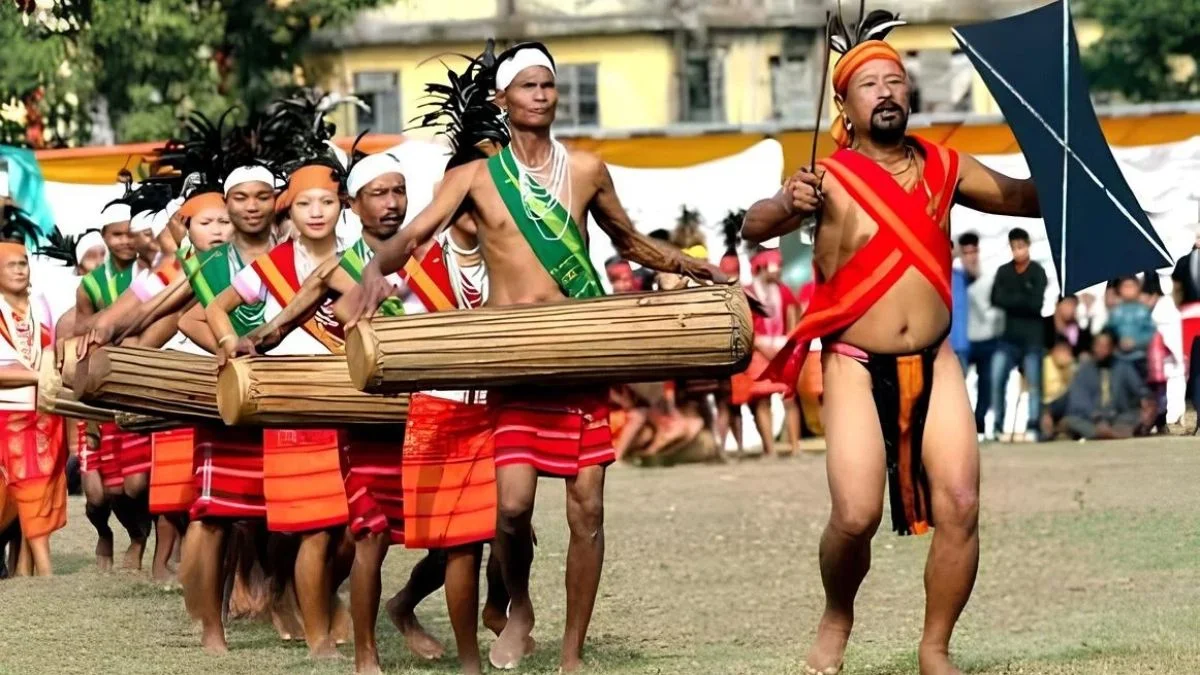
Garo performers play traditional dama drums during Wangala in Meghalaya (Photos: Utsav)
As November approaches, the Garo Hills in Meghalaya prepare for the rhythmic beats of traditional drums as the Garo community gathers for one of its oldest harvest celebrations. Wangala, a post-harvest thanksgiving festival dedicated to Misi Saljong, the deity associated with fertility and prosperity, marks the end of the agricultural season and celebrates the community’s relationship with nature.
Traditionally known for its 100-drum performances, the festival has evolved into an important platform for preserving Garo music, dance, rituals and indigenous identity. Its 50th edition, scheduled for November 11-14, will feature 1,000 drummers and 3,000 dancers, marking a significant milestone in its cultural journey.
The origins of Wangala lie in the agricultural practices and spiritual beliefs of the Garo community, for whom harvesting has traditionally been followed by thanksgiving.
The festival is dedicated to Misi Saljong, also known as Pattigipa Rarongipa, the deity associated with fertility and prosperity. After months of working in the fields, the community celebrates the harvest by expressing gratitude for nature’s bounty and seeking blessings for future agricultural seasons.
Also Read: Kongthong: Meghalaya’s whistling village preserves living heritage through tourism
Traditionally, Wangala is celebrated across Garo villages between September and December, with communities observing the festival on different dates. The organised 100 Drums Wangala Festival, however, brought several village celebrations together on a common platform.
Its first edition was held in December 1976 at Asananggre in West Garo Hills, creating an opportunity for different Garo groups to showcase their traditional music, dance and customs.
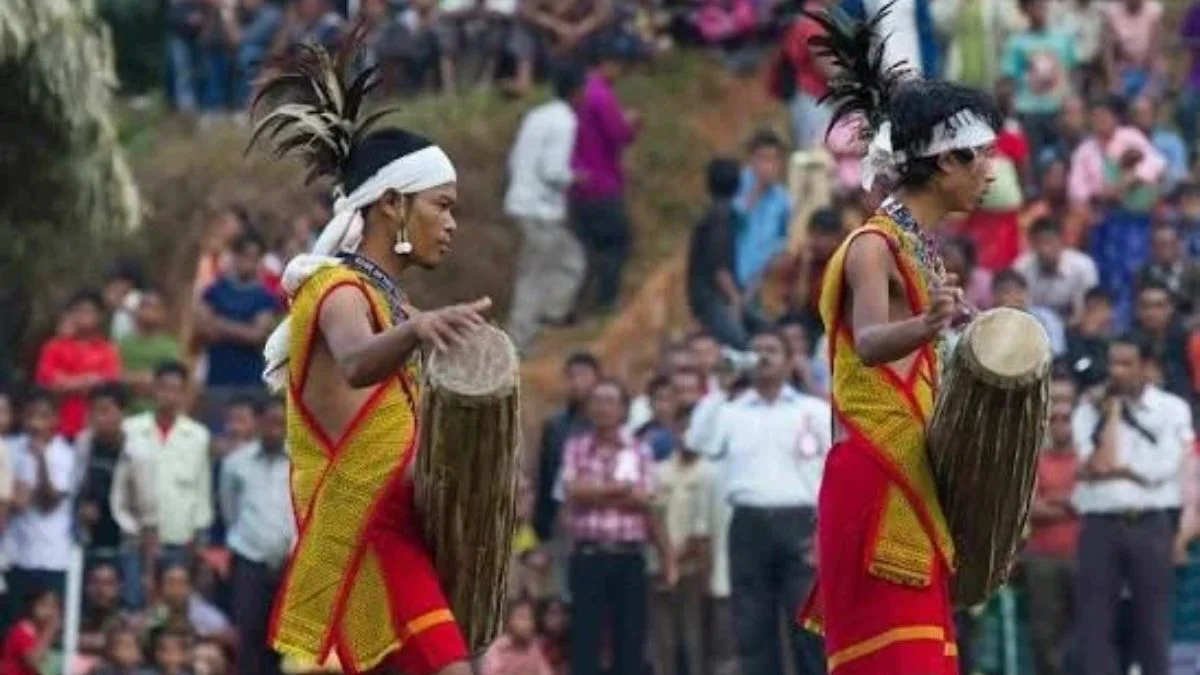
The 100 Drums Wangala Festival has grown into a major cultural platform for showcasing the heritage and indigenous identity
At the centre of the celebration is the dama, a traditional long, oval-shaped drum that gives the festival its popular name. Groups of male performers carry the drums using shoulder straps and beat them in coordinated patterns, creating rhythms to which women and other dancers move in carefully arranged formations. Traditional instruments such as gongs, bamboo flutes and buffalo-horn instruments also accompany the performances.
The dance is distinctive for its formations and movements, with men and women generally performing in separate, parallel lines. Their steps and gestures reflect elements of everyday agricultural life, including activities associated with sowing and harvesting. The performances are therefore not simply entertainment but an expression of the community’s relationship with farming, nature and collective work.
Traditional attire adds to the visual identity of the celebration. Men commonly wear gando, a wraparound garment, with headgear decorated with feathers, while women wear colourful garments such as dakmanda and daksari, accompanied by traditional ornaments. Together, the costumes, music and coordinated movements reflect the diversity of Garo cultural expression.
Also Read: Meghalaya bans roadside picnics in Sohra over environmental concerns
Beyond the performances, Wangala involves rituals with religious and social significance. One important ceremony is Rugala, during which rice beer is offered as an expression of gratitude for the harvest. This is followed by Chachat Soa, an incense-burning ceremony. In traditional village celebrations, the Nokma, or village chief, plays an important role in the proceedings. Folk songs, indigenous games, traditional food and storytelling also form part of the festivities, helping preserve knowledge and customs passed down through generations.
Over the past five decades, the organised festival has grown in scale and visibility, bringing together Garo communities from different regions. However, changing lifestyles, migration and evolving religious practices have affected the observance of traditional customs.
With the spread of Christianity, some communities increasingly celebrate Wangala as a cultural event rather than a religious ceremony. The organised festival has consequently become an important platform for keeping traditional music, dance, attire and indigenous heritage visible.
The golden jubilee in 2026 will take this effort to a larger scale. Moving beyond the customary 100-drum presentation, the special edition is planned around 1,000 drummers and 3,000 dancers under the theme Rhythm of 1,000 Drums.
Scheduled from November 11 to 14 at Wangala A’dam, Garo Heritage Village, Chibragre, near Tura in West Garo Hills, the four-day celebration will also feature indigenous food, traditional games, folk songs and oral storytelling.