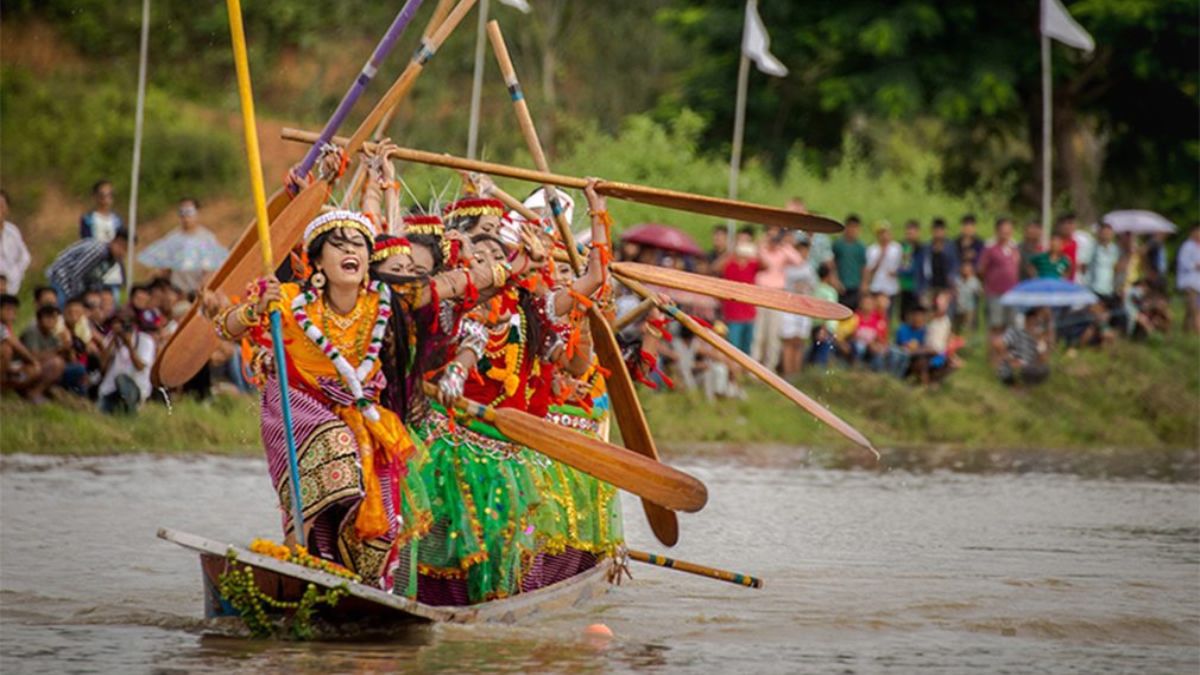
Participants take part in a traditional boat race, showcasing Manipur’s indigenous sporting and cultural traditions (Photos: Incredible India)
Every November, Manipur celebrates its cultural diversity through the Sangai Festival, a 10-day event that transforms the state into a platform for traditional performances, exhibitions and community participation. Organised by the Manipur Department of Tourism since 2010, the festival showcases the customs of the Meitei community and various indigenous communities from the hill regions, including Naga and Kuki-Zo groups.
Through traditional attire, music, dance, food and sporting competitions, it offers visitors an opportunity to experience the state’s cultural diversity in one place.
The festival derives its name from the Sangai, also known as the brow-antlered deer or dancing deer, which is found in the wild only in Manipur. The animal inhabits Keibul Lamjao National Park, located within Loktak Lake, where it moves across floating masses of vegetation called phumdis.
These unusual movements have earned it the name dancing deer. The Sangai is also regarded as a symbol of Manipur’s identity and pride, making it an important emblem of the festival. Its association with the state’s natural environment also highlights the importance of protecting the endangered species and its habitat.
Traditional dance performances are among the main attractions of the Sangai Festival. Visitors can witness Manipuri classical dance, particularly Ras Leela, which depicts the divine love of Radha and Krishna.
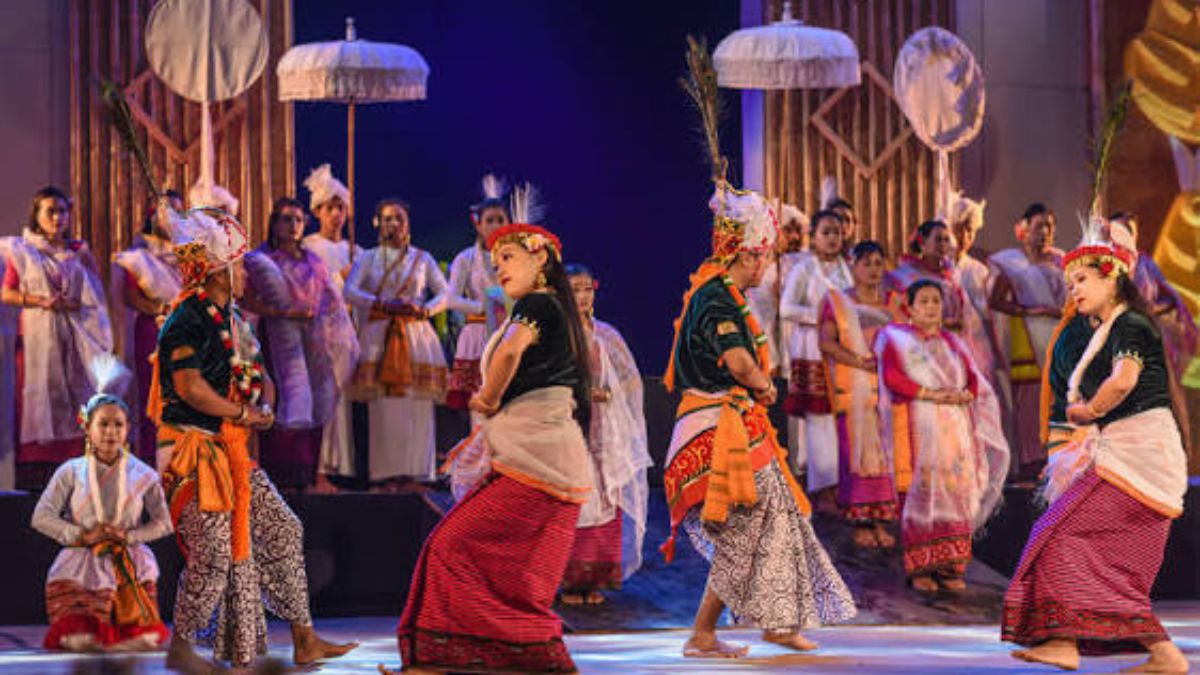
Participants perform a traditional Manipuri dance, showcasing the region’s distinctive costumes, music and cultural traditions
Known for its graceful movements, devotional expressions and elaborate costumes, the dance is accompanied by traditional instruments such as the pung, a Manipuri drum and cymbals. Female dancers wear the distinctive cylindrical skirt called Potloi, which is an important feature of Manipuri dance attire.
The festival also showcases folk dances and musical performances representing different communities of Manipur. These include the Khamba Thoibi dance, based on a popular Moirang love legend and traditional Naga and Kuki-Zo performances featuring community songs, dances and colourful indigenous attire.
Traditional instruments, including the pena, a string instrument and various drums, accompany performances, reflecting the musical diversity of the state. The movements, costumes and songs often communicate stories of ancestral life, community relationships and local beliefs.
Indigenous sports and martial arts are another important part of the celebration. Sagol Kangjei, the traditional form of polo played on horseback, is among Manipur’s most recognised sporting traditions. Players use bamboo sticks to strike a ball towards the opposing team’s goal. Yubi Lakpi, a game resembling rugby, involves players competing to carry a greased coconut to a designated goal.
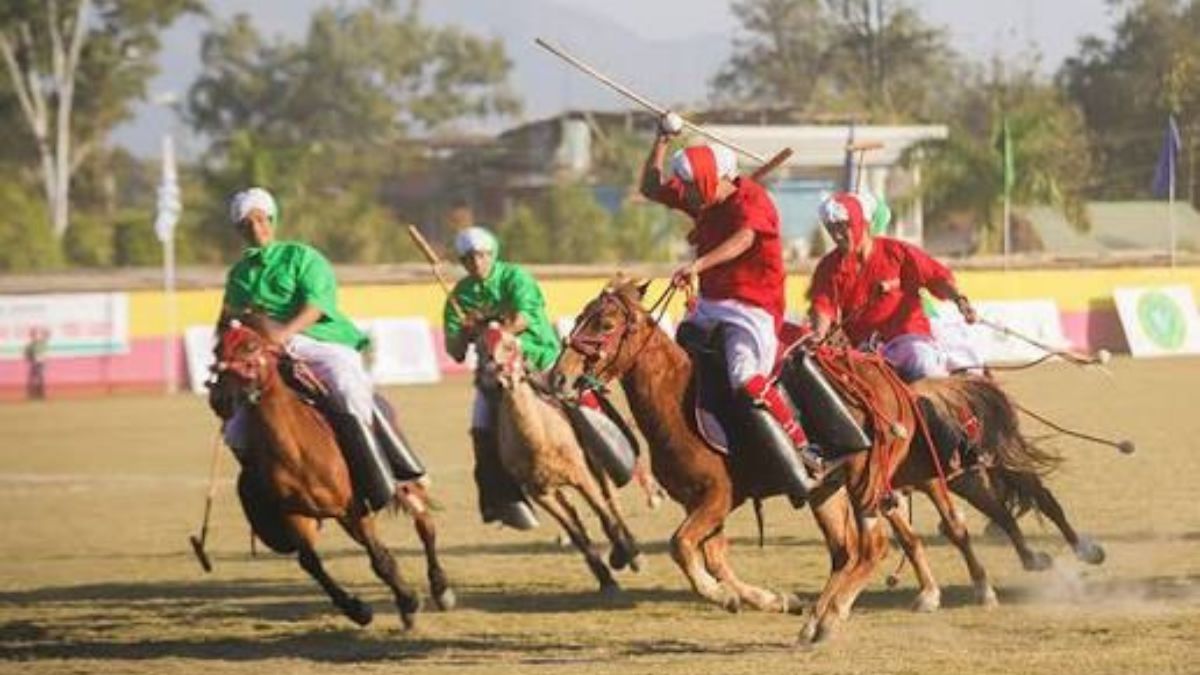
Players compete in a traditional game of Sagol Kangjei, Manipur’s indigenous form of polo
Traditional wrestling, known as Mukna, tests the strength and balance of competitors, while demonstrations of Thang-Ta showcase sword and spear techniques that originated in the state’s martial traditions. These activities highlight the importance of physical strength, discipline and sporting heritage in Manipuri society.
The festival also provides a platform for Manipur’s traditional handloom and handicraft industries. Artisans display handwoven textiles, including the Phanek, a traditional wraparound skirt worn by women, and the Innaphi, a light shawl.
Their designs and weaving techniques reflect the state’s distinctive textile heritage. Cane and bamboo products, pottery, woodwork, traditional ornaments and handmade household objects are also exhibited, allowing visitors to understand the skills and materials used in indigenous craftsmanship. Demonstrations and sales provide artisans with opportunities to promote their work and reach wider markets.
Food is another important attraction, with stalls presenting traditional dishes from different communities.
Meitei preparations such as Eromba, made with boiled vegetables, chillies and fermented fish, Singju, a spicy salad prepared with vegetables and herbs, and Nga Thongba, a traditional fish curry, introduce visitors to the region’s culinary heritage. Fermented fish, known as Ngari, is an important ingredient in several local preparations. Food stalls representing hill communities also showcase their distinctive ingredients, cooking techniques and traditional dishes.
Beyond its performances and exhibitions, the Sangai Festival serves as a platform for cultural exchange and the preservation of indigenous knowledge. It brings traditional practitioners, artisans and younger generations together, helping maintain visibility for customs and skills that face challenges from urbanisation and changing lifestyles. By placing the Sangai deer at the centre of its identity, the festival also connects the celebration of cultural heritage with environmental conservation.