Indian street foods: Laboratories of fearless fusion flavours
From ‘schezwan dosa’ to ‘achari sushi’
India’s street food now served in fusion styles stands as both comfort and spectacle
Known for their exciting culinary palette, the Indian street food has also emerged as a laboratory where exotic and often controversial fusion foods are continuously created, some of which disappear with the first serving, while others stay on to tempt taste buds of millions.
India’s street food now served in fusion styles stands as both comfort and spectacle
Indian street food is far more than a quick bite grabbed between meals, it is a living, breathing chronicle of the nation itself. An aroma that drifts through ancient alleys, the sizzle that echoes across modern boulevards, and the flavour that binds a billion people. From Chennai’s bajji stalls and Kohima’s bamboo-smoked delicacies to Delhi’s chole bhature and Lucknow’s kebabs, street food has woven itself tightly into the fabric of India.
Long before the notion of street food took form, ancient Indian epics such as the Ramayana and the Mahabharata recorded scenes of travellers, mendicants, and merchants being welcomed with food prepared by locals. Sharing a meal was considered an act of dharma, an offering of warmth, compassion, and hospitality. What began as a gesture of goodwill slowly blossomed into an everyday culture. Bustling bazaars and roadside inns evolved into lively addas, spaces where stories, gossip, and flavours are traded with equal enthusiasm.
As these flavours travelled along trade routes and royal kitchens, a rich culinary patchwork emerged, giving every region its own signature identity.
With rising interstate travel in the 1970s came the beginning of a vibrant entrepreneurial era. Highways blossomed with dhabas, humble yet legendary eateries that promised hot rotis, hearty dal, and a comforting cup of chai to weary travellers. Meanwhile, cities witnessed an explosion of pushcarts, kiosks, and hawkers who carried the flavours of home right onto crowded pavements.
Also Read Street food vendors in distress as Covid-19 keeps customers away
As the decades unfurled, India’s palate grew younger, bolder, and more curious. Global exposure, rising travel culture, and the influence of media sparked a wave of reinvention. Momos emerged with a tandoori spice trail, the classic South Indian dosas were served with schezwan sauce and cheese, and even Nutella; chaat found companions in international sauces and techniques. Street food soon became a laboratory of imagination.
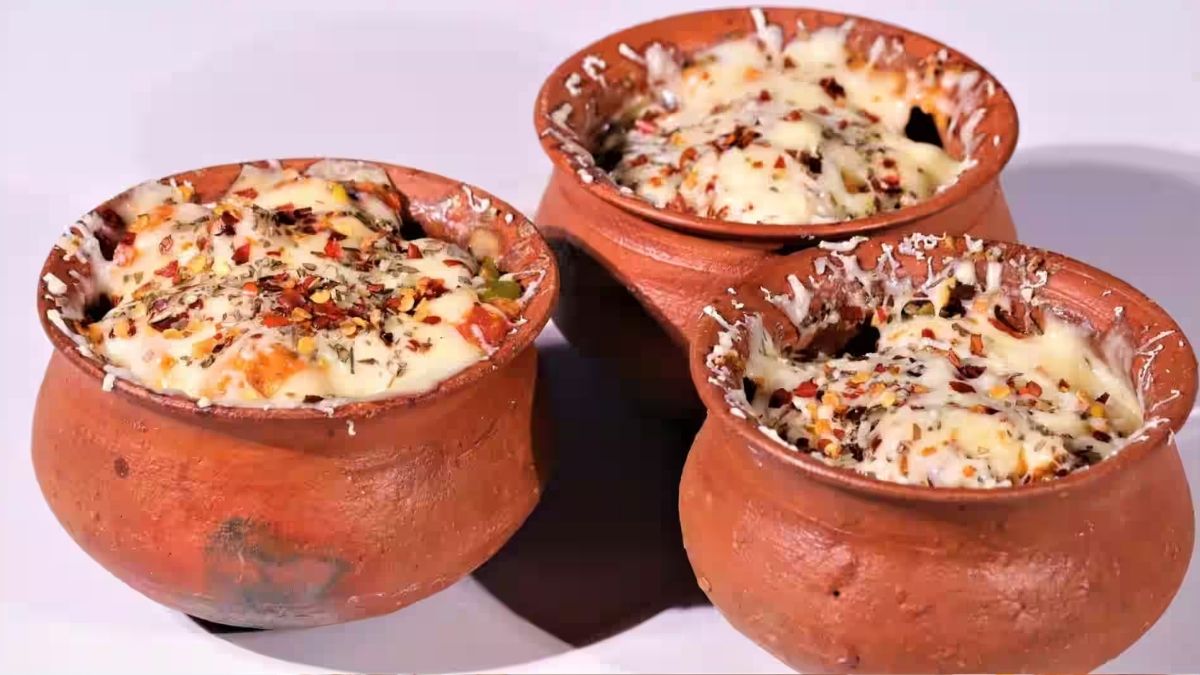
Today, Indian street food stands as both comfort and spectacle, an edible mosaic of heritage and innovation. Whether served in clay pots or kulhads, steel plates or banana leaves, every dish tells a story, of creativity, nostalgia, and relentless, and very often needless, reinvention. From ancient pathways to neon-lit food trucks, the journey of street food mirrors India’s own, diverse, dynamic, and delightfully unpredictable.
A foreign dish subjected to fusion is Sushi, the traditional Japanese delicacy, which made its way to India and quickly gained popularity, admired for its subtle flavours and refined balance, a dish that spoke to the tastes of the well-travelled diner. Yet, it didn’t take long for inventive Indian chefs to leave their mark on the Japanese traditional fare.
The classic rolls evolved into achari sushi, paneer sushi, tikka sushi, and even Arabic-inspired sushi, infusing the Japanese staple with the bold, vibrant flavours beloved across India. By blending the subtlety of traditional sushi with the bolder and more high-pitched flavours of Indian cuisine, fusion sushi has emerged as a fresh culinary favourite, delighting diners with its playful reinvention of a global classic.
Srishti Shikha, sous chef at Trident Hotel, an upscale business hotel in South Mumbai, says the country’s insatiable curiosity is the engine of its culinary innovation.
“Indian street food today has become a canvas for fusion. From kulhad pizzas and chicken tikka patties to tandoori momos and even chicken makhani burgers, our streets are now bustling with experiments that blend the familiar with the new,” Shikha tells Media India Group.
She explains fusion is more than a trend and is an emotional journey.
“People find comfort in food, no matter where it comes from. We grow up with certain flavours, and over time they become part of our emotional memory. So when we discover something new, we try to mould it into something that still feels like home. In a country as vast and vibrant as India, people are constantly experimenting. They want global tastes to blend seamlessly with everyday flavours. Fusion food is India’s way of embracing the world while staying rooted in what feels like home,” she adds.
And perhaps that is the true beauty of Indian street food, it never stops evolving, yet it never forgets where it came from. Every bite is a story, ancient yet new, traditional yet daring, familiar yet thrillingly unexpected.