Youth-led private libraries spark educational revival in Kashmir
Addressing challenges of employment and education through well-equipped study spaces
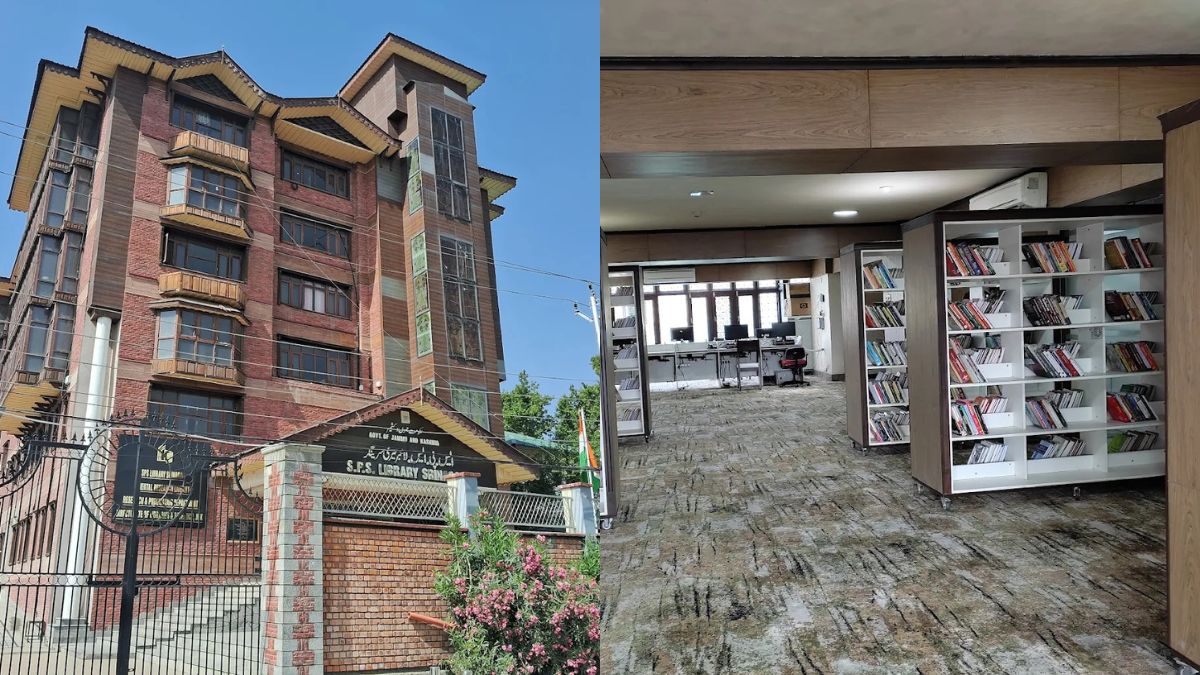
Kashmir has over 70 public libraries, of which about 63 are operational, while the rest are closed (Photo: SPS Libary)
In Kashmir’s towns and semi-urban areas, unemployed youth are opening private reading rooms and libraries that offer quiet, well-equipped spaces for students preparing competitive exams.
Kashmir has over 70 public libraries, of which about 63 are operational, while the rest are closed (Photo: SPS Libary)
In the quiet lanes of towns and semi-urban neighbourhoods in Jammu and Kashmir, a silent educational movement is taking shape. With government libraries struggling to meet the needs of students, a growing number of unemployed young men and women are opening private reading rooms and small libraries.
These offer space, warmth, and stability to students, job aspirants and general readers, enabling them to prepare for various competitive exams for admissions and recruitment. They step in where public libraries fall short, supporting education and providing youth with opportunities to earn and lead amid job shortages and inadequate facilities.
Often run from modest rooms and refurbished shops, these youth-led study hubs run on a membership basis with minimal monthly fees. With facilities such as internet access, extended operational hours, and heating during the harsh winters, and free competitive exam materials, they are creating a focussed environment that many public libraries fail to offer. The membership comes with regular counselling and guidance sessions, as well as motivational talks, to make these spaces lively.
For the young owners of these libraries, these initiatives also present a rare chance to earn, lead, and serve in a region marked by limited job opportunities.
One such initiative is the Tagore Library in Budgam, founded and managed by 28-year-old Altaf Hussain, a postgraduate degree holder in Mass Communication.
“I wanted to offer something constructive to the neighbourhood: a productive space where the aspirational youth of Budgam could spend time with books and also prepare for competitive exams. Already, the literacy rate of our district is low at around 57 pc, creating a significant learning gap. Additionally, given the widespread adoption of digital devices, reading appears to have taken a back seat. So, setting up a library felt like the most sensible way to contribute towards reviving our engagements with books,” Hussain tells Media India Group.
Now in its second year, the Tagore Library experiences a steady flow of both students and locals seeking a quiet ambience for reading. “Students and aspirants from diverse backgrounds like NEET, JEE, JKSSB and UPSC, come here and access the study material free of cost. A good number of youngsters want to get away from digital spaces to hold a book and just read,” says Hussain.
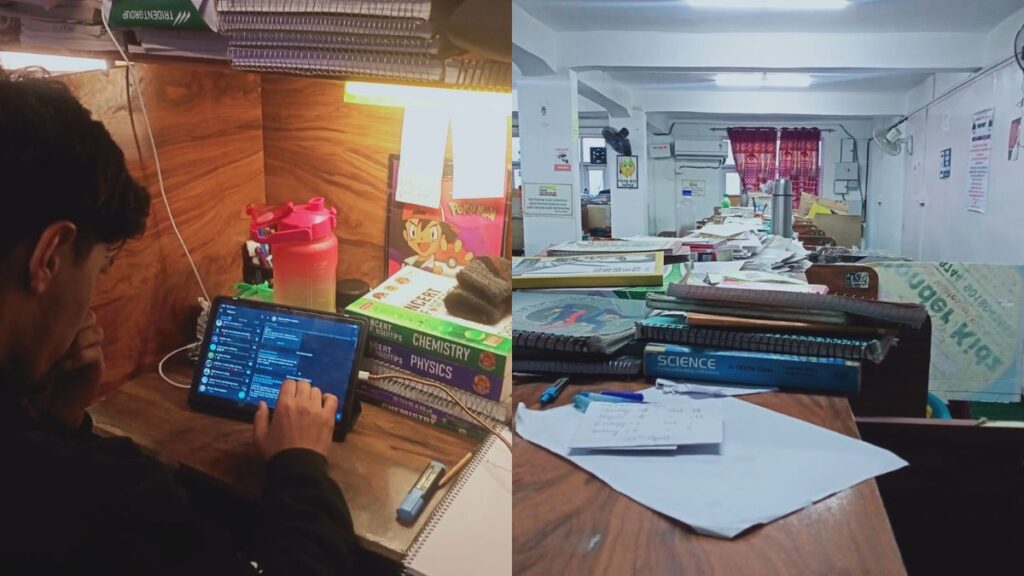
Tagore Library draws steady crowds of students and locals craving a peaceful reading haven
According to official data, Kashmir has over 70 public libraries, of which about 63 are operational, while the rest are closed due to staff shortages, poor maintenance or infrastructure gaps. Many of those that are open struggle with outdated catalogues and lack amenities such as internet, adequate seating, or heating arrangements.
More alarming is the condition of school libraries, over half of which reportedly have no books, and nearly all lack digital tools, leaving rural and low-income students far behind.
“In public libraries, the reading environment often suffers due to administrative indolence. But the same is not true for private library spaces which supplement the needs of readers, especially students and aspirants through initiatives like academic support or counselling,” adds Hussain.
Also Read: Missing placement cells in Kashmir universities undermine job prospects for students
Over the years, Jammu and Kashmir’s worsening unemployment crisis has accelerated this trend. The latest Mission YUVA Baseline Survey Report (2024–25) indicates that youth unemployment in Jammu & Kashmir stands at 17.4 pc, significantly higher than the national average of 10.2 pc. The overall unemployment rate stands at 6.7 pc, which is nearly double the national average.
With limited formal employment opportunities, many educated youth are turning to community-based micro-enterprises, such as private library ventures that blend social service with modest income generation.
A senior official of the Srinagar Public Library Department, speaking anonymously to Media India Group, states that the emergence of new private libraries does not impact the footfall of public libraries, which continue to attract regular visitors.
“Public libraries provide free access to books, reference materials, reading spaces, and basic facilities. We try to update our repository regularly. In fact, students and competitive exam aspirants regularly use our book collection throughout the year. Public libraries consistently attract a good number of visitors. At the same time, we are a government department and work according to established rules and hence cannot extend the operational hours on our own,” he says.
For students like Hilal Ahmad Dar, who is preparing for the civil services at the Flambeau Library in Srinagar’s Rajbagh, the difference is stark.
“Public libraries are best for free access to general reading material with limited hours of access. But private libraries complement the books and reading materials with fixed seats, quieter rooms, charging points, AC, internet and long hours of access for their members. It is conducive for students and job aspirants preparing for exams, as well as the general public. It is the convenience that makes a difference to everyone,” Dar tells Media India Group.
Others echo similar experiences. “There is no doubt that public libraries serve the wider community, but they can be noisy, with limited access hours and often do not update their catalogues. Private libraries offer an alternative, providing access to books as well as an ambient reading environment with better infrastructure. They’re ideal for aspirants who need long hours as well as people who require quiet spaces for immersing in books,” Burhan Mushtaq, a member of a private library in Srinagar, explains to Media India Group.
Many of these initiatives are driven by community spirit. Majid Ali, the founder of Dr APJ Abdul Kalam Library & Research Centre in Budgam, says his inspiration was personal.
“My library is less a business and more a service. Having studied both in Kashmir and outside, I felt that our students needed a distraction-free environment where they could focus on their studies. That became my fundamental reason,” the 25-year-old tells Media India Group.
Also Read: Jammu & Kashmir schools open to differently-abled children
But running such spaces is far from easy and requires constant attention and capital.
“Our library has a seating capacity of 200, with approximately 150 desks usually occupied, and 50 seats reserved for those in need, such as orphans or students from financially disadvantaged backgrounds. However, maintenance is the most challenging part, as everything from heating and internet to seating and cleanliness requires attention. Yet, even if a single student studies here for one hour, it gives meaning to the community,” says Ali.
These private spots showcase how jobless graduates transform empty rooms into bustling hubs, earning a livelihood for themselves while also providing spaces for reading and conversation.
As these youth-run private libraries like Tagore Library and Dr APJ Abdul Kalam Research Centre grow, it is emblematic of a quiet revolution in Kashmir’s educational landscape. Not only do these fill institutional gaps, but these spaces also nurture ambition and demonstrate the power of self-help in the face of governmental indifference. Yet operators say that key support from government bodies to maintain the logistics could strengthen these grassroots efforts.