Cities in crisis: Climate change threatens future of urban India
Floods, heatwaves and failing infrastructure signal deeper urban distress
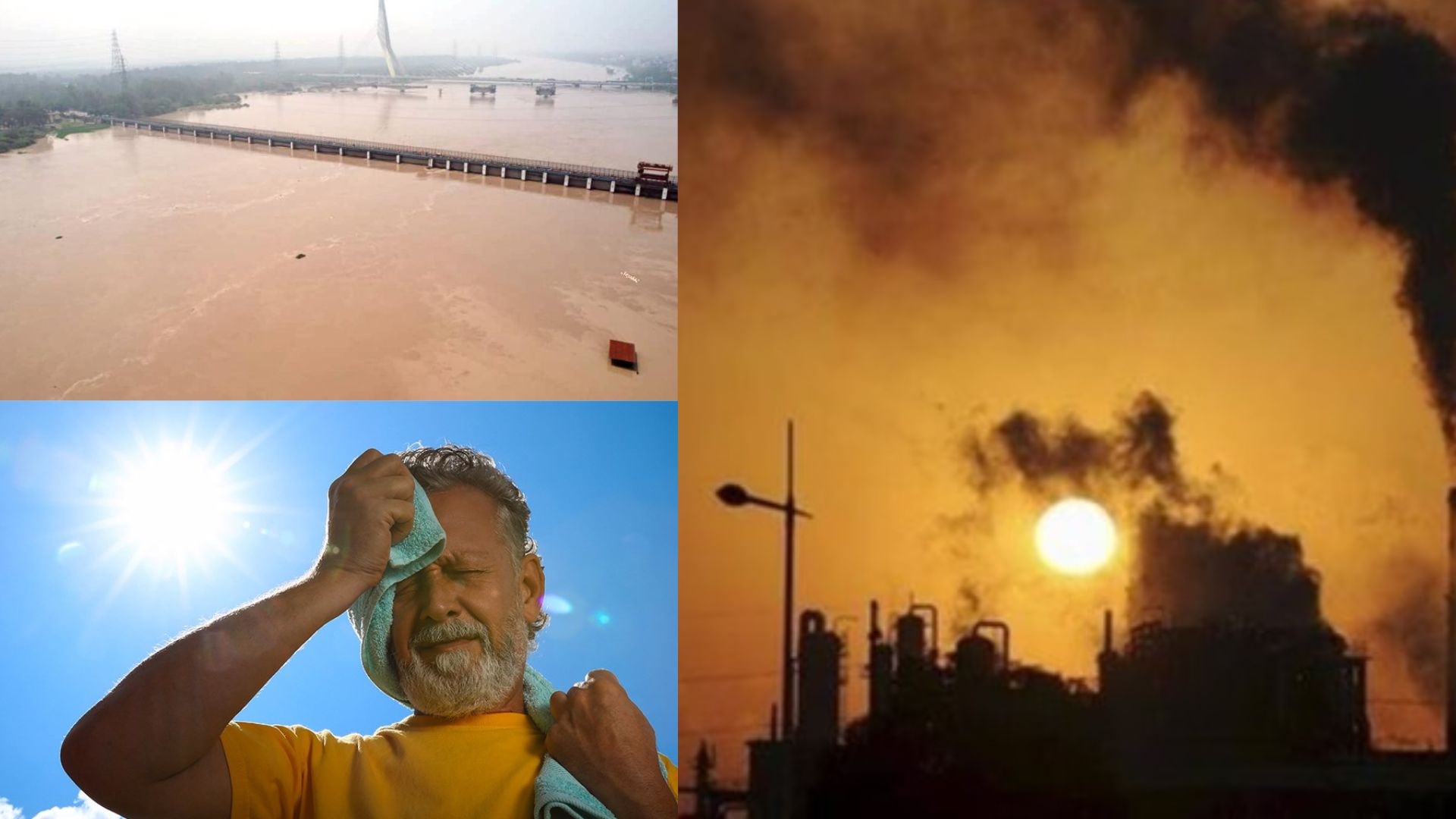
Indian cities are becoming hotspots for climate-related threats like floods and heatwaves
A World Bank report reveals urban India is becoming a climate risk zone. As cities expand into flood-prone and heat-exposed areas, phenomena such as severe floods in Delhi and heatwaves in Patna are no longer exceptional, but symptoms of a broader crisis. The report calls for immediate investment in resilient infrastructure to avert mounting economic and human costs, before it is too late.
Indian cities are becoming hotspots for climate-related threats like floods and heatwaves
Whenever climate change or global warming is discussed, the spotlight often falls on vanishing glaciers, polluted air, and the thinning ozone layer. But lost in this conversation is a crucial piece of the puzzle, how cities, especially those in India, are being pushed to the brink by a changing climate.
A new World Bank report puts this into sharp perspective. It finds that Indian cities are becoming hotspots for climate-related threats like floods and heatwaves, and will need more than USD 2.4 trillion in investments by 2050 to build infrastructure that can cope. The clock is ticking, as urban India expands into areas that are increasingly flood-prone and heat-stressed.
India’s cities are not just population centres, they are economic engines. By 2030, 70 pc of new jobs are expected to emerge from cities. But to sustain this growth, the cities will need to become climate-resilient. According to the report Delhi, Chennai, Surat and Lucknow are among the most at-risk cities, where unplanned expansion into vulnerable zones is amplifying exposure to extreme heat and floods.
Delhi, in particular, faces a growing threat. Between 1983 and 2016, the city’s exposure to dangerous heat increased by 71 pc, with total exposure across India’s 10 largest cities rising from 4.3 billion to 10.1 billion person-hours per year. That heat is now being compounded by erratic rainfall and flash floods.
The evidence is mounting. On May 25 this year, Delhi recorded 81.4 mm of rain in just a few hours, its wettest May since 1901. Mumbai, too, shattered a 107-year record for May rainfall. In both cities, the water overwhelmed infrastructure. In Delhi, the Minto Road underpass, a known flooding hotspot, went underwater once again. In Mumbai, even a newly inaugurated underground metro station was submerged.
These are not isolated events, they are the symptoms of a larger breakdown. In July 2024, three UPSC aspirants lost their lives in flash floods in Old Rajinder Nagar, Delhi. Their deaths underscored the growing human cost of unprepared cities caught off guard by climate extremes.
Indian cities affected by climate change
Delhi is not the only city facing a future shaped by climate extremes. A recent study released on June 10, 2025, by development consulting firm IPE Global and GIS technology provider ESRI India, projects that several other urban centres, including Surat, Thane, Hyderabad, Patna, and Bhubaneswar, could experience a two-fold increase in heatwave days by 2030. These changes are not distant possibilities; they are well on their way, already reshaping the climate realities of Indian cities.
The study estimates that 72 pc of Tier-I and Tier-II cities will face a rise in heat stress and extreme rainfall events. Alongside this, they are expected to encounter storm surges, lightning strikes and hailstorms. Coastal districts are set to be among the most affected. Nearly 69 pc of these regions could experience extended summer-like weather even during the monsoon months of June through September. That figure is projected to rise to 79 pc by 2040, pointing to a narrowing window of climatic stability.
Using dynamic climate modelling and spatial analytics, the report outlines a steep increase in extreme heat events over the past 30 years. From 1993 to 2024, heatwave days rose 15-fold during both the pre-monsoon and monsoon periods. The past decade alone saw a 19-fold spike, with major implications for public health, agricultural productivity, water security, and electricity demand.
According to Manu Bhatnagar, Principal Director of the Natural Heritage Division at Indian National Trust for Art and Cultural Heritage (INTACH), a Non-Governmental Organisation focussed on preserving national heritage, the primary cause of this vulnerability is the pattern of urbanisation and encroachment into low-lying areas.
“India’s rapid urbanisation, with over 530 million people now living in cities, has outpaced planning and infrastructure. Climate change, though now a major urban issue, is still missing from most planning approaches. As a result, we see climate-inappropriate architecture like glass facades and poor orientation, and growing emissions at traffic choke points creating heat islands. Our blind adoption of western planning models has led to widespread ground concretisation, which traps heat and blocks rainwater from soaking into the ground. A 35°C day can feel like 48°C. This also worsens flooding, as runoff increases and drainage systems fall short during intense rain. In many cases, development has ignored natural topography, allowing construction in low-lying zones and floodplains. The loss of green spaces and absorbent surfaces has only made the situation worse,” Bhatnagar tells Media India Group.
Echoing similar sentiments, Rohit Bagai, Programme Associate at iForest, a non-profit environmental research organisation based in Delhi, believes that India’s basic infrastructure is not yet equipped to support the evolving climate needs of its cities.
“Reports from the Intergovernmental Panel on Climate Change (IPCC), World Bank, and others clearly show that South and Southeast Asia are highly vulnerable to extreme weather events caused by climate change. Even countries like the US, with strong infrastructure, are struggling, so the challenge is much greater for India, where many urban areas still lack basic systems. Rapid, unplanned urbanisation is making things worse, increasing the urban heat island effect and pushing development into floodplains and wetlands. We are losing our natural buffers, which is why floods like those in Chennai and Bengaluru are becoming more severe. At the same time, concrete is replacing vegetation and water bodies at an alarming rate,” Bagai tells Media India Group.
Cities in the shadow of climate change
The impact of climate change on Indian urban infrastructure is becoming increasingly visible. Bengaluru, once known for its network of lakes, now finds itself frequently waterlogged after heavy rainfall, a result of rapid and unplanned urban growth.
On May 21, low-lying areas of the city were flooded after heavy rains linked to a low-pressure system over southern Karnataka. Once home to more than a thousand lakes, Bengaluru now has fewer than 200, with 85 pc encroached upon or polluted, according to a 2016 study by Biome Environmental Trust.
The city’s civic body, Bruhat Bengaluru Mahanagara Palike (BBMP), notes that only 17 lakes are in good condition today. The city’s uneven terrain further compounds the problem, with rainwater quickly collecting in depressions and flood-prone zones. Making matters worse, a 2023 study by the Indian Institute of Science found that 93.3 pc of Bengaluru’s surface area was covered by built-up structures, leaving little room for water absorption and runoff control.
According to experts, the implications of climate change are significant, as India expected to lose 5.3 pc of working hours due to heatwaves. The construction sector, in particular, is likely to face the greatest impact from rising temperatures.
As per 2019 International Labour Organisation report, India is the country most affected by heat stress as in 1995, we lost around 4.3 pc of working hours, and this is expected to rise to 5.8 pc by 2030. That translates to about 34 million full-time jobs lost. According to the report, while most of the impact will be in agriculture, the construction sector will be increasingly affected, with both male and female workers facing rising heat-related risks.
According to Bhatnagar, these short and intense rainfall events are causing year-round disruptions to economic activity and leading to significant damage to both private and public property across the country.
“Climate change is affecting us year-round, through rising temperatures and short, intense rainfall, especially during monsoons. These events disrupt economic activity, with flooding alone causing major losses in productive man-hours and damage to both private property and public infrastructure, often running into thousands of crores. Investing in course correction now will save far more in the long run. As they say, prevention is better than cure,” adds Bhatnagar.
Observing these developments, Bagai notes that India’s infrastructure is fundamentally unprepared to support climate-resilient systems.
“We are not moving in the right direction. At a broader level, Indian cities lack key fundamentals like technical expertise, funding, and administrative autonomy, which limit their overall effectiveness, not just in climate action,” adds Bagai.
The urgency for action is underscored by a report prepared in partnership with the Ministry of Housing and Urban Affairs, which warns that annual economic losses from rain-related flooding in India already stand at USD 4 billion. These are expected to rise to USD 5 billion by 2030 and could surge to between USD 14 and 30 billion by 2070 if no corrective measures are taken.
The report also projects alarming health impacts. “If emissions continue at current levels, annual heat-related deaths may rise from 1,44,000 to more than 3,28,000 by 2050. Around 20 pc of working hours in major Indian cities could be lost due to high heat stress conditions,” it says.
India’s urban population is expected to reach 1.1 billion by 2070, which would require over 144 million new urban homes, double the current housing stock. To prepare for this scale of growth and climate risk, the World Bank estimates that India will need to invest USD 2.4 trillion by 2050 and USD 10.9 trillion by 2070 across housing, transport, solid waste and municipal services.
However, current investment falls far short. The report notes that India spent only USD 10.6 billion annually on urban infrastructure between 2011 and 2018. At just 0.70 pc of GDP, this is significantly below global benchmarks and must be scaled up substantially.
To bridge the gap, the report recommends increasing private sector participation through mechanisms like green bonds, blended finance, and access to international climate funds. It also calls for strengthening the financial autonomy of urban local bodies and enhancing their ability to plan and execute bankable projects.
“This is both a challenge and an opportunity. Without timely action, climate risks such as flooding and extreme heat will become much more severe,” says Auguste Tano Kouame, World Bank Country Director, India.
Auguste’s remarks makes it clear, that India’s urban future hinges on climate resilience. With climate-linked losses mounting and urban populations set to surge, the path forward demands urgent, coordinated investment across infrastructure, planning, and governance. Whether India seizes this opportunity will define the future of its cities and the people who live in them.