
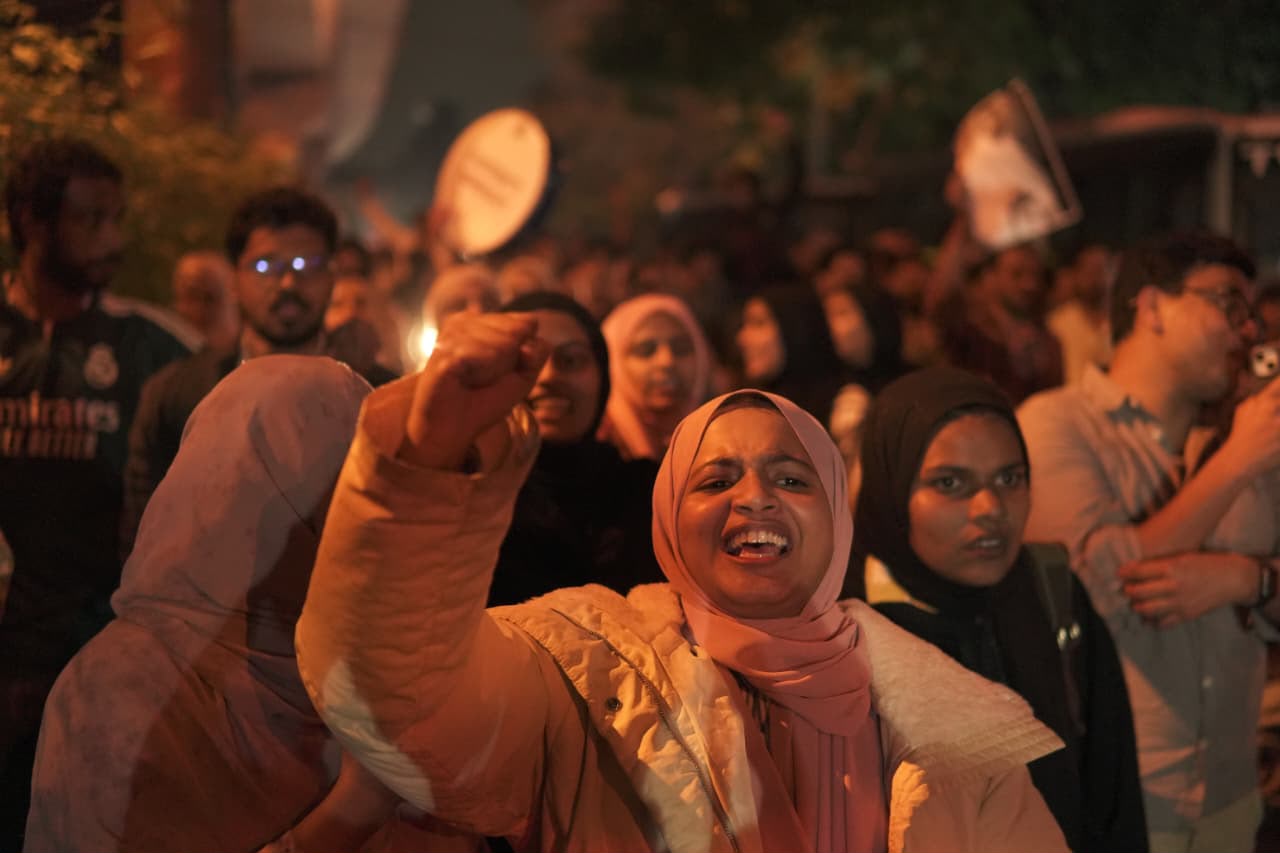
Students at Jamia Millia Islamia celebrate the university's agreement to restore student union elections (Photo: Nausheen Farooq)
Following an 18-day protest and hunger strike by students, the decision by the Jamia Millia Islamia University administration to restore the university’s elected student union after nearly two decades, is being watched with great optimism by the students at one of the best universities in the country.
As per the decision of the university officials, the restoration will be effective within six weeks of the commencement of the academic session on July 16, 2027.
The agreement could mark a significant change in a dispute that dates back to 2006, when Jamia dissolved its elected student union, citing incidents of campus violence and disruption to academic activities. Since then, successive university administrations have cited pending court cases as a reason for not conducting student union elections.
The decision to allow restoration of elections has raised expectations among students for a representative body that can question administrative decisions, protect student rights and ensure equal representation on campus.
Jamia students say they expect the restored union to do more than just represent them. They want it to raise grievances concerning admissions, hostel allotments and campus facilities, ensure transparency in administrative decisions and protect students’ rights. They also expect the body to represent different student groups equally, including women.
For many students and former students, the absence of an elected union has meant having no recognised platform to collectively raise concerns or hold the administration accountable.
Also Read: Jamia students face suspensions, detentions & threats
Greater powers to question the administration
For Ebin Basil, a third-year BA-LLB student who participated in the hunger strike, based in Delhi, the foremost expectation is that the restored union would have sufficient powers to address issues affecting students and question administrative decisions.
“Restoration of a democratically elected union and representation was a major issue, which was the prime reason behind all the other issues students faced on campus, including fee hike, hostel issues, mess and canteen facilities, admission irregularities, and the list goes on,” he says
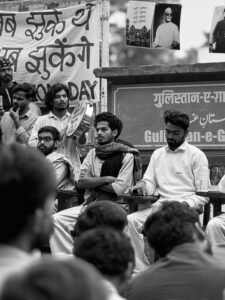
The restored union would give students a say in decision-making (Photo: Ebin Basil)
Explaining why students eventually resorted to an 18-day protest, Basil says they had exhausted other means of raising their concerns without receiving any positive response from the administration.
“The sudden reason to take such a huge step was that all other means of protest had already been exhausted while dissenting over the several issues. No positive outcomes came, and eventually, students raising dissent were seen as criminals and penalised by the administration. This is a blatant violation of freedom of speech and expression,” he says.
According to Basil, the restored union would give students a say in decisions concerning them and prevent arbitrary actions by the administration. He also believes an elected union would familiarise students with democratic practices and prepare them to participate in the country’s democratic processes in the future.
Among his expectations are improvements in student welfare, particularly hostel facilities and women’s safety. He also wants the union to provide students with a platform to raise campus-related concerns at national and international levels.
“The restoration of the student union will make the administration more accountable. As of now, the new constitution has not been prepared, and we do not know how powerful the union will be. We need the participation of student representatives in the drafting committee.We will bargain for the maximum possible power-sharing,” he says.
He also pointed to irregularities in admissions, faculty appointments, guest lecturer appointments and hostel allotments, which he believes should come under the union’s scrutiny.
Basil raised concerns about what he described as saffronisation and political favouritism within the university. He believes the restored union would address these issues.
On the nature of the proposed union, he believes it must be democratic, secular and socialist in nature, arguing that otherwise, the process would remain democratic only in form, without any underlying values.
Also read : Hijab Row: Attack on Constitutional rights, say students
An unbiased union and equal representation
For Nausheen Farooq, a second-year MSc Disaster Management student who is associated with the Fraternity Movement, a student wing of Welfare Party of India, the foremost expectation from the restored union is that it would be unbiased and represent all students equally.
“My first and only expectation from the union, whichever is elected, is that they remain unbiased towards any student group. The elected body must not favour certain students or divide them, which was a tactic historically used by the administration to divide and rule,” Farooq tells Media India Group.
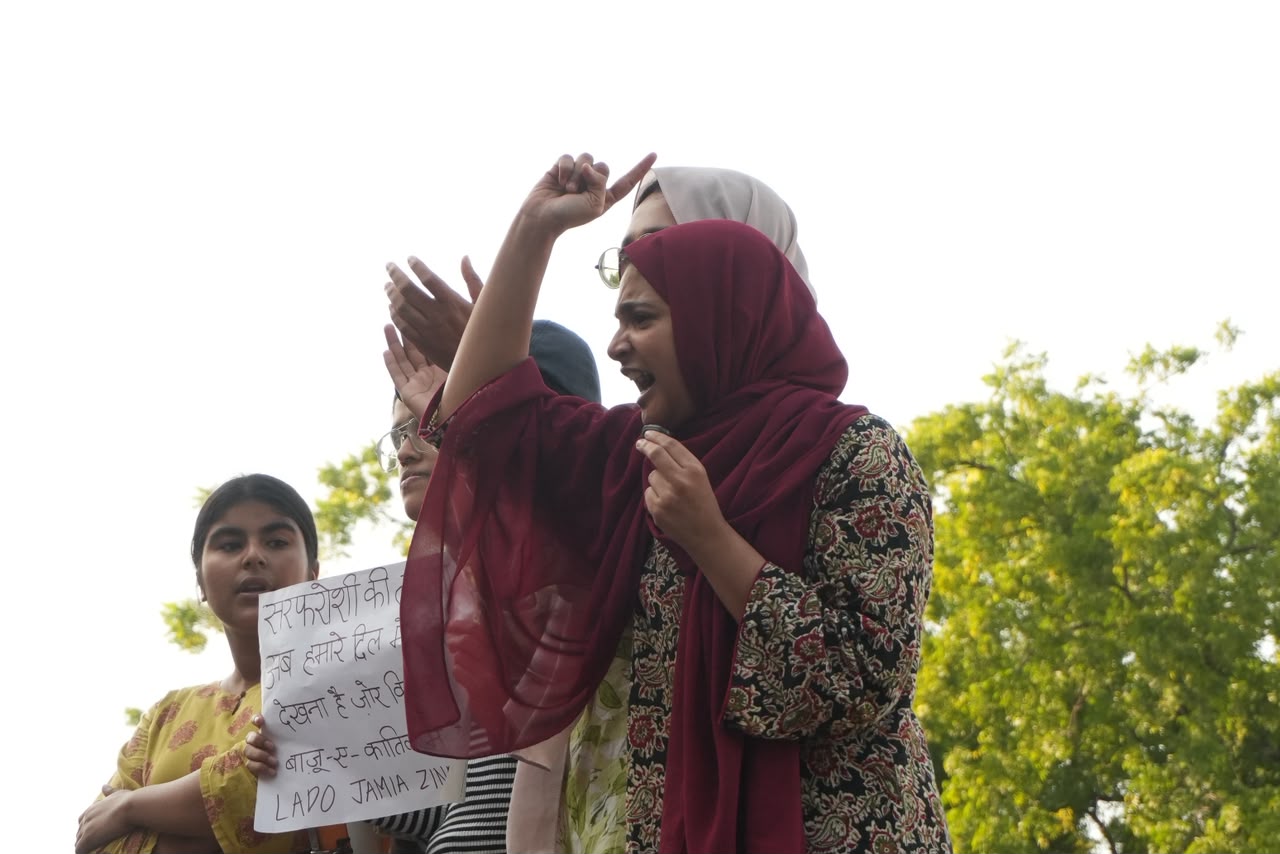
Restored union should not discriminate against any student (Photo: Nausheen Farooq)
She also recalled the difficulties faced by students over the years, including what she described as unfair admissions, biased seat allocations and the suppression of student voices.
“There are many problems that must be addressed, but if a union comes, first of all, they should not discriminate against any student. They should not take away the rights of any student on the basis of their background,” she says.
For Farooq, ensuring equal treatment and preventing discrimination should be among the fundamental responsibilities of the restored union, irrespective of which student group comes to power.
Women’s participation and leadership
Alongside administrative accountability and equal representation, women’s participation and leadership have also emerged as important expectations from the restored union.
Former Jamia student Rehna Shajahan, working as an HR, based in Dubai, recalled the anti-CAA protests and highlighted the difficulties students, particularly women, faced in the absence of an elected representative body.

Rehna Shajahan
“During the CAA–NRC protests, the campus went through an extremely difficult period. Many students were harassed, including innocent students who were simply sitting inside the library and preparing for their examinations. I was present there myself and witnessed the fear and distress students experienced,” she says.
“In the absence of an elected student union, we lacked a strong, recognised body that could collectively represent us and raise our concerns. This particularly affected women students, who needed greater support, protection and representation during such a sensitive time. Therefore, I expected that under the restored union, students would feel safe from these brutalities,” she adds.
Farooq highlighted women’s participation in the recent protest for the restoration of the union, saying their mobilisation demonstrated their ability to take leadership roles and shape movements demanding institutional change.
“As a woman, I think when we ask for leadership and representation, women’s participation was the greatest victory for this union. While boys’ mobilisations created noise, women breaking gates, reaching out to the media and supporting those inside the campus created a truly effective impact,” she says.
Although Farooq is in her final academic year and may not be part of the union when it is eventually formed, she hopes the restored union will ensure meaningful participation of women and that a woman will also get the opportunity to lead it.
“I would be so happy if a woman takes the lead. Women will make a big and much-needed change because Jamia women are stronger, more supportive and truly deserving leaders,” she says.
For former Jamia student Mujeeb Rehman, based in Haryana’s Mewat region, one of the key expectations from the restored union is that it provides students with an effective grievance-redressal mechanism and ensures accountability for decisions affecting their campus lives.
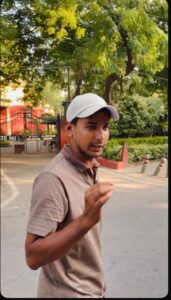
Mujeeb Rehman
Recalling his time at the university, Rahman tells Media India Group that the absence of elected representatives meant students had no effective body to raise their concerns or challenge administrative actions. He says students’ rights were frequently violated, while their dignity on campus was increasingly undermined.
“Even security guards would stop students anywhere on campus and issue instructions to them,” he says.
Recalling an incident from his graduation days, Mujeeb says he was once stopped by a security guard while recording something in the university’s central canteen.
“Once, when I was recording something in the central canteen of the university, a security guard approached me and said, ‘You cannot record here.’ When I asked him, ‘Whose instructions are you following?’, he replied, ‘There are no instructions from anyone else. This is my instruction,’” Rehman says.
He further adds, “You can imagine how much power he believed he had over the campus. He seemed to consider himself the supreme authority because he knew there was no proper grievance redressal mechanism. Students could not approach the invigilator either because, even if they did, the security adviser would simply defend the security personnel.”
He also highlighted the limited access to sports facilities and the lack of adequate infrastructure to ensure students’ safety while crossing roads between different parts of the university.
“Outsiders frequently hold matches at our sports complex, but students themselves rarely get the opportunity to play. They are hardly ever allowed to use the playground, and student tournaments are organised occasionally,” he says.
Therefore, Rehman expects the restored union to act as a collective platform through which students can raise grievances, protect their rights and demand accountability from the university administration.
