
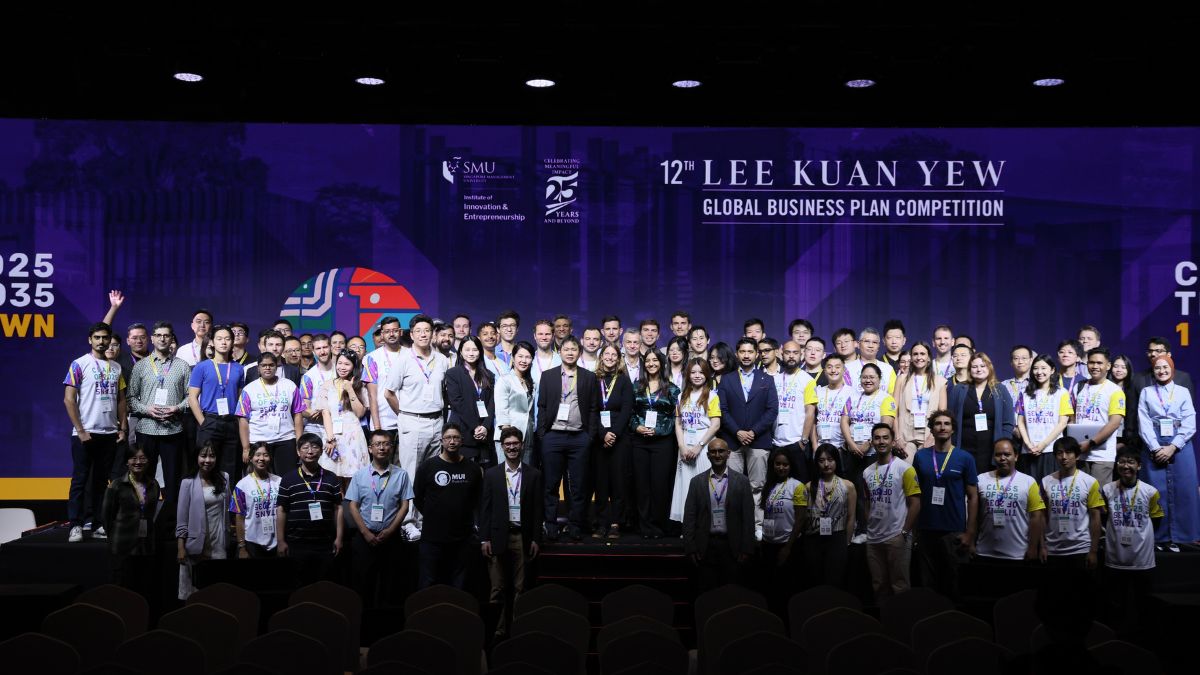
Lee Kuan Yew Global Business Plan Competition opens global search for deep tech urban solutions and sustainability focused founders
With over USD 1.95 million in prizes on offer, the 13th Lee Kuan Yew Global Business Plan Competition (LKYGBPC) will bring 50 deep-tech start-up finalists to Singapore from September 28 to October 1, 2027.
Organised by Singapore Management University (SMU), the competition will connect university founders and recent graduates with investors, mentors and industry partners to help bring innovative urban and sustainability solutions to market.
In a press statement, SMU says the competition aims to help start-ups overcome challenges in finding customers, industry partners and opportunities to deploy technologies at scale. The 50 finalists will also participate in an Innovation Festival featuring investor engagement, mentorship and connections with corporate and ecosystem partners.
Selected finalists can join SMU’s Urban SustaInnovator (USI) accelerator, launched in 2025, which supports start-ups through market access, pilot projects and strategic introductions across Asia. In May 2026, SMU IIE launched the USI Fund to support promising ventures as they test and scale their solutions.

Rony Palathinkal
“Founders of breakthrough technologies can create value only when they reach the people, industries, and communities they are designed to serve. SMU created LKYGBPC as a platform to help founders bring their innovative ideas to life by connecting them with the partners, markets and opportunities needed to turn innovation into real-world impact. Now, through the USI programme and USI Fund, we offer a post-competition pathway to pilot, scale, and raise capital throughout Asia,” says Rony Palathinkal, Head of LKYGBPC and Urban SustaInnovator at SMU IIE.
SMU supports these efforts through its Overseas Centres in Bangkok, Jakarta, Ho Chi Minh City and Shenzhen, alongside its International Advisory Councils in eight countries, connecting start-ups with industry, government and community partners across Asia.
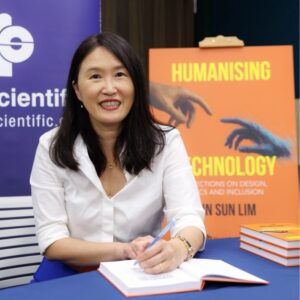
Sun Sun Lim
“SMU’s expansive network of partners from industry, government and community across Asia enables us to forge connections that enable startups to cross borders and scale their innovative solutions,” says Professor Sun Sun Lim, SMU’s Vice President of Partnerships and Engagement and Lee Kong Chian Professor of Communication & Technology.
Singapore-based Standard Physics, formerly known as Inviscid AI, was a finalist in the 12th LKYGBPC before joining the Winter 2026 cohort of Y Combinator and SMU’s inaugural USI accelerator. The start-up uses physics-informed artificial intelligence and Internet of Things-powered digital twins to improve energy efficiency in buildings and data centres.

Kabir Jain
Through USI, Standard Physics secured a pilot project with The GEAR, operated by Japanese construction company Kajima, and is discussing three additional opportunities. The company has also raised USD 2.3 million in seed funding led by Square Peg Capital and is preparing to launch an AI-powered engineering platform.
“The accelerators were very complementary. YC was good at getting us from zero to one, and then USI has been very helpful in getting us from one to 10. The USI team can make the right introductions and help you grow,” says Kabir Jain, co-founder of Standard Physics.
