
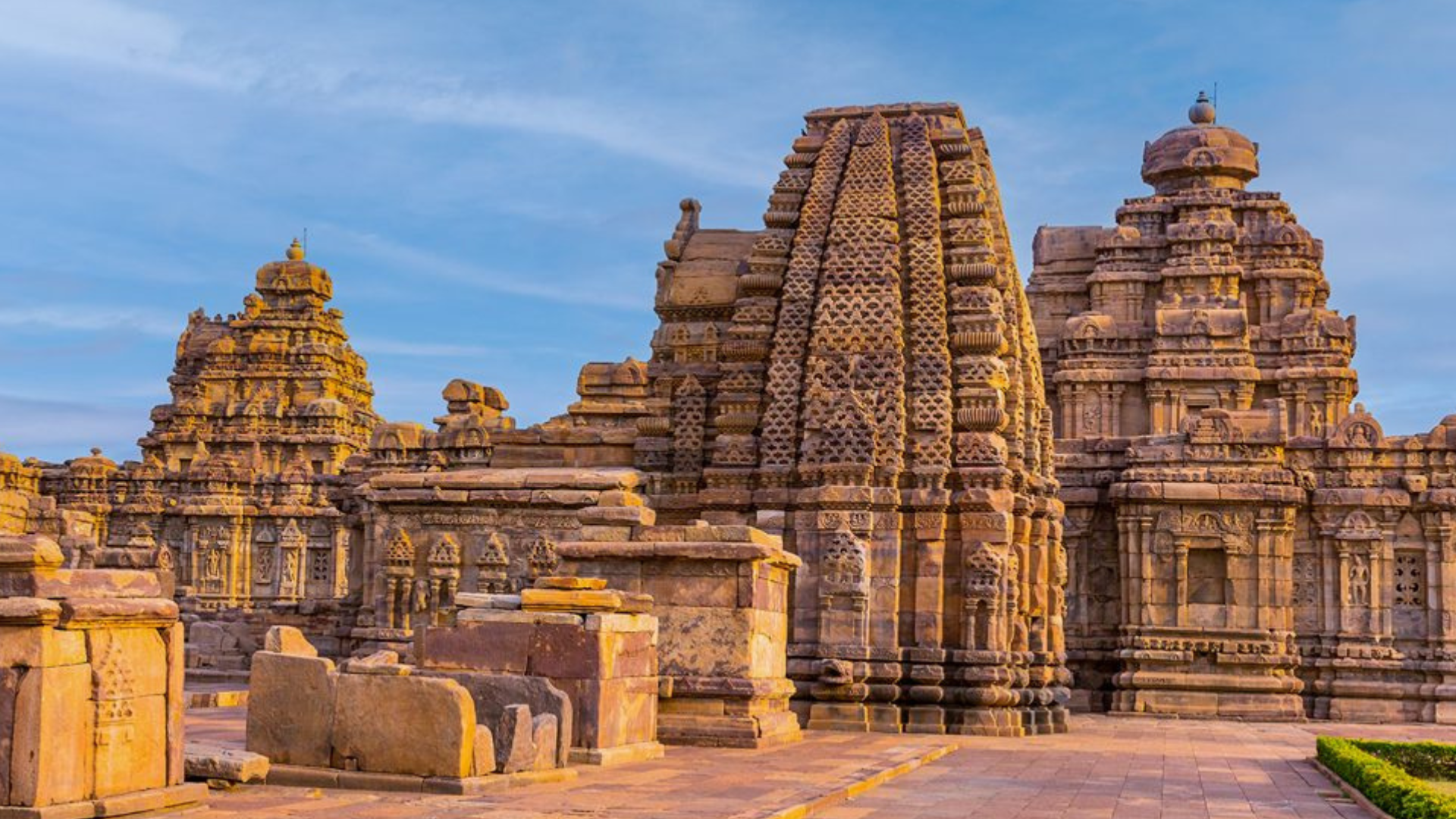
Badami may not be as famous as Hampi or Mysore, but for those who venture off the usual path, it offers a rare and rewarding experience (Photo: Incredible India)
Tucked away in the northern part of Karnataka, the town of Badami is a hidden gem that blends ancient heritage with rugged natural charm. Once known as Vatapi, Badami was the capital of the powerful Chalukya dynasty during the 6th to 8th centuries. Today, it is best known for its rock-cut cave temples, carved from deep red sandstone cliffs that stand tall around the town. Badami may be small, but its historical significance and dramatic setting make it one of South India’s most fascinating destinations.
The main attraction in Badami is its group of four cave temples, carved into the cliffside above Agastya Lake. These temples date back over 1,500 years and were hewn directly out of the stone by hand. The first three caves are Hindu, featuring intricate carvings of gods like Shiva and Vishnu. The fourth is Jain, smaller, but filled with detailed images of Tirthankaras and saints. As one steps into these caves, they are surrounded by stories from ancient Indian mythology, dancing deities, celestial beings and heroic tales carved in stone with extraordinary skill.
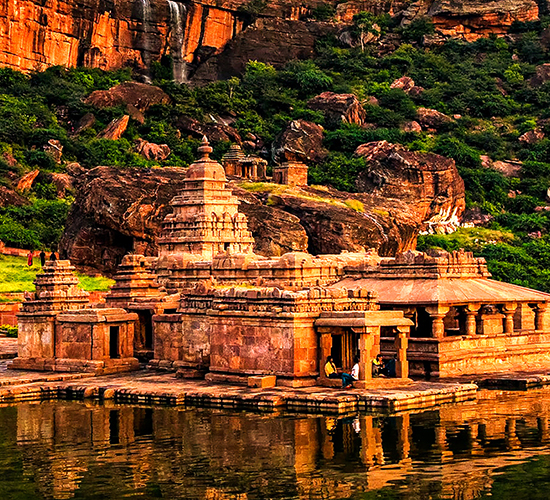
Main attraction in Badami is its group of four cave temples, carved into the cliffside above Agastya Lake (Photo: Karnataka Tourism)
Below the caves lies Agastya Lake, a man-made waterbody believed to have healing powers. Its peaceful, greenish-blue waters are surrounded by rocky hills, temple spires and crumbling old walls. On its eastern bank sit the Bhuthanatha Temples, built in honour of a form of Shiva. The view of these temples from across the lake, with the reflections on the water and red cliffs behind, is one of the most memorable sights in Badami.
Climbing up from the lake leads to the remains of Badami Fort. Although only parts of the original fort remain, including some stone steps, bastions and watchtowers, the walk offers sweeping views of the town and the surrounding landscape. The climb itself is an adventure, narrow paths wind through boulders and the higher you go, the more the view opens up. From the top, the town’s red cliffs, ancient structures, and the still waters of Agastya Lake form a picture of timeless beauty.
For those interested in learning more about Badami’s past, the Archaeological Museum near the lake holds a rich collection of sculptures, inscriptions and relics from the Chalukya period. The museum features original carvings and artefacts from nearby temples up close, along with detailed explanations about their history and symbolism.
Culture, adventure and quiet reflection
While Badami is a treasure for lovers of history and architecture, it is also a wonderful place for those seeking quiet moments, soft adventure, or a break from crowded tourist spots. The surrounding cliffs, hills and valleys offer plenty of opportunities for trekking, walking, or simply sitting and enjoying the views.
Badami has also become popular among rock climbers, both from India and abroad. The soft yet grippy sandstone cliffs offer many climbing routes for all skill levels. During the cooler months, climbers can often be seen scaling the cliffs in the early morning or late afternoon. For beginners, local guides offer basic instruction and equipment, making it possible to try climbing even if someone has never done it before.
Food in Badami is simple, mostly South Indian, with local restaurants serving dishes like dosa, idli and thali meals. Though the town does not have luxury hotels, it offers several clean and comfortable guesthouses and small resorts.
For travellers who want to explore more, Badami is close to two other historical towns: Aihole and Pattadakal. These towns, around 30 km away, are home to more ancient temples built during the Chalukya period. Pattadakal is a UNESCO World Heritage Site, known for its mix of North and South Indian temple styles, while Aihole is often referred to as the “cradle of Indian temple architecture” due to the large number of early temples scattered across the village.
The nearest big city to Badami is Hubli (also called Hubballi), which is around 105 km away and well connected by road and rail. Hubli has an airport with regular flights to major cities like Bengaluru, Mumbai and Hyderabad. From Hubli, one can take a taxi or bus to reach Badami in about two to three hours.
Badami may not be as famous as Hampi or Mysore, but for those who venture off the usual path, it offers a rare and rewarding experience.
