
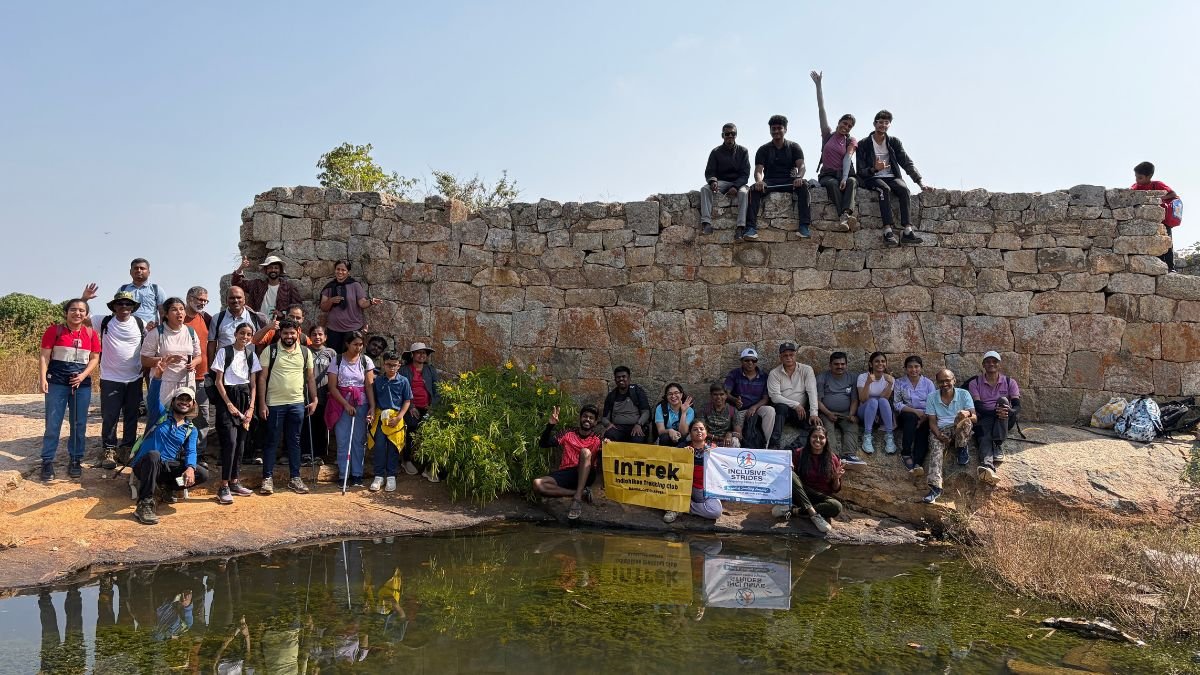
Indiahikes Trekking Club organised a trek to the summit of Kaiwara Betta in Karnataka’s Chikkaballapur region on November 22
To promote access to outdoor activities for visually impaired people, Indiahikes Trekking Club, an organiser of treks, organised a trek to the summit of Kaiwara Betta in Karnataka’s Chikkaballapur region on November 22. The trek brought together 17 visually impaired participants and was organised in association with ‘Inclusive Strides’, a Bengaluru-based group of visually impaired people.
In a press statement, Indiahikes says that each participant was paired with a volunteer from InTrek, with additional volunteers from Inclusive Strides supporting the group.
The statement adds that the participants used the sighted-guide technique, in which a visually impaired trekker holds the elbow or hand of a sighted volunteer to follow their movements and navigate the route.
Also Read: Indiahikes bags contract from Odisha Forest Department to explore trekking trails
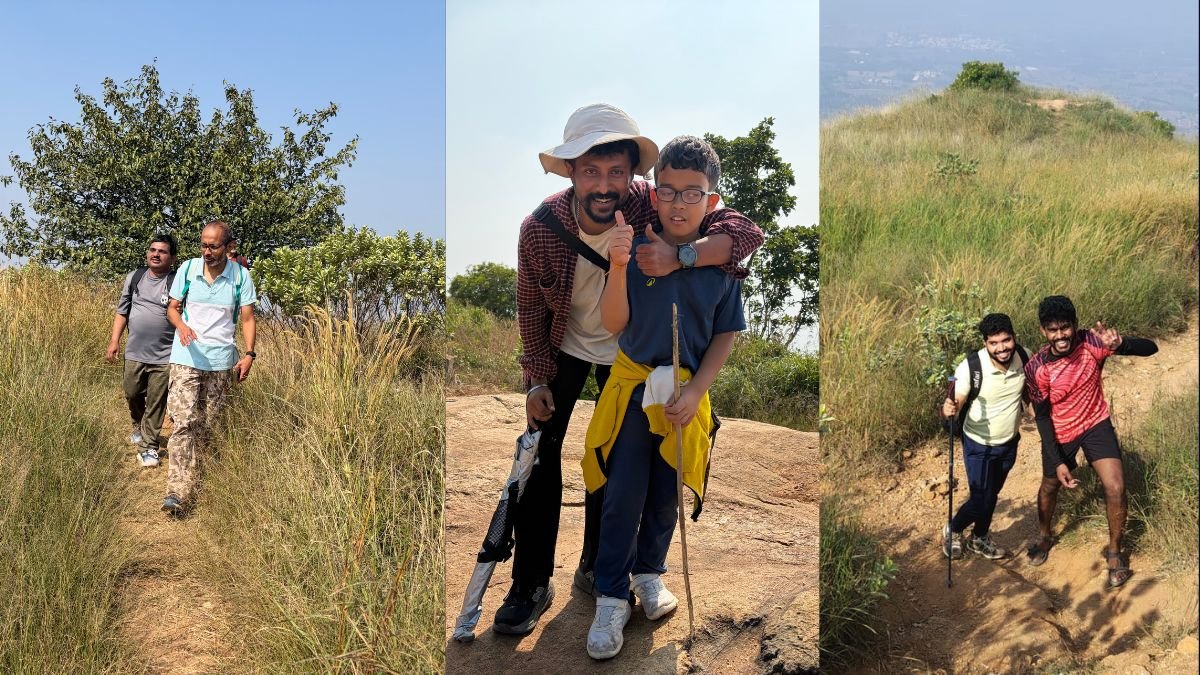
Each participant was paired with a volunteer from InTrek, with additional volunteers from Inclusive Strides supporting the group
The 2-km trail passes through forest patches, fort ruins and small waterbodies. While the route is considered suitable for beginners, the event required specific arrangements to enable visually impaired participants to navigate the terrain.
Before the trek, volunteers received instructions on guiding participants and communicating changes in the terrain, including steps, uneven surfaces and changes in direction.
According to statement, the Kaiwara Betta trek followed InTrek’s first inclusive trekking initiative for visually impaired people, held in Mumbai in August.1
The initiative was started by Krishna Warrier, a core team member of InTrek. An avid trekker who has worked with visually impaired people for more than 15 years, Warrier believes the initiative should recognise participants as trekkers who happen to be visually impaired, rather than define them primarily by their disability.
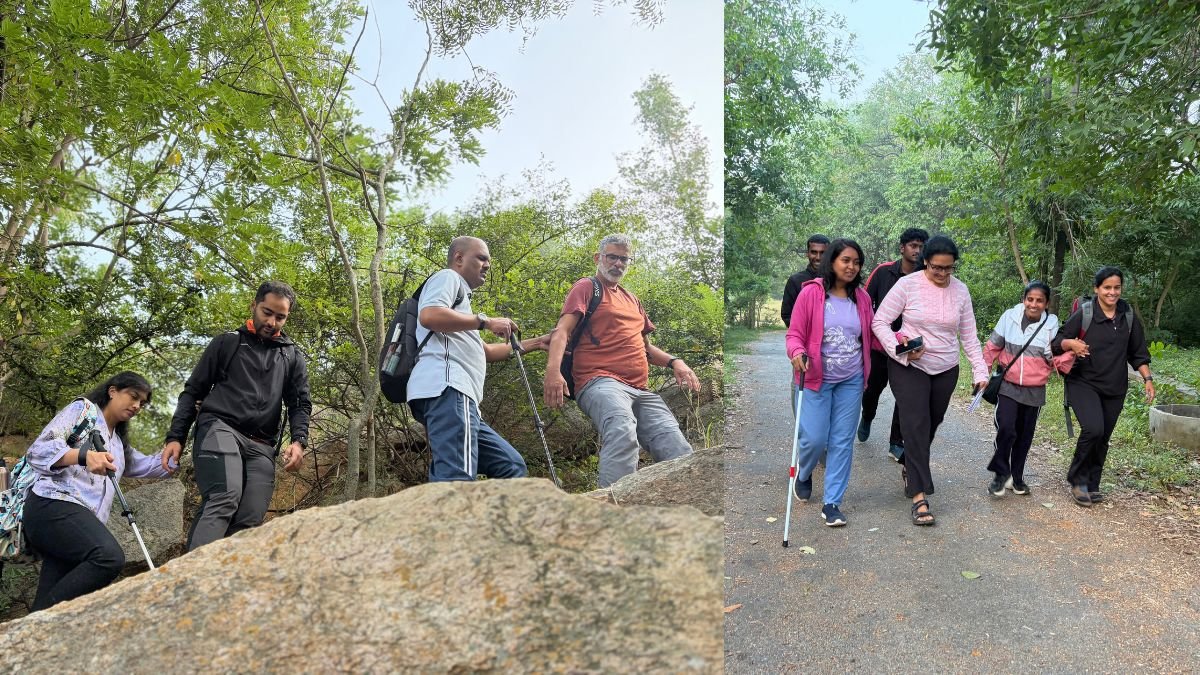
The participants used the sighted-guide technique, in which a visually impaired trekker holds the elbow or hand of a sighted volunteer to follow their movements and navigate the route
The response to the Mumbai event encouraged the club to continue the initiative and organise another trek in Bengaluru.
Also Read: Mountains Beckon: Trekking comes of age in India
Through these activities, InTrek aims to address barriers that often limit the participation of visually impaired people in outdoor recreation. The initiative relies on trained volunteers, suitable routes and adaptations to trekking practices rather than excluding participants on the basis of visual impairment, says the statement.
The club plans to organise more inclusive trekking events, with the aim of making outdoor experiences accessible to a wider group of people.
“As we began our trek, my sighted volunteers became my eyes, describing the beautiful valleys, the lush green hills, the open sky and the breathtaking surroundings. Their words painted pictures in my imagination. While I could not see the landscape, I could feel its beauty in so many other ways. The fragrance of wild plants, the fresh smell of grass and earth, the gentle breeze touching my face and the sounds of birds made the surroundings come alive. I found myself pausing just to breathe in the freshness of nature. It was beautiful to realise how much of the world we can experience beyond what our eyes can see. I may not have seen the beautiful valleys, the green hills or the open sky, but I felt their beauty with every breath and every step,” says Praveen Kumar Gurunath, who was trekking for the first time.
