
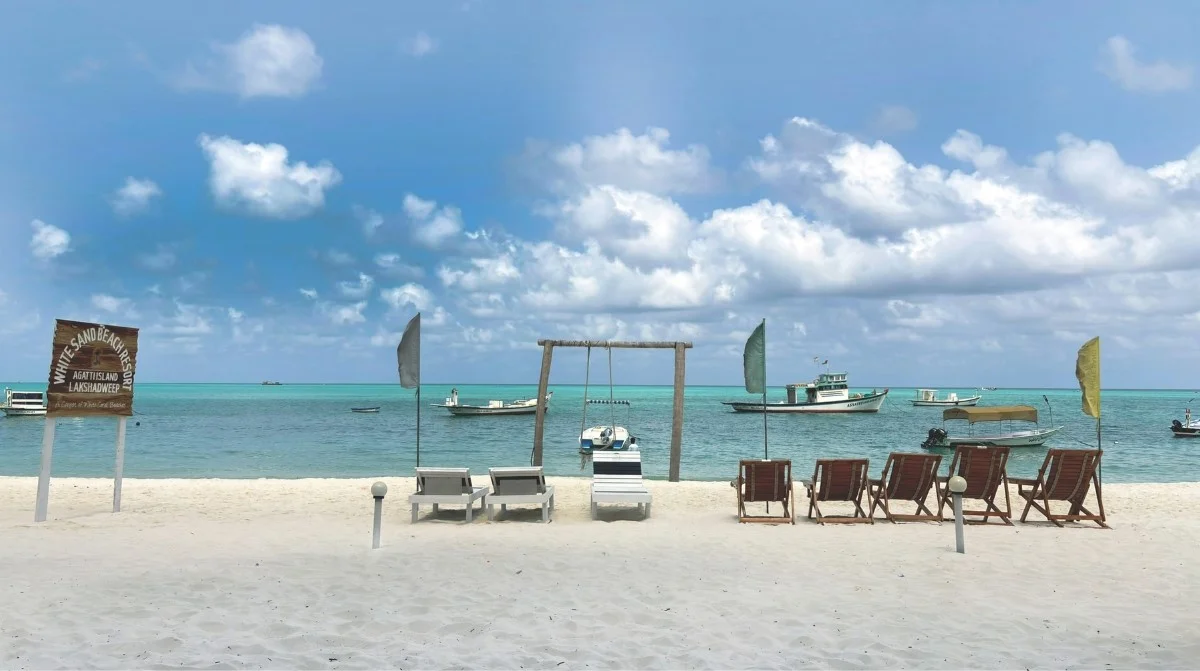
A quiet stretch of beach on Agatti Island (Photos: India and You/Rashida Tinwala Afsar)
Captain Jack Sparrow, the protagonist in Pirates of the Caribbean, a hit film franchise, once famously said, “Not all treasure is silver and gold, mate.”
That was precisely what I experienced in real life, recently. As our aircraft began descending, I pressed my face closer to the window, and looking down, I could see strips of land floating between endless shades of blue of the Arabian Sea, a contrast so surreal that it almost looked as if God had himself turned to photoshopping.
As the aircraft moved, the water seemed to be changing colours every few seconds, turquoise near the shore, deep sapphire farther away, with coral patches visible beneath the surface like scattered brushstrokes. Even after we landed, nature’s play of colours continued. Blue is often tied to sadness and white to emptiness. Yet, standing on the coral islands of Lakshadweep, surrounded almost entirely by those two colours, I felt much more cheerful and energised than I had in a long time.
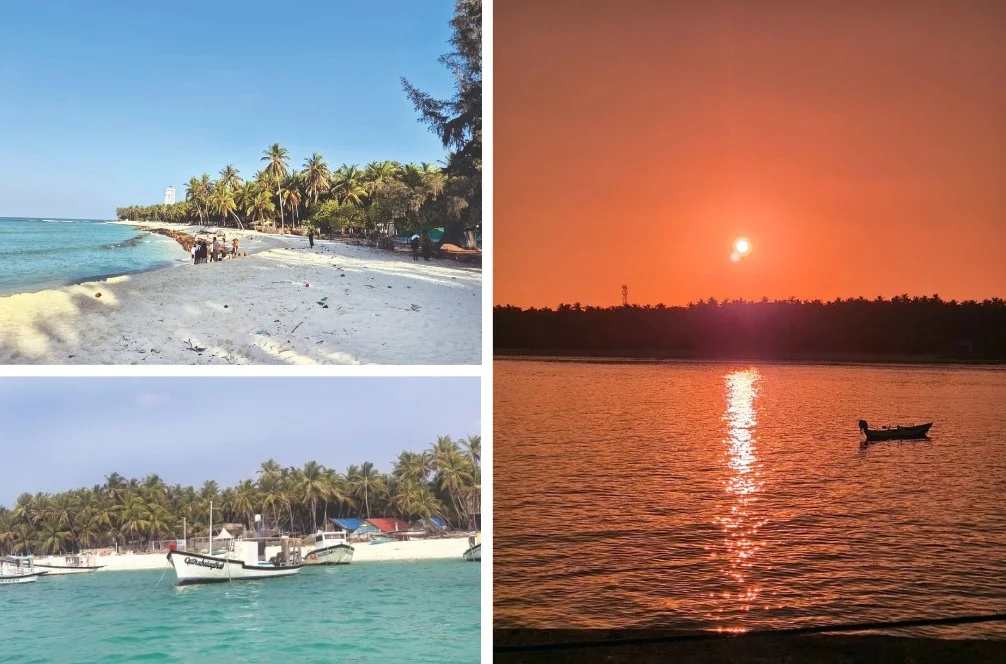
From palm-fringed shores to fiery sunsets, Agatti makes you fall in love with the simple joys of island life
Getting to Lakshadweep takes effort. From Mumbai, it meant a layover in Bengaluru, permits to arrange and police clearance certificates to submit, enough to almost make you wonder if the journey is worth it.
But as our aircraft began its final descent into Agatti, all doubts evaporated. The runway appeared like a thin strip placed in the middle of the sea, a sight so unreal that for a second it looked as though the aircraft would touch the water before landing. The moment we stepped out, a breeze of warm, salty air instantly filled our nostrils, replacing the exhaustion of travel with excitement.
Also Read: Banswara: City of 100 islands
On the ground, permit checks were quick and smooth, all arranged in advance by our host on the ground, Aju Akbar, Founder, Lakshadweep Travel Guide, a local tour operator. As we drove through narrow island roads lined with small homes and swaying coconut trees, I asked him how the residents here managed everyday life.
“Many people still think of Lakshadweep as somewhere outside India. But everything here is connected to the mainland, as we receive everything from there, from medicines and groceries to clothes and electronics. Local vendors source these supplies from the mainland.” Akbar said.
As I pondered over the contrasting lifestyle, we arrived at White Sand Beach Resort, which was going to be our home for the next five days.
Located on the western coast of Agatti Island, the largest island in the archipelago, the resort sits beside shallow waters that glow in impossible shades of turquoise. As we drove in, our guide, Rabiya, pointed toward the sea and smiled, “This is the best side to stay on.” Curious, I asked her why, and she explained that the western coast has a larger area of shallow waters, and crystal-clear lagoons, compared to the eastern side.
Lunch was served, and I could not have imagined a better welcome. The dining area opened directly onto the beach, waves rolling gently in the background as plates of hot food arrived at the table. I had been worried about food options before coming here since I do not eat seafood, but that concern disappeared almost immediately. The variety was immense, both vegetarian and non-vegetarian dishes prepared with comforting flavours that tasted even better with the ocean right in front of us.
“Local dishes like thenga chor, which is rice made with coconut milk, kelanji, sweet coconut milk, coconut halwa and tuna fish pickle are all worth trying when visiting Lakshadweep. These flavours are very much part of the island experience,” Akbar told us.
Agatti is only about 7.6 km long, yet approximately 10,000 people call it home. Coming from a city where concrete towers dominate nearly the entire skyline, it felt so refreshing to see the land and sky exist together without interruption.
We wandered through tiny lanes lined with pastel-coloured homes, children cycling past us, and locals chatting outside their houses. Eventually, we made our way to Western Jetty, one of the island’s most popular local hangout spots. Just opposite the jetty sits Rooh Café, best known for its cold coffee, we also had sandwiches while watching island life unfold around us. Nobody seemed to be in a rush to get anywhere, and neither were we.
By the time we returned to the resort, shades of orange and pink had taken over the sky as the sun began to descend below the horizon and into the azure waters. We headed back to our room early, knowing the next morning would finally bring us face-to-face with Lakshadweep’s underwater world.
Falling for the Sea
I have always been someone who chooses mountains over beaches and while I would not say I am scared of water, I usually prefer admiring the ocean from a distance. And I planned this trip just to change that.
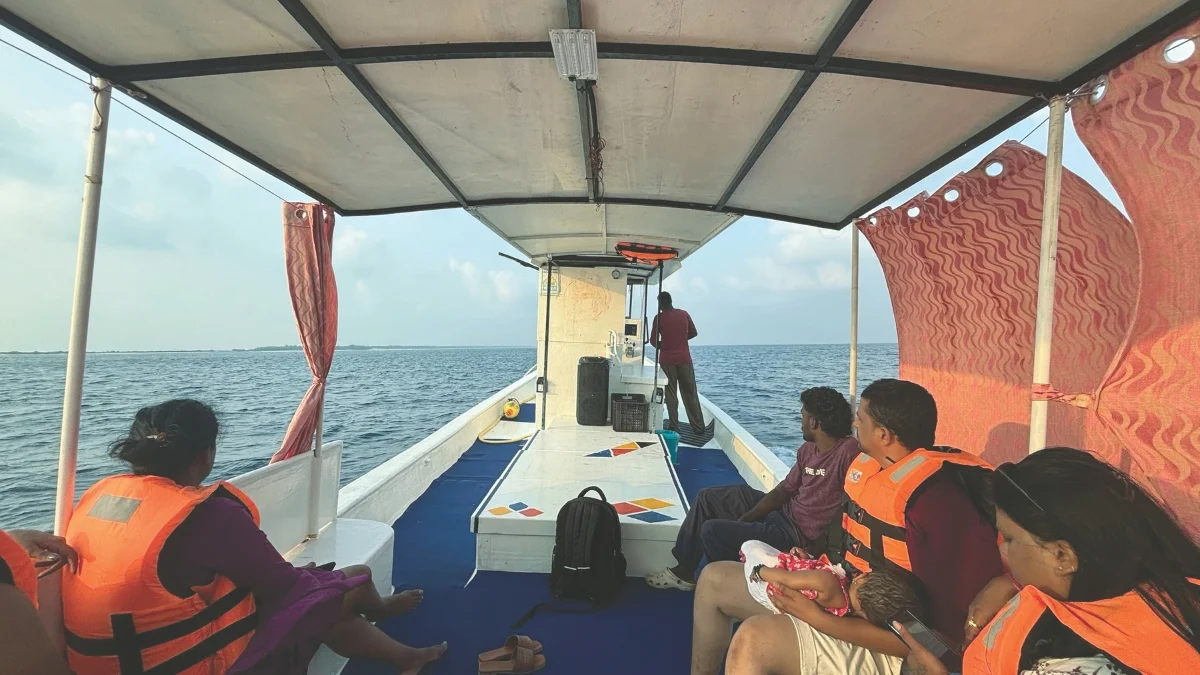
A boat ride across the endless blue offers a closer look at Lakshadweep’s natural beauty
Our first activity for the day was snorkelling. Before heading deeper into the ocean, our instructor gave us a practice session near the shore. I was not very comfortable at first, awkwardly trying to adjust to breathing through the mask while waves occasionally splashed into my face, but after a while, I actually started enjoying it.
Soon, our boat anchored above a huge cluster of corals, with our masks strapped on, we slipped into the water, and that became my very first real encounter with life beneath the ocean.
The experience was beyond anything I had imagined. Healthy coral clusters stretched endlessly below us, surrounded by reef fish moving in flashes of yellow, silver, orange, and blue. As we swam around, we spotted starfish resting on the seabed along with parrotfish, butterflyfish, and bannerfish weaving through the reefs. In between all of that, I finally spotted two fish that I had been dreaming of seeing in real life, ever since childhood, Nemo (clownfish) and Dory (regal blue tang).
We spent about half an hour in the water and it did not feel enough. So we jumped back in while the others were finishing their turns with the guide, floating above the corals for as long as we could. I knew I had to leave eventually, but perhaps you have to leave something behind to have a reason to come back.
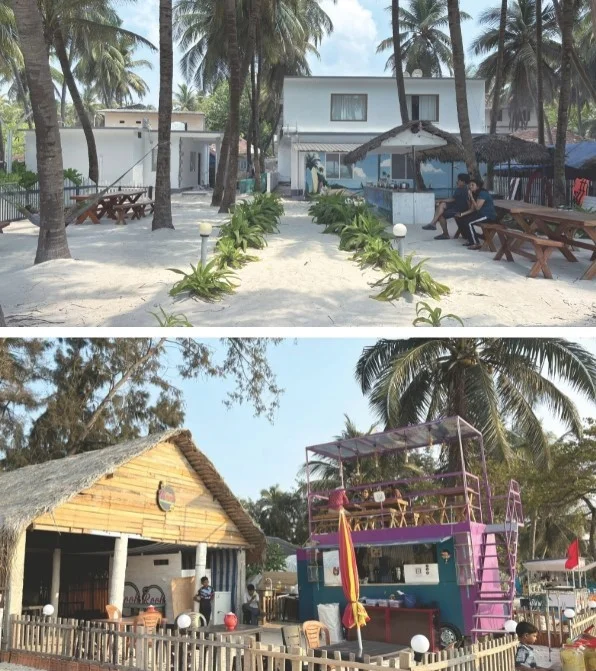
Sand-floor stays and beachside cafes, Lakshadweep
Our next excursion was to Kalpeti, an uninhabited island about 45 minutes away by a boat. Our guide, Burhanuddeen, kept scanning the water as we sailed, until he suddenly pointed and said, “Turtle.” We circled back and spotted a giant sea turtle feeding on coral below us. “At least 150 years old,” he said, as all of us stared at it like little children.
Watching it move so effortlessly through the water, I knew I could not leave without going beneath the surface myself. By the time we reached Kalpeti, its mangroves, quiet shores and sparkling blue waters felt like the perfect pause before my next adventure.
Beyond the comfort zone
I woke up the next morning with a mix of excitement and fear as a huge leap of faith awaited me. I still could not believe that the girl who had always preferred watching the ocean from afar had actually signed up to dive nearly six metres beneath it. A thousand thoughts rushed through my mind, as I waited for the instructors to arrive. Soon, we were on the boat listening carefully to the briefing, how to breathe through the regulator, how to equalise underwater, and the hand signals we would need once we descended.
Raheem, Founder of Dive Time, a local dive operator, spoke about a few things divers should keep in mind. “Enjoy the ocean, but leave it exactly as you found it. Good buoyancy control is one of the most important things, because it helps you avoid accidentally kicking or touching the reef. Never standing on or holding corals, maintaining a respectful distance from marine life, and not disturbing the seabed may seem like small things, but they make a big difference in this sensitive ecosystem.”
One by one, people started slipping into the water while I sat there trying to gather the courage to take the leap myself. When my turn came, panic hit instantly. I stumbled while entering the water, struggled to breathe properly, and surfaced again. Then again. It took me three attempts before I could finally calm myself enough to descend.
The moment we went underwater, everything became quiet. Not just around me, but within myself too. Below us, coral clusters stretched across the seabed, while hundreds of reef fish moved effortlessly through the water. I could not stop looking around, the water no longer felt intimidating. It felt peaceful. This time, I truly understood what Katrina Kaif’s character Laila meant in Zindagi Na Milegi Dobara when she told Hrithik Roshan’s character Arjun that his life was about to change before their first dive.
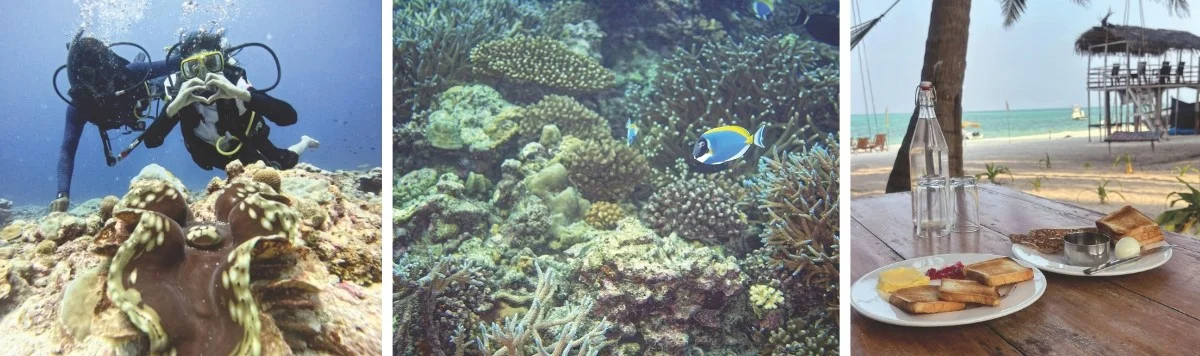
Lakshadweep’s colourful coral reefs and marine life make every underwater moment unforgettable
Once I was back on the boat, I found myself curious to know more about coral conservation and what goes into protecting the underwater world we had just experienced. Raheem explained that for Dive Time, responsible diving is an important part of the experience.
“We try to keep diving simple and safe. We keep our groups small, and place a strong emphasis on respecting the reef. In a place like Lakshadweep, the underwater experience is not just about seeing colourful corals and marine life; it is about understanding that you are entering a living ecosystem, and treating it with the care it deserves.”
Alongside conducting dives, dive time is also involved in reef monitoring and awareness initiatives, working with divers and local communities to build a better understanding of the fragile marine environment.
Also Read: Thomas Cook, SOTC to launch charter flights from Bengaluru to Lakshadweep
Later that evening, we met Rabiya back at the resort, she casually mentioned another dive option, one that would take us nearly 12 metres deep into the sea. The idea of going further into the ocean became impossible to ignore. After a lot of back and forth with my own thoughts, I finally said yes.
The next morning, we were picked up and our divemaster, Ameen, repeated all the same instructions once again, but I could barely focus.
My attention was entirely on the huge waves crashing against the boat as we headed farther into the ocean.
But the moment I descended underwater, every bit of fear disappeared. The seabed felt much farther away. Schools of fish moved around us, larger than the ones I had seen before, while the deep blue seemed endless. I kept my breath steady, looked around in wonder, and felt incredibly glad that I had chosen to push past my fear instead of listening to it.
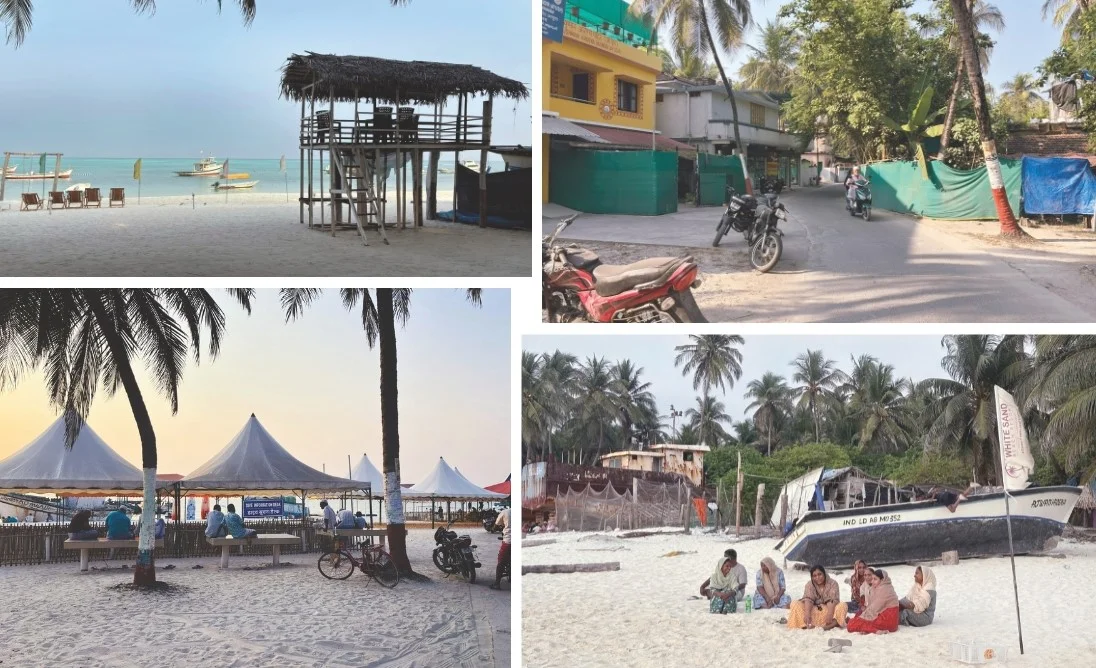
White-sand beaches, turquoise waters and quiet lanes make Agatti a perfect island escape
We spent around half an hour underwater, though it felt like only five minutes. Back on the boat, Ameen smiled and asked me how the experience had been.
“Do it scared, but do it,” I told him instantly. And I think that applies to almost everything in life.
The quiet charm of Agatti
That night, with everything I had seen over the past two days, I slept like a baby, partly because of the exhaustion, but mostly because of the joy I was carrying within me.
Our final day in Agatti was completely different from the ones before it. There was no agenda. We simply spent the day exploring the island. Life here is very simple. Almost everyone we crossed stopped to chat, some invited us to sit with them by the beach, others simply smiled as we passed by. Agatti may be small in size, but the hearts of the people here feel endless, just like the ocean.
We spent the day moving through places like Lagoon Beach, Eastern Jetty and Andhaan Beach. That evening, we watched our last sunset here disappear into the horizon. We sat there listening to the waves, pointing at constellations we could barely name, and talking about how strange it felt that a place we had only arrived at a few days ago already felt difficult to leave behind.
Back home, blue and white are often tied to negative emotions. But Lakshadweep changed that for me. Here, blue became the colour of healing and white became the colour of peace. And perhaps that is the real treasure Captain Jack Sparrow was talking about all along.
