
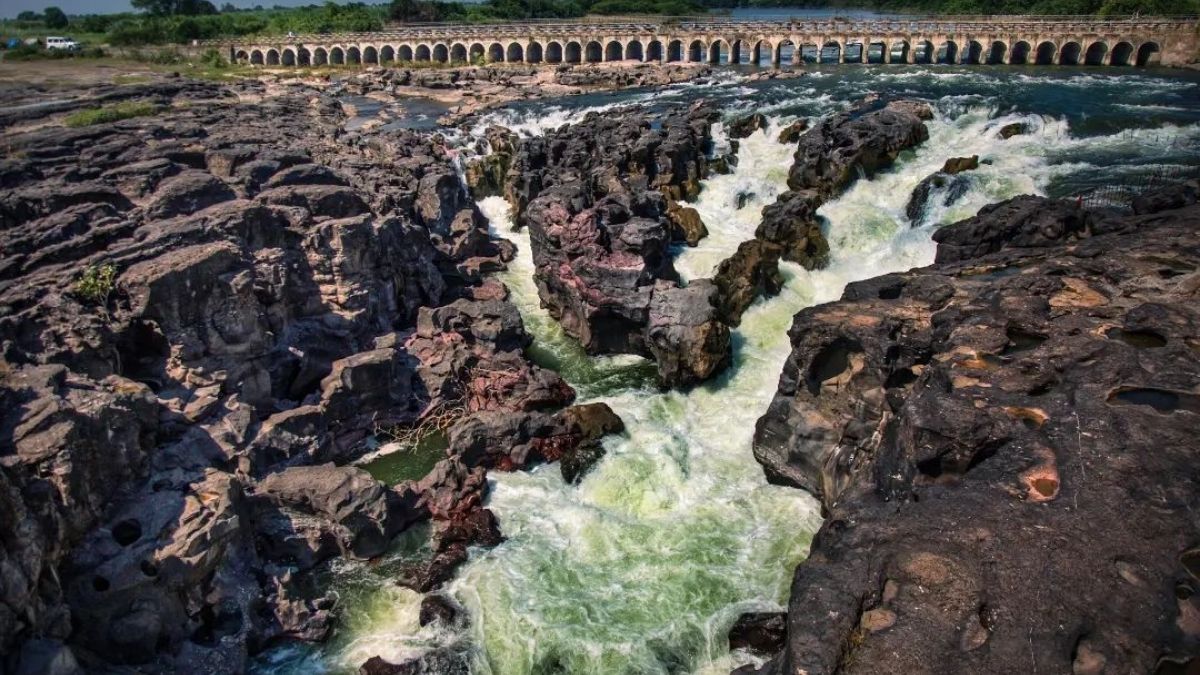
The Nighoj Potholes, locally known as Ranjan Khalge, formed by the waters of the Kukadi River in Nighoj village (Photo: Maharashtra Tourism)
Distinguished by its naturally sculpted basalt landscape and centuries of river erosion, Nighoj, a small village situated in Parner taluka of Ahmednagar district of Maharashtra, about 100 km east of Pune, has emerged as an offbeat tourist destination, attracting visitors with its unusual terrain, religious landmarks and village surroundings.
The main attraction of Nighoj is its extensive stretch of circular, bowl-shaped potholes carved into basalt rock. These formations were developed through the continuous movement of water and rock fragments over long periods.
As pebbles became trapped in depressions in the riverbed, flowing water caused them to rotate, gradually grinding away the rock and deepening the hollows. Over thousands of year, the process created the distinctive formations visible along the river gorge.
The dark basalt surfaces, uneven rock walls and rounded cavities give the landscape an unusual appearance, earning Nighoj the informal description of Maharashtra’s Moon Land. The potholes are often described as among the largest of their kind in Asia.
Also Read: Maharashtra to commence leopard safaris in Trimbakeshwar, Yeola
Malganga Temple
Nighoj’s cultural identity is closely associated with the Malganga Devi Temple, situated near the rocky river gorge. Another temple dedicated to the goddess stands across the Kukadi River at Takali Haji, in Pune district. A suspension bridge connects the two temple areas and offers views of the river channel and surrounding rock formations, subject to local access conditions.
Local religious celebrations add another dimension to the destination. The village is associated with annual observances and gatherings linked to the goddess, reflecting the role of faith in community life. Travellers interested in attending local festivals should confirm dates and arrangements with temple authorities.
Nearby temples extend the religious itinerary
Travellers interested in religious tourism can extend their trip to the Mahaganapati Temple at Ranjangaon, one of Maharashtra’s eight Ashtavinayak shrines dedicated to Lord Ganesha. Located in Pune district, the temple is known for its religious significance and attracts devotees throughout the year, particularly during Ganesh Chaturthi. It can be included in a wider regional itinerary, depending on the route and available time.
Combining Nighoj’s riverside shrines with established pilgrimage sites offers visitors a broader view of Maharashtra’s religious traditions, alongside the geological attractions that make the village distinctive.
Village life offers a glimpse of rural Maharashtra
Beyond its geological attractions, Nighoj provides an opportunity to experience the rural landscape of the Deccan plateau. Agricultural fields, village settlements and local shrines shape the surrounding countryside, offering a quieter experience than heavily commercialised tourist destinations.
Visitors can explore the village, observe everyday rural life and sample traditional Maharashtrian food where available. Regional dishes may include bhakri, made from millets such as jowar or bajra (give English names also, always), accompanied by vegetable preparations and chutneys. Food options are limited compared with established tourist centres, making advance planning advisable.
The destination’s cultural appeal lies in its connection between community life, religious practices and the natural environment.
Also Read: Lonar Lake: Maharashtra’s otherworldly wonder
Photography, walking and geological exploration
Nighoj is best suited to a relaxed day trip centred on its river gorge and temples. Visitors can observe the potholes from accessible viewpoints, photograph the unusual rock patterns and enjoy views of the river. The suspension bridge, when open, offers another perspective of the formations.
The site is also suitable for students and geology enthusiasts interested in erosion, basalt formations and the effects of flowing water over time. However, it is not a developed adventure-sports destination, and visitors should avoid climbing unstable rocks or entering deep potholes. The riverbed can become slippery, while water levels may rise during heavy rainfall.
Best time to visit and how to reach
The drier months generally provide better opportunities to observe the exposed potholes. During the monsoon, the river can look more dramatic, but higher water levels may cover the formations and make the riverbed dangerous.
Nighoj offers Maharashtra an opportunity to promote tourism beyond its conventional hill stations. Its combination of geological heritage, religious traditions and rural landscapes can support nature-based and educational tourism while creating opportunities for local livelihoods.
