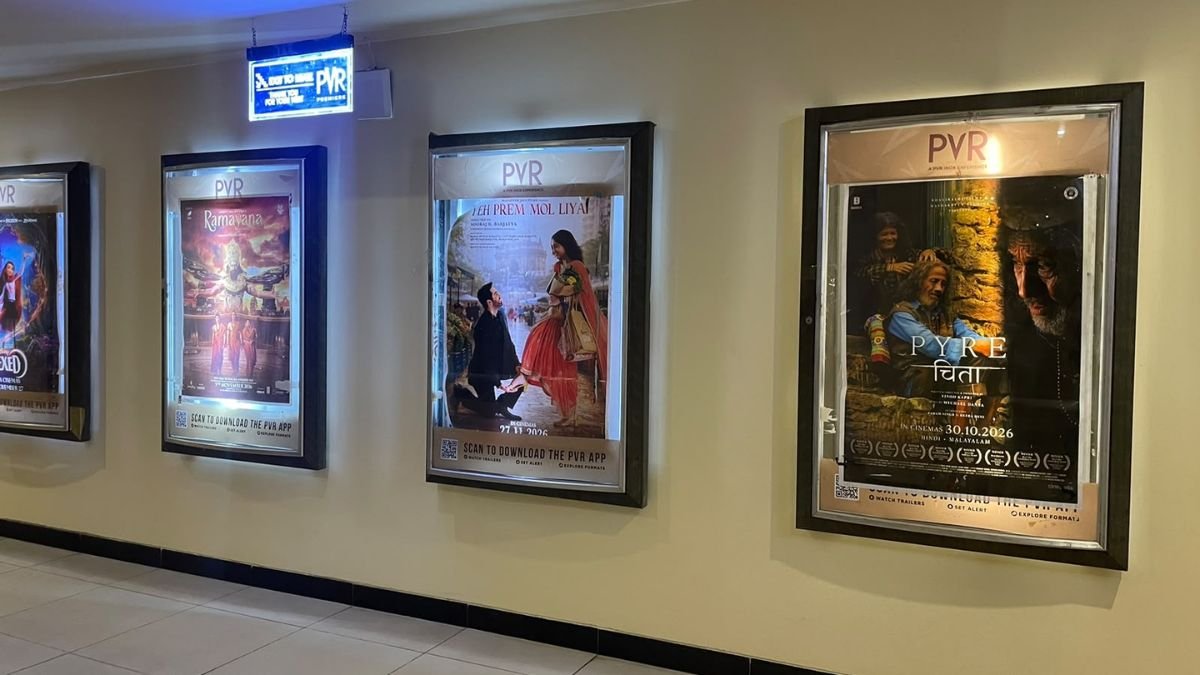
The arrival of a major commercial release, the film's theatrical presence reportedly dropped to around 70-75 screens (Photo: Anushka Roy Choudhary)
Indian cinema has traditionally been driven by star-led narratives, big-budget productions and stories designed for mass appeal. However, a parallel stream of filmmaking continues to explore quieter, deeply personal stories that often remain outside the mainstream commercial framework.
Independent films, built around unconventional narratives, real-life experiences and creative freedom, frequently find recognition at international film festivals but struggle to secure theatrical distribution in India. Vinod Kapri’s Pyre is one such film, bringing the realities of ageing, loneliness and migration in a remote Himalayan village to the screen through the lives of an elderly couple. Its journey from international festival recognition to Indian theatres highlights the challenges independent filmmakers face in finding distributors, securing screens and turning critical acclaim into audience footfall.
After winning more than 18 international awards, including the audience award at the Tallinn Black Nights Film Festival in Estonia in November 2024 , independent filmmaker Vinod Kapri’s Pyre was finally released in Indian theatres on October 30. Set in a remote village in Uttarakhand’s Kumaon region, Pyre follows an elderly couple, the bidi smoking Padam and Tulsi played by amateur actors Padma Singh and Hira Devi, navigating ageing, loneliness and the gradual disappearance of their village as younger generations migrate elsewhere.
The film’s journey from the international festival circuit to multiplexes has brought renewed attention to a persistent question in Indian cinema over whether critically-acclaimed films find an audience in a theatrical market largely driven by big budgets, star power and franchise releases.
Gap between festival acclaim and theatrical distribution
For independent films, winning awards is often only one part, or even the debut, of the journey to ensure that the film is seen by wider audiences outside the festival circuits. But here, the filmmakers face several hurdles as securing a distributor, negotiating screen space and reaching audiences beyond film festivals can prove equally challenging.
Pyre premiered at the Tallinn Black Nights Film Festival and it subsequently travelled to festivals in Bengaluru, New York, London, Stuttgart, Boston and Chicago, receiving recognition across several categories. However, its international reception did not automatically translate into an easy route to Indian theatres.
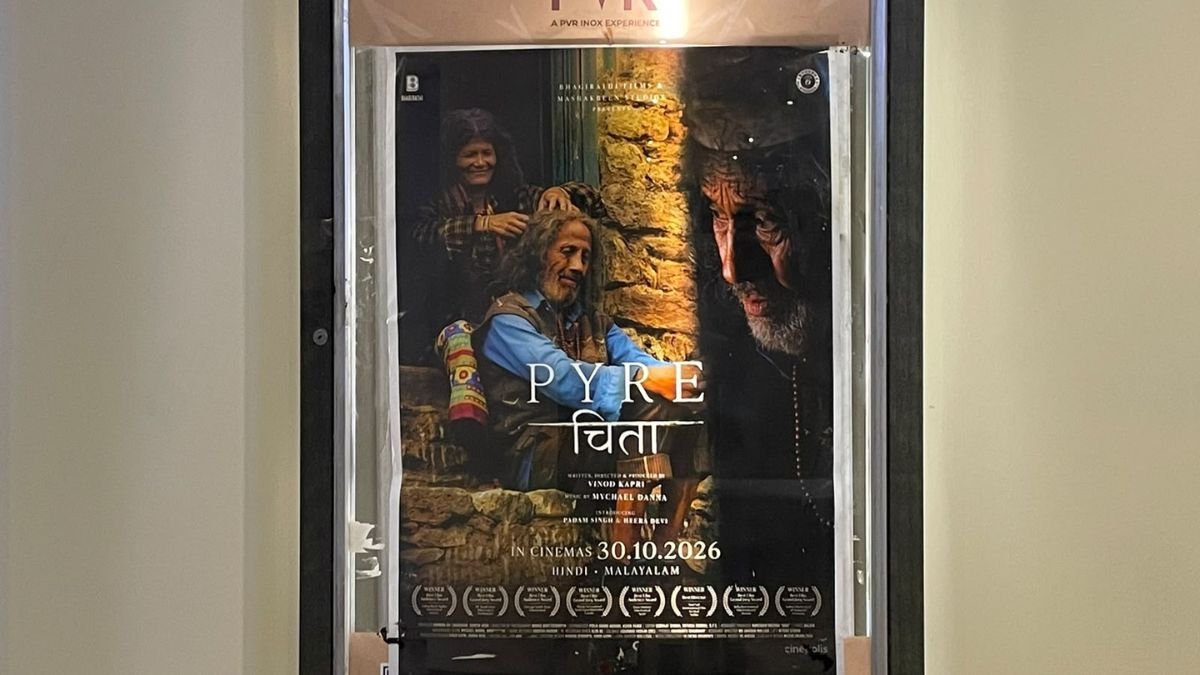
The filmmaker subsequently raises concerns about the reduction in screenings
Kapri has been quoted by media as saying that despite the film’s international recognition, finding support from studios and streaming platforms was difficult. He said he had also approached Over The Top (OTT) streaming platforms, but struggled to find interest in the project.
The filmmaker revealed that Pyre was made on a budget of approximately INR 20 million. By August, he had almost given up on the film’s prospects of an Indian theatrical release. It eventually secured a release through producers Suresh Joshi and Arindra Rai Chaudhuri. The experience points to a larger problem within independent filmmaking. Festival recognition can establish a film’s artistic credibility and international visibility, but it does not necessarily provide the commercial backing required to bring it to a wider domestic audience.
Multiplexes and the struggle for screen space
The theatrical release of Pyre through Cinepolis reflects the potential role of multiplex chains in creating opportunities for independent films. However, securing an initial release is different from retaining screens once larger commercial productions enter the market.
The film’s theatrical journey illustrated this challenge. According to Kapri, Pyre opened with around 80 screens, but its screenings increased as audiences began responding to the film. In Delhi, the number of shows reportedly increased from approximately 11-13 on the first day to nearly 70 by the fifth day. By the sixth day, the film was playing in approximately 355 theatres.
However, following the arrival of a major commercial release, the film’s theatrical presence reportedly dropped to around 70-75 screens, despite Kapri claiming that nearly 90 pc of its shows were running houseful.
Also Read:Independent cinema breaks shackles at Cannes
The filmmaker subsequently raises concerns about the reduction in screenings. The development triggered a wider conversation about the difficulties smaller films face when competing for limited theatrical space.
The situation also highlights the importance of audience demand in influencing exhibitors. On November 12, it was announced that more than 200 additional shows of Pyre would be added across India from November 13. Kapri acknowledged the support of Cinépolis and PVR Cinemas in restoring the film’s theatrical presence.
The development suggests that multiplex chains can provide an entry point for independent cinema. However, the availability of screens remains closely connected to commercial considerations, competing releases and the ability of a film to sustain audience interest.
One of the biggest assumptions surrounding independent cinema is that films with strong festival credentials have limited appeal among mainstream audiences.
Pyre challenges that perception to some extent. Kapri spoke about organising special screenings in three Himalayan towns that did not have proper theatres. The screenings were priced at INR 99 per ticket, with four shows organised daily over four days. According to the filmmaker, the response was strong enough to extend the screenings. He said that the film’s theatrical shows increased from more than 80 on its opening day to over 400 by the following Monday.
Also Read : Cinema’s undying obsession with regional stereotypes
According to a report, the box office collection by Pyre had crossed INR 25 million and while these figures indicate an encouraging response for a relatively small and independent production, they also demonstrate the difference between audience interest and the ability to sustain a theatrical run.
The response raises questions about how the industry identifies its audience. Films without established stars may not command the same advance visibility as large commercial productions, but that does not necessarily mean viewers are unwilling to watch them. For independent cinema, the challenge is often to make potential audiences aware that a film exists and give them sufficient opportunities to watch it.
Economics of releasing niche films
Unlike large studio productions, independent films frequently operate with tighter budgets and limited promotional resources. Their theatrical release involves several competing considerations, including distribution costs, marketing expenditure, theatre rentals, show allocations and ticket revenue.
For a film such as Pyre, a limited release can be a practical way to test audience response before expanding into additional markets. However, fewer initial screens also mean that the film must generate visibility quickly to sustain its theatrical run.
The economics become more complicated when a film competes with productions that have larger promotional budgets, established stars and extensive distribution networks.
Kapri’s account of the film’s journey also highlights the difficulties of securing alternative distribution avenues. In the absence of an OTT acquisition, theatrical distribution became an important route for the film to reach audiences.
Also Read:Independent Cinema in India
The filmmaker argues that streaming platforms, which initially created opportunities for independent filmmakers, have increasingly turned to larger productions. This creates another hurdle for smaller films that may struggle to find either a streaming partner or a theatrical distributor.
Hence, for independent films, social media and audience recommendations can become important tools for building visibility. The response to Pyre on various social media platforms demonstrates how conversations around a film can extend beyond conventional promotional campaigns. Audience reactions, recommendations and the filmmaker’s public communication about the reduction in screenings helped bring attention to its theatrical journey.
Kapri’s appeal over the loss of shows also generated discussion about the availability of screens for independent cinema. The subsequent announcement of additional screenings was accompanied by his acknowledgement of audience support.
This indicates that word-of-mouth can influence a film’s theatrical prospects, particularly when viewers actively encourage others to watch it. However, social media visibility alone cannot guarantee a sustainable box-office performance. It needs to translate into actual ticket purchases, repeat recommendations and continued demand across locations. For independent filmmakers, the challenge is therefore not simply to promote a film but to convert online conversations into theatre attendance.