
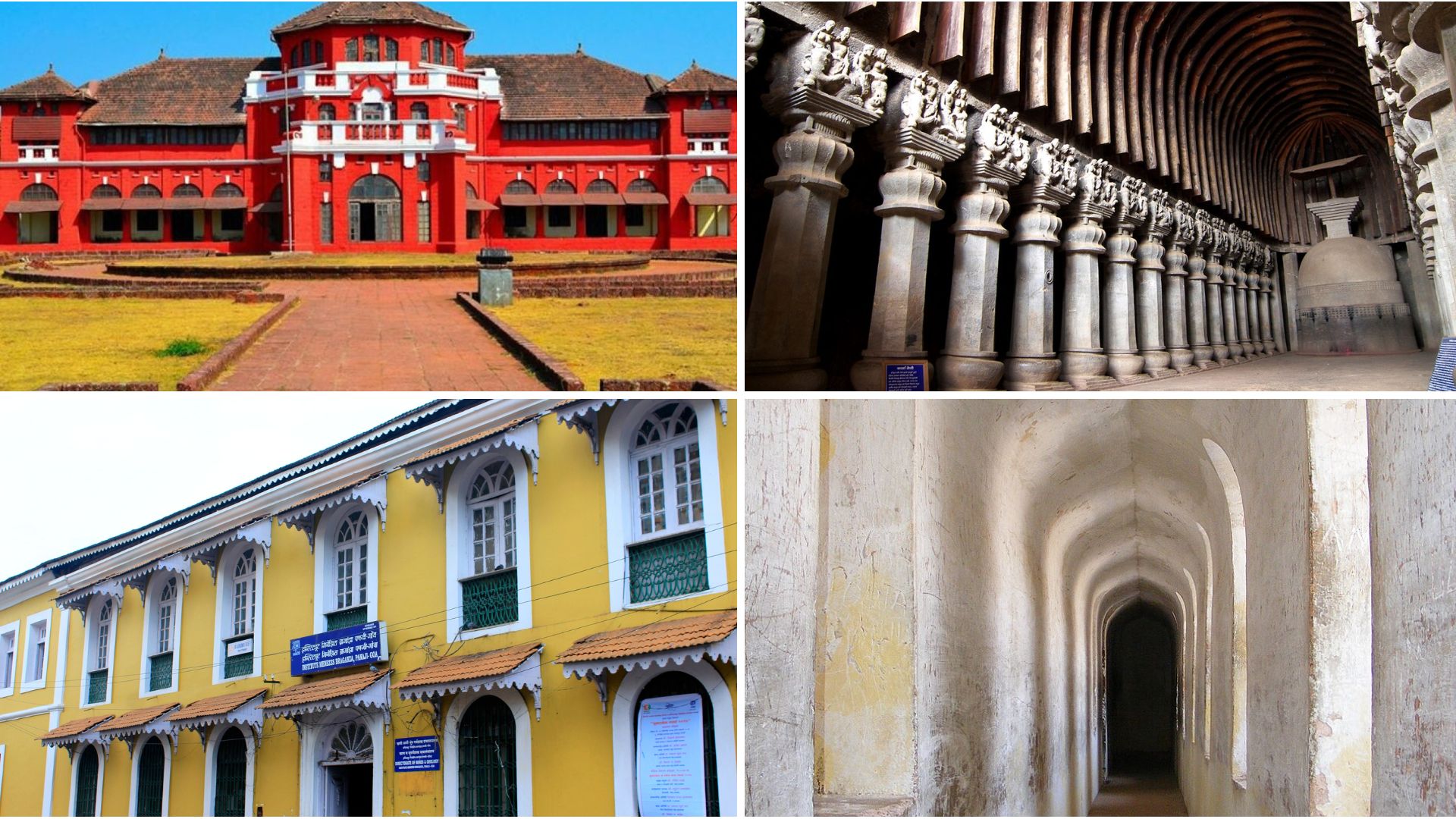
India's diverse architecture tells the story of its multi-cultural identity
It is often said that a nation’s civilisation and identity are deeply influenced by its architecture and vice-versa. From the Baroque architectural style that reflected Austria’s grandeur to the functional and minimalist constructivist designs that defined the Soviet Union’s character, architecture tells the story of a country’s evolution. These styles, with their unique features and significance, offer a glimpse into the cultural, political, and historical fabric of the nation, serving as a testament to its changing identity over time.
India’s diverse architecture tells the story of its multi-cultural identity. From the Chanderi monuments in Madhya Pradesh, reflecting changes in power, to the mix of Mughal, British, and Rajput styles in Delhi, the country’s buildings share its history and culture. While the Taj Mahal and Red Fort are famous, here are five other monuments with unique architecture worth exploring.
Thiba Palace, Ratnagiri, Maharashtra
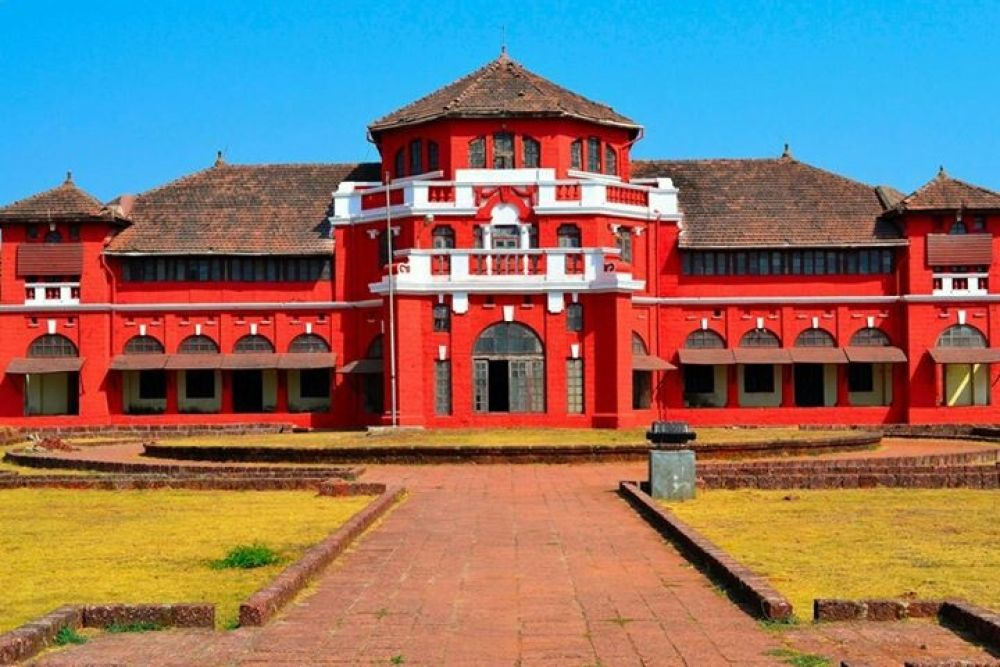
Also known as Thibaw Palace, this red-coloured structure was built by the British in 1910 to imprison King Thibaw of Burma and his family. (Photo: Ratnagiri Zila Parishad)
Tucked away amidst the beautiful beaches, temples, and forts of the coastal city of Ratnagiri lies a palace from a long-forgotten era. Not dedicated to a British, Mughal, or any dynasty known to Indian history, it was built for the Burmese king, Thiba Palace.
Also known as Thibaw Palace, this red-coloured structure was built by the British in 1910 to imprison King Thibaw of Burma and his family, who were exiled to India after the Third Anglo-Burmese War of 1885. Designed for the king’s confinement, this three-story palace is nestled within its grounds.
With its sloping roofs and semi-circular wooden windows adorned with intricate carvings, Thiba Palace stands out. Constructed with red brick, teak wood, and lava rock, it uniquely blends colonial and Burmese architectural styles, a rare sight in India.
Its spacious design features wide, airy corridors, contributing to its grand feel. Today, the palace serves as a museum, showcasing artifacts from the king’s time in exile, including a Buddha statue brought by Thibaw himself.
Ohel David Synagogue, Pune, Maharashtra
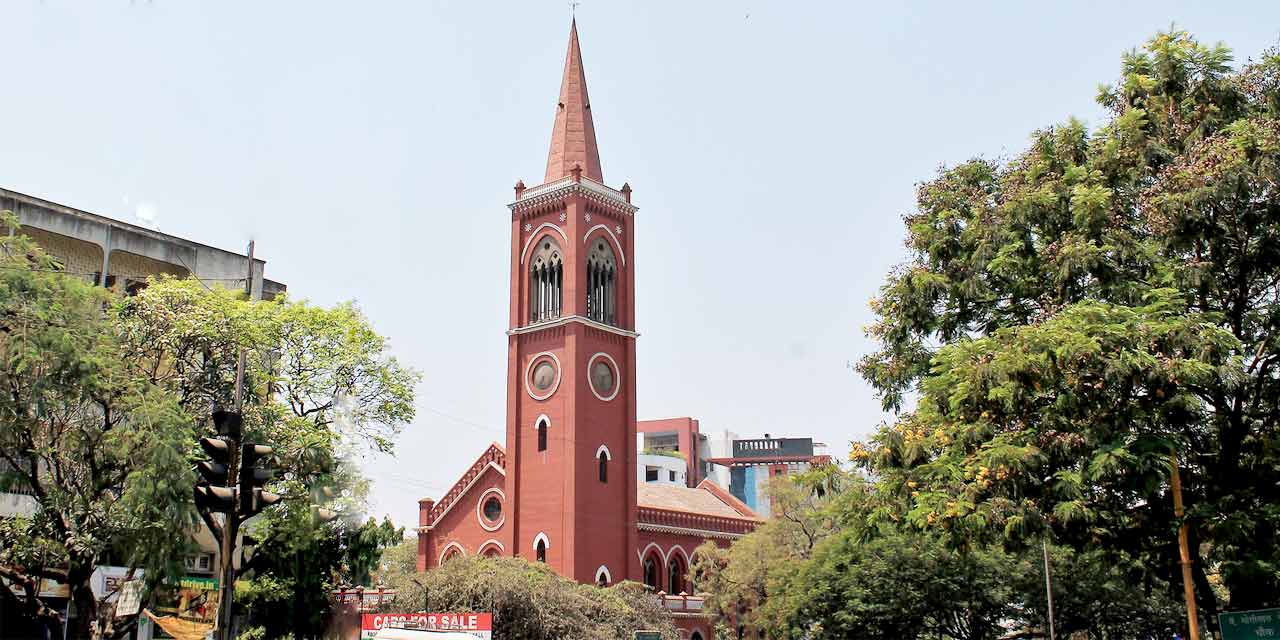
Designed by British army officer General Henry St Clair Wilkins, Ohel David is country’s largest synagogue. (Photo: Pune Tourism)
Meanwhile, at Pune’s busy Moledina Road, stands a striking red synagogue, locally known as Laal Deul (Red Temple in Marathi), the Ohel David Synagogue.
A short distance from Pune railway station, near a towering clock, this historic structure was commissioned by Jewish businessman and philanthropist David Sassoon. Designed by British army officer General Henry St Clair Wilkins, it is the country’s largest synagogue, an imposing presence amidst the bustling streets.
Its raised, elaborately decorated heckal (ark) echoes the influence of other Baghdadi synagogues, marking the deep-rooted presence of Jews in India.
The synagogue’s design features a long central hall that leads to a rounded sanctuary area, with rows of columns and arched windows on either side, an architectural style reminiscent of European churches, reflecting an English Gothic influence. The clock in the 27 m tall tower, brought from London, still stands as a silent witness to the city’s past.
Institute Menezes Braganza, Panaji, Goa
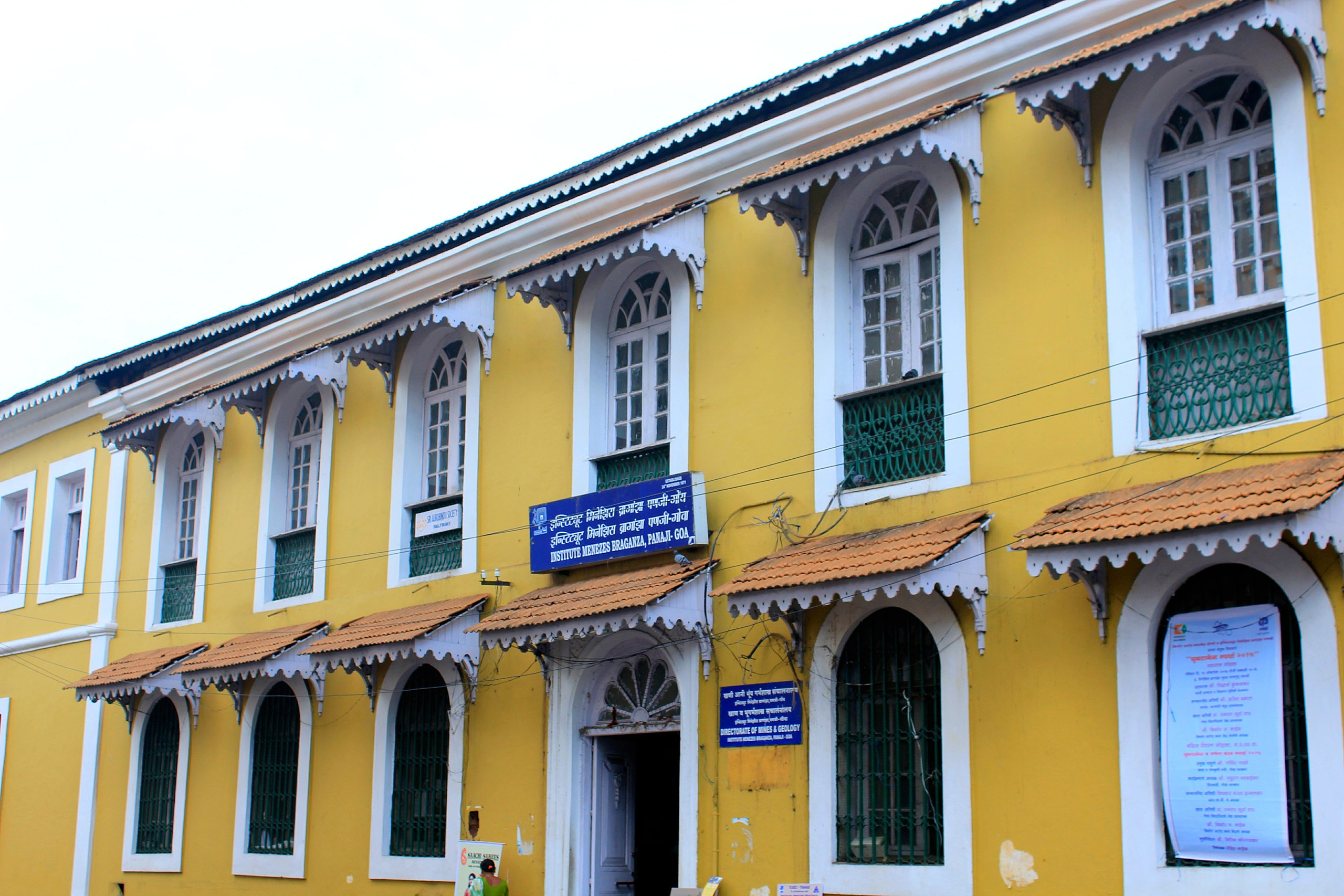
Built-in honour of Goan freedom fighter Luis de Menezes Braganza, this institution carries a deep historical legacy. (Photo: Wikimedia Commons)
In the heart of Goa’s capital, Panaji, near the Central Library and Police Headquarters, stands a prominent cultural landmark, Institute Menezes Braganza. Built-in honour of Goan freedom fighter Luis de Menezes Braganza, this institution carries a deep historical legacy.
Originally known as Institute Vasco Da Gama, the white-and-yellow façade of the building hints at its past as part of the headquarters of the Portuguese army, a reminder of the era when Portuguese rule shaped the region. This colonial influence is best reflected in the institute’s most striking feature, its grand azulejos (glazed tiles).
Adorning the walls at the northeast entrance, these intricate blue-and-white tiles depict scenes from Os Lusíadas, the famed Portuguese epic, written by Luís Vaz de Camas, which celebrates Portugal’s 15th and 16th century voyages of discovery. Painted in Lisbon and shipped to Goa, these tin-glazed ceramic masterpieces make the institute the only place in India showcasing the artwork of Jorge Colaço.
Bhool Bhulaiya, Lucknow, Uttar Pradesh
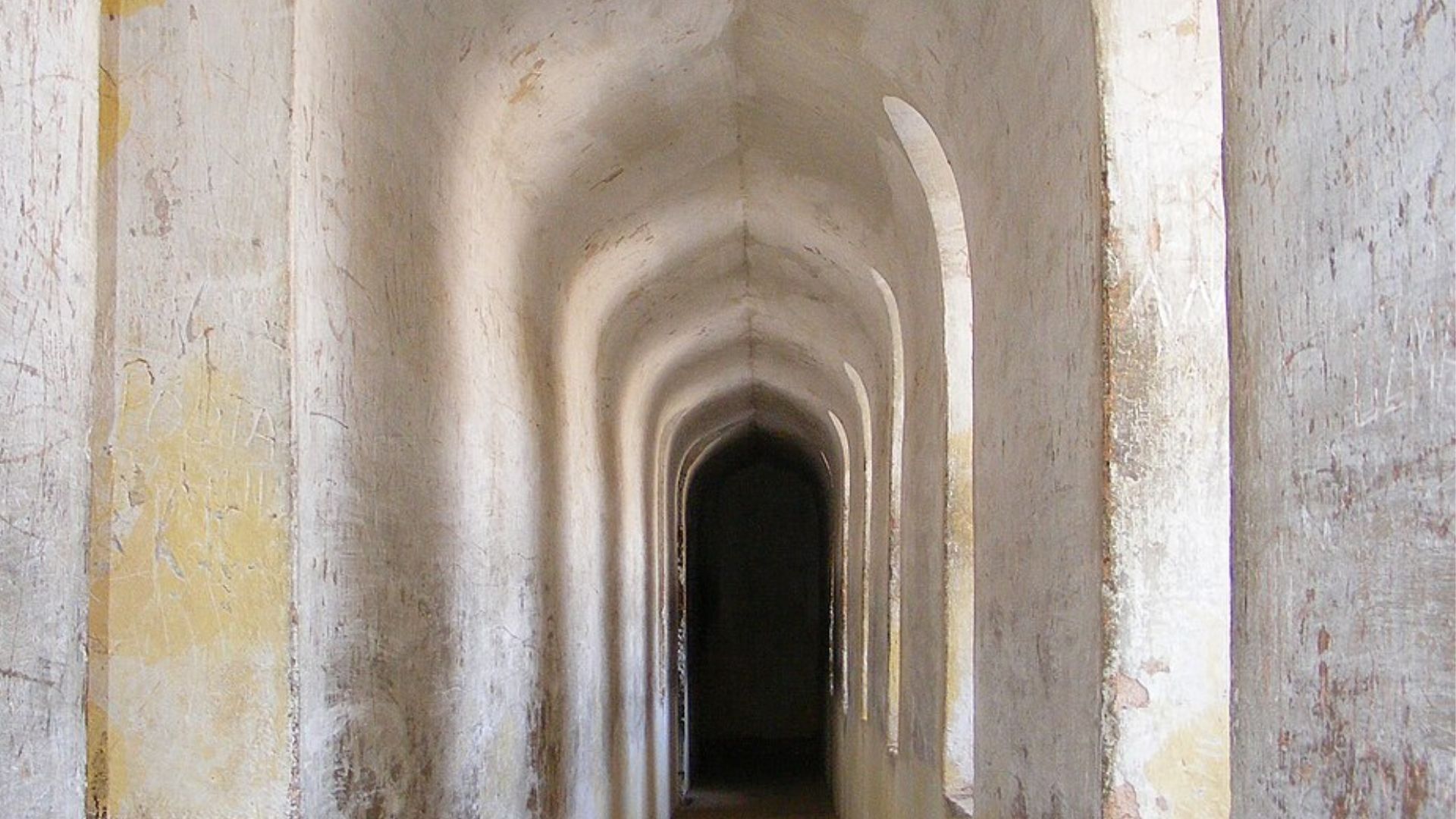
The structure’s identical doorways and interconnected passages make it astonishingly easy to get lost (Photo: Wikimedia Commons)
In the heart of Lucknow, nestled within the grand Bara Imambara complex on the bustling Husainabad Trust Road, lies one of India’s most intriguing architectural wonders, Bhool Bhulaiya.
True to its name, this labyrinthine structure is designed to confuse, fascinate, and even disorient those who dare to navigate its maze-like corridors.
Built in the late 18th century by Nawab Asaf-ud-Daula, Bhool Bhulaiya was more than just an architectural marvel, it was a strategic masterpiece. With 1,024 pathways but only two exits, the maze was ingeniously designed to outwit intruders while supporting the massive weight of the central hall, remarkably constructed without a single column.
The structure’s identical doorways and interconnected passages make it astonishingly easy to get lost, so much so that visitors are strongly advised to take a guide. Adding to its brilliance, the architect left the ceiling hollow to reduce weight, inadvertently creating the labyrinth while naturally maintaining a cooler temperature inside.
But the real treat? The panoramic rooftop views. Through its artistically crafted windows, you can glimpse Lucknow’s iconic landmarks, the majestic Rumi Darwaza, the grand Asifi Masjid, the towering Hussainabad clock tower, and a breathtaking view of the Gomti river. Incredibly, one single window offers a picture-perfect view of the entire city, a sight that is just as mesmerising as the maze below.
Karla Caves, Pune, Maharashtra
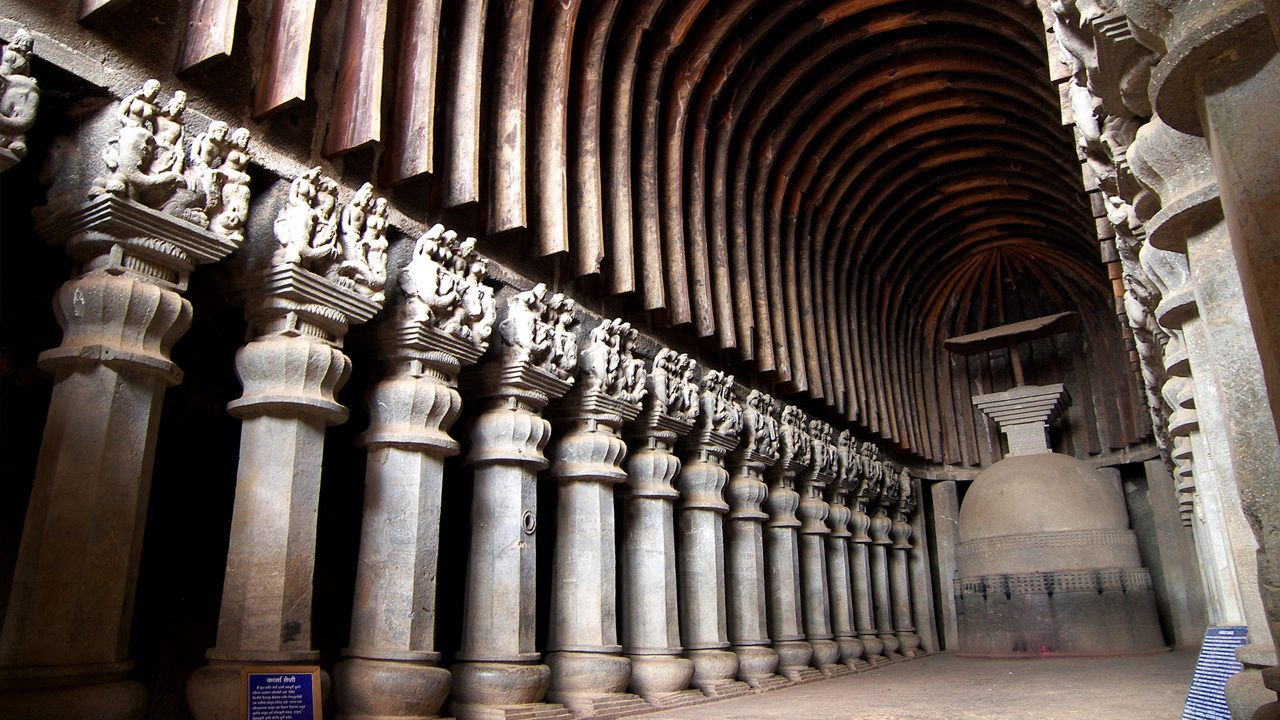
Established on a hill in the Karli area, these caves date back as early as the 2nd century BC. (Photo: Incredible India)
Hidden amidst the hills, near Lonavla, about 70 km from Pune, lies Karla Caves, one of the oldest rock-cut Buddhist sites in the state.
Established on a hill in the Karli area, these caves date back as early as the 2nd century BC and showcase the deep Buddhist influence in the region. At the entrance stands a shrine of Goddess Ekveera, alongside a Nagarkhana or drum house, marking the site’s historical and spiritual significance.
These 16 caves in the complex are filled with intricate carvings, with the highlight being the Chaitya Griha, a grand prayer hall leading to a stupa. Inside, the ceiling’s curved wooden ribs and octagonal pillars decorated with human and animal sculptures reflect the artistry of ancient craftsmen.
Carved entirely out of basalt rock, Karla Caves stand as a testament to the skill and engineering expertise of the past.
These buildings, through their architectural features, reflect a story and identity that they silently convey. They go beyond aesthetics, serving as windows into India’s evolving identity and standing as timeless reminders of the artistic brilliance that has shaped and continues to shape the subcontinent.
