
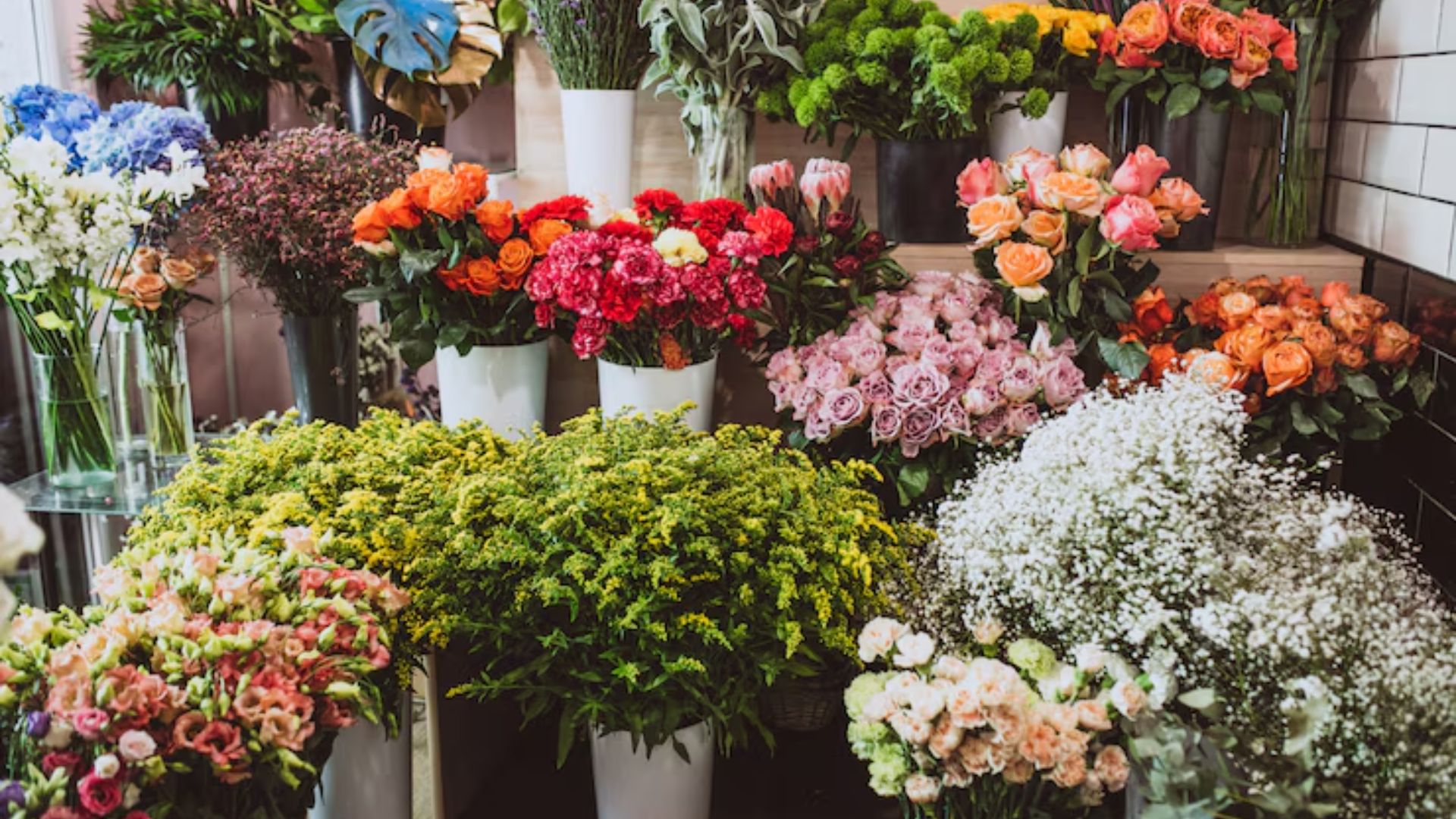
rising disposable incomes, e-commerce, improved import-export systems drive growth (Photo: Freepik)
With vibrant petals, verdant stems, and intricate roots, flowers have an enduring allure for humankind, just as they are for honeybees. Their natural fragrance and fresh elegance make them a staple at events and festivals across cultures. Whether scattered at weddings, offered in prayers or worn in celebration, flowers bring beauty, symbolism and a sense of occasion. They do not just decorate, they speak, evoking emotion, memory and meaning wherever they bloom.
This deep-rooted cultural and emotional connection has blossomed into a booming industry. No longer limited to gardens and garlands, flowers today are cultivated on a commercial scale, fuelling India’s rapidly growing floriculture sector.
Fragrant and vibrant, floriculture in India is blossoming into a thriving industry of its own. Valued at INR 292 billion today, the sector is projected to more than double, reaching INR 744 billion by 2033, growth at a compound annual growth rate of 10.9 pc.
Fragrance of growth
Behind this blooming success lies a bouquet of contributing factors. Florists and industry insiders point to continual advancements in agricultural technology, improved cultivation practices and rising disposable incomes as key drivers.
The expansion of organised retail and the growing influence of e-commerce have also made flowers more accessible than ever. Urbanisation is playing its part too, with more people seeking aesthetic and symbolic value in their surroundings. At the heart of it all is India’s enduring cultural connection to flowers, woven into weddings, festivals, and religious rituals, ensuring demand remains as perennial as the blossoms themselves.
Orshaan Khanna, a fresh flower wholesaler who has been in the business in Mumbai for 17 years, believes that growing awareness among farmers about floriculture has played a significant role in boosting the flower trade in India.
“People are becoming more aware now farmers and growers alike. I have seen the number of informed farmers grow from just a handful to hundreds, even thousands. Production has really improved. These days, people are willing to spend on flowers something they did not give much importance to before. That mindset has changed. Now, when people go to the market, they want to buy flowers, they see the value in them,” Khanna tells Media India Group.
Hera Rasool, founder of The Flower Shop, a florist in Delhi’s Gautam Nagar, believes the floriculture boom is not just rooted in tradition it is thriving in the digital age. The rise of social media, streamlined import-export systems, and the increasing use of renewable-powered greenhouses have all helped the flower trade flourish like never before.
“Honestly, it is wild how much has changed. Just 6–7 years ago, you will ever see tulips, peonies, or even hydrangeas in Indian flower shops and now they are being grown right here in Himachal. Social media has made global flower trends feel local. People want what they see online, rare, premium blooms and that demand has pushed floriculture beyond just roses and carnations. Add in better import-export systems, renewable-energy greenhouses, even ethical sourcing and suddenly, flowers you once had to go to Amsterdam for are arriving at your doorstep the next day. It has become this amazing mix of aspiration and accessibility,” Rasool tells Media India Group.
Rasool’s observations are not just anecdotal, they reflect a broader shift in India’s floriculture landscape, one that’s gaining global traction. According to the Hindusthan International Journal of Multidisciplinary Research (HIJOMR), India exported 5412.09 metric tonnes of floriculture products in in 2024–25, generating USD 22 million, suggesting that the industry, much like what it cultivates, is poised to bloom again.
From rare flowers to urban gardens: The new face of floristry
This evolution is not just happening in export numbers it is unfolding in flower markets across India. With rising disposable incomes and shifting consumer tastes, floriculture is no longer limited to traditional marigolds and jasmine. Today, there is a growing demand for exotic blooms like orchids, lilies, and hybrid roses in a spectrum of colours.
The changing consumer preferences has prompted farmers and florists to diversify their offerings, expanding both the variety and volume of flowers grown. Supporting this shift are advancements in technology and agricultural practices greenhouse farming, precision cultivation, and better post-harvest handling now ensure higher-quality flowers with longer shelf lives.
Observing this trend, Khanna says people are now constantly looking for the next best thing, and flowers much like jewellery are increasingly seen as luxury items. The flower business, he explains, now falls under the luxury category. Those who have money are willing to spend, and they are spending on premium flowers that reflect status and style.
“Earlier, people did not care much about flowers but now they do. They are ready to spend. Those with knowledge go for the best lilies, sunflowers, carnations while others just pick anything. It is all part of the luxury segment now, like jewellery. If people have money, they are spending it on flowers,” adds Khanna.
According to Rasool, it is not just about how much people can spend it is about what they aspire to and how they want things to look. When it comes to buying flowers, aesthetics and aspiration often outweigh disposable income.
“Two words, aspiration and aesthetics. People aren’t just buying flowers to gift anymore, they want them for their living rooms, Instagram, even Zoom calls. Flowers have become a lifestyle statement. It used to be just gerberas and roses, but now it is all about the new tulips, eustomas, ranunculus. The rarer the flower, the stronger the desire. Plus, eco-friendly and ethically sourced flowers are finally in demand. Customers now ask where and how flowers are grown that never happened five years ago,” adds Rasool.
This evolving demand is especially evident in key cultural and lifestyle arenas. Flowers remain integral to Indian weddings, festivals, and religious ceremonies through the life, from births to deaths, fuelling strong demand for both cut and loose blooms.
At the same time, the rise of interior landscaping and green spaces is transforming how people interact with plants, whether at home or in the workplace driving a growing appetite for potted plants as a sustainable, long-lasting alternative to traditional cut flowers.
This surge in demand has also paved the way for entrepreneurial success stories. Start-ups like Hoovu Fresh have tapped into the market with remarkable results recording a turnover of USD 960,000 while expanding through online platforms, retail outlets, and event supply, reflecting the growing appetite for ornamental flowers in everyday life and celebrations.
“It is completely transformed. Earlier, you will visit your local florist, now it is scroll, click and deliver in under 90 minutes. People send flowers across cities without stepping out. It has gone from walk-in bouquets to trackable, scheduled deliveries. And it is not just for gifting anymore, it is self-love, décor, everyday indulgence,” adds Rasool.
Business short of fragrance
Despite the industry’s rapid growth and transformation, floriculture continues to grapple with several persistent challenges that cast a shadow over its blooming success.
According to Khanna, one of the biggest challenges in floriculture is the constant risk of crop diseases. Even a minor outbreak can disrupt the entire production cycle, affecting both quality and supply.
“There is always a risk of disease in the fields. Some people manage it well and succeed, but if the crop fails, it is a big setback. Another issue now is overproduction. Earlier, supply was limited, now, with more awareness, everyone is growing flowers. As a result, prices drop, and many are not earning profits that match their investment,” adds Khaana.
Acknowledging these challenges, Rasool points out that logistics and perishability remain major hurdles in the flower business. Maintaining the freshness and quality of flowers during transportation especially over long distances is a constant struggle.
“Logistics is still a beast, flowers are perishable, and keeping them fresh over long distances is tough. Add unpredictable weather and limited cold storage, and it gets harder. Demand’s evolving faster than supply, people want exotic blooms, but scaling that locally with low waste and ethical practices is still a challenge. Rising costs, climate change and seasonal disruptions do not help either,” adds Rasool.
These concerns echo a broader reality, signifying that even as the industry blossoms, its roots remain entangled in complex challenges. Perishability, logistics, climate volatility, and market saturation are significant hurdles that cannot be ignored. Yet, India’s floriculture sector continues to grow, shaped by deep-rooted cultural traditions, driven by rising consumer aspiration, and sustained by innovation in farming and retail.
