
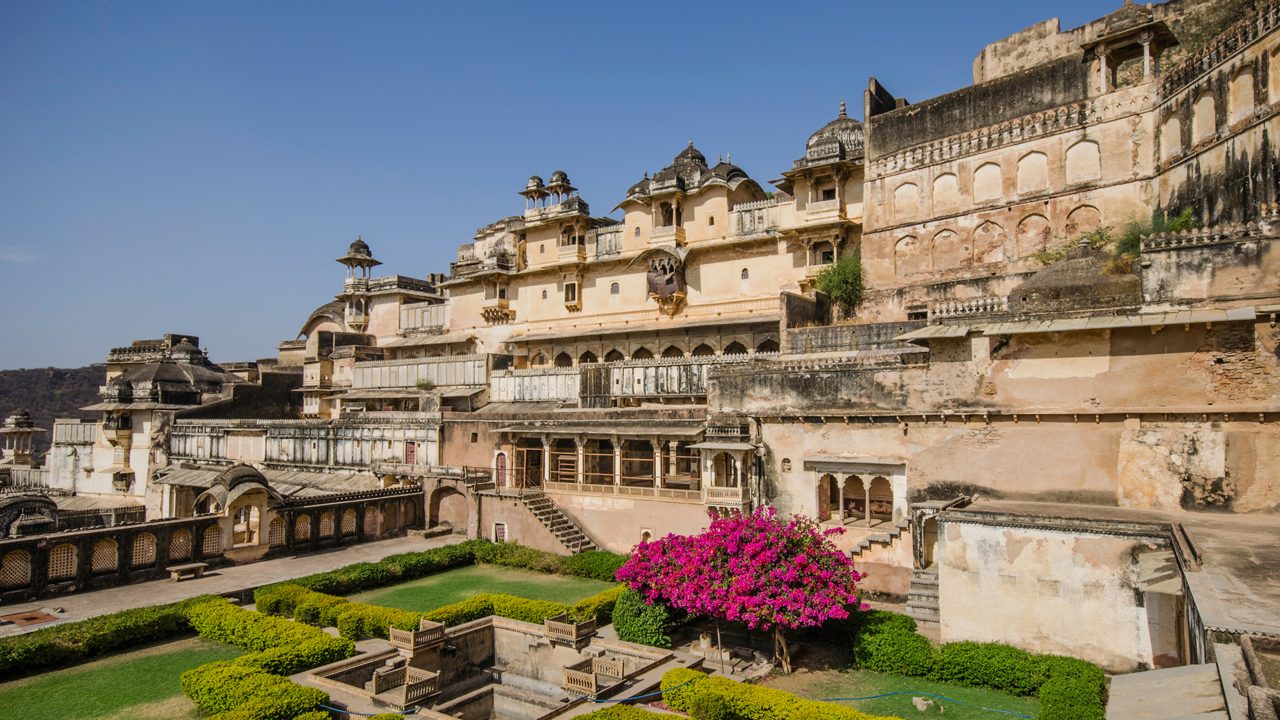
Rao Raja Ratan Singh Hada began building Bundi Palace in the early 17th century
The palaces of Bundi in Rajasthan are among the most fascinating and historically significant architectural treasures in India, rising sharply against the rocky slopes of the Aravalli hills. The Garh Palace, also called Bundi Palace, is the centrepiece of Bundi’s royal past. It is a vast complex that features elaborate murals, centuries-old tales inscribed in stone and colour and a distinctive fusion of Rajput and Mughal influences.
Rao Raja Ratan Singh Hada began building Bundi Palace in the early 17th century and over the following three centuries, it was enlarged by succeeding rulers. It was mainly built between the 16th and 18th centuries. The impressive 13th-century Taragarh Fort, which dominates Bundi’s skyline, is ideally situated next to the palace complex. Often called Rajasthan’s ‘blue city’, Bundi is located roughly 200 km from Jaipur and is encircled on three sides by the Aravalli ranges. The town is tucked away in a narrow gorge, which heightens the dramatic appearance of its royal buildings.
The Garh Palace is actually a collection of linked palaces, each named after the ruler who ordered it, rather than a single building. The distinctive elements of the Rajputana style, elephant motifs, elaborately carved pillars and jharokhas, or elaborate balconies, keep the overall architectural character remarkably harmonious despite the piecemeal construction. In keeping with the cultural fusion that characterised Bundi’s royal past, the palace’s design also includes Mughal features like vast courtyards, verdant gardens, and water features.
The Badal Mahal, ‘Cloud Palace’, is one of the most well-known parts of the palace. It is situated atop a hill inside the fort complex. Constructed under Rao Raja Ratan Singh’s rule, Badal Mahal provides expansive views of Bundi and the surrounding landscape, which are frequently obscured by clouds and mist, hence the palace’s evocative name. The three-story building stands out for combining Mughal and Rajput architectural elements; the interior is decorated with colourful murals and frescoes, while the exterior features intricate stonework, arches, and domes. These paintings, which are regarded as masterpieces of the Bundi school of miniature art, feature religious themes, hunting expeditions and scenes from royal life.
Rao Ummed Singh’s 18th-century Chitrashala, also known as the Ummed Mahal, is another highlight of the palace complex. Beautiful blue and gold murals that depict courtly scenes, moments from Krishna’s life and themes from classic literary and religious texts cover the walls of the Chitrashala. These frescoes are distinguished from other Rajasthani painting traditions by their distinctive Bundi style, vibrant colours and exquisite detailing.
Other noteworthy buildings within the palace complex include the Phool Mahal or Palace of Flowers and Ratan Daulat, both of which add to the overall majesty and historical account of Bundi’s royal past. The intricate design of the palaces, which is connected by a network of courtyards, arcades and staircases, reflects the builders’ aesthetic preferences as well as their defensive requirements.
In addition to being architectural marvels, the palaces of Bundi are colourful canvases that document the history, culture, and artistic development of the area. Because Bundi created its own unique painting style that impacted the larger Rajasthani school of art, the frescoes inside these palaces are especially important. A trip to Bundi is a voyage through time thanks to these murals, which bring to life scenes from epics, royal processions and festivals with their fine details and vibrant colours.
Bundi is reachable by road, rail, and air. The closest airport is in Jaipur roughly about 200 km away. The town’s mediaeval charm, narrow streets, step wells or baolis and the glistening Nawal Sagar Lake in the middle, welcomes visitors. The palaces offer history buffs, art enthusiasts and photographers alike an enthralling experience with their majestic exteriors and lavishly furnished interiors.
