
The opposition to the bill, dubbed as a draconian overreach that threatens democracy
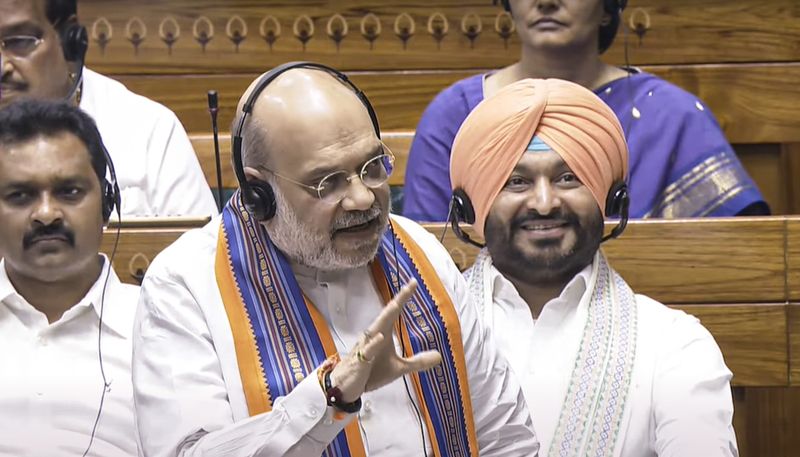
The Constitution (130th Amendment) Bill, 2025, introduced in Parliament by Union Home Minister Amit Shah, has triggered intense public and political debate across India. The bill proposes that any Prime Minister, Chief Minister, or minister who is held in jail for 30 consecutive days on serious criminal charges should automatically lose their position, even without a formal conviction.
While the government argues that the bill promotes clean politics and accountability, many legal experts, political leaders and civil society members see it as a dangerous overreach that undermines the very foundation of Indian democracy.
“As a matter of law, while the intent behind the Constitution (130th Amendment) Bill, 2025, to promote accountability in public office is commendable, the provision for automatic removal of a Prime Minister, Chief Minister, or minister solely on the basis of being in custody for 30 consecutive days, and in the absence of a conviction, raises grave constitutional and procedural concerns,” Prafulla Sharma, practising lawyer at Supreme Court tells Media India Group.
Congress leader Kapil Sibal accused the government of “weaponising laws to target the opposition,” asking, “Has any BJP minister been arrested?” to question the bill’s purported morality. Meanwhile, Priyanka Gandhi called it “completely draconian”, noting, “You don’t even have to be convicted” for removal, a “pull the wool over the eyes” tactic. Rahul Gandhi likened the move to medieval tyranny, stating, “We are going back to medieval times when the king could just remove anybody at will”.
The opposition to the bill, dubbed as a draconian overreach that threatens democracy, stems from prolonged detentions of various opposition figures without trial which are now a common occurrence, notably in cases filed by the Enforcement Directorate.
For instance, ED had detained several ministers of the Aam Admi Party as well as leaders of other opposition parties in multiple cases alleging money laundering. Not one of the cases has even reached the trial stage even though over three years have gone by since the first case was lodged against an AAP Minister in the previous Delhi government. Moreover, ED’s conviction rate in money laundering cases is pathetically low and as such has been called out by the Supreme Court.
In this context, the critics say that the Indian Constitution and legal system are firmly rooted in the principle of “innocent until proven guilty.” Traditionally, disqualification from office only occurs after a judicial conviction for serious offences, as outlined under the Representation of the People Act, 1951. This amendment, however, allows for automatic disqualification based only on prolonged custody, even if the charges are unproven or are later found to be false.
“This law undermines the foundational presumption of innocence until proven guilty under Indian criminal jurisprudence, leaves scope for potential political misuse of the central agency and arbitrary detention, and risks destabilising democratically elected governments without adequate safeguards, thus calling into question its consistency with the principles of due process and federalism enshrined in the Constitution,” adds Sharma.
“The proposed amendment disregards the presumption of innocence by making prolonged detention itself a trigger for removal, even if charges are yet unproven or possibly fabricated,” Neela Ganguli, Assistant Professor & Head Programme of Political Science, Guru Nanak College, Chennai tells Media India Group.
Critics also warn that the bill opens the door for political misuse. In the current climate, where central investigation agencies such as the Central Bureau of Investigation and ED are often accused of acting on political missives, the risk of these agencies being used to arrest opposition leaders and force their disqualification is high.
“This provision risks political misuse: Political rivals or authorities could weaponise law enforcement agencies to detain opposition ministers, thereby removing them from office without substantive grounds. It undermines the right to a fair trial and due process, shifting the power to penalize elected representatives from courts to investigative agencies,” says Ganguli.
Though the bill includes a clause for reinstatement if a minister is granted bail or acquitted many say this is not enough. The damage to a political career or an elected government could be irreversible by then. There are no judicial checks in place to prevent politically motivated detentions, and the bill lacks any requirement for courts to assess the validity of charges before removal takes effect.
“This arrangement is incompatible with constitutional morality and the spirit of federalism, opening avenues for political manipulation and weakening states’ ability to govern themselves. The bill centralises power and introduces a mechanism by which the Centre can undermine or topple opposition-ruled state governments, disrupting the delicate balance essential to federalism and democratic choice in India,” says Ganguli.
The bill also raises serious questions about India’s federal structure. By allowing centrally controlled agencies to arrest and remove ministers, including Chief Ministers, the Centre gains disproportionate power to interfere in state governance, especially in states run by rival parties.
Critics argue this is a modern version of the misuse of Article 356, which was once used to dismiss opposition-led state governments, a practice now discredited by the courts.
“The disqualification bill significantly threatens India’s federal structure by giving the Centre and its agencies power to directly undermine state governments and restrict their autonomy in choosing executive leadership,” she adds.
While the government claims it is cracking down on corruption, many experts believe the bill reflects a broader attempt to concentrate power in the hands of the central executive.
“This amendment sets a precedent for executive accountability based on detention rather than judicial conviction, but is widely viewed by experts and observers as a move that risks concentrating power under the guise of anti-corruption rather than genuine political reform,” explains Ganguli.
The Centre’s move also departs significantly from international democratic norms. In most democracies, elected representatives are removed only after judicial conviction or parliamentary processes such as impeachment. Arrest or detention alone is not enough to remove someone from office.
Global standards favour checks and balances, judicial independence and legislative oversight elements the current bill is accused of ignoring.
“The bill’s automatic disqualification based on detention rather than adjudication is a novel and contentious mechanism not aligned with the principle of presumption of innocence common to most democracies. India must incorporate judicial checks and balances before disqualification, ensuring due process and preventing politically motivated use of law enforcement agencies,” she notes.
As the bill moves to a joint parliamentary committee for further review, many hope that stronger safeguards will be introduced. Until then, concerns remain that this amendment, though framed as a tool for accountability, could weaken the very democratic principles it claims to uphold.
