
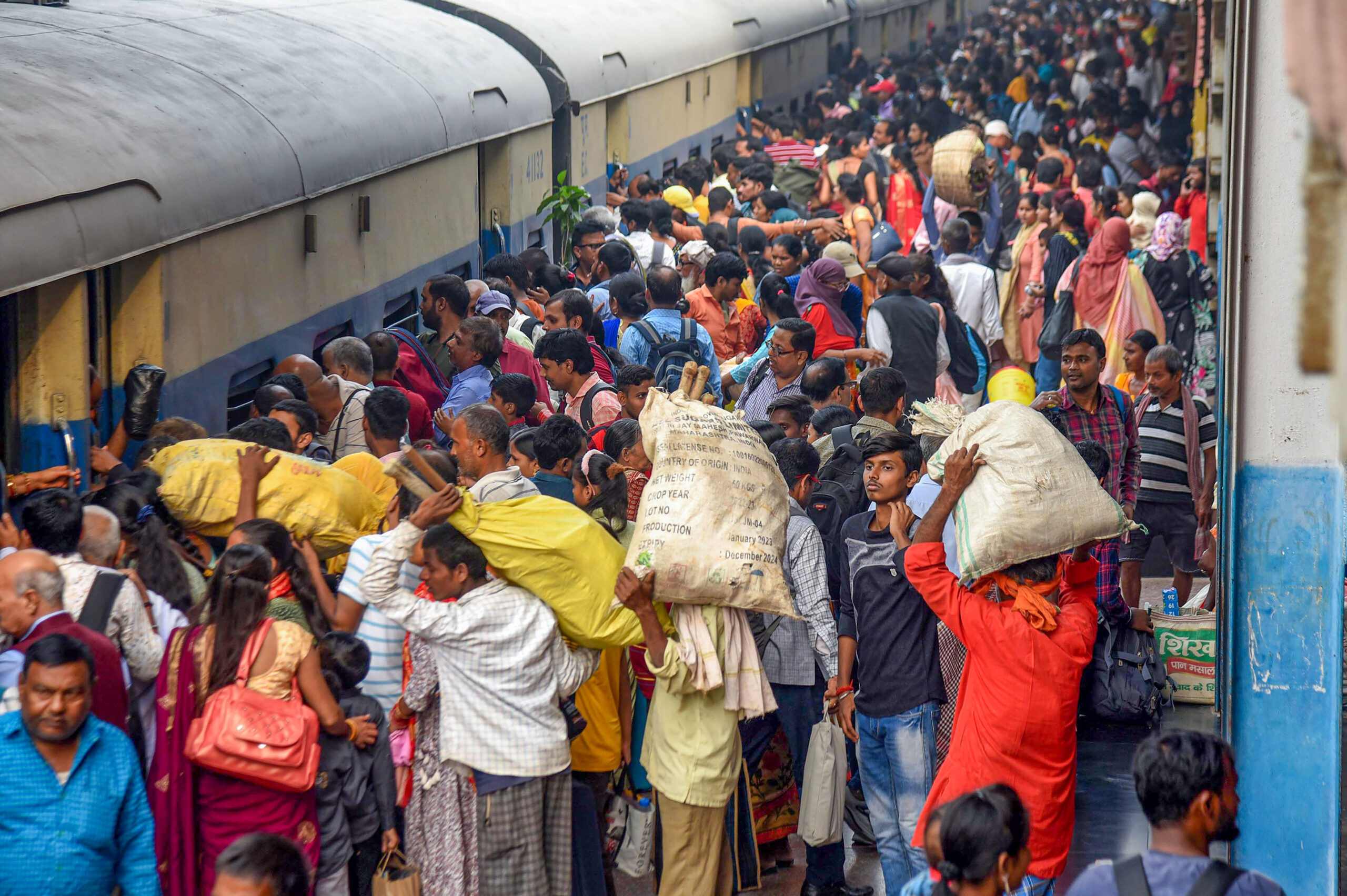
India has a long history of fatal crowd incidents. According to government and media data, dozens of such tragedies have occurred over the past two decades (Photo: PTI)
A string of deadly crowd-related incidents in India over the past year has raised urgent questions about public safety at mass gatherings, including religious festivals, political events, and major transport hubs.
Despite previous warnings and past tragedies, lapses in planning, coordination and crowd control continue to result in preventable deaths and injuries.
In January this year, a stampede during the Maha Kumbh Mela in Allahabad left at least 30 people dead and dozens injured. The incident occurred on a major bathing day at the Sangam, where millions of devotees had gathered.
Initial reports indicated that the stampede began after a barricade collapsed, triggering panic near a narrow access point to the riverbank. Several eyewitnesses described overcrowded passages and a lack of sufficient crowd regulation measures.
Days later, another crowd surge in a different part of the world’s largest gathering of humans reportedly caused additional fatalities, taking the death toll to nearly 40. Authorities launched an inquiry into the incident, and compensation was announced for the families of the deceased.
In an unrelated event just weeks later, on February 15, at least 18 people were killed in a stampede at New Delhi Railway Station. The incident occurred as pilgrims returning from the Kumbh attempted to board several trains bound for Uttar Pradesh.
Confusion between similarly named trains, the Prayagraj Express and the Prayagraj Special reportedly led to chaos on the platforms. Multiple trains were scheduled for departure in a short window, and the resulting surge of passengers onto crowded stairways and platforms led to a crush. The Railway Minister announced a probe and promised improvements in crowd handling at major stations, including the establishment of additional waiting zones and improved signage.
The confusion at the railway station was just the beginning of the logistical challenges faced by authorities during the massive religious gathering. As millions of devotees made their way to the Kumbh Mela, crowd management emerged as a critical concern not only at transport hubs but also at the event grounds themselves. Despite efforts by the administration to streamline movement and ensure safety, the scale of the gathering tested the limits of planning and infrastructure.
“We went to the Kumbh after the stampede, though it was mostly well organised, the number of people there was surreal. Too much crowd to handle. I feel even though the planning was still okay, there should have been a cap on the number of people who were let in every day,” Sunny Kumar, a resident of Delhi, tells Media India Group.
“When we heard of the stampede we were scared, but it was once in a lifetime event so we went, however we left our kids at home, fearing for our safety,” he adds.
In June, jubilation over the Royal Challengers Bengaluru (RCB) winning their first title in the Indian Premier League, a club-based cricket tournament, turned tragic when a victory celebration outside Bengaluru’s M Chinnaswamy Stadium went into chaos. A large crowd, estimated in the millions, had gathered despite restricted entry via passes. At one point, a temporary slab placed over a drain near the stadium reportedly collapsed under pressure, triggering panic and a surge in the crowd. The stampede claimed 11 lives and injured dozens of others.
In the aftermath, the Karnataka government suspended senior police officers and filed FIRs against RCB, the Karnataka State Cricket Association, and event organisers alleging criminal mismanagement.
More recently, on September 27, a political event in Karur, Tamil Nadu, organised by Tamil actor-turned-politician Vijay’s party, Tamilaga Vettri Kazhagam, ended in a deadly stampede.
The event, promoted as a “people’s gathering,” reportedly drew crowds far exceeding the permitted capacity. As attendees waited in the heat for hours, the arrival of Vijay led to a sudden surge toward the stage area. The resulting crush killed at least 40 people and left over 100 injured, according to police and local hospital records.
The Tamil Nadu government has ordered a judicial inquiry, and police have registered a case against the organisers under various sections related to negligence and wrongful death. The party issued a statement expressing condolences and offered compensation to victims’ families.
In December 2024, a tragic stampede broke out at Sandhya Theatre in Hyderabad during the premiere of Pushpa 2: The Rule, in which actor Allu Arjun was expected to make an appearance. Reports say that a large crowd had already gathered outside, and when Arjun arrived and waved to fans from the sunroof of his vehicle, the crowd surged toward the theatre gate. The situation worsened as private security allegedly pushed people to clear a way for his vehicle, causing chaos. The gate crowding and poor entry/exit management led to the death of a 35‑year‑old woman named Revathi and serious injuries to her son.
Each of these incidents has sparked public debate over whether adequate precautions are being taken ahead of large gatherings. In the case of the New Delhi station stampede, a two-member inquiry committee was appointed to investigate communication failures, including unclear platform announcements and crowd dispersal protocols.
Similarly, at Karur, questions have been raised about the absence of adequate water supplies, crowd control barriers, and coordination between event organisers and local authorities. In both cases, officials promised corrective measures, but critics noted that similar assurances have followed past tragedies without leading to systemic reform.
“These incidents are preventable, but I feel stars want a good number at their promotions. Even at college festivals or concerts we feel the same. I attended a concert in Delhi, and it was highly mismanaged, there were no proper provisions to handle the crowd and I would never want to attend such events again,” Sanchi Mehta, a student, tells Media India Group.
India has a long history of fatal crowd incidents. According to government and media data, dozens of such tragedies have occurred over the past two decades, including at temples, political rallies and public events.
While the police do have protocols in place for crowd management, such as deploying personnel, setting up barricades, and monitoring entry and exit points, their effectiveness often depends heavily on coordination with event organisers.
“In accordance with safety regulations, crowd limits are determined by the authorised capacity of the venue. Police use surveillance cameras, headcounts at gates, and controlled ticketing or entry passes to enforce these restrictions. The event may be temporarily halted or closed to additional admissions if the crowd size surpasses safe limits. Conventional emergency protocols include ambulances and medical personnel on the scene, evacuation routes that have been planned in advance, and rapid response teams that have received first aid and crowd control training. We make sure emergency vehicles have unobstructed access, work with medical services, and, if necessary, initiate crowd dispersal protocols,” an official of Delhi Police, who did not wish to be named, tells Media India Group.
In many cases, this coordination is either inadequate or completely missing. Organisers may fail to provide accurate crowd estimates, ignore safety advisories, or make last-minute changes without informing authorities. This lack of communication hampers the police’s ability to prepare and respond effectively, increasing the risk of stampedes and other crowd-related disasters.
“Issues occur when organisers fail to follow safety instructions or provide accurate information, which leads to confusion or crowding. Attendee risks may rise as a result, and emergency response times may be prolonged. To lessen such problems, it is now important to have regular liaison meetings and practice exercises with the organisers,” he adds.
With many more major events approaching and religious festivals drawing large crowds across the country, concerns persist over whether lessons from recent tragedies will translate into preventive action. Public safety advocates have warned that unless structural changes are introduced, the risks associated with unmanaged crowds will continue to pose a threat.
