
The EU has enhanced discussions with India and the two sides now have a new strategic agenda aimed at deepening cooperation in areas like trade, technology, security and sustainability
In the corridors of powers in New Delhi and Brussels a silent revolution is taking place redefining the contours of European Union-India relations thanks to strengthening of strategic ties and challenges arising out of uncertainty in the global geopolitics, particularly about the wildly swinging trade policies of the Trump Administration in the United States.
This dynamic is characterised by desire to reset their economic and strategic priorities, making the relationship as one of the most crucial of the 21st century. Over the last two decades, this relationship has rapidly grown as successive leaderships from both sides of the respective political aisles have sought to cultivate a stronger partnership.
Though the development in ties had stalled for a few years, notably due to the Covid-19 and the subsequent conflict between Russia and Ukraine, the EU-India ties have been on a sharp upswing in the last few months, especially since February this year when the EU’s College of Commissioners led by President of the Commission Ursula von der Leyen visited India.
For India, the EU is a valued partner, with the strategic partnership spanning the fields of economic, defence and technological cooperation. It is India’s third largest trading partner, and both sides are working to expand trade and investment, build secure supply chains, and deepen collaboration in areas like artificial intelligence and advanced technology. This growing relationship is based on shared values like democracy and mutual prosperity.
It is true that there are divergences between Delhi and Brussels on many issues such as India’s refusal to explicitly condemn the Russian invasion of Ukraine. However, four years into the Ukraine crisis and sanctions on Indian refineries for importing Russian oil, have taught the EU leaders that coercion is never the way to convince India. The EU has finally realised that as a civilisational State and a post-colonial country, any attempts to force India will always backfire. The sense in Delhi and in Brussels is that the despite the differences on Ukraine, convergences on other issues far outweigh the differences and that a strategic partnership can never be held hostage to a single issue.
With this relatively belated realisation earlier in 2025, the European Union set about picking up the numerous threads of the bilateral relationship with a view to take mutual cooperation at least in the areas where there were no differences or at least not seemingly insurmountable ones such as the one on Ukraine.
With this realisation, the EU has enhanced discussions with India and the two sides now have a new strategic agenda aimed at deepening cooperation in areas like trade, technology, security and sustainability. The rise in momentum of renewed energy in bilateral relationship came early in the year when the entire European College of Commissioners embarked upon its first-ever visit to India, that took place in February, signalling a clear commitment to elevating the partnership.
The negotiations and discussions during the visit of the powerful body and subsequently have led to the adoption of a “New Strategic EU-India Agenda”, in October, a significant milestone in EU-India relations that is aimed to deepen, broaden, and better coordinate bilateral cooperation, enhance prosperity and security for both partners and help tackle major global challenges.
Alongside, there has been noticeable progress on initiatives like the India-Middle East-Europe Economic Corridor (IMEC). The year also saw the long-delayed free trade negotiations reach what appears to be a decisive culminating point.
Republic Day 2026 Surprise Guests: Redefining diplomacy
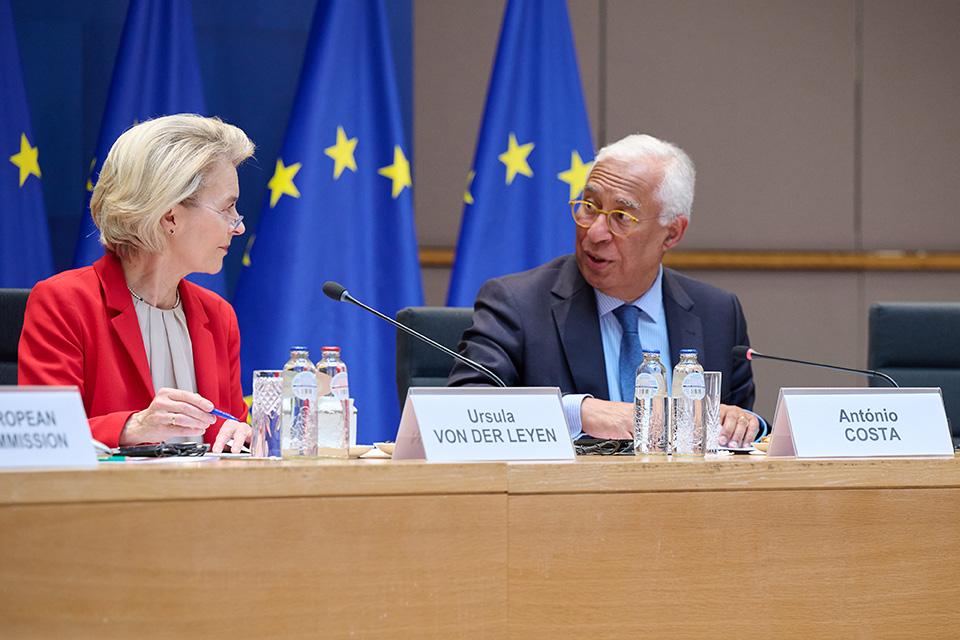
India has invited the European Commission President Ursula von der Leyen and European Council President Antonio Costa to be the chief guests of the 2026 Republic Day
As a strong gesture indicating its own willingness to push ahead with this renewed momentum in development of bilateral ties, India has invited the European Commission President Ursula von der Leyen and European Council President Antonio Costa to be the chief guests of the 2026 Republic Day celebrations. Thus, for the first time ever, the EU’s top two leaders will be chief guests at India’s Republic Day, marking a defining moment in the decades-old partnership built on trade, trust, and strategic balance.
By tradition the Chief Guest of the Republic Day is a head of a foreign country. This has been the practice from first Republic Day celebrations in 1950. Leaders of key global powers, from all over the world, have been attending the R-Day celebrations in India as Chief Guests ever since. Thus having the EU leaders as chief guests is a strong signal by India which has accorded the same privilege to the EU leadership.
Moreover, the visit by von der Leyen and Costa would be very appropriate as it would offer yet another opportunity for the top leadership of both India and the EU to provide the extra boost needed for conclusion of the FTA negotiations and overcome the remaining ‘sticking points’.
For India, also, the event’s importance is far from being just ceremonial. It highlights New Delhi’s desire to diversify and balance its foreign policy and as India has so far walked a tightrope, maintaining a delicate balance in its bilateral relations with the United States and Russia. In these turbulent times, it is important and useful for India to have an anchor of stability in its external ties.
From an economic standpoint, the EU is the 3rd largest trading partner of India and one of its major sources of investment as well as technology. If the two sides could indeed manage to pull off the signing of the FTA during the visit by the EU leadership would be a win-win situation where India could speed up the reform process, opening its markets to foreign players.
It also signals the ambitious idea of India as a global leader who has the capacity to bring together the major powers on her own terms and in her own way. Indirectly, by hosting the EU chiefs, India is making it clear that it stands at the crossroads of two great continents, Asia and Europe, balancing the scales, and not only projecting influence.
Understanding India what it means for Europe
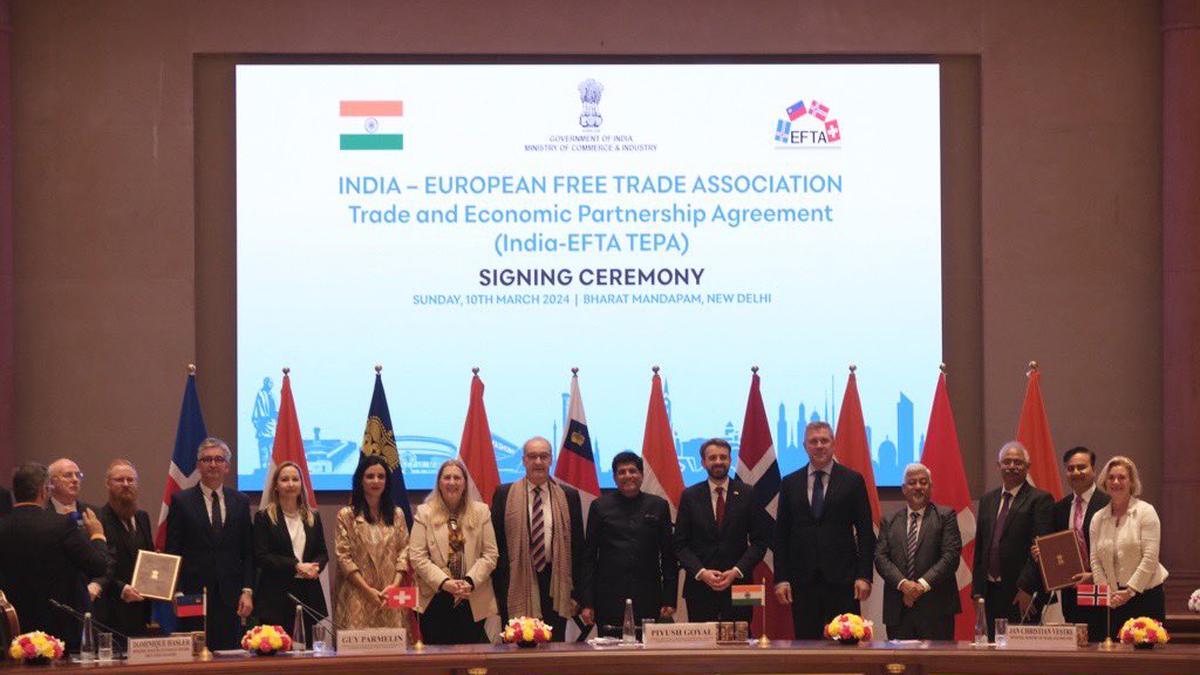
India and the European Union reaffirmed their shared ambition to conclude the much-awaited free trade agreement negotiations by the end of December (Photo: X@EFTAsecretariat)
As the EU reviews its policies in the global economic and political system, there is a growing recognition that in the current global uncertainty, relationship with India is of critical importance to EU’s future. It is increasingly realised that India’s future trajectory will have a significant impact on the EU’s ability to achieve its global economic, political and climate change ambitions. Today, there is a growing recognition across European capitals that EU needs to rebalance its economic relationships in the global economy, beyond its reliance on China. Therefore, an effective EU policy approach towards India is a desired choice to recognise the new global realities.
India is one of the world’s largest and most dynamic economies and an essential partner for the EU in promoting a rules-based global order and tackling global challenges. With strong economic growth and major ambitions in the green and digital transitions, India plays a key role in shaping the future of Indo-Pacific.
The EU’s leadership understands that its relationship with India, which is already the fifth-largest economy and is poised to overtake Germany and Japan within this decade to become third behind the US and China, should be a priority, and both sides stand to gain by deepening co-operation.
However, despite the camaraderie and the warm rhetoric, the EU-India relationship is also fragile in certain areas and there are differences that the two sides need to overcome. Also, India sees the EU more of a trade bloc rather than a political actor. The EU’s leadership agree that relations with India should be a priority, and both sides stand to gain by deepening co-operation. Brussels appears to have realised that the strategic value of EU-India relations outweighs disagreements over Russia and understands that it has limited influence on India’s foreign policy strategy of multi-alignment.
India-EU trade talks drive towards finalisation
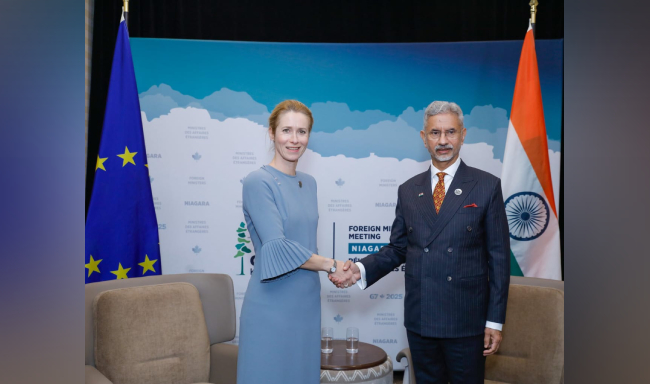
India and the European Union reaffirmed their shared ambition to conclude the much-awaited free trade agreement negotiations by the end of December (Photo: Ministry of External Affairs)
During the 11th India-EU Foreign Policy and Security Consultations and the Sixth Strategic Partnership Review Meeting held in Brussels in November, India and the European Union reaffirmed their shared ambition to conclude the much-awaited free trade agreement negotiations by the end of December and have pledged to work jointly for a free, open, inclusive and prosperous Indo-Pacific.
“Both sides reaffirmed their common ambition to conclude negotiations on the Free Trade Agreement by the end of this year and to accelerate negotiations on the Investment Protection Agreement and the Geographical Indications Agreement,” said the joint statement issued after the meeting.
“They highlighted the importance of cooperation at the multilateral level and continued dialogue on economic issues, including on diversification of supply chains. Both sides also noted the progress made in the India-EU Trade and Technology Council (TTC) and look forward to the next TTC ministerial meeting in Brussels in 2026,” it added.
Indicating the urgency attached to the negotiations by both sides, an informal round of negotiations was held in Brussels in early November and though it was not a formal round but yet involved intensive discussions at the chief negotiator level. The goal was to resolve outstanding issues like market access and non-tariff barriers to advance the agreement.
These developments indicate that India and the European Union have pushed their long-running free trade talks back to the centre of their partnership, reaffirming a shared goal to conclude negotiations by December. With the current joint roadmap nearing its conclusion, India and the EU have agreed to begin work on a new Joint Comprehensive Strategic Agenda to guide cooperation beyond 2025. This framework is expected to be adopted at the India–EU Leaders’ Summit in New Delhi in January 2026.
Urgency to conclude negotiations
The FTA discussions between India and the EU have progressed towards the final stage as both sides concluded two high-level engagements in Brussels on November 18 and 19. With an intension to conclude the negotiations, the EU’s negotiating team headed by EU Trade Commissioner Maros Sefcovic will land in New Delhi in coming days. The decision to invite EU top leadership comes when both parties are putting their best foot forward to finalise a long-pending FTA.
More than half of the 23 chapters of the FTA are done and dusted, broad understanding reached on remaining, issues that remain to be settled are agriculture, wine and spirit, automobiles, insurance, and banking. The ‘dairy products’ issue will also require more discussion as will the issue carbon-tax problem. This relates to the EU’s decision to enforce the Carbon Border Adjustment Mechanism (CBAM) from January 2026 by imposing tariffs on products being imported from countries that have less stringent climate rules. This, India believes, could hurt Indian exports to the EU and not make it a level-playing field. Despite these not-insignificant differences, if the two sides do manage to reach an agreement on the FTA by the Republic Day, it will be a fitting crowning glory for the leadership of the two sides.
Given their shared interests, the EU and India are working together to promote peace, economic prosperity and security in Indo-Pacific region and beyond. After the FTA is signed, India and EU must play a greater leadership role to safeguard the relationship over the next decades.
What is clear is that the stakes for both are high, an ambitious trade agreement between the world’s largest economy and the soon-to-be third largest could create the economic underpinnings for a growing strategic partnership, especially in countering China. In the age of uncertainty and challenges, the EU-India partnership must be for progress and promise.
(Sunil Prasad is the Secretary General of Brussels based Europe India Chamber of Commerce. The views expressed here do not necessarily reflect those of Media India Group.)
