

Kishangarh, a small city in Rajasthan has emerged as a popular tourist and photoshoot destination for its marble dumping yards (Photos: Media India Group/Varsha Singh)
For several travellers across the country, Rajasthan evokes images of imposing forts, ornate palaces, vast desert landscapes, traditional art and craft, and vibrant cultural expressions. However, tucked amid the rugged terrain of the Aravali range, one of India’s oldest mountain systems, barely 20 km from Ajmer, lies Kishangarh, an emerging destination that has quietly carved out an unconventional place for itself on India’s tourism map.
Unlike Rajasthan’s more celebrated destinations, Kishangarh has drawn attention not for its royal palaces or historic forts, but for something far more unexpected which is its vast marble dumping yards.
Founded in 1611 near Lake Gundalao, the historic city today is ringed by towering white mounds of marble slurry and waste, spread across nearly 200 acres. Resembling snow-clad peaks, these chalky landscapes stand in stark contrast to Rajasthan’s otherwise colourful palette, lending Kishangarh an arresting and almost surreal appearance.
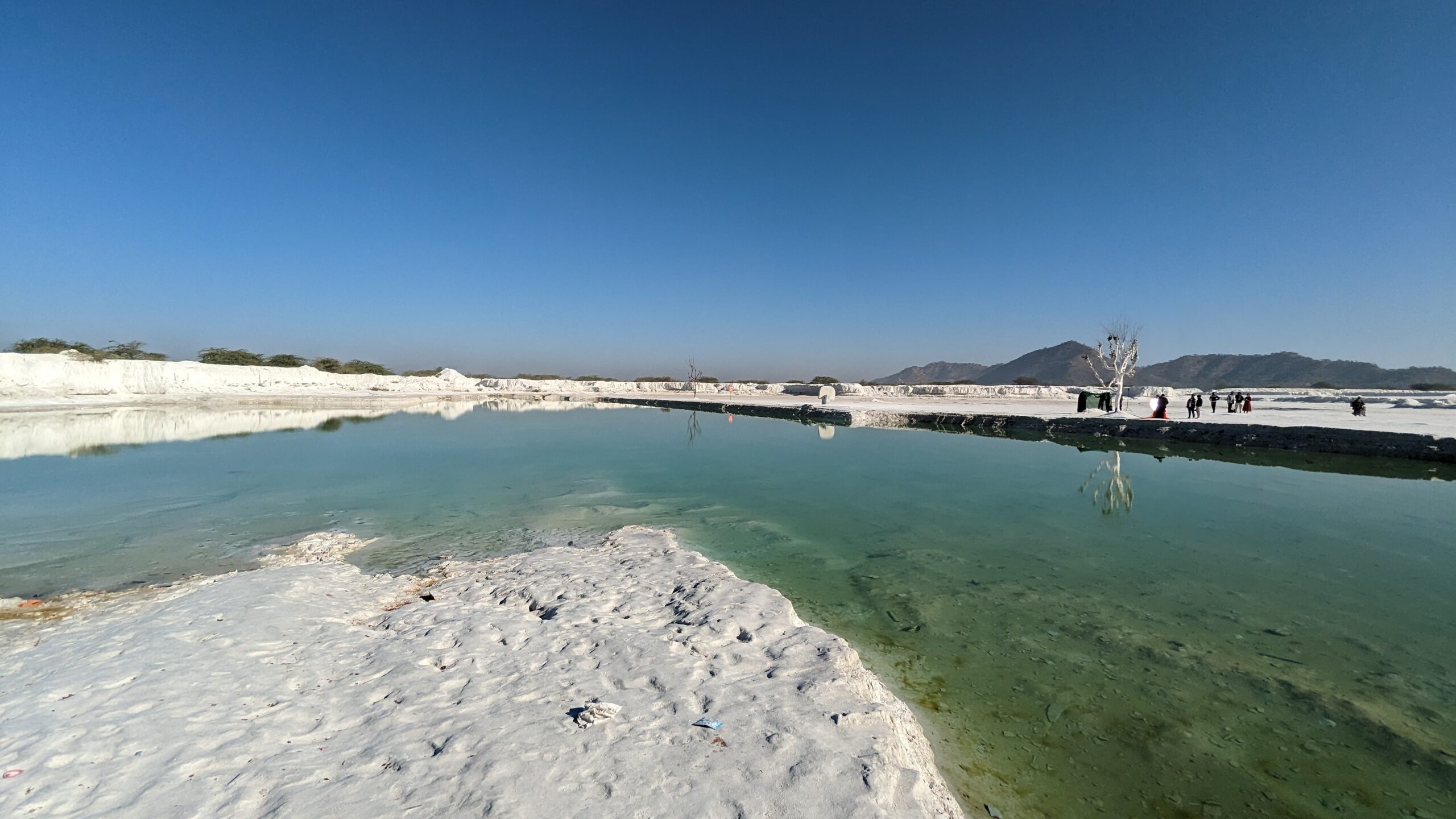
At sunrise and sunset, the terrain glows softly, transforming the waste heaps into a dreamlike setting
Traditionally a trade centre for cotton fabric and agricultural produce, Kishangarh’s identity began to shift in the turn of the millennium. The city’s transformation into a tourist curiosity can be traced back to 2005, when the Rajasthan Industrial Development and Investment Corporation Limited (RIICO), along with the Kishangarh Marble Association, decided to centralise marble waste disposal. A designated area was created to dump marble slurry generated by the region’s extensive marble-processing industry.
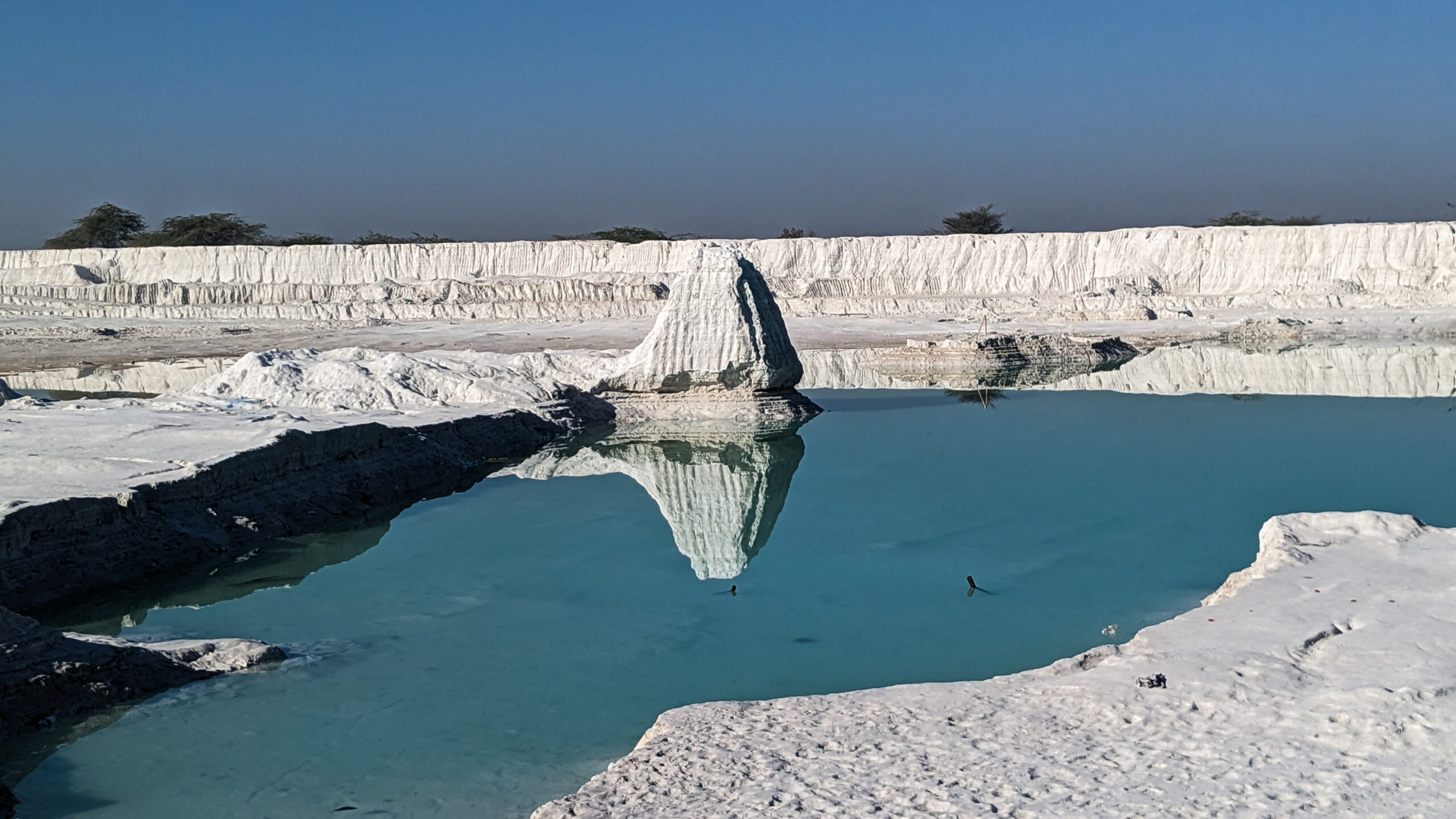
The city is also known as Mini Ladakh or the snow desert of Rajasthan
Although wells extending to about 15 m in depth were dug to manage the waste, marble slurry was often piled on the surface, in massive heaps. Over time, these deposits hardened and spread, gradually taking on the form and colour of snow-capped hills. What began as an industrial necessity inadvertently gave rise to one of Rajasthan’s most visually striking and unique landscapes.
Today, these white expanses are referred to as Mini Ladakh or the snow desert of Rajasthan, have become a magnet for tourists, photographers, pre-wedding shoots and social media creators.
At sunrise and sunset, the terrain glows softly, transforming the waste heaps into a dreamlike setting. Couples pose amid the powdery white ground, visitors walk carefully across the chalky slopes, and content creators frame shots that make Kishangarh appear worlds away from the desert state it belongs to.
Also Read Kathputli: String puppetry from Rajasthan
And it took little time for those about to tie nuptials to head here for their pre-wedding photoshoots. Nitin Roonwal, founder and photographer at Sanjana Studios in Kishangarh, says that the city’s popularity has surged well beyond traditional tourism.
“We do get a lot of people who want to have their pre-wedding shoots here. While we only take a limited number of shoots, nearly 15 to 20 bookings are made every month during the off-season. During the peak season, that number goes up to 40 to 50 bookings. Apart from couples, we have also started receiving bookings from influencers, which have increased by nearly 30 to 40 pc,” Roonwal tells Media India Group.
Adding to the location’s visual fame, the marble plains have also featured in popular culture. The icy-looking terrain appeared in a song from the Bollywood film Baaghi 3, starring Tiger Shroff and Shraddha Kapoor. Several music videos and album songs including Kis Kisko Pyaar Karoon, Chor Denge starring Nora Fatehi, and Saiyaan Ji featuring Nushrratt Bharuccha have also been filmed here, further amplifying Kishangarh’s reach among younger audience.
The city’s appeal extends beyond its viral marble landscapes. According to Anurag Kishore, founder, Shree Shyam Ashok Tours and Travels, a local tour company, visitors are increasingly exploring other corners of the city as well.
“Apart from the famous dumping yard, places such as Kishangarh Fort, Phool Mahal, Kali Mata Temple, Navagraha Temple and Lake Gundalao have also become popular for tourism and photo shoots. Tourism here has increased largely due to viral reels and videos on platforms like Instagram,” Kishore tells Media India Group.
Kishangarh Fort
One of the city’s quieter yet visually compelling landmarks is the Kishangarh Fort, built in 1649 by Maharaja Roop Singh Rathore. Located close to Lake Gundalao, the fort is a fine example of Rajput and Mughal architectural styles, blending defensive structures with palace-like elegance. Constructed primarily of sandstone and lime plaster, the fort’s warm hues offer a striking contrast to the white marble landscapes that now surround the city.
Though lesser known compared to Rajasthan’s more famous forts, Kishangarh Fort has steadily gained popularity as a photoshoot destination. Its interiors, adorned with murals and Bani Thani paintings, reflect the artistic legacy of the Kishangarh school of miniature painting. Arched corridors, balconies and courtyards provide photographers with classic Rajasthani backdrops make the fort a natural extension of the city’s evolving visual tourism.
Phool Mahal
Within the fort complex lies the Phool Mahal, or Palace of Flowers, once used for royal gatherings and celebrations. Today, it stands as another favoured location for photography. Decorated interiors, carved pillars and painted ceilings offer visitors a glimpse into the courtly life of Kishangarh’s rulers. Young couples and travellers often choose this space for its timeless aesthetic, seeking a traditional setting that complements the more surreal imagery of the marble yards.
Lake Gundalao
Flanked by the fort on one side and old city settlements on the other, Lake Gundalao forms the historic heart of Kishangarh. Originally built as a water reservoir to support the town, the lake gradually came to define the city’s layout and rhythm. Early mornings and late evenings are particularly popular among photographers, as the sun casts shades of gold and orange across the water, reflecting temple spires, fort walls and everyday life along its banks.
In a state celebrated for colour and grandeur, Kishangarh stands apart for its unexpected whiteness, offering travellers and photographers a destination that feels both unfamiliar and quietly compelling.
